Lesson 10 · 5 min
Batteries: storing sunshine for the night
Capacity in kWh, how much of it you may use (DoD), and how many hours it will run your home.
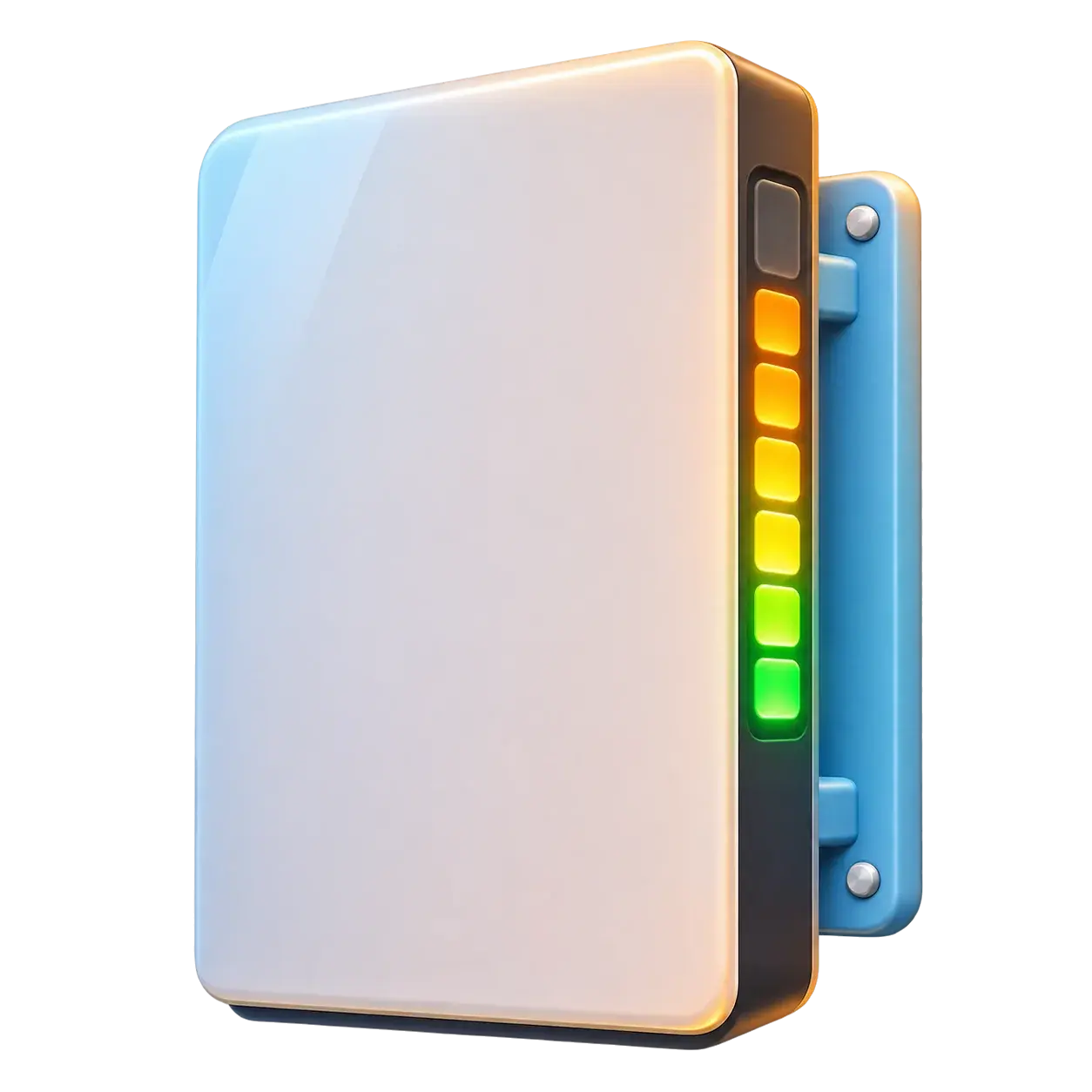
A battery is an energy bucket. Its size is written in kilowatt-hours (kWh): a 10 kWh battery can hold 10 kWh of energy, enough to run a 1 kW load for 10 hours, or a 2 kW load for 5 hours. During the day the panels fill it; in the evening and at night your home drinks from it.
You should not empty a battery completely every day, because it wears out much faster. The share you are allowed to use is called depth of discharge (DoD). Modern lithium (LFP) batteries typically allow 90–95%; older lead-acid batteries only about 50%. The rest stays inside as a protected reserve.
So the real question is: how long will it last? Backup hours = capacity (kWh) × DoD ÷ load (kW). Batteries also have a voltage, often 48 V for homes; dividing watt-hours by volts gives amp-hours (Ah), another common way to describe their size.
Try it yourself
Drag the sliders and watch the animation and numbers change.
Worked example
A family in Abu Dhabi uses about 1.2 kW in the evening (lights, fridge, fans and TV). They have a 10 kWh lithium battery with 90% depth of discharge. How long can it run the house?
- hours = kWh × DoD ÷ load
- = 10 kWh × 90% ÷ 1.2 kW
- = 9 kWh ÷ 1.2 kW
- = 7.5 h
What this means: About 7½ hours, from sunset to around 2 a.m. To last until sunrise they would need a bigger battery or a smaller night load.
Quick check
Pick an answer to see at once whether it is correct.