
Lesson 3 · 3 min
kW, kWp, MW and MWh: the scale ladder
From a phone charger to a solar farm: the same watt, in steps of 1,000.
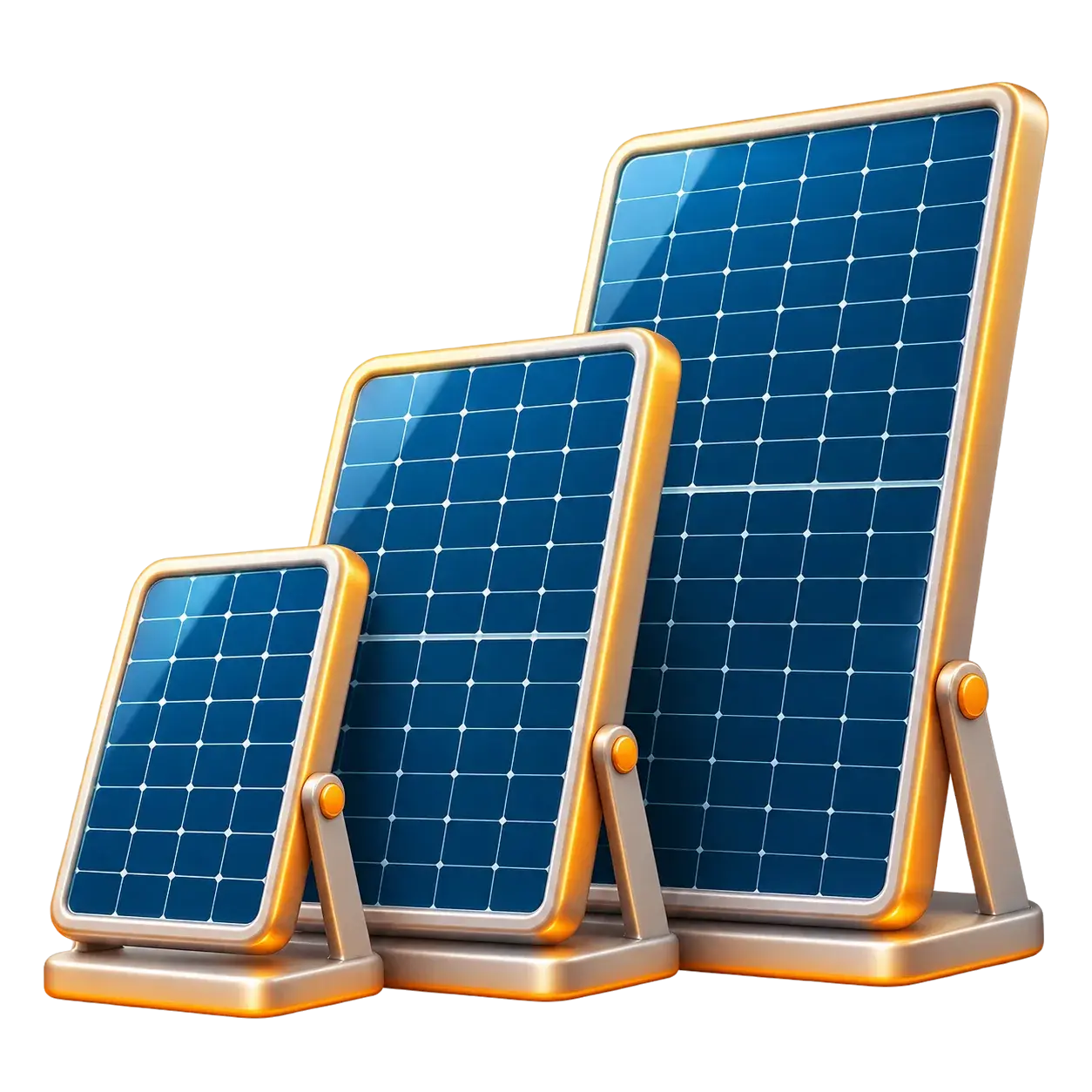
Solar numbers get big quickly, so we group watts in steps of 1,000. 1,000 watts is one kilowatt (kW). 1,000 kilowatts is one megawatt (MW). A phone charger uses about 20 W, a kettle about 2 kW, a home solar system is often 5–15 kW, and a solar farm can be 50 MW or more.
The same steps work for energy: 1,000 Wh = 1 kWh, and 1,000 kWh = 1 MWh. Homes are billed in kWh; big solar farms sell their output in MWh.
You will often see kWp, short for kilowatt-peak. It is the total power a set of panels makes under standard test conditions: strong sunlight of 1,000 W per square meter at 25 °C. It is the system's size label, like an engine's horsepower. On a real day the output is usually a bit below the peak.
Try it yourself
Drag the sliders and watch the animation and numbers change.
Worked example
A villa in Abu Dhabi has 20 solar panels of 720 W each. What is the system size in kWp?
- P = 20 × 720 W
- = 14,400 W
- = 14,400 ÷ 1,000 = 14.4 kWp
What this means: The system is 14.4 kWp. In one hour of full test sunlight it would make about 14.4 kWh. A 50 MW solar farm is about 3,500 times bigger.
Quick check
Pick an answer to see at once whether it is correct.