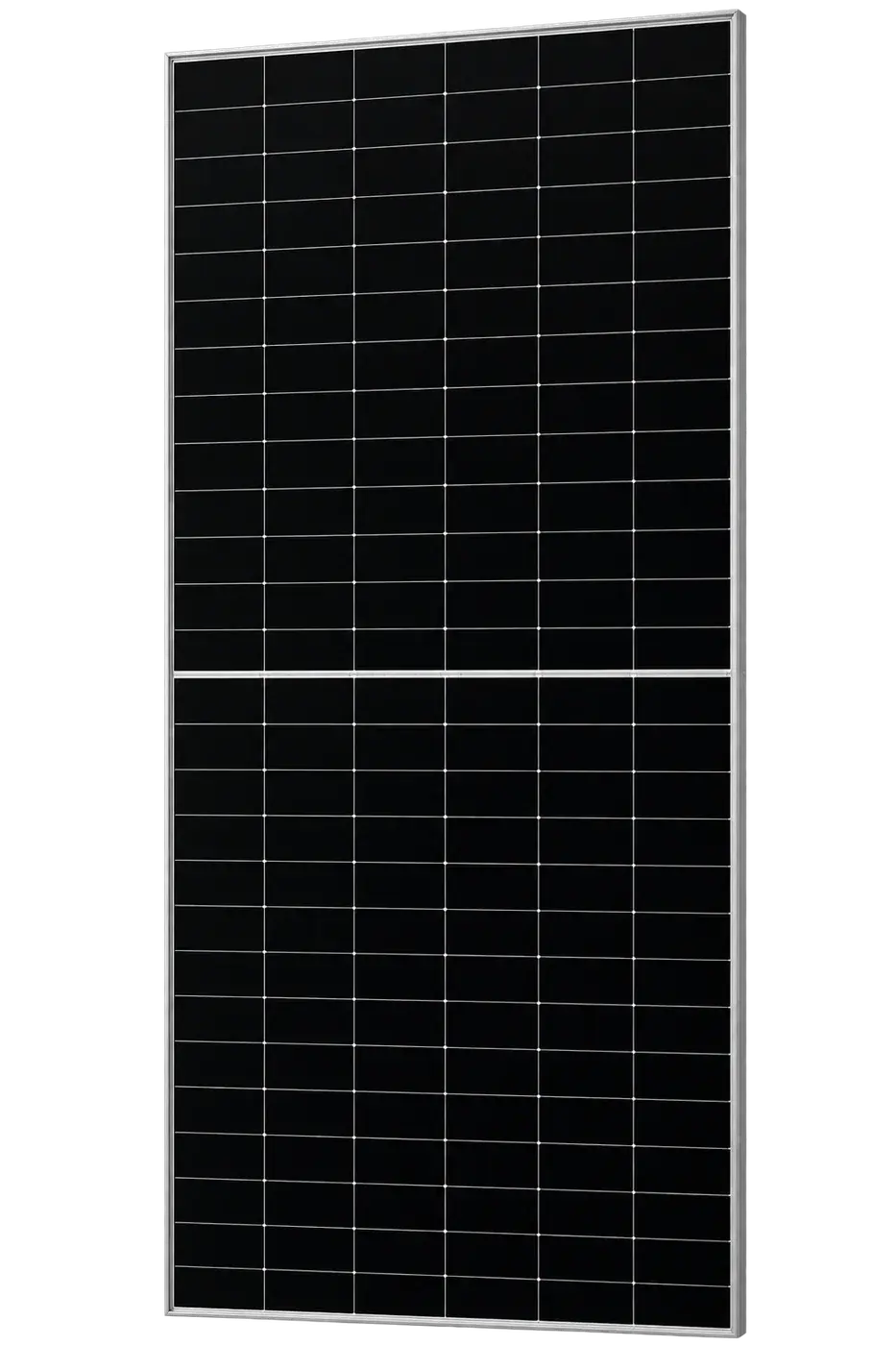
In a back-contact (BC) cell both positive and negative contacts are on the rear, so the front surface is completely free of metal. That raises current and efficiency: in the classic 2278 × 1134 mm frame a BC module reaches about 600 W, roughly 20 W above a TOPCon module of the same size. Its −0.26 %/°C coefficient is among the best of crystalline technologies, which matters on hot roofs and in desert plants where cells exceed 65 °C.
Because the rear carries the metal grid, bifaciality is lower (around 70 %) than TOPCon or HJT, so BC shows its strength mainly on rooftops and fixed-tilt systems where rear gain is limited anyway. The uniform black-cell front is also preferred for visible commercial façades and carports. Handling and racking are identical to other 2278 mm glass-glass modules; check that the inverter's MPPT range suits the slightly higher Vmp.
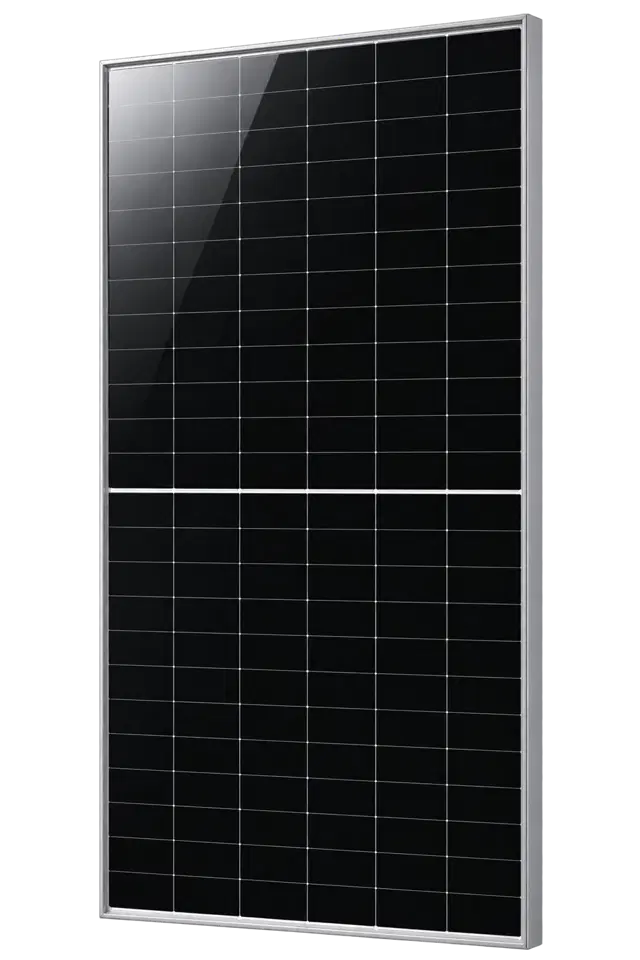
Utility-scale back-contact (HPBC 2.0) bifacial module, 640–670 W class, up to 24.8 % efficiency.
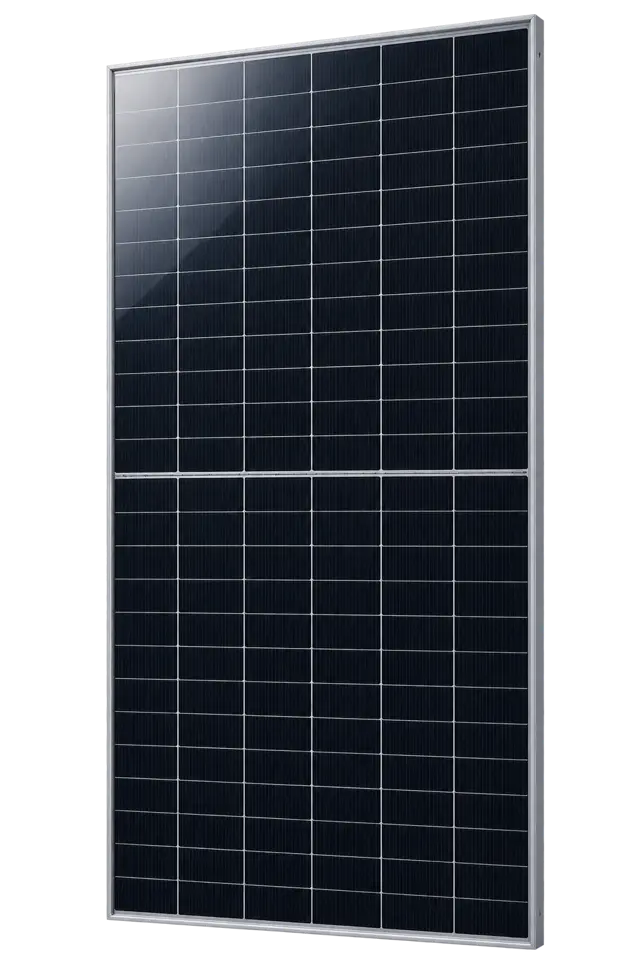
Bifacial dual-glass N-type HPDC module for ground-mount plants, 600–625 W, 23.0 % efficiency.
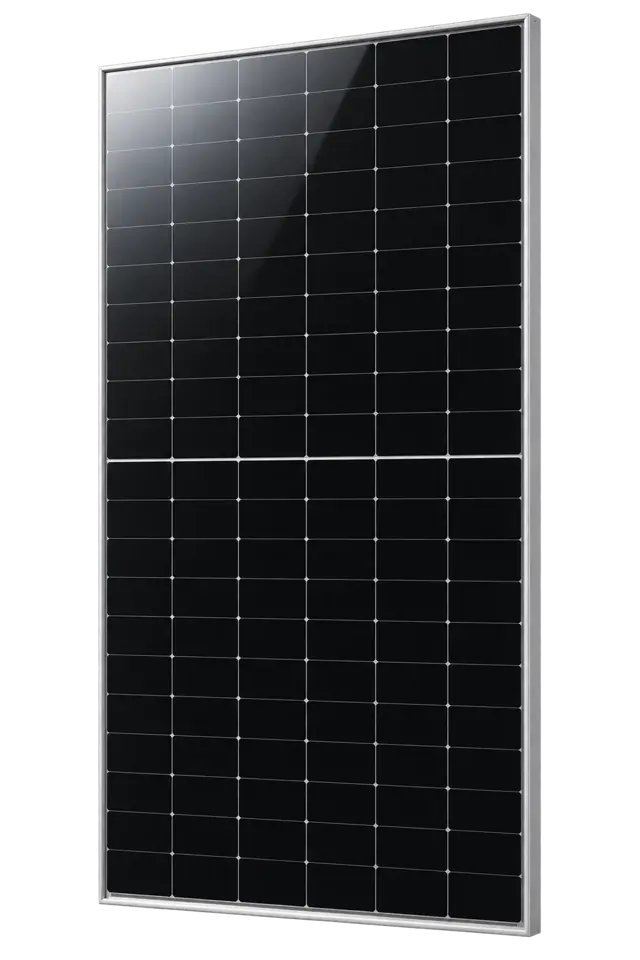
Monofacial HPBC module for commercial & industrial rooftops, 570–595 W, 22.8 % efficiency.
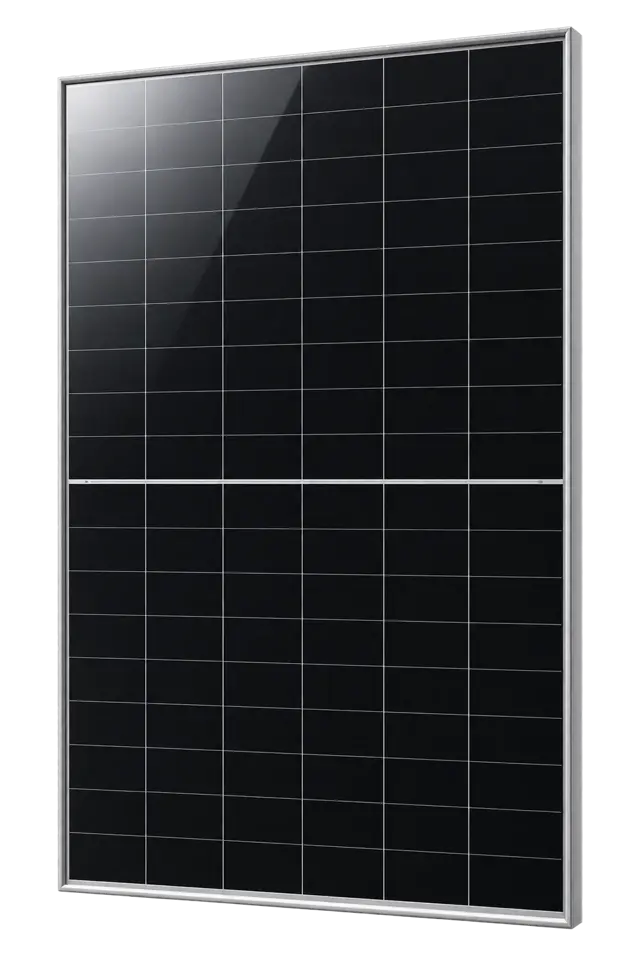
Residential back-contact rooftop module, 455–485 W, 23.3 % efficiency with anti-shading design.
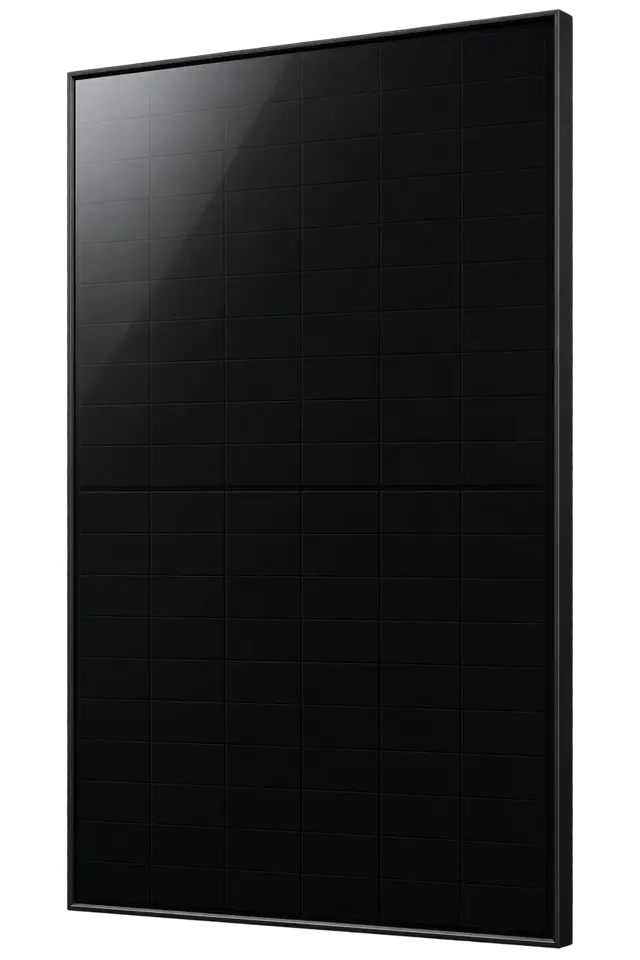
All-black aesthetic version for premium villas, 445–465 W, 22.5 % efficiency.
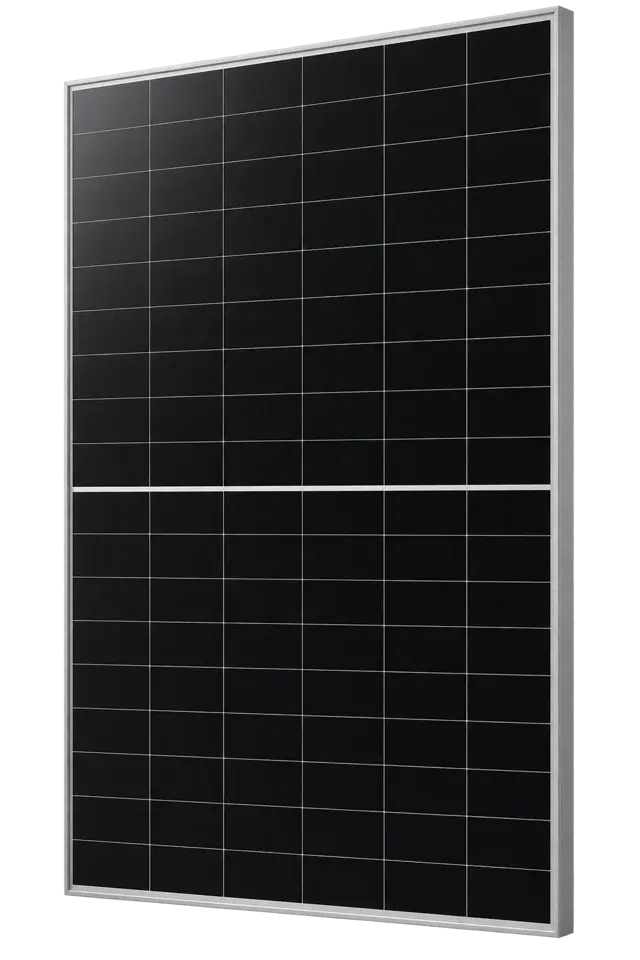
Residential HPBC 2.0 back-contact module, 54-cell format, around 480 W with strong partial-shade behaviour.
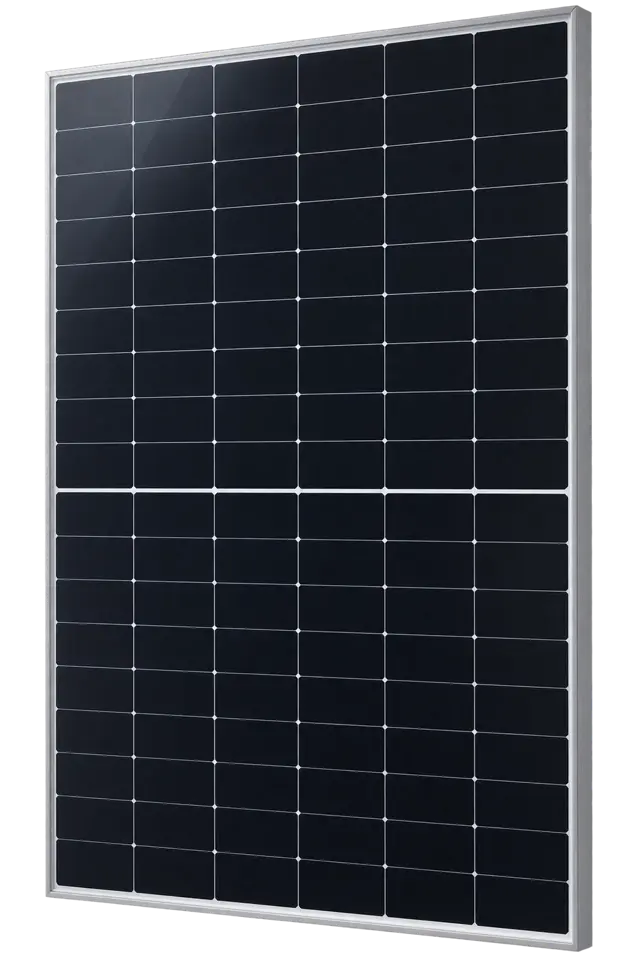
Rooftop HPBC back-contact module on 182 mm wafers, 415–435 W, around 22 % efficiency.
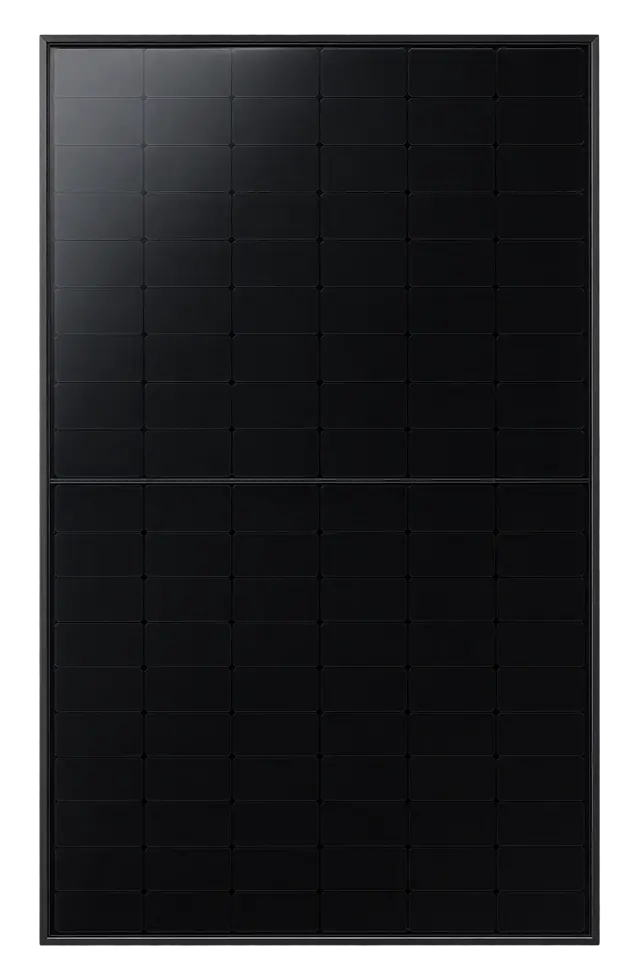
All-black residential back-contact module with black frame and backsheet, around 420 W.
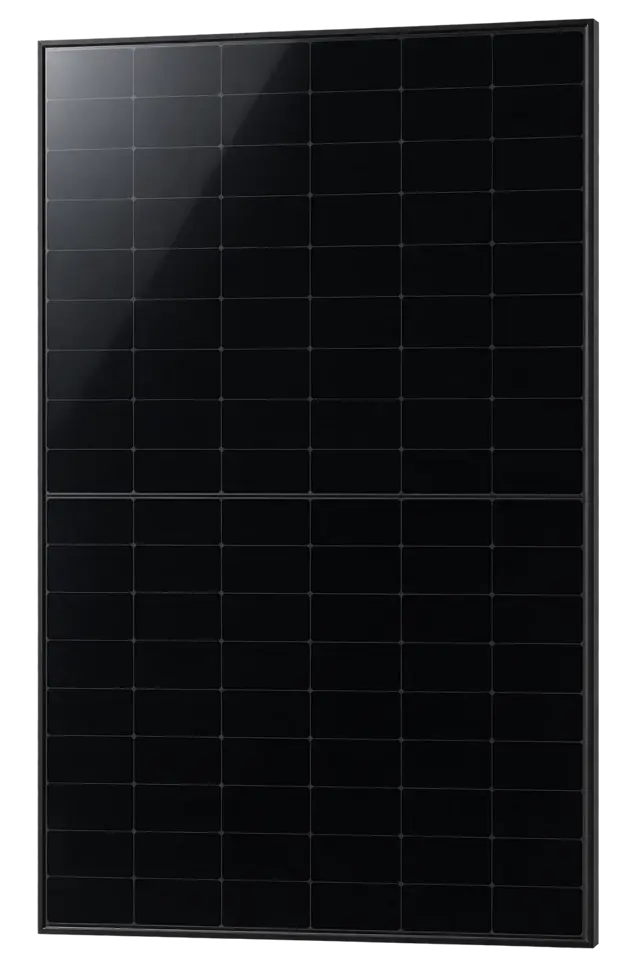
Premium all-black HPBC 2.0 rooftop module with extended warranty, around 450 W and 23 % efficiency.
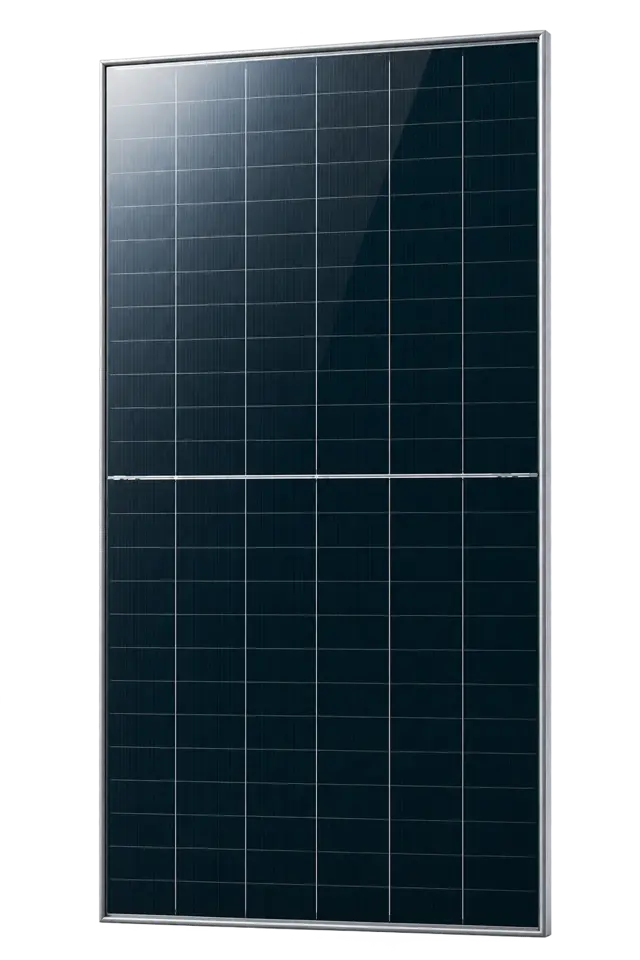
N-type TOPCon bifacial dual-glass module, 695–720 W, 23.2 % efficiency. Our utility-scale reference product.
