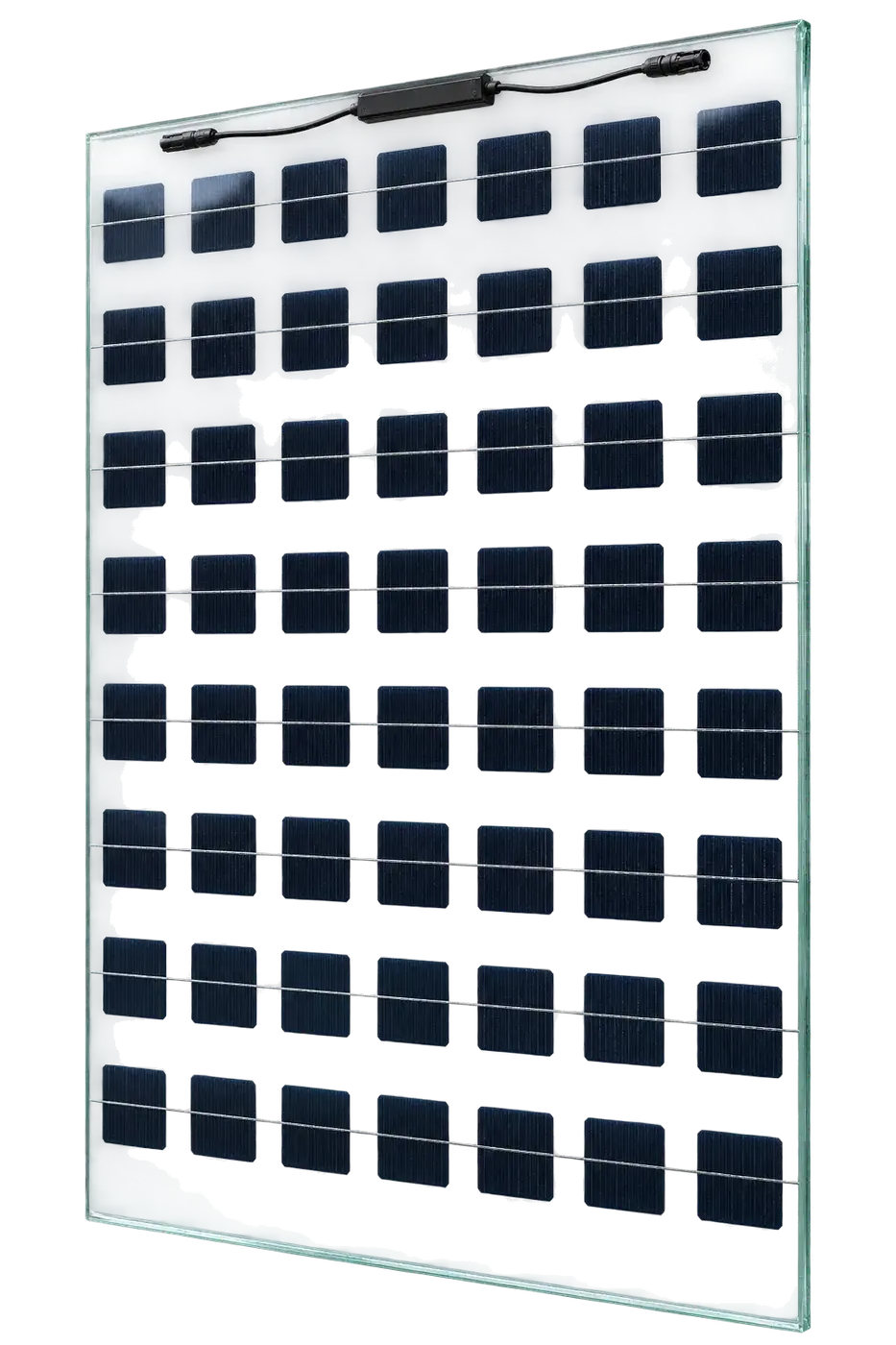
In the Gulf, the problem in a greenhouse is usually too much sun, not too little: summer irradiance and heat stress crops and drive up cooling and water demand. A greenhouse module with around 50–60 % open area spreads chequered shade across the crop, cuts peak heat gain and produces electricity for fans, pad-and-pan cooling and pumps on the same site. Leafy greens, herbs, strawberries and many nursery plants tolerate this level of shading well; fruiting crops such as tomatoes and cucumbers need careful layout, often with PV on only part of the roof.
Output is about 200 W per standard-size module. Mount modules in the greenhouse glazing bars with gaskets suited to the profile, keep a slope that lets rain and condensate drain, and use cables and connectors rated for high humidity inside the greenhouse. Plan cleaning access from the outside — dust on greenhouse roofs reduces both crop light and energy. An agronomist should review the shading pattern for the chosen crop before final design.
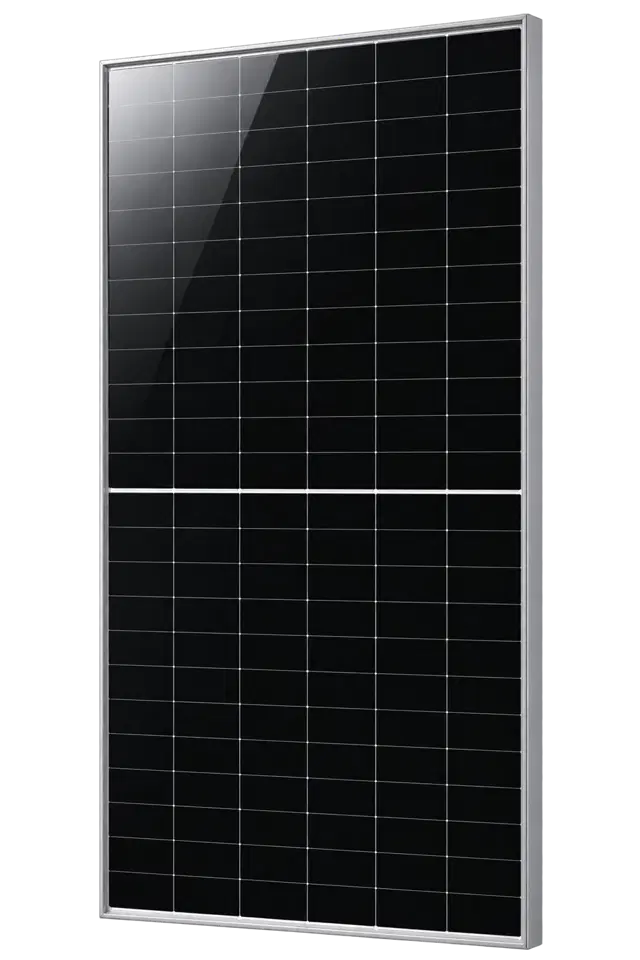
Utility-scale back-contact (HPBC 2.0) bifacial module, 640–670 W class, up to 24.8 % efficiency.
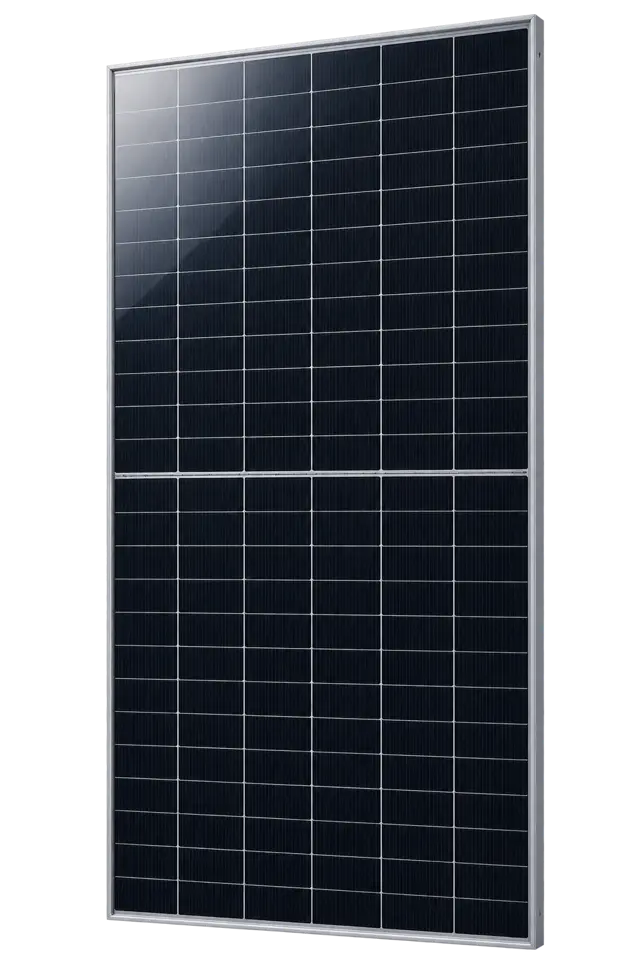
Bifacial dual-glass N-type HPDC module for ground-mount plants, 600–625 W, 23.0 % efficiency.
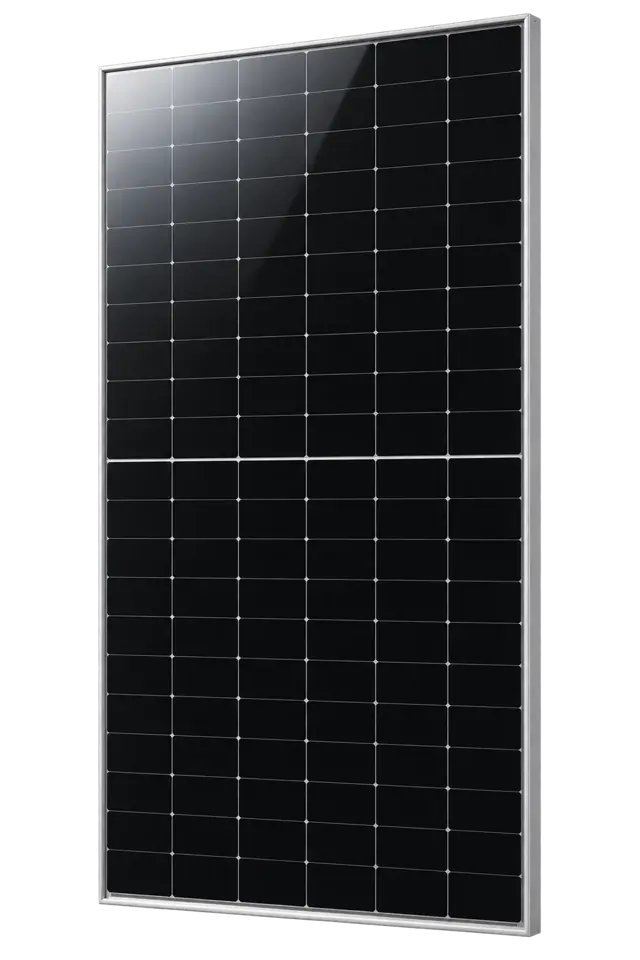
Monofacial HPBC module for commercial & industrial rooftops, 570–595 W, 22.8 % efficiency.
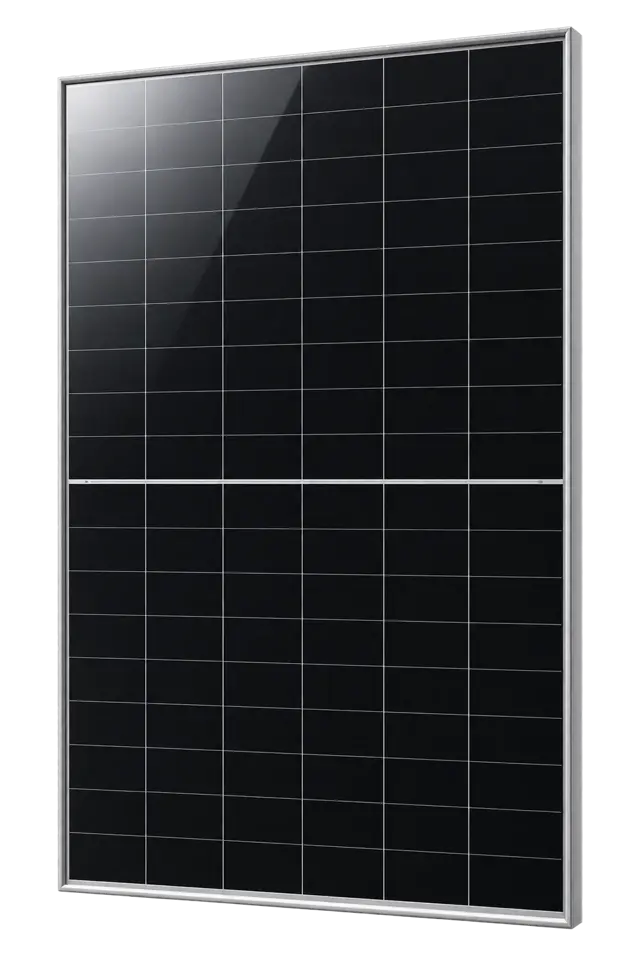
Residential back-contact rooftop module, 455–485 W, 23.3 % efficiency with anti-shading design.
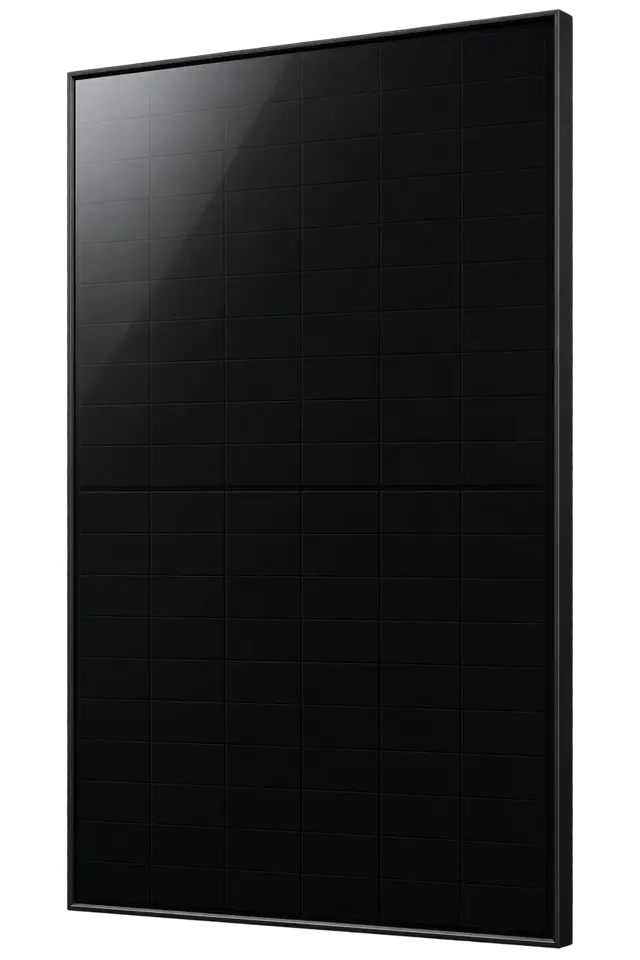
All-black aesthetic version for premium villas, 445–465 W, 22.5 % efficiency.
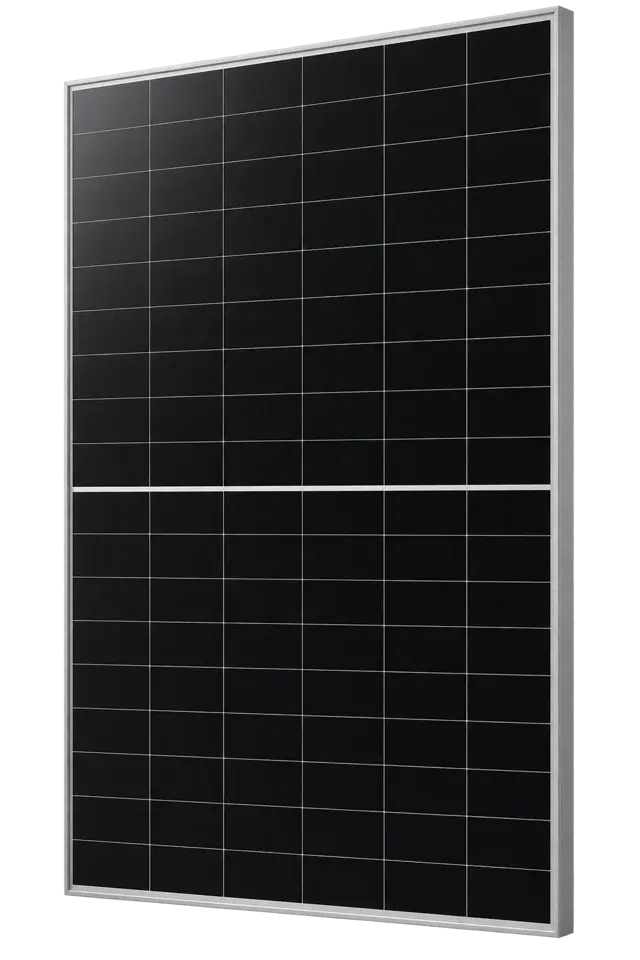
Residential HPBC 2.0 back-contact module, 54-cell format, around 480 W with strong partial-shade behaviour.
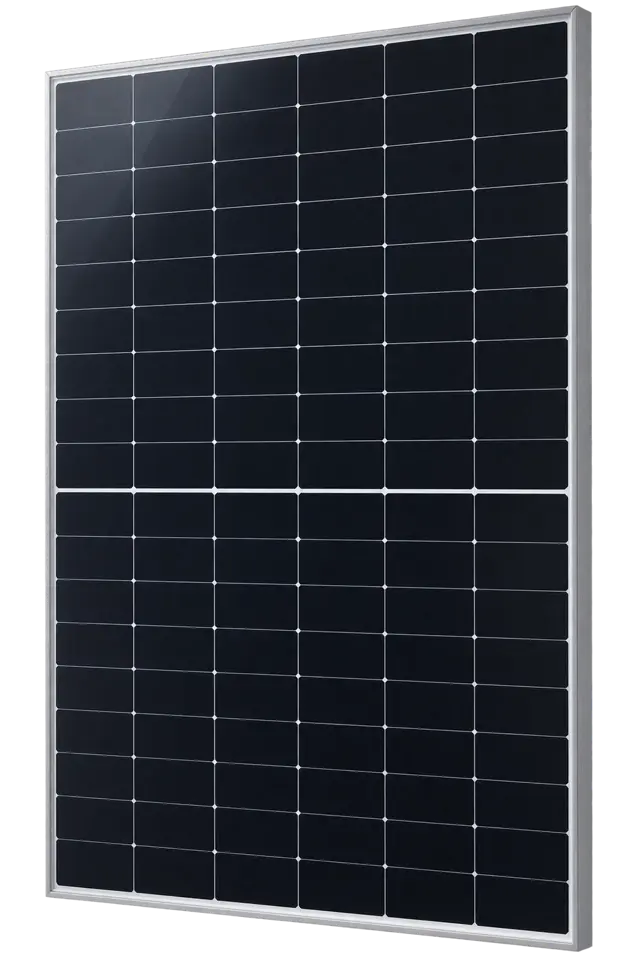
Rooftop HPBC back-contact module on 182 mm wafers, 415–435 W, around 22 % efficiency.
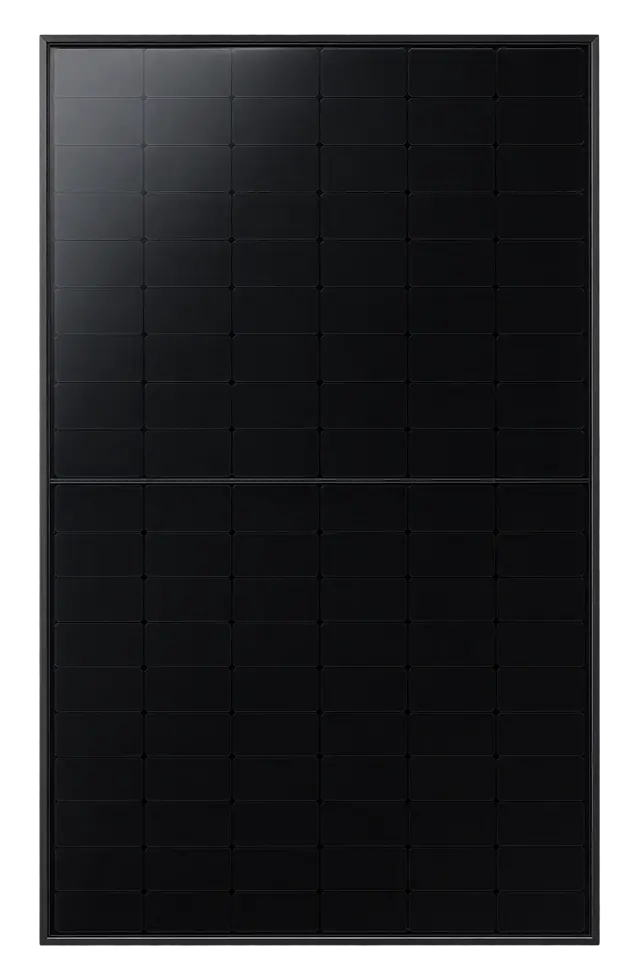
All-black residential back-contact module with black frame and backsheet, around 420 W.
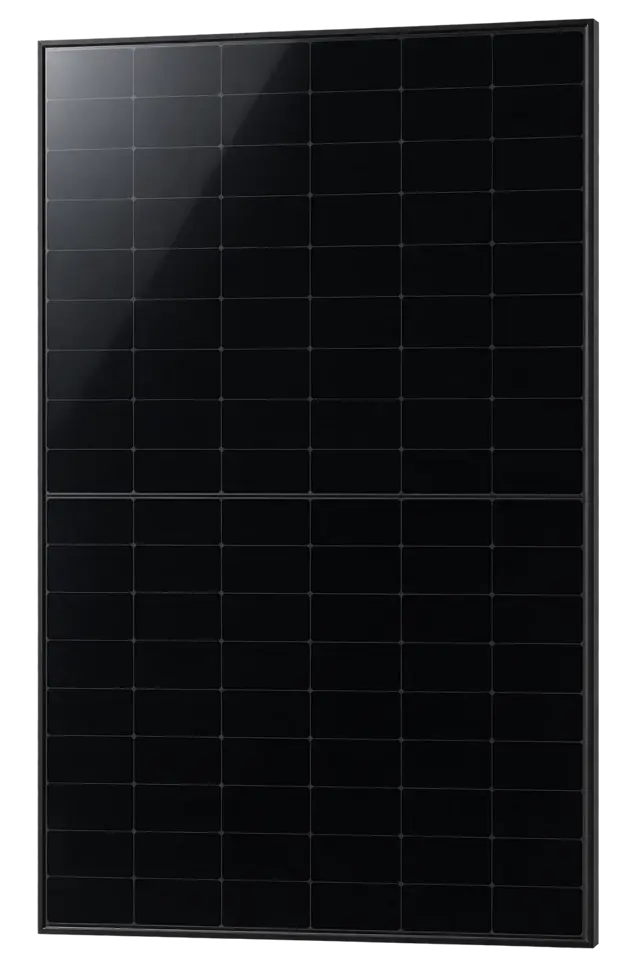
Premium all-black HPBC 2.0 rooftop module with extended warranty, around 450 W and 23 % efficiency.
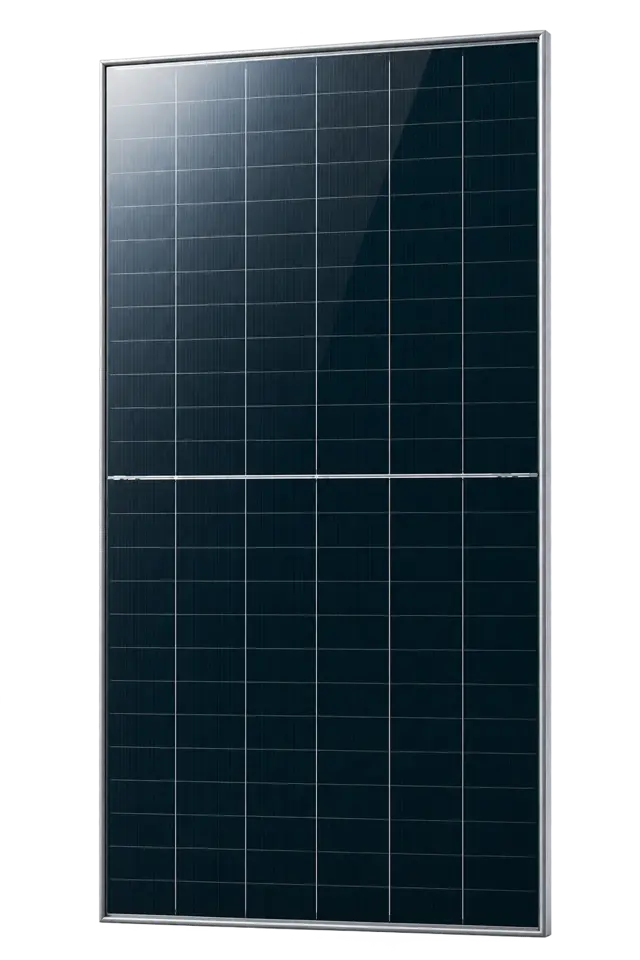
N-type TOPCon bifacial dual-glass module, 695–720 W, 23.2 % efficiency. Our utility-scale reference product.
