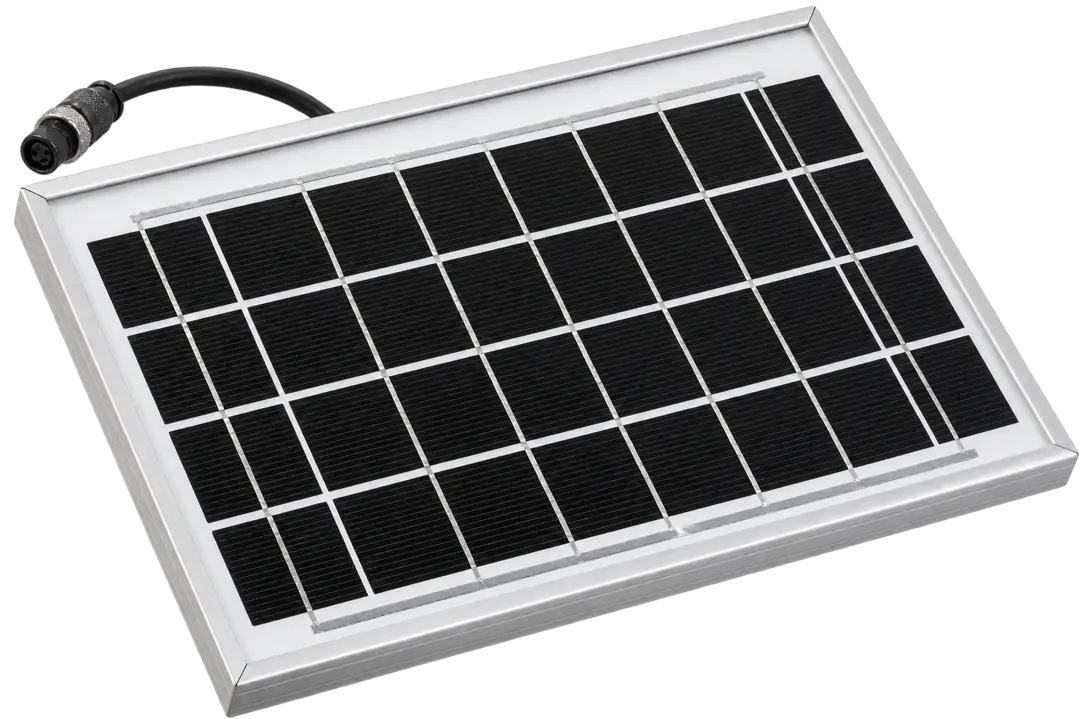
A 10 W module is built from 36 small cut mono cells in series, giving about 18 V at the maximum power point — enough headroom to charge a 12 V lead-acid or LiFePO4 battery through a small PWM controller. In practice it delivers 40–60 Wh per day in the Gulf, which suits loads in the milliamp range: gate and barrier motors on standby, wireless cameras with low duty cycles, telemetry sensors, electric-fence energisers and keeping a parked vehicle or boat battery topped up.
Always use a charge controller unless the panel's current is below roughly 1 % of battery capacity in amp-hours (a 10 W panel on a 100 Ah battery is borderline). Mount it facing south at a tilt close to the latitude so dust washes off in the occasional rain, and keep the short junction-box leads out of direct sun where possible — the small plastic box sees surface temperatures above 70 °C in summer.
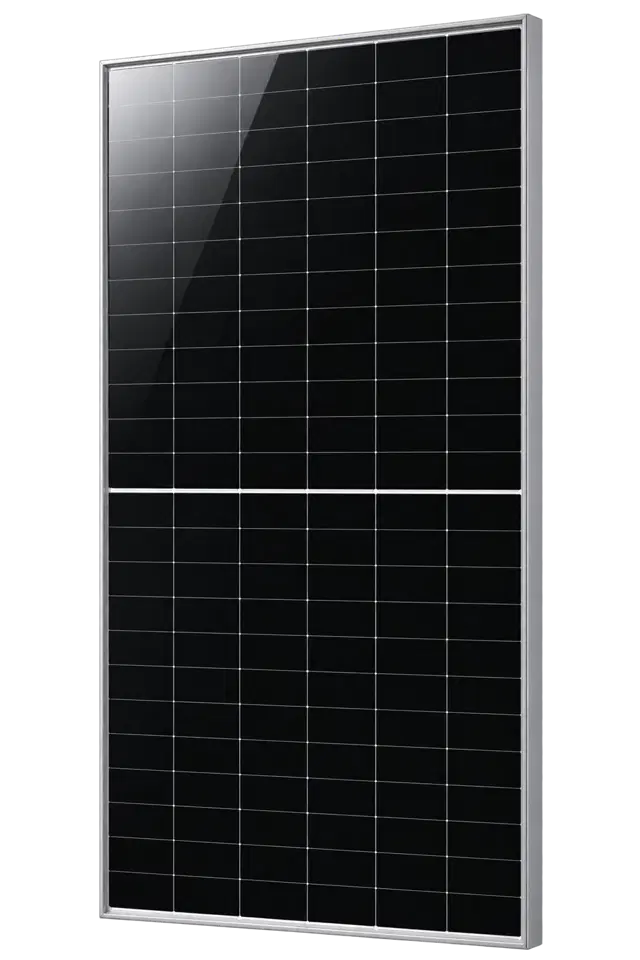
Utility-scale back-contact (HPBC 2.0) bifacial module, 640–670 W class, up to 24.8 % efficiency.
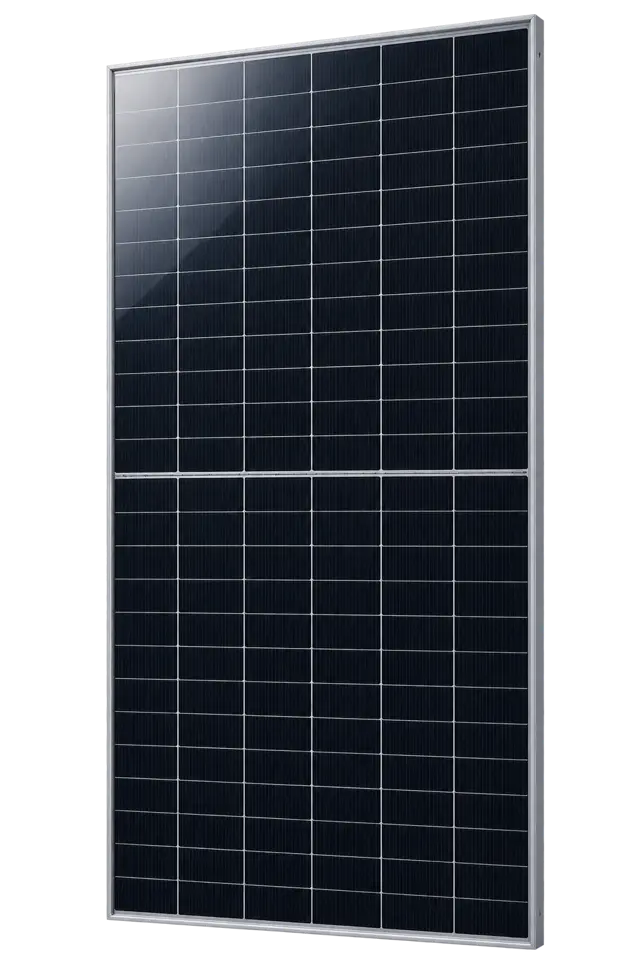
Bifacial dual-glass N-type HPDC module for ground-mount plants, 600–625 W, 23.0 % efficiency.
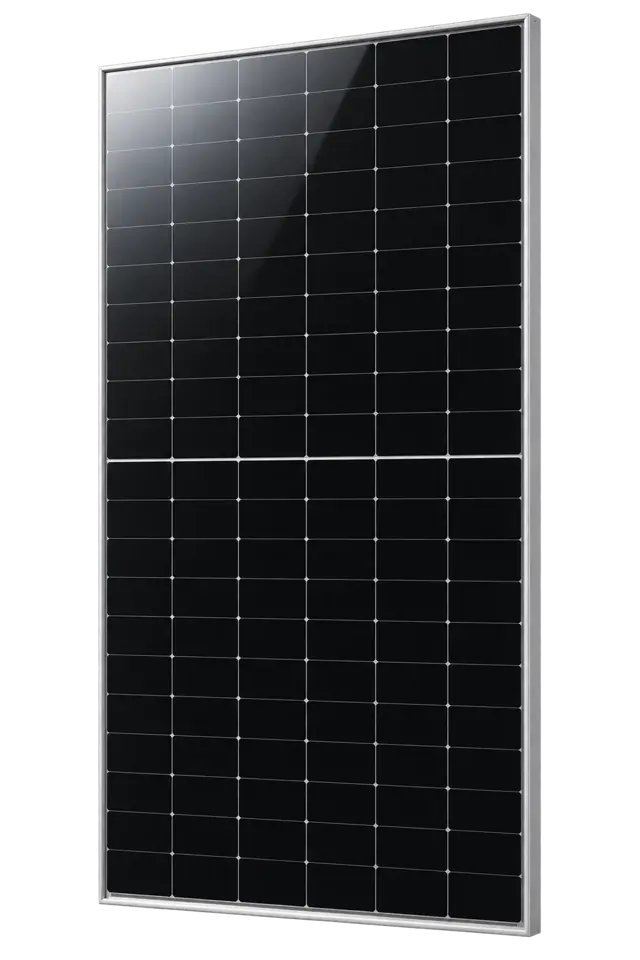
Monofacial HPBC module for commercial & industrial rooftops, 570–595 W, 22.8 % efficiency.
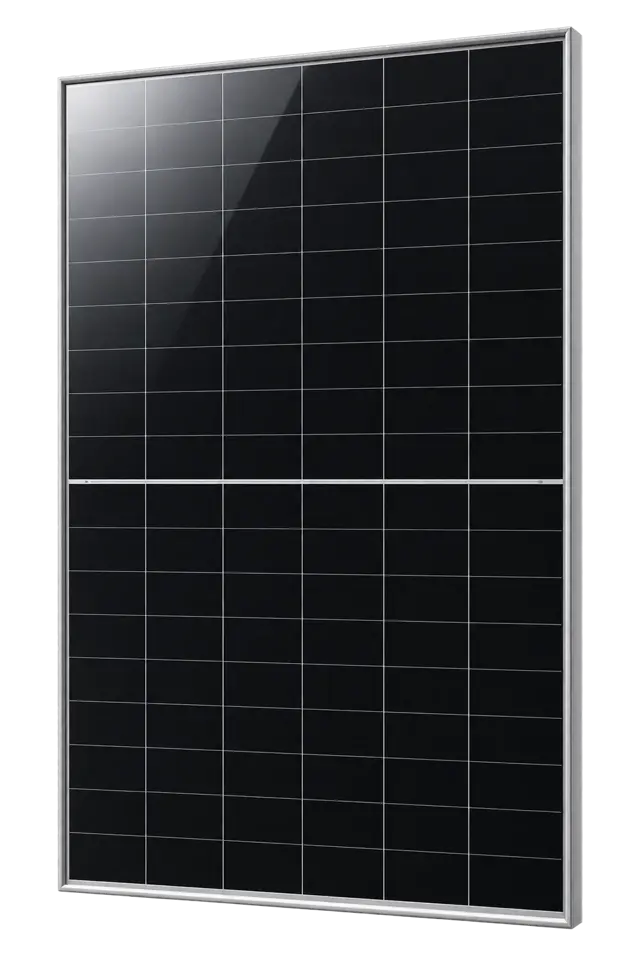
Residential back-contact rooftop module, 455–485 W, 23.3 % efficiency with anti-shading design.
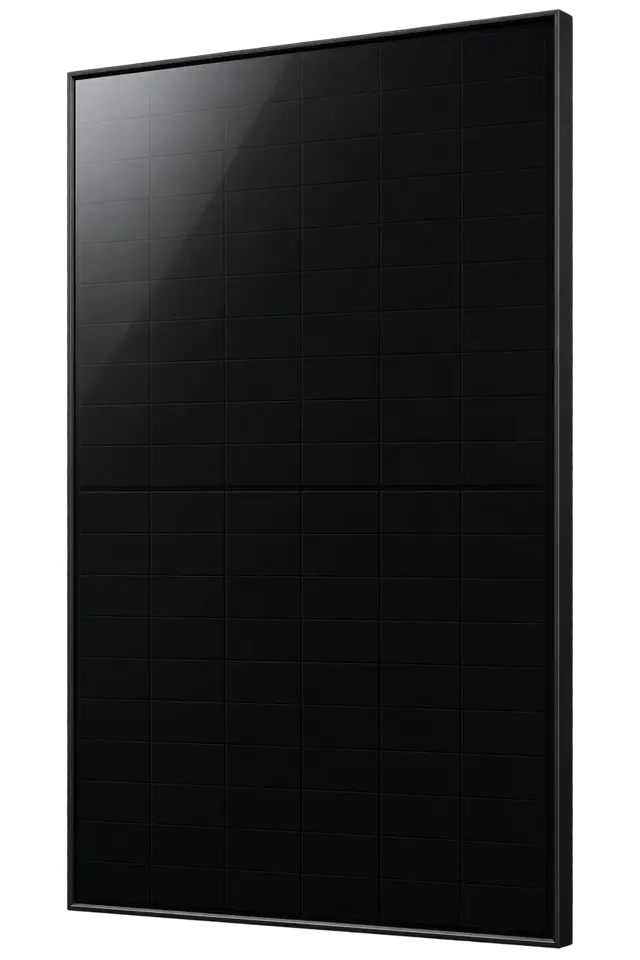
All-black aesthetic version for premium villas, 445–465 W, 22.5 % efficiency.
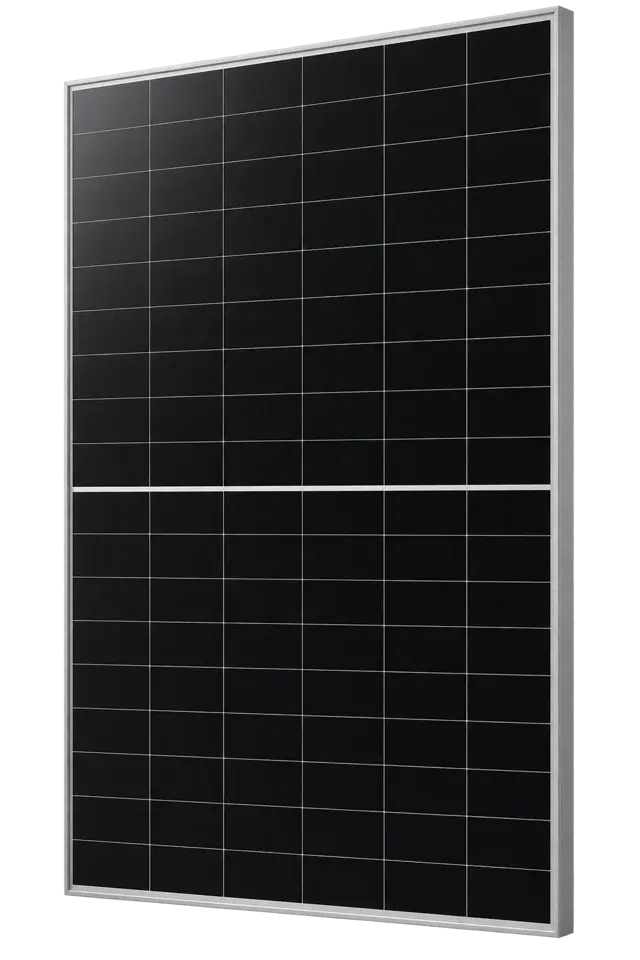
Residential HPBC 2.0 back-contact module, 54-cell format, around 480 W with strong partial-shade behaviour.
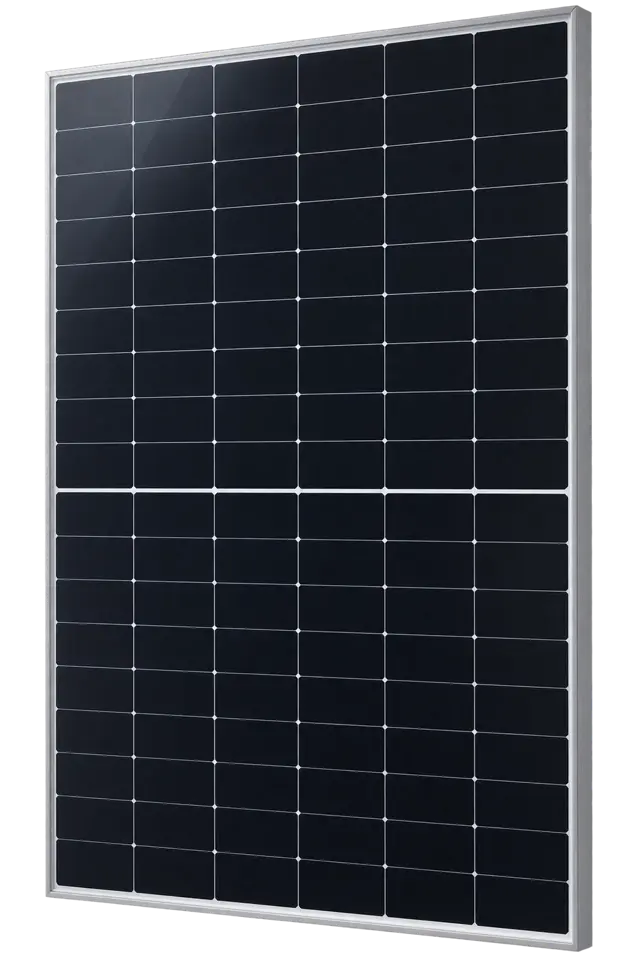
Rooftop HPBC back-contact module on 182 mm wafers, 415–435 W, around 22 % efficiency.
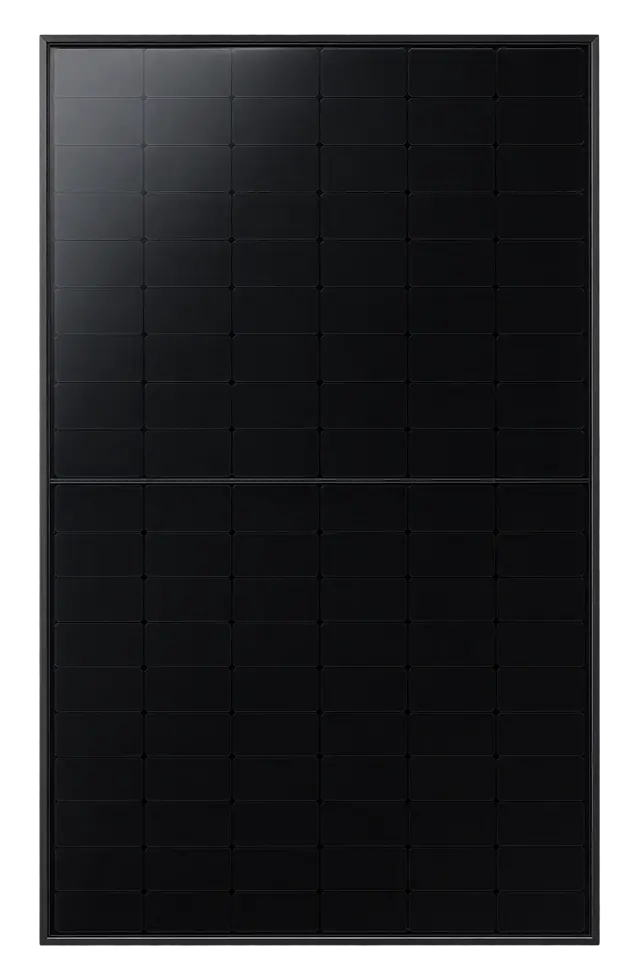
All-black residential back-contact module with black frame and backsheet, around 420 W.
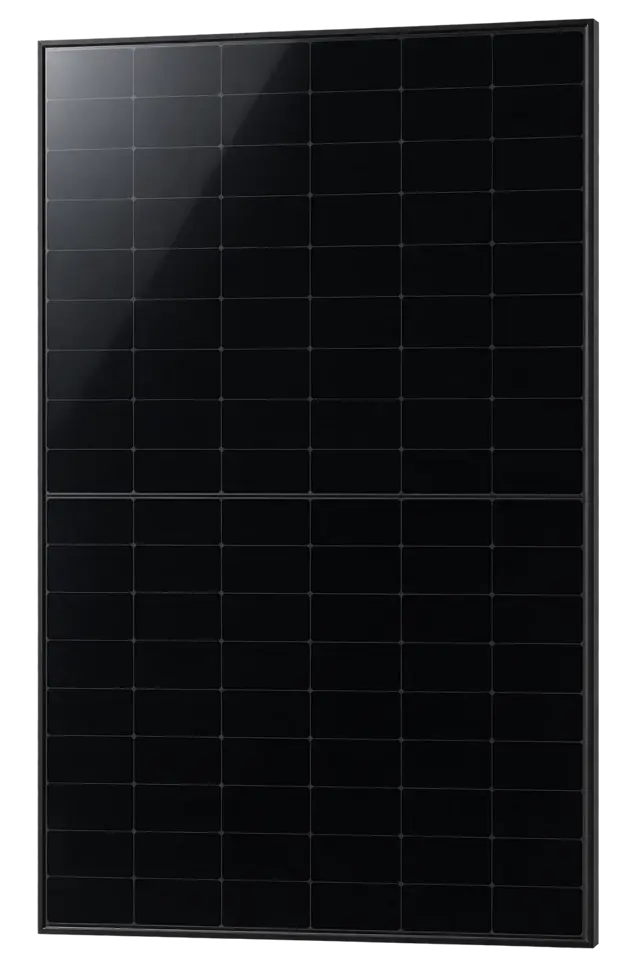
Premium all-black HPBC 2.0 rooftop module with extended warranty, around 450 W and 23 % efficiency.
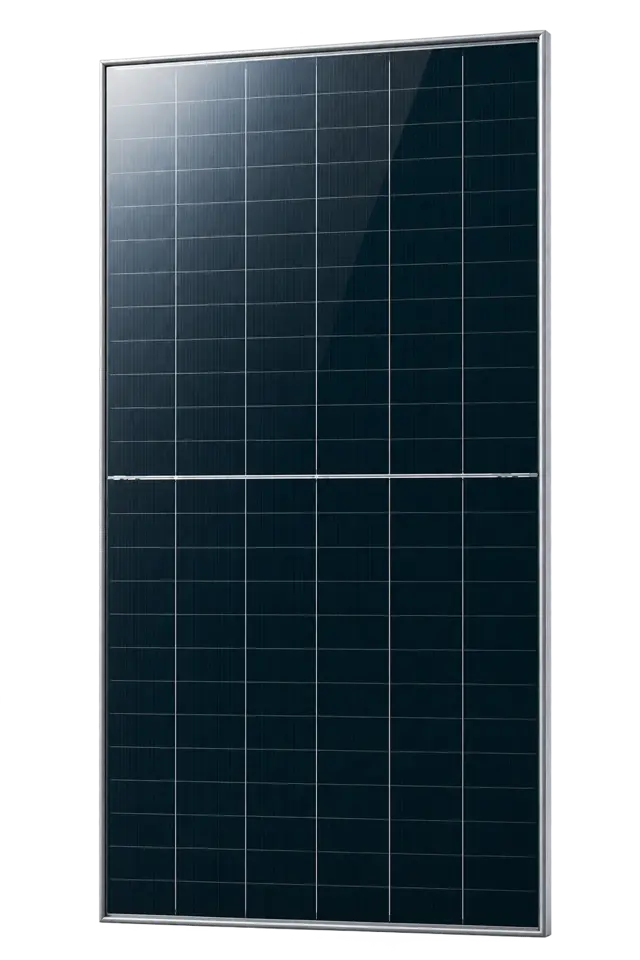
N-type TOPCon bifacial dual-glass module, 695–720 W, 23.2 % efficiency. Our utility-scale reference product.
