Lesson 8 · 5 min
Series vs parallel: wiring panels together
Series adds up the voltage, parallel adds up the current, and the inverter sets the limits.
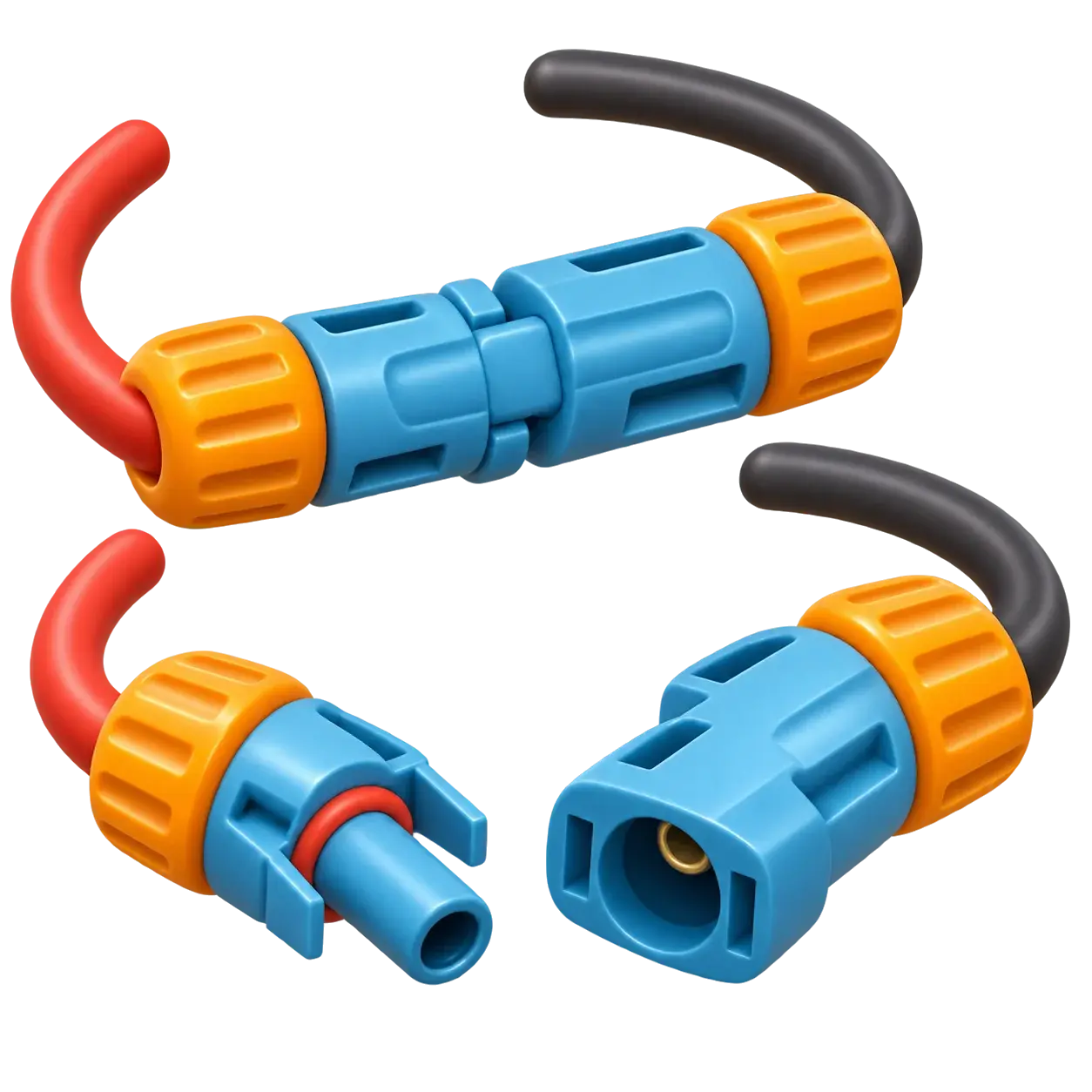
One panel on its own makes about 41 volts. To feed an inverter we connect many panels together, and there are two ways to do it. In series, panels are joined in a chain, plus to minus, like batteries in a flashlight. The current stays the same (about 17.6 A), but the voltages add up: 20 panels in series make about 818 V. That chain is called a string.
In parallel, several strings are joined side by side. Now the voltage stays the same, but the currents add up: two strings give about 35 A, three give about 53 A. Power is still voltage × current, so both ways give more watts by different routes.
There is one trap. A panel's voltage goes up when it is cold. On a chilly, sunny morning, before any current flows, a string can reach a much higher voltage than normal. Every inverter has a maximum input voltage (often 1000 V or 1500 V), and going over it can destroy it. That is why designers count panels per string using the coldest morning of the year, not a normal day.
Try it yourself
Drag the sliders and watch the animation and numbers change.
Worked example
A ground-mounted system near Madrid uses panels with an open-circuit voltage (Voc) of 49.04 V, a temperature coefficient of −0.25 %/°C, and a 1500 V inverter. Winter mornings can reach −5 °C, which is 30 °C colder than the 25 °C test temperature. How many panels can go in one string?
- N = 1500 V ÷ (Voc × (1 + 0.0025 × (25 − Tmin)))
- = 1500 ÷ (49.04 × (1 + 0.0025 × 30))
- = 1500 ÷ 52.72
- = 28.45 → 28 panels
What this means: Always round down: 28 panels per string. With 29 the voltage on a freezing morning could pass 1500 V and damage the inverter.
Quick check
Pick an answer to see at once whether it is correct.