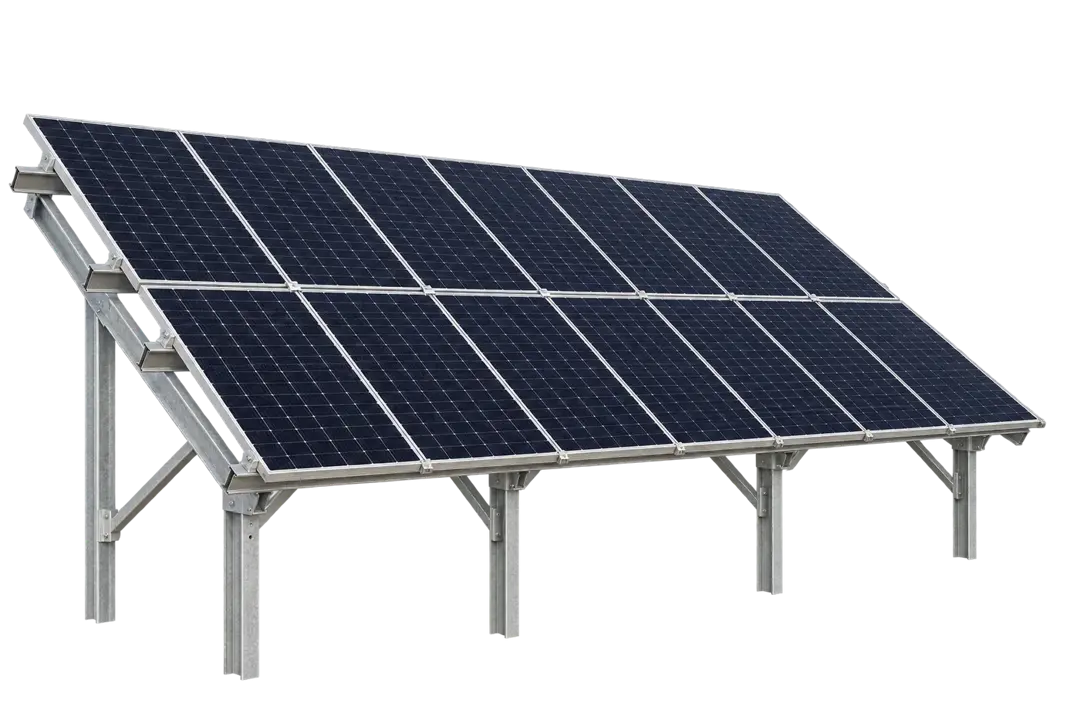
Fixed-tilt ground mounts are the workhorse of utility-scale PV. Modules are installed in tables of two or more rows in portrait (e.g. 2P) on cold-formed steel purlins, supported by rafters and driven piles. The tilt angle is fixed, usually close to the site latitude minus a few degrees to balance yield and row spacing: around 20–25° in the UAE.
The structure is made from S350GD–S550GD cold-formed sections, either hot-dip galvanized after fabrication (ISO 1461, ≥80 µm) or pre-coated with Zn-Al-Mg (ZAM), which gives equal or better protection with a thinner, self-healing layer at cut edges. Foundations are typically driven C- or W-piles; ground screws or concrete footings are used on rock or loose sand.
Desert sites demand design for sandstorms, high wind gusts and soil with high chloride and sulfate content. A geotechnical survey and pull-out tests define pile depth; corrosion category C4 is the usual minimum, and C5 near the coast. Price is per kWp of structure delivered, excluding pile driving and installation.

Complete rail-based kit for pitched and metal roofs: rails, splices, mid/end clamps, roof attachments and stainless fasteners, priced per kWp.

Heavy-gauge steel carport (single or double cantilever) that shades cars while generating power; per kWp, with optional waterproof decking and EV-charger provisions.
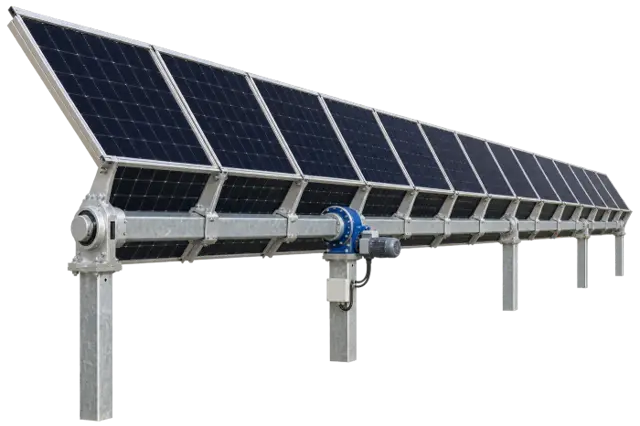
Horizontal single-axis tracker (1P or 2P) that follows the sun east to west for 15–25 % more energy than fixed tilt; with stow mode for sandstorms. Per kWp.
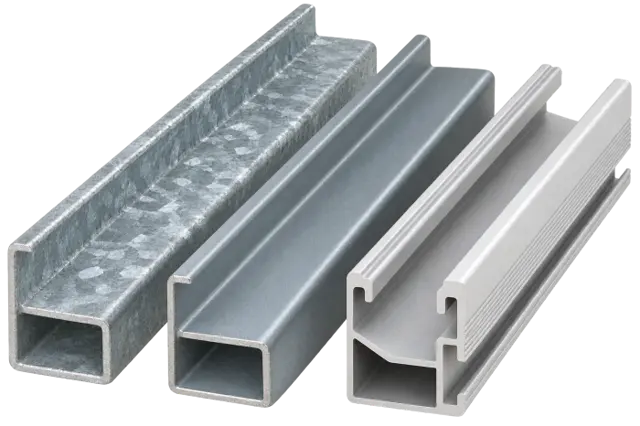
How to choose structure material and coating for corrosion categories C4 and C5, with an indicative price per tonne of coated cold-formed steel sections.
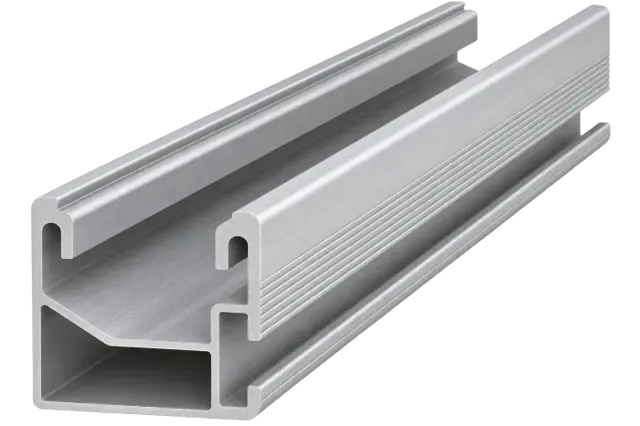
Extruded 6005-T5 anodized rail with T-slot for clamps and roof attachments; sold per meter (standard lengths 4.2 and 5.3 m).
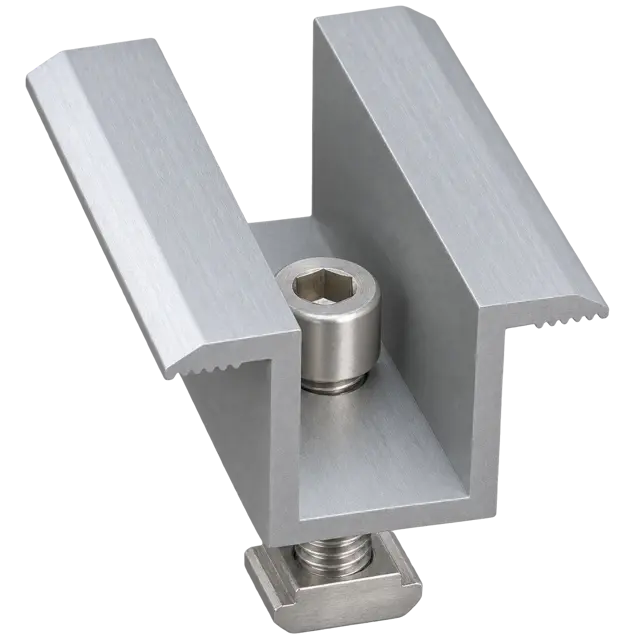
Aluminium mid clamp with hammer-head bolt, fixes two adjacent modules (30–40 mm frames) to the rail, with grounding teeth.
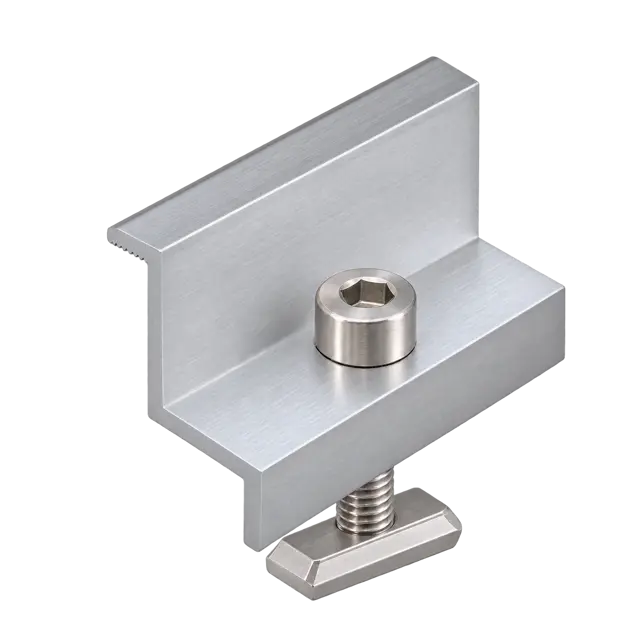
Aluminium end clamp that secures the outer edge of the first and last module in each row.
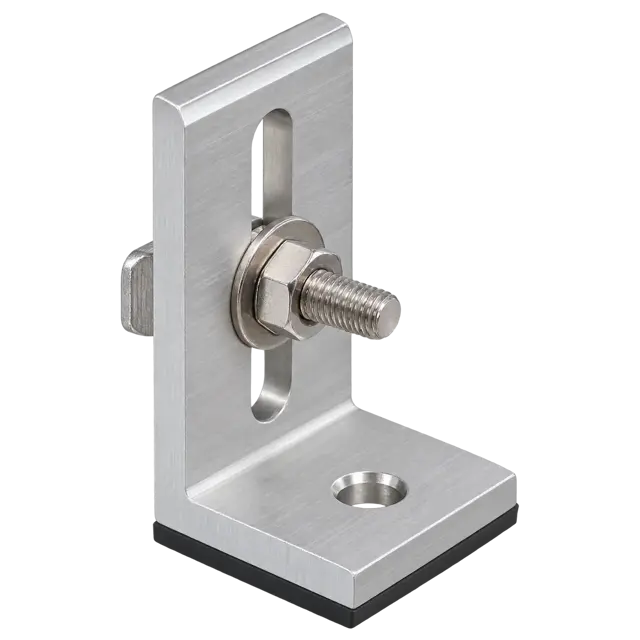
Aluminium L-foot for trapezoidal metal and flat-seam roofs, with EPDM pad and slotted hole for rail height adjustment.
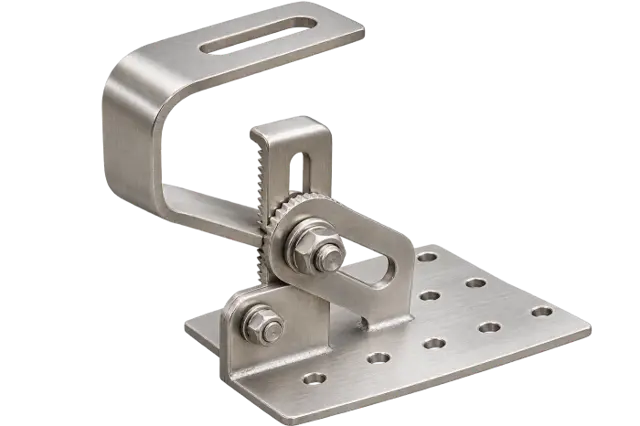
Adjustable stainless-steel hook that passes under roof tiles and fixes to the rafter, carrying the rail above the tiles.

Galvanized steel foundation post driven 1.5–2.5 m into the ground, or helical ground screw for rocky/sandy soils. No concrete needed.
