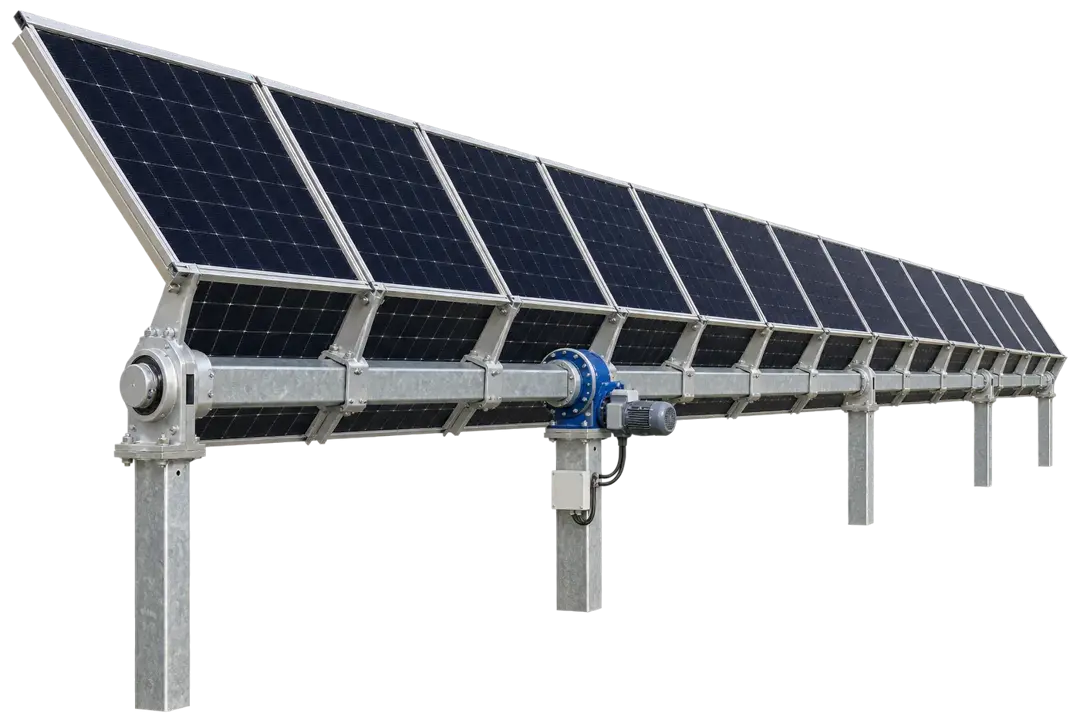
A horizontal single-axis tracker (HSAT) rotates rows of modules around a north–south torque tube, following the sun from about −55° in the morning to +55° in the evening. In high-irradiance, low-latitude regions such as the UAE and Saudi Arabia, this raises annual yield by roughly 15–25 % versus fixed tilt and flattens the daily production curve.
Each row is driven by a slew drive or linear actuator controlled by an astronomical algorithm with backtracking to avoid inter-row shading at low sun angles. Combined with bifacial modules, trackers gain additional rear-side energy from the bright desert ground.
Key design points are wind stow (rows go flat or to a safe angle above a set wind speed), dust-resistant bearings and drives, self-powered controllers with small PV modules, and terrain-following piles. Trackers now dominate new utility-scale tenders in the Middle East because the extra energy outweighs the higher capital and maintenance cost.

Complete rail-based kit for pitched and metal roofs: rails, splices, mid/end clamps, roof attachments and stainless fasteners, priced per kWp.
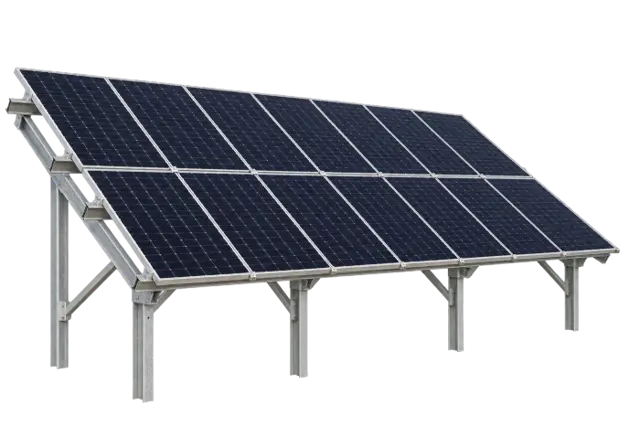
Steel ground-mount structure for utility and commercial fields: driven piles, rafters and purlins in hot-dip galvanized or Zn-Al-Mg coated steel, priced per kWp.

Heavy-gauge steel carport (single or double cantilever) that shades cars while generating power; per kWp, with optional waterproof decking and EV-charger provisions.
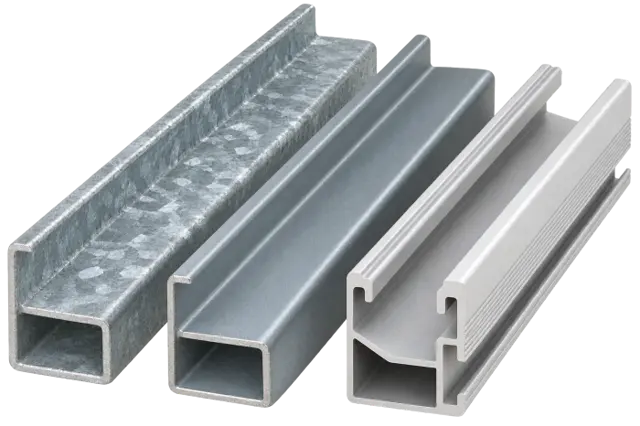
How to choose structure material and coating for corrosion categories C4 and C5, with an indicative price per tonne of coated cold-formed steel sections.
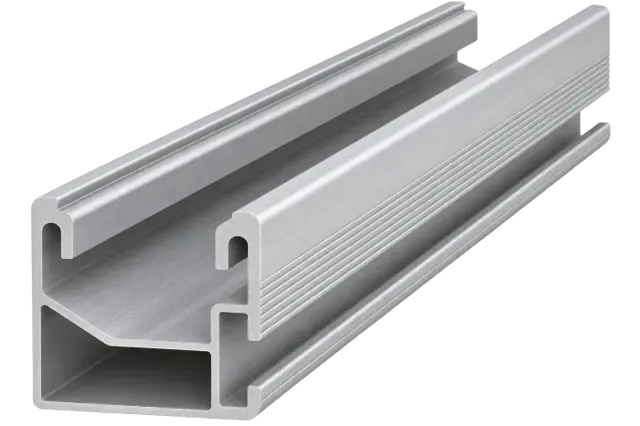
Extruded 6005-T5 anodized rail with T-slot for clamps and roof attachments; sold per meter (standard lengths 4.2 and 5.3 m).
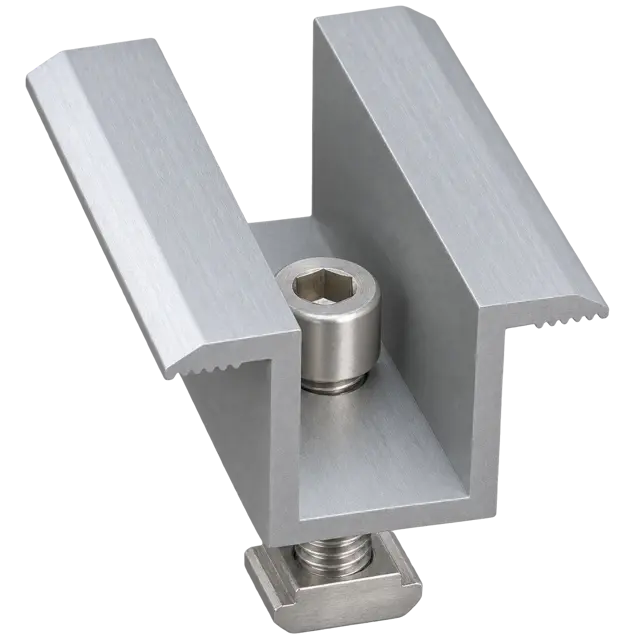
Aluminium mid clamp with hammer-head bolt, fixes two adjacent modules (30–40 mm frames) to the rail, with grounding teeth.
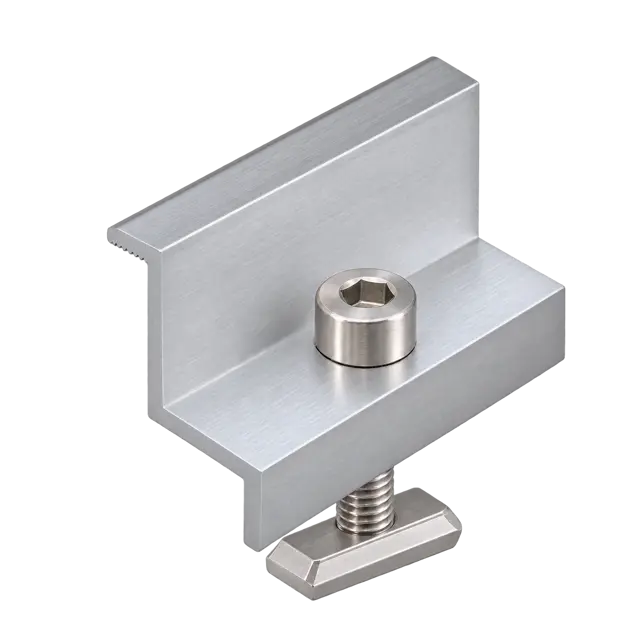
Aluminium end clamp that secures the outer edge of the first and last module in each row.
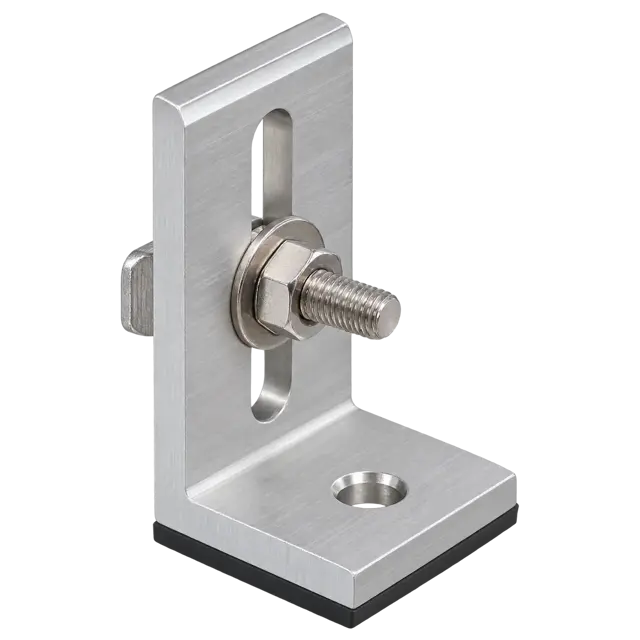
Aluminium L-foot for trapezoidal metal and flat-seam roofs, with EPDM pad and slotted hole for rail height adjustment.
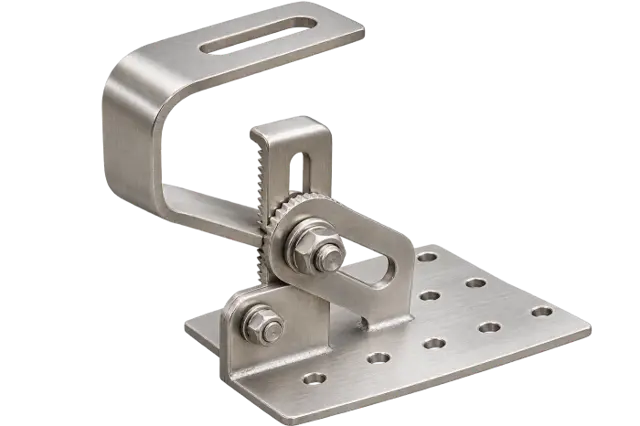
Adjustable stainless-steel hook that passes under roof tiles and fixes to the rafter, carrying the rail above the tiles.

Galvanized steel foundation post driven 1.5–2.5 m into the ground, or helical ground screw for rocky/sandy soils. No concrete needed.
