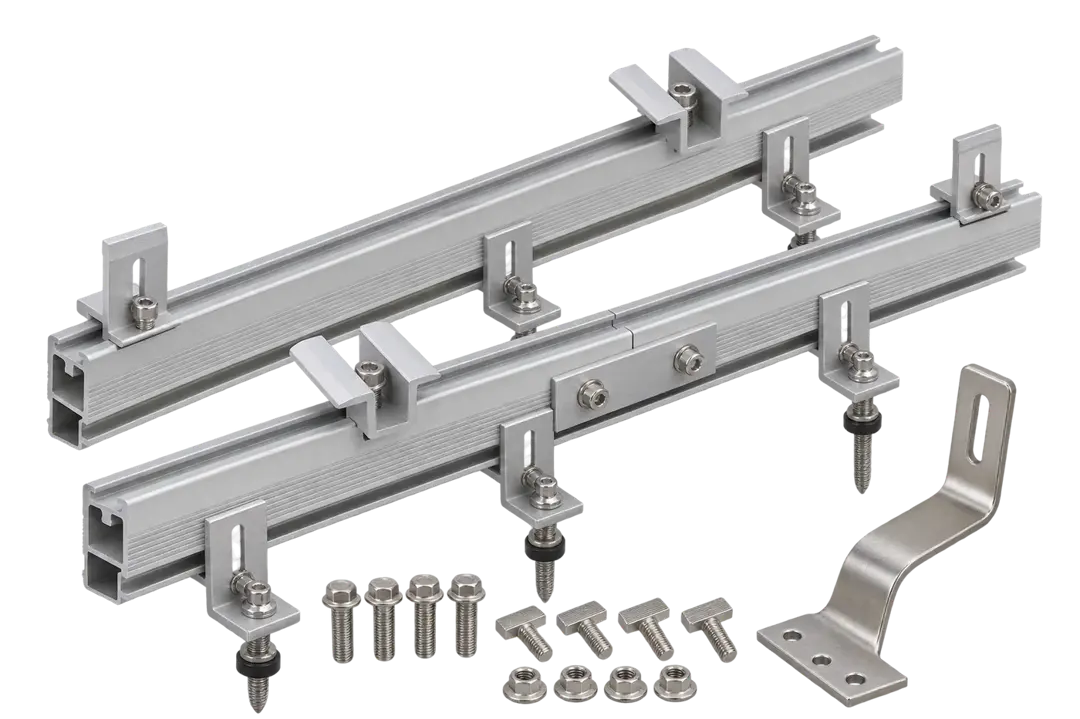
A rooftop rail system is the most common way to fix PV modules to residential and commercial roofs. Extruded aluminium rails (typically 6005-T5 alloy) run perpendicular to the module's long side and are attached to the roof through L-feet, tile hooks or hanger bolts. Modules are then clamped onto the rails with mid clamps between modules and end clamps at the row ends.
This kit is sized per kWp and includes rails, rail splices, clamps for 30–35 mm frames, roof attachments, grounding hardware and A2-70 stainless fasteners. Aluminium is light, needs no coating and resists corrosion well, which makes it ideal for roofs where added load must be minimized.
In the GCC, structures must be designed for high wind speeds and for coastal salt exposure near the Gulf. Rail spans and attachment spacing should be calculated to EN 1991 or ASCE 7 wind loads, and stainless fasteners should be isolated from aluminium where moisture is present to avoid galvanic corrosion.
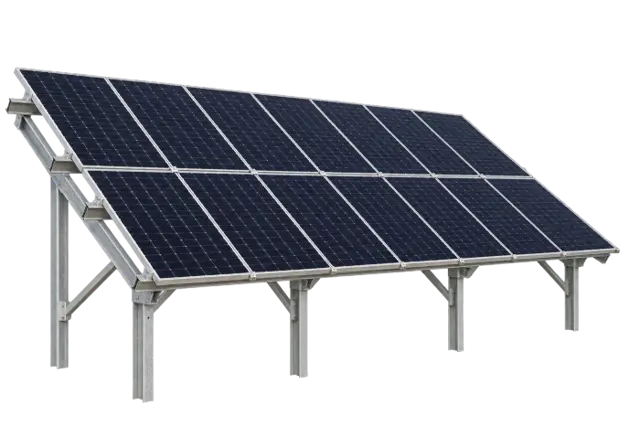
Steel ground-mount structure for utility and commercial fields: driven piles, rafters and purlins in hot-dip galvanized or Zn-Al-Mg coated steel, priced per kWp.

Heavy-gauge steel carport (single or double cantilever) that shades cars while generating power; per kWp, with optional waterproof decking and EV-charger provisions.
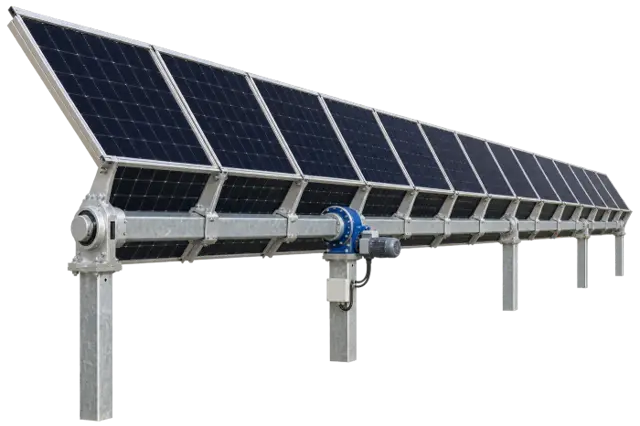
Horizontal single-axis tracker (1P or 2P) that follows the sun east to west for 15–25 % more energy than fixed tilt; with stow mode for sandstorms. Per kWp.
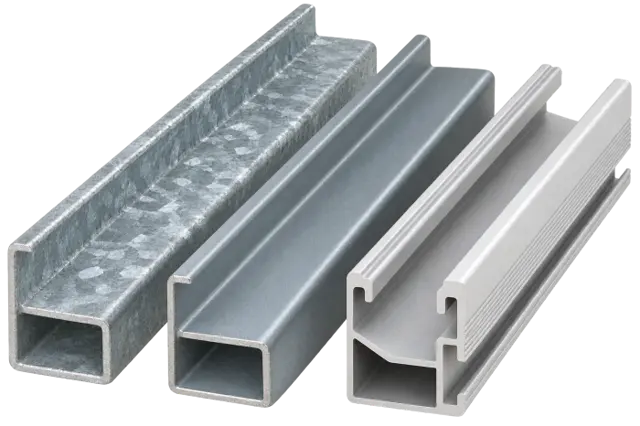
How to choose structure material and coating for corrosion categories C4 and C5, with an indicative price per tonne of coated cold-formed steel sections.
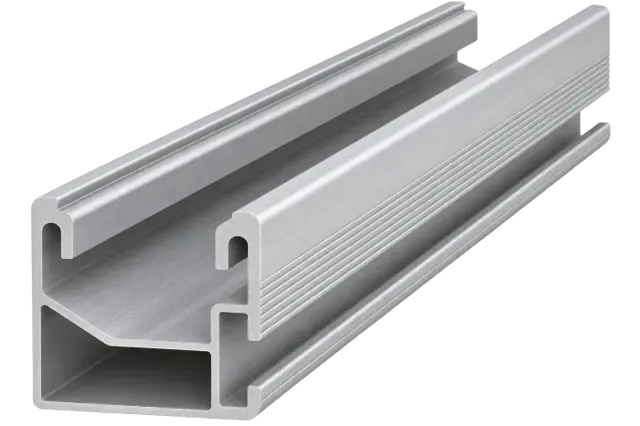
Extruded 6005-T5 anodized rail with T-slot for clamps and roof attachments; sold per meter (standard lengths 4.2 and 5.3 m).
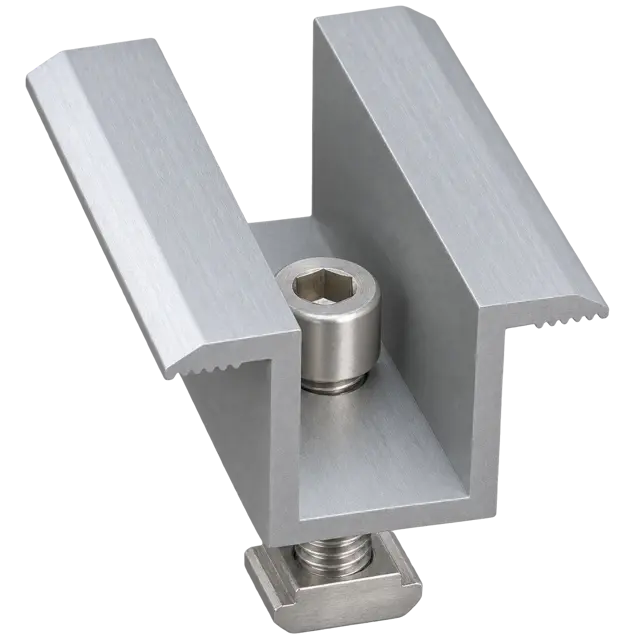
Aluminium mid clamp with hammer-head bolt, fixes two adjacent modules (30–40 mm frames) to the rail, with grounding teeth.
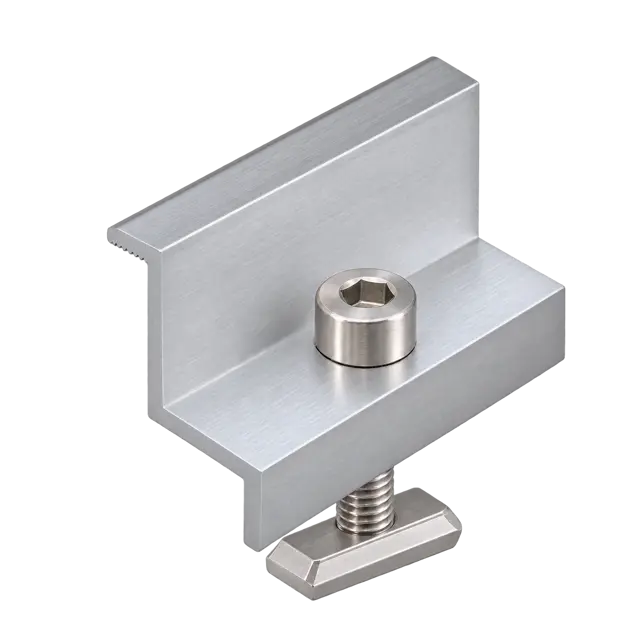
Aluminium end clamp that secures the outer edge of the first and last module in each row.
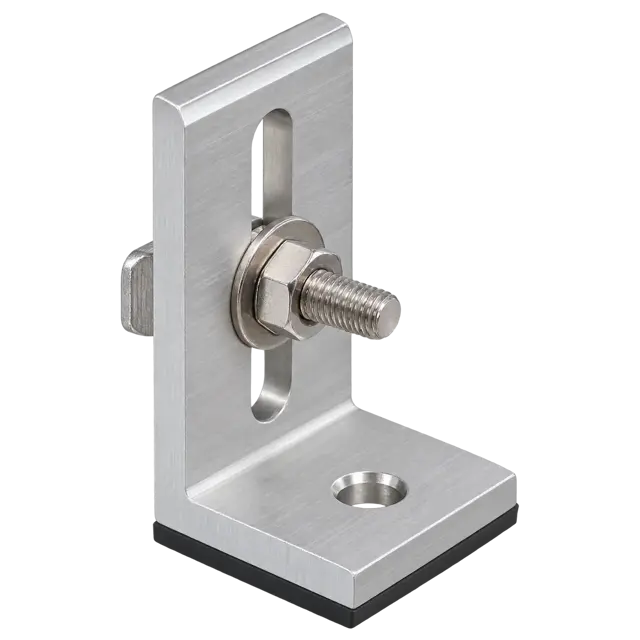
Aluminium L-foot for trapezoidal metal and flat-seam roofs, with EPDM pad and slotted hole for rail height adjustment.
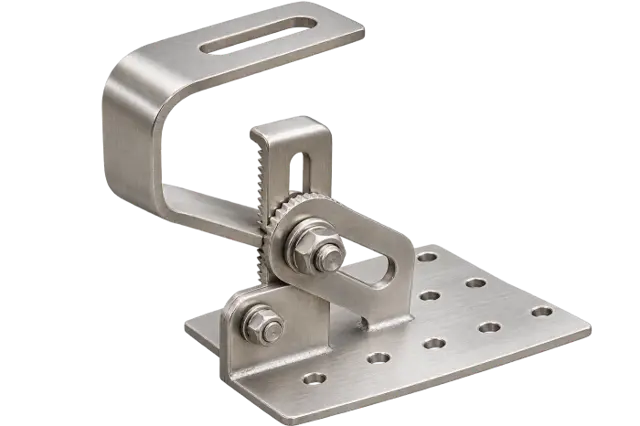
Adjustable stainless-steel hook that passes under roof tiles and fixes to the rafter, carrying the rail above the tiles.

Galvanized steel foundation post driven 1.5–2.5 m into the ground, or helical ground screw for rocky/sandy soils. No concrete needed.
