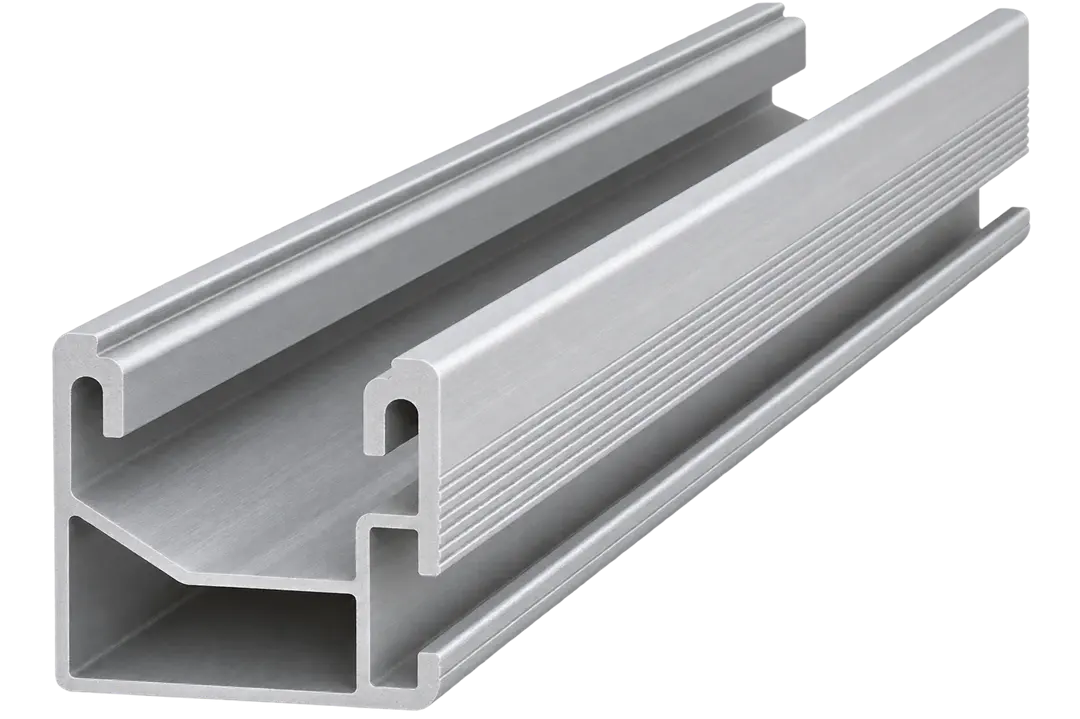
The rail is the backbone of rooftop systems. Its profile height (typically 40–50 mm) determines the allowable span between roof attachments; heavier profiles allow fewer roof penetrations. The anodized finish (≥10 µm) protects against UV and coastal air, and the upper T-slot accepts hammer-head bolts so clamps can be positioned anywhere along the rail.

Complete rail-based kit for pitched and metal roofs: rails, splices, mid/end clamps, roof attachments and stainless fasteners, priced per kWp.
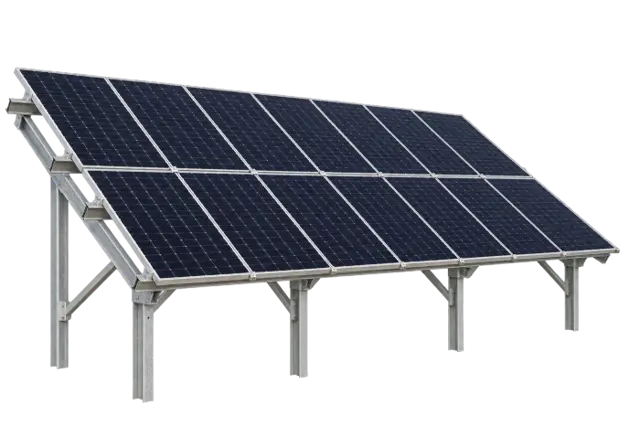
Steel ground-mount structure for utility and commercial fields: driven piles, rafters and purlins in hot-dip galvanized or Zn-Al-Mg coated steel, priced per kWp.

Heavy-gauge steel carport (single or double cantilever) that shades cars while generating power; per kWp, with optional waterproof decking and EV-charger provisions.
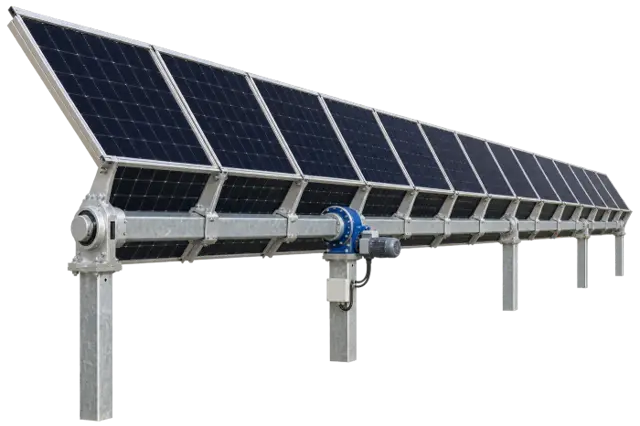
Horizontal single-axis tracker (1P or 2P) that follows the sun east to west for 15–25 % more energy than fixed tilt; with stow mode for sandstorms. Per kWp.
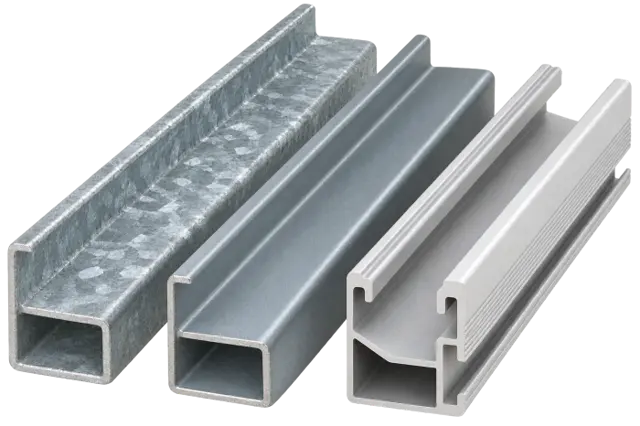
How to choose structure material and coating for corrosion categories C4 and C5, with an indicative price per tonne of coated cold-formed steel sections.
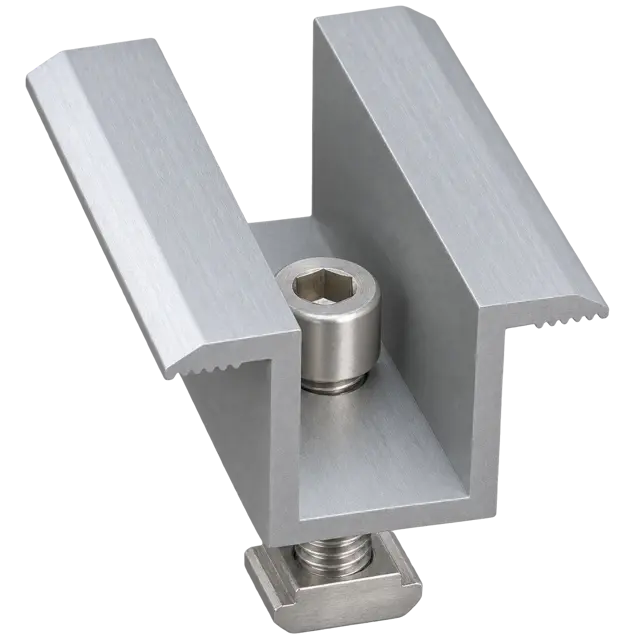
Aluminium mid clamp with hammer-head bolt, fixes two adjacent modules (30–40 mm frames) to the rail, with grounding teeth.
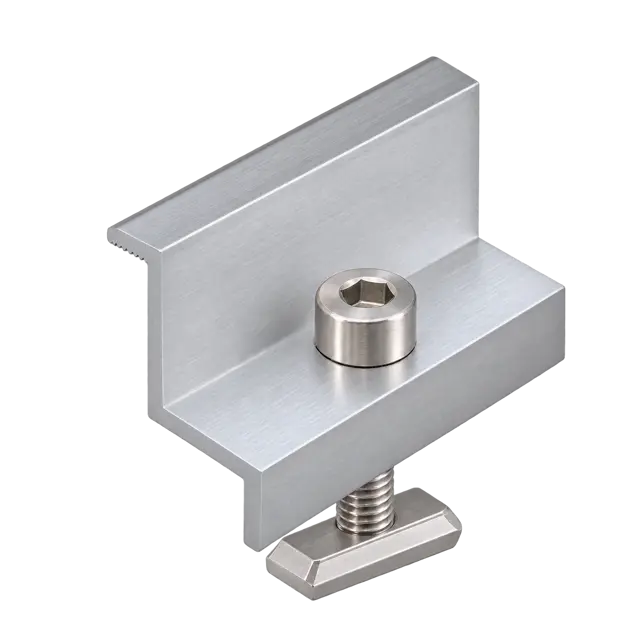
Aluminium end clamp that secures the outer edge of the first and last module in each row.
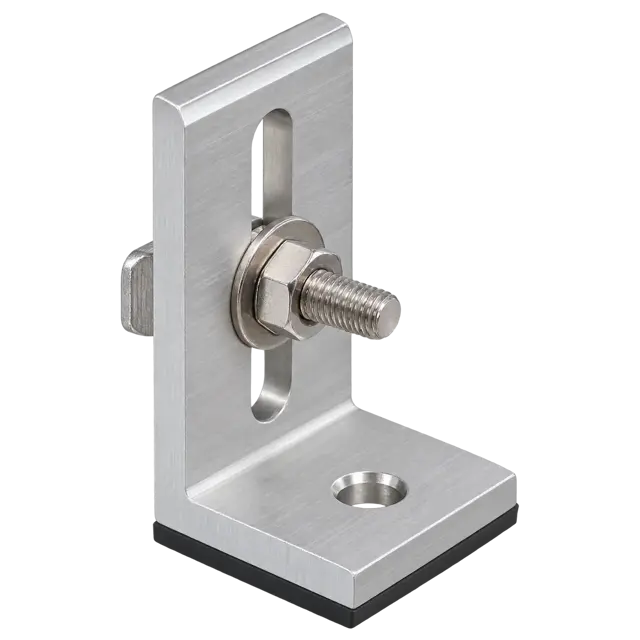
Aluminium L-foot for trapezoidal metal and flat-seam roofs, with EPDM pad and slotted hole for rail height adjustment.
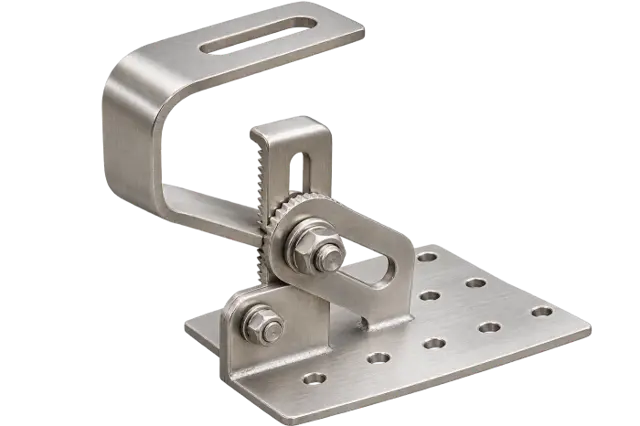
Adjustable stainless-steel hook that passes under roof tiles and fixes to the rafter, carrying the rail above the tiles.

Galvanized steel foundation post driven 1.5–2.5 m into the ground, or helical ground screw for rocky/sandy soils. No concrete needed.
