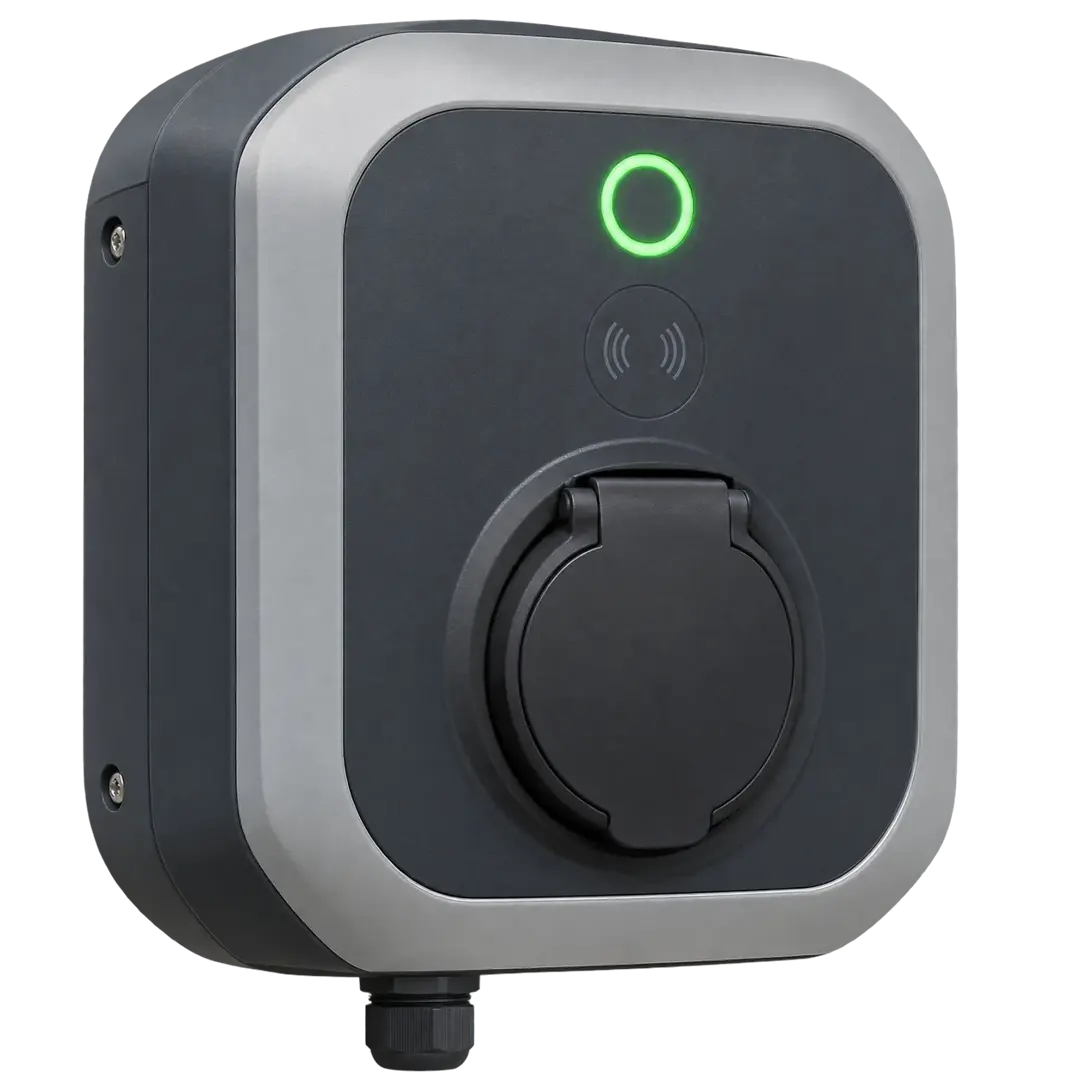
Most current EVs carry an 11 kW three-phase on-board charger, so an 11 kW wallbox delivers the car's full AC rate — around 60 km of range per hour — while drawing only 16 A per phase at 400 V. Spreading the load across three phases is gentler on the building supply than a 32 A single-phase unit and leaves headroom on villa and office connections. Features mirror the 7.4 kW model: Type 2 socket or cable, integrated 6 mA DC leakage detection, RFID or app start, OCPP 1.6J and solar-surplus control via CT or meter.
For PV integration, note that three-phase charging cannot drop below about 4.1 kW (3 × 6 A × 230 V). Better units switch automatically between one-phase and three-phase operation, so surplus charging can start at 1.4 kW in the morning and ramp to 11 kW at noon. Supply: 5-core 4–6 mm² Cu on a 20 A four-pole MCB with a Type A RCD (Type B where the charger lacks DC fault detection). In a 50 °C car park, check the derating curve and keep the unit out of direct afternoon sun.

Home wallbox with a Type 2 socket or tethered cable, solar-surplus charging mode and OCPP. The obvious next step after a rooftop PV system.
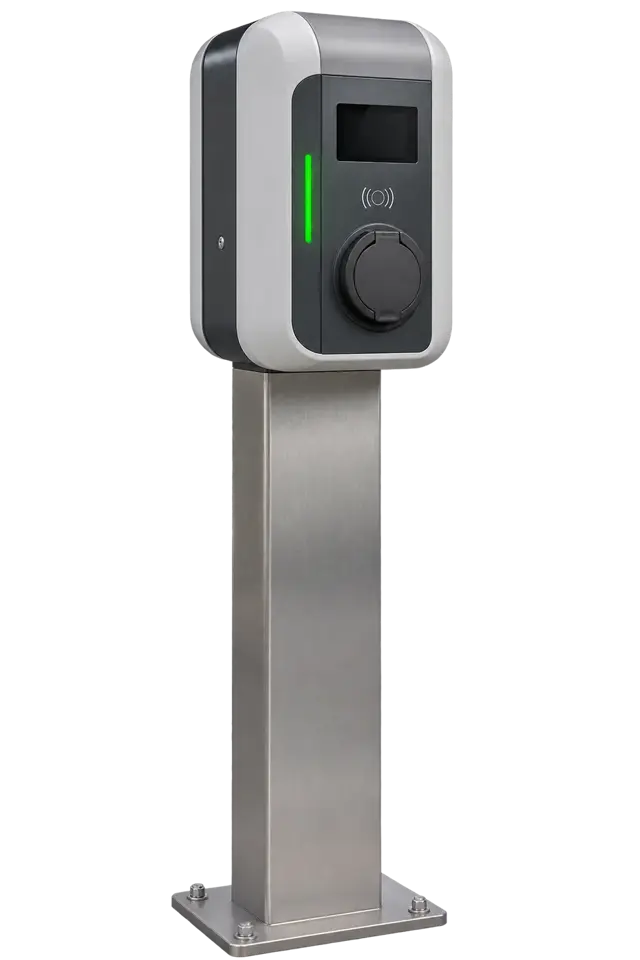
Networked 32 A three-phase charger for solar carports, workplaces, hotels and malls. Wall or pedestal mount, single or twin socket.

Floor-standing DC charger that adds about 100 km of range in 15–20 minutes, for fuel stations, fleet depots, malls and highway stops.

High-power twin-outlet DC charger that splits 120 kW dynamically between two cars. The standard unit for public hubs and fleet depots.
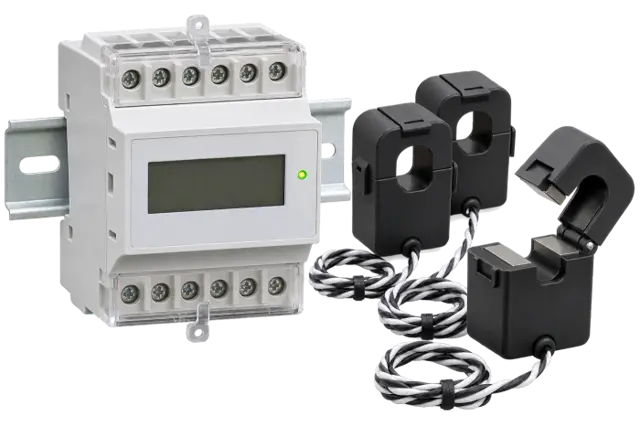
Three-phase meter and split-core CTs that tell the chargers how much capacity is free, so EVs charge fast, use solar surplus first and never trip the main breaker.
