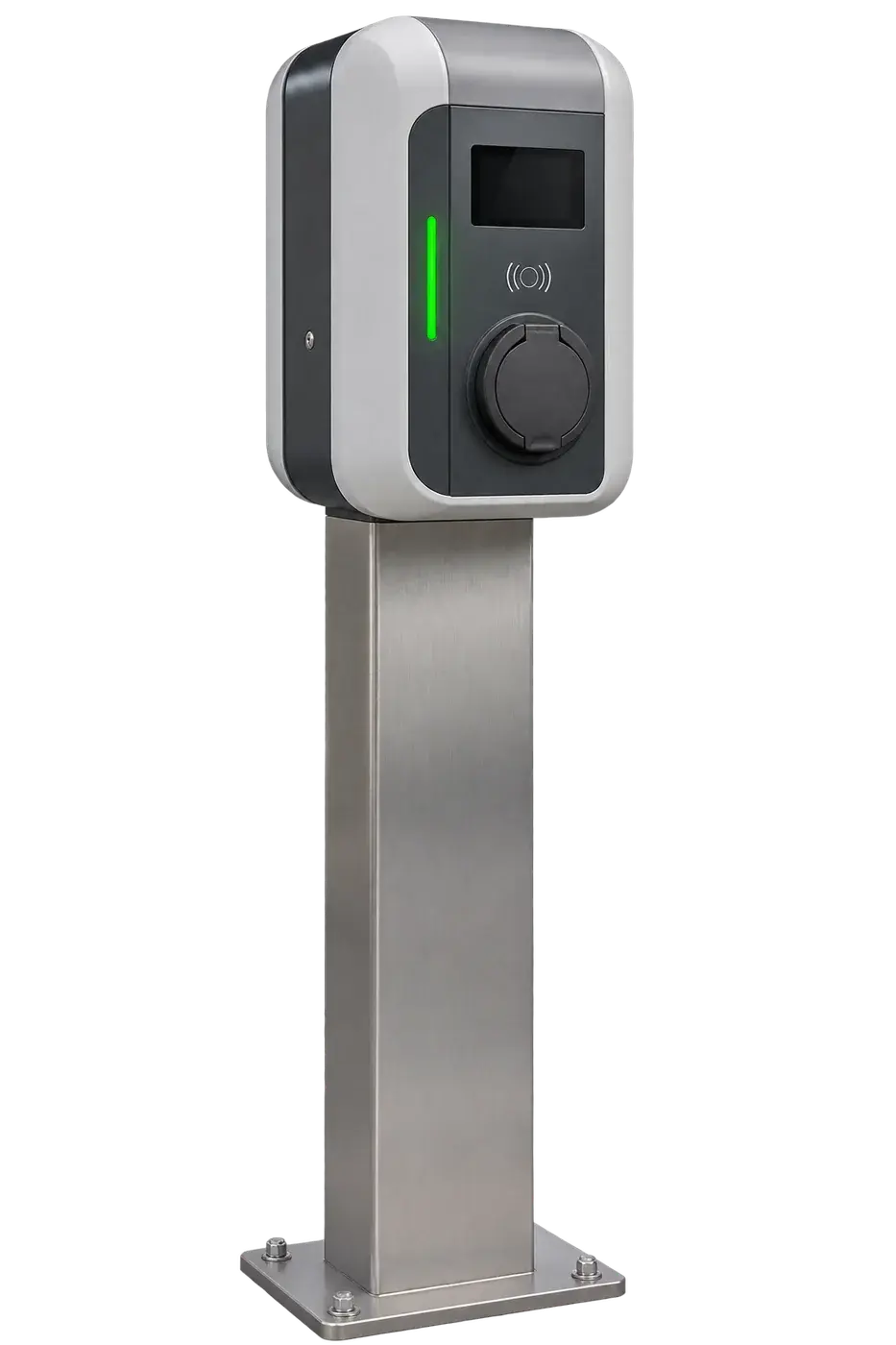
The 22 kW charger is the workhorse of destination charging. It delivers 32 A per phase at 400 V; whether a car actually takes 22 kW depends on its on-board charger (many accept 11 kW, some 22 kW), which is why commercial sites often choose twin-socket units that share 22 kW between two bays. Commercial features include RFID and app access control, a MID-class energy meter for billing, OCPP 1.6J or 2.0.1 to connect to any charge-point management system, 4G/Ethernet, and local or cloud load management across a fleet of chargers.
Under a solar carport, each bay typically carries 3–5 kWp of modules, so a 20-bay carport of about 80 kWp generates far more at noon than cars plugged in at 11 kW can always absorb — load management and a dynamic export or site-limit meter keep the building connection within its rating while prioritising PV energy. Plan cable and protection per charger (typically 10 mm² Cu, 40 A four-pole MCB, Type A RCD with 6 mA DC detection or Type B), and size the distribution board for the managed peak rather than the sum of nameplates. In the Gulf, pedestal units should be IP55/IK10, rated to 50–55 °C, with cable management that keeps connectors off hot paving. Public charge points connected to the grid in Dubai fall under the utility's EV charging rules (the DEWA EV Green Charger network sets the local benchmark).

Home wallbox with a Type 2 socket or tethered cable, solar-surplus charging mode and OCPP. The obvious next step after a rooftop PV system.
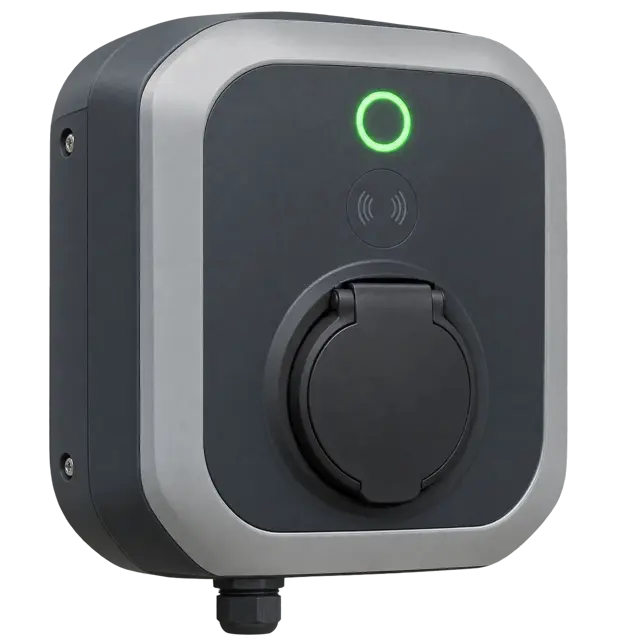
Three-phase 16 A wallbox for villas, offices and small car parks; matches the 11 kW on-board charger fitted to most current EVs.

Floor-standing DC charger that adds about 100 km of range in 15–20 minutes, for fuel stations, fleet depots, malls and highway stops.

High-power twin-outlet DC charger that splits 120 kW dynamically between two cars. The standard unit for public hubs and fleet depots.
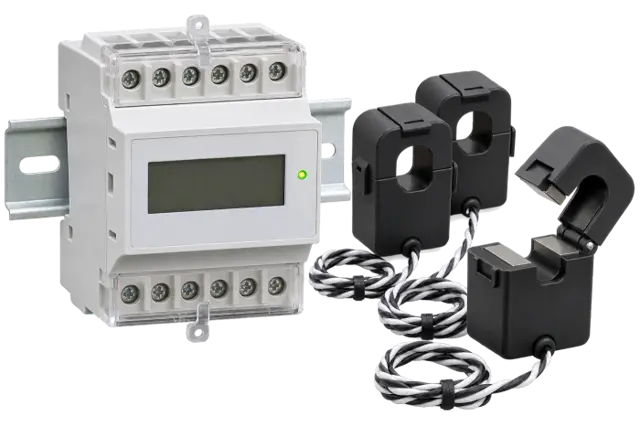
Three-phase meter and split-core CTs that tell the chargers how much capacity is free, so EVs charge fast, use solar surplus first and never trip the main breaker.
