
A DC charger moves the AC-to-DC conversion out of the car and into the cabinet, so it can feed the battery directly at up to 60 kW — typically 200–1000 V DC and up to 150–200 A on CCS2, the standard connector in the GCC and Europe. Second outlets in CHAdeMO (some Japanese models) or GB/T (Chinese-market vehicles) are available. The cabinet houses modular 20–30 kW power modules, so one failed module reduces power rather than taking the charger offline. A 7–10 inch touchscreen, RFID, card payment option, OCPP 1.6J/2.0.1 and an integrated DC energy meter are standard on commercial units.
Grid side: a 60 kW charger needs about 100 A at 400 V three-phase (≈70 kVA with margin), so a dedicated feeder of 35–50 mm² Cu or 70 mm² Al with a 125 A MCCB is typical. Pairing with solar is about energy, not instantaneous power — a 60 kW session at noon can draw from a 100 kWp carport, but at night it is grid-fed unless there is a battery buffer. A 100–200 kWh battery-buffered setup is a common way to add fast charging where the transformer has little spare capacity.
In Gulf conditions the critical parameter is thermal: power modules derate above roughly 45–50 °C, so choose units with full output to 50 °C or above, a sunshade or canopy, and filters suited to dust. Plan a concrete plinth, bollards and cable management, and budget for the grid-connection fee and approvals, which often exceed the hardware cost.

Home wallbox with a Type 2 socket or tethered cable, solar-surplus charging mode and OCPP. The obvious next step after a rooftop PV system.
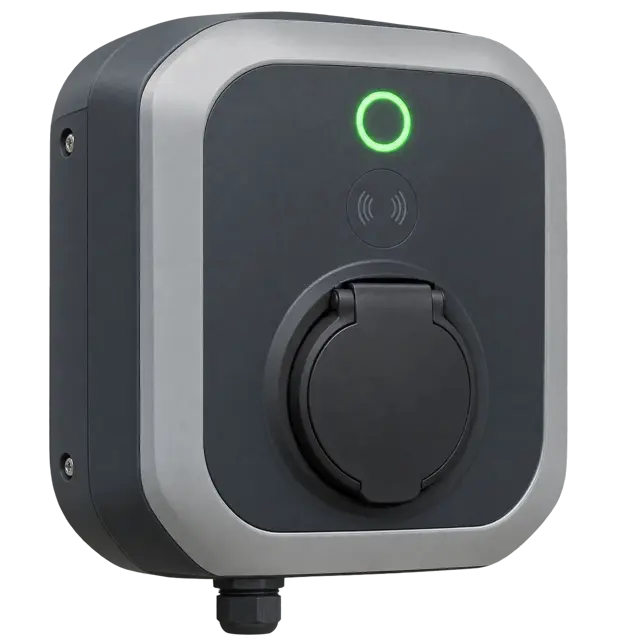
Three-phase 16 A wallbox for villas, offices and small car parks; matches the 11 kW on-board charger fitted to most current EVs.
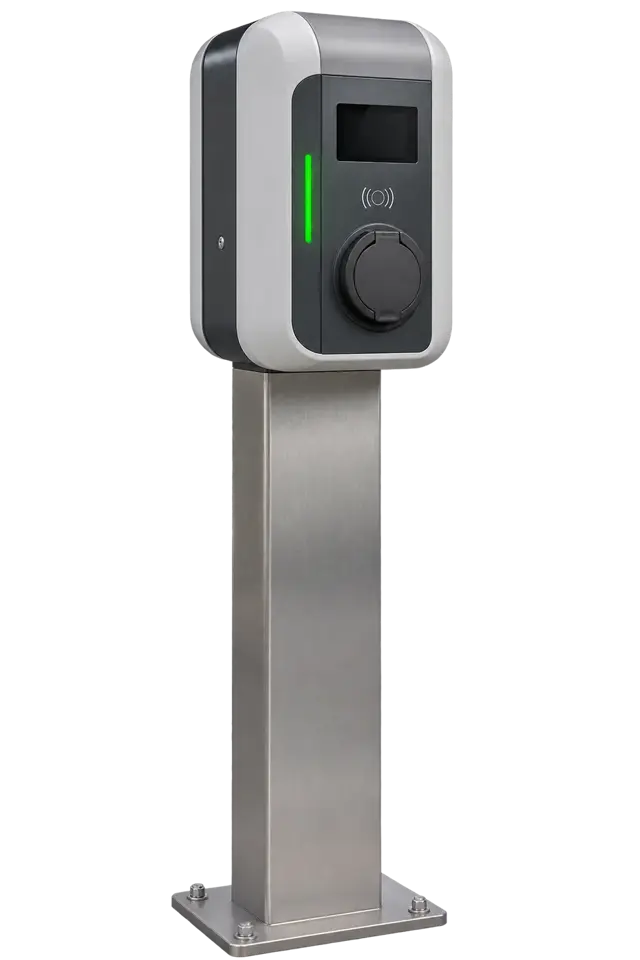
Networked 32 A three-phase charger for solar carports, workplaces, hotels and malls. Wall or pedestal mount, single or twin socket.

High-power twin-outlet DC charger that splits 120 kW dynamically between two cars. The standard unit for public hubs and fleet depots.
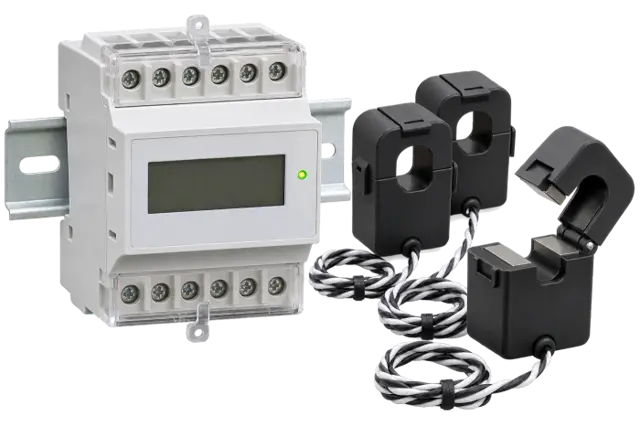
Three-phase meter and split-core CTs that tell the chargers how much capacity is free, so EVs charge fast, use solar surplus first and never trip the main breaker.
