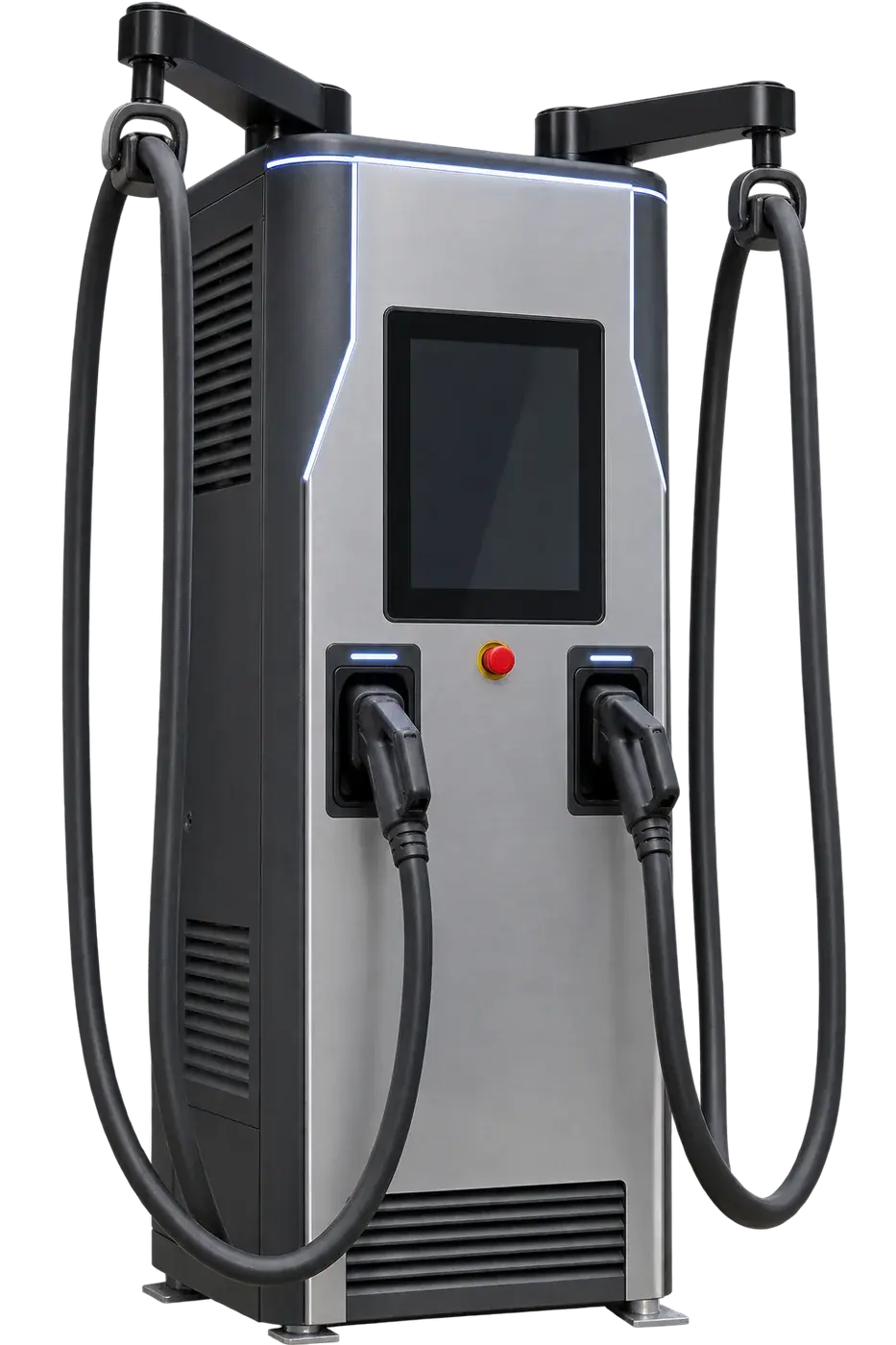
With 120 kW available, a modern 800 V car can charge from 10 % to 80 % in roughly 20–30 minutes, and a 400 V car in 30–40 minutes. Two CCS2 outlets share the power through internal contactor matrices: one car alone can take the full 120 kW (up to the cable's 200–250 A limit, or more with liquid-cooled cables), while two cars receive power in steps according to their demand. Output voltage typically spans 150–1000 V DC so both 400 V and 800 V platforms charge at full current.
The grid requirement is substantial — about 200 A at 400 V (roughly 140–150 kVA), usually fed from a dedicated LV panel or, on hubs with several units, from a new 11 kV or 22 kV transformer. That is why solar carports and battery buffers matter: PV offsets daytime energy and a BESS shaves the peak that would otherwise set the connection size and demand charges. Commercial terminals include payment, OCPP 2.0.1 with ISO 15118 Plug & Charge readiness, and remote diagnostics.
For the Gulf, check the full-power ambient temperature (50 °C or higher), IP54/IP55, dust filtration that can be cleaned from outside, and serviceability of power modules. Allow 3–5 % of hardware cost per year for maintenance and connectivity, and plan civil works — plinth, ducts, canopy, bollards — early with the grid connection.

Home wallbox with a Type 2 socket or tethered cable, solar-surplus charging mode and OCPP. The obvious next step after a rooftop PV system.
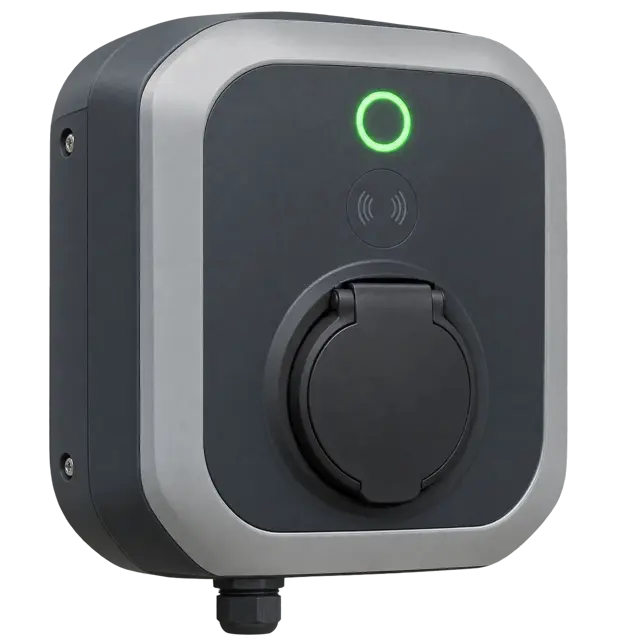
Three-phase 16 A wallbox for villas, offices and small car parks; matches the 11 kW on-board charger fitted to most current EVs.
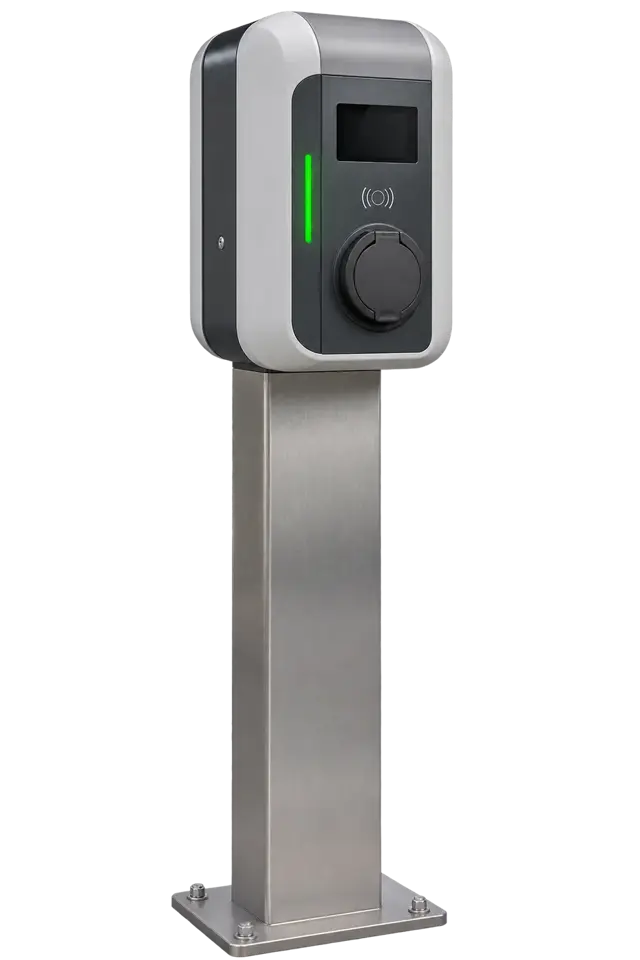
Networked 32 A three-phase charger for solar carports, workplaces, hotels and malls. Wall or pedestal mount, single or twin socket.

Floor-standing DC charger that adds about 100 km of range in 15–20 minutes, for fuel stations, fleet depots, malls and highway stops.
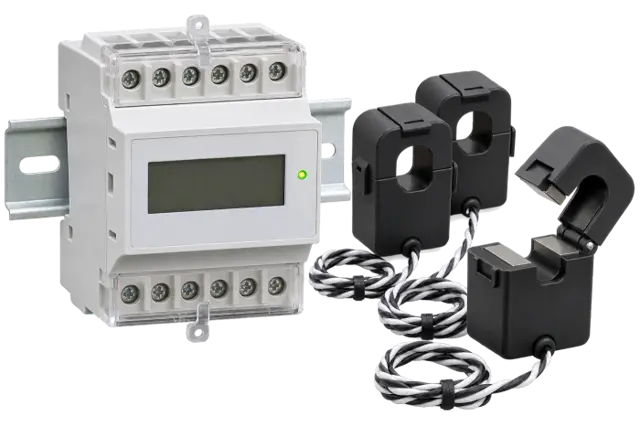
Three-phase meter and split-core CTs that tell the chargers how much capacity is free, so EVs charge fast, use solar surplus first and never trip the main breaker.
