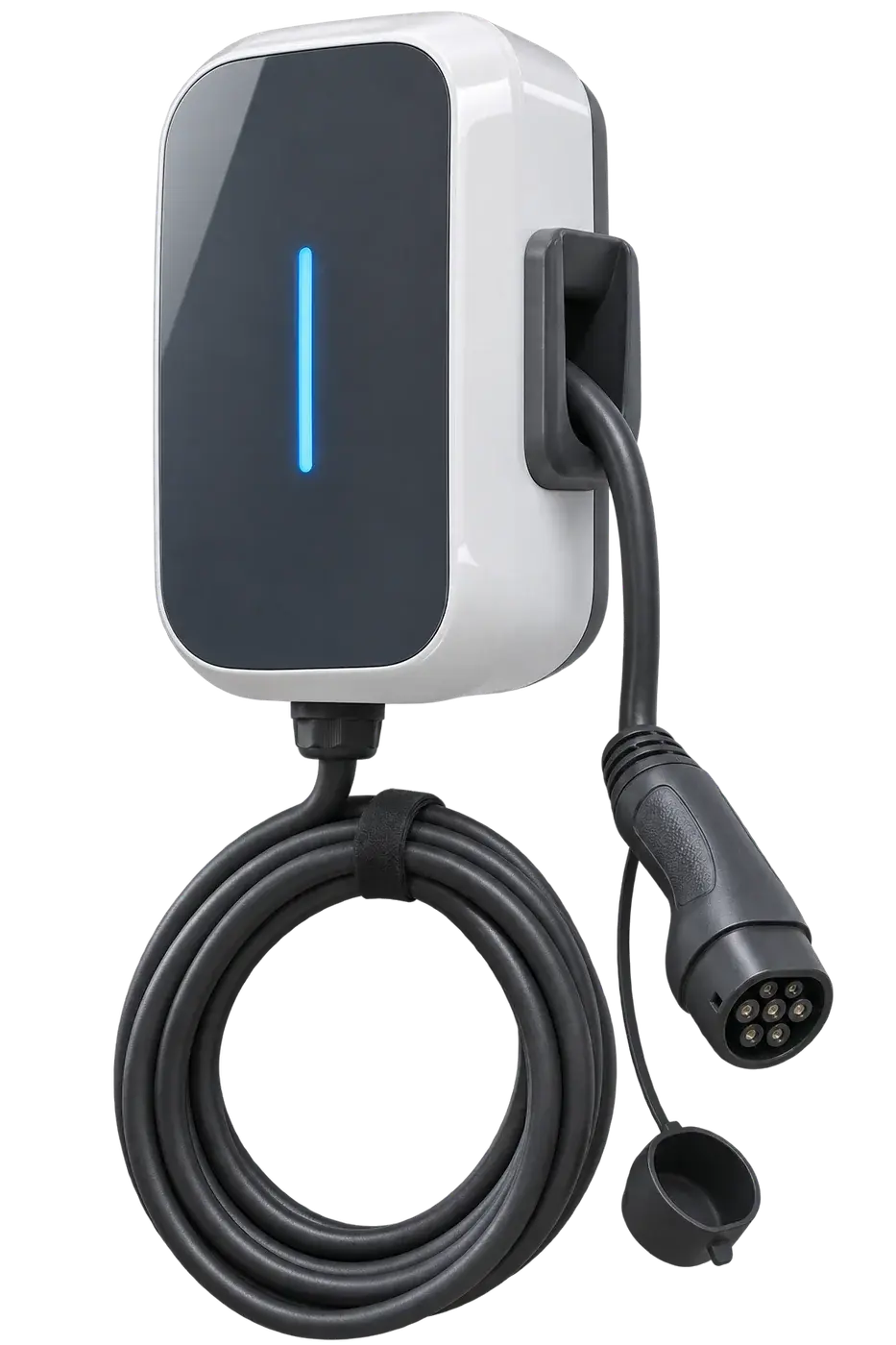
A 7.4 kW wallbox draws up to 32 A on a single-phase 230 V circuit and adds roughly 40–50 km of range per hour to a typical EV. That is enough to refill an average daily commute of 50–80 km in two hours, so most villas never need more. The unit integrates the IEC 61851 control pilot, a 6 mA DC leakage detector (so a cheaper Type A RCD can be used upstream instead of Type B), lockable socket or 5–7.5 m tethered cable, and Wi-Fi/Ethernet with OCPP 1.6J for app control or fleet back-ends.
The solar-surplus mode is what makes it interesting for PV owners. With a CT clamp or smart meter on the incoming supply, the charger modulates its current between 6 A and 32 A to follow the export power, so the car soaks up midday surplus instead of exporting it at a low tariff. Below about 1.4 kW of surplus (the 6 A minimum of the standard) it either pauses or tops up from the grid, depending on the mode selected. A 10 kWp roof in Dubai produces roughly 45–50 kWh on a clear day — more than enough to cover a commuter car.
Installation: a dedicated 40 A circuit, typically 6–10 mm² copper depending on run length, with a 40 A MCB and Type A RCD (or Type B if the charger lacks DC leakage detection). Wall-mount in shade where possible; outdoor units in the Gulf should be IP55 or better and rated for 50 °C ambient, as many units derate current above 40–45 °C. Charging installations connected to the DEWA network must follow its EV charger connection requirements.

Three-phase 16 A wallbox for villas, offices and small car parks; matches the 11 kW on-board charger fitted to most current EVs.
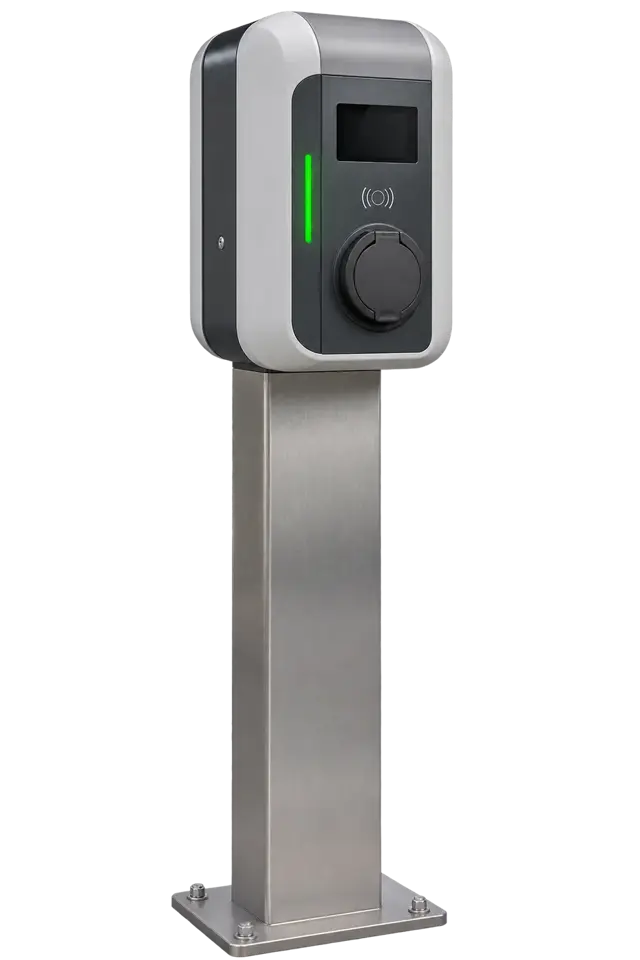
Networked 32 A three-phase charger for solar carports, workplaces, hotels and malls. Wall or pedestal mount, single or twin socket.

Floor-standing DC charger that adds about 100 km of range in 15–20 minutes, for fuel stations, fleet depots, malls and highway stops.

High-power twin-outlet DC charger that splits 120 kW dynamically between two cars. The standard unit for public hubs and fleet depots.
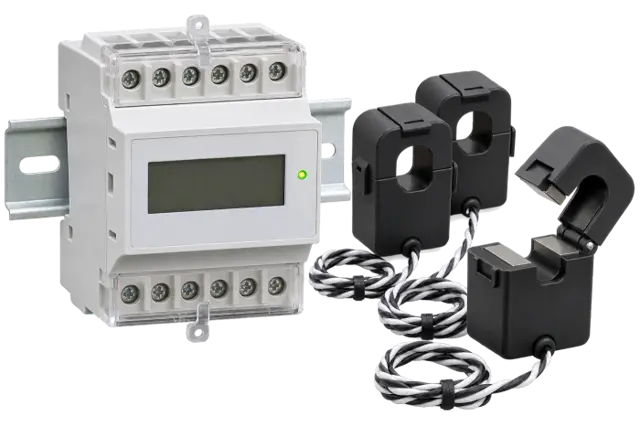
Three-phase meter and split-core CTs that tell the chargers how much capacity is free, so EVs charge fast, use solar surplus first and never trip the main breaker.
