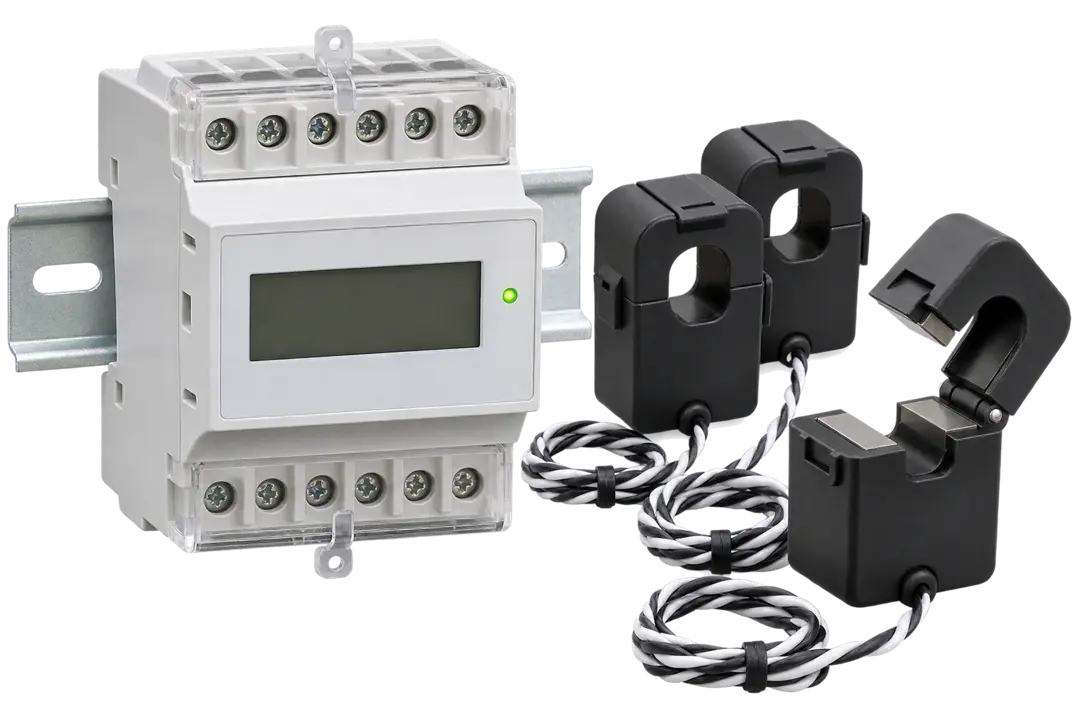
Without load management, adding a 22 kW charger to a villa with a 60 A supply, or ten 11 kW chargers to an office car park, often means upgrading the connection. A load-balancing meter measures real-time current on each incoming phase (via 3 × split-core CTs, typically 100–600 A) and sends it to the charger or charge-point controller over Modbus RS485 or Ethernet. The charger then lowers or raises its current every few seconds so the site never exceeds the set limit, while cars still charge at full power whenever the building load allows.
The same measurement enables solar-surplus charging: when the meter sees export, the chargers absorb it; with a battery inverter in the mix, priorities can be set (house first, then battery, then car — or the reverse). Phase-aware balancing also prevents single-phase chargers from overloading one phase. The set includes a DIN-rail three-phase meter (class 1 or better), three CTs, and configuration; check compatibility with the charger brand's protocol before ordering, as most chargers only accept their own or a short list of approved meters.

Home wallbox with a Type 2 socket or tethered cable, solar-surplus charging mode and OCPP. The obvious next step after a rooftop PV system.
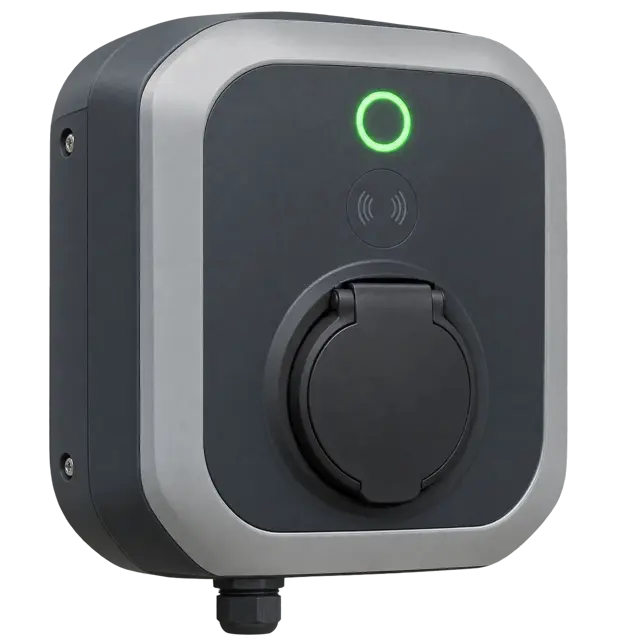
Three-phase 16 A wallbox for villas, offices and small car parks; matches the 11 kW on-board charger fitted to most current EVs.
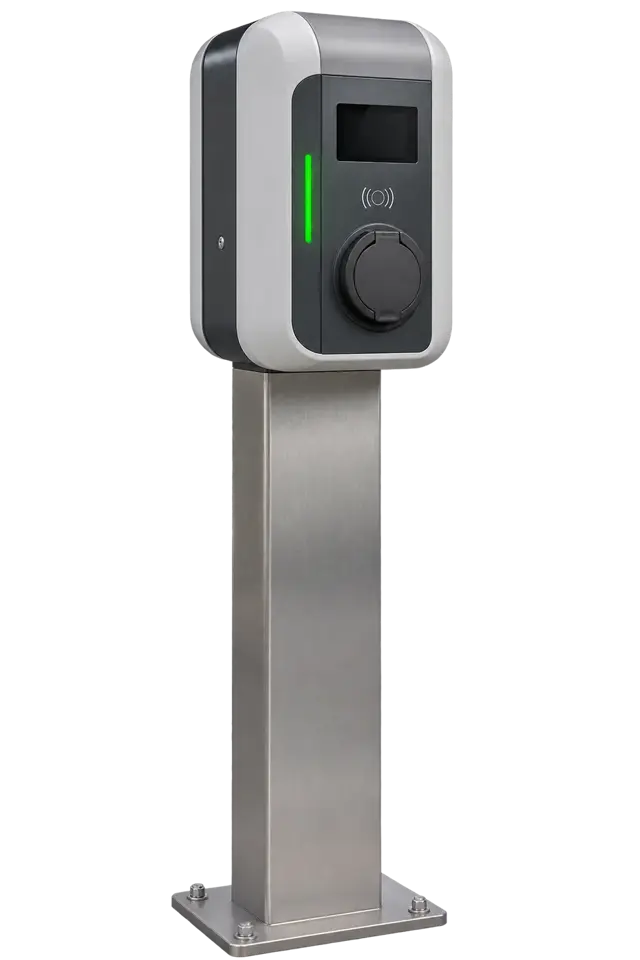
Networked 32 A three-phase charger for solar carports, workplaces, hotels and malls. Wall or pedestal mount, single or twin socket.

Floor-standing DC charger that adds about 100 km of range in 15–20 minutes, for fuel stations, fleet depots, malls and highway stops.

High-power twin-outlet DC charger that splits 120 kW dynamically between two cars. The standard unit for public hubs and fleet depots.
