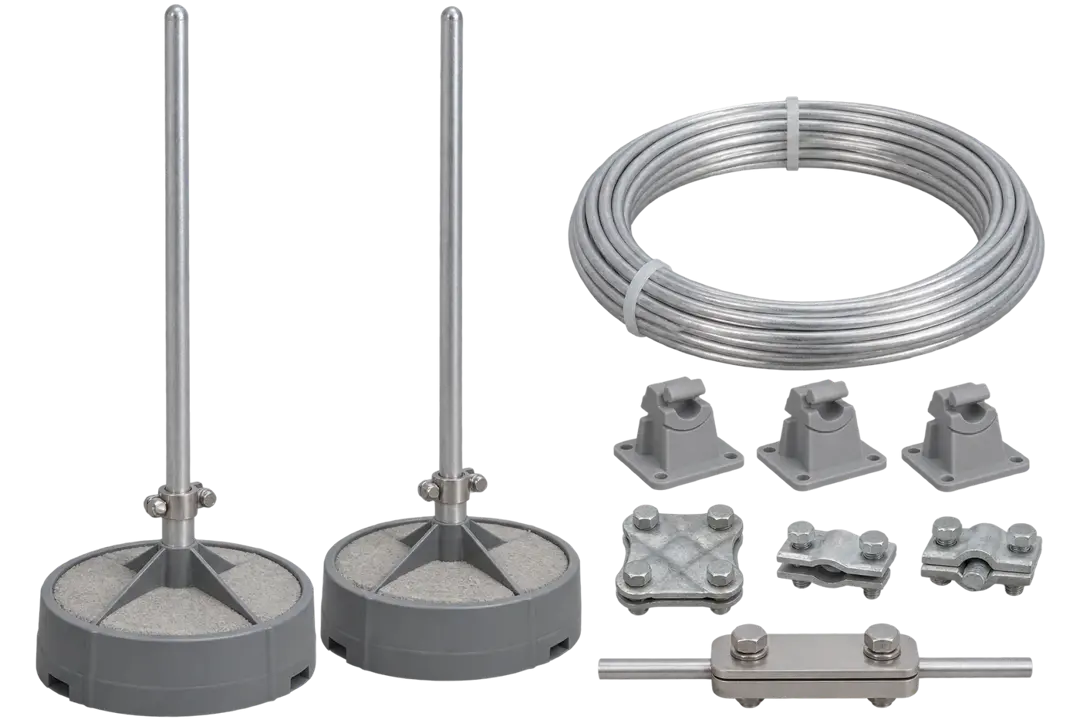
An external lightning protection system intercepts direct strikes before they hit modules or cabling. Using the rolling-sphere or protective-angle method of IEC 62305-3, air-termination rods are positioned so the whole array lies within the protected volume, while keeping the separation distance (typically 0.5–1 m) between rods and modules so that the rods do not cast shadows or flash over to the PV system.
Where separation distances cannot be kept, the structure is bonded to the lightning protection system and Type 1 SPDs are required on the DC and AC sides. A lightning risk assessment (IEC 62305-2) determines whether a system is needed at all; many ground-mounted plants rely on structural earthing and SPDs only.

Double-insulated, UV- and ozone-resistant tinned-copper PV cable rated 1500 V DC, the standard choice for string runs on commercial and utility arrays.

The cross-section used on module leads and short rooftop string runs; 1500 V DC, halogen-free, UV-resistant.
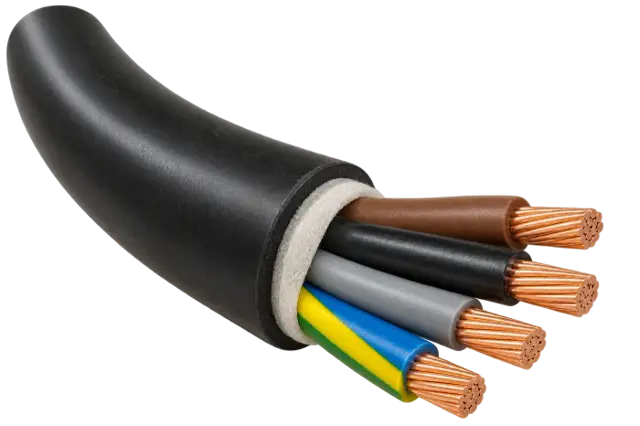
0.6/1 kV copper XLPE-insulated, PVC-sheathed (armored on request) cable linking inverters to the AC distribution board, priced as a representative 5-core 10 mm².
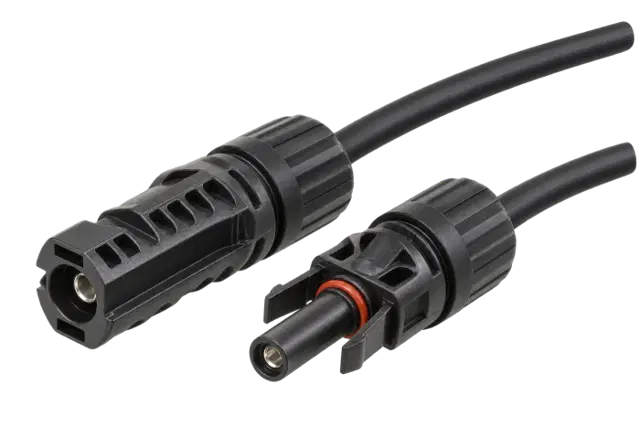
Male + female IP68 PV connectors for 4–6 mm² cable, 1500 V DC, certified to IEC 62852.
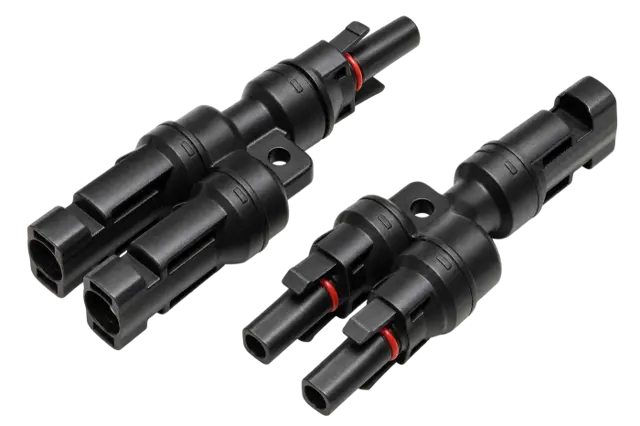
Parallels two strings onto one MPPT input or cable: one male (+) and one female (−) branch, 1500 V.

Ratchet crimper with 2.5/4/6 mm² dies, insertion tool, unlocking wrenches and cable stripper.

IP65 enclosure with gPV string fuses, Type 2 DC surge protection and a load-break isolator, 1000/1500 V DC.
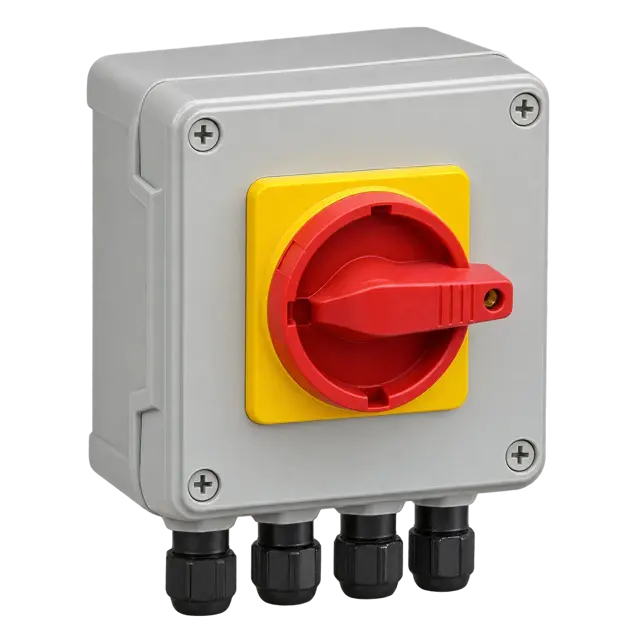
Rotary load-break DC switch in an IP66 enclosure for safely isolating strings ahead of the inverter.
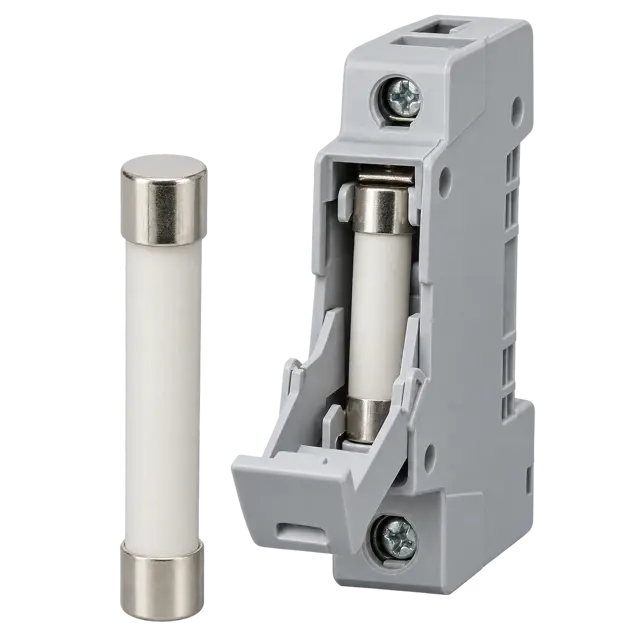
10×85 mm photovoltaic fuse link (15–32 A) with DIN-rail fuse holder, rated to IEC 60269-6.
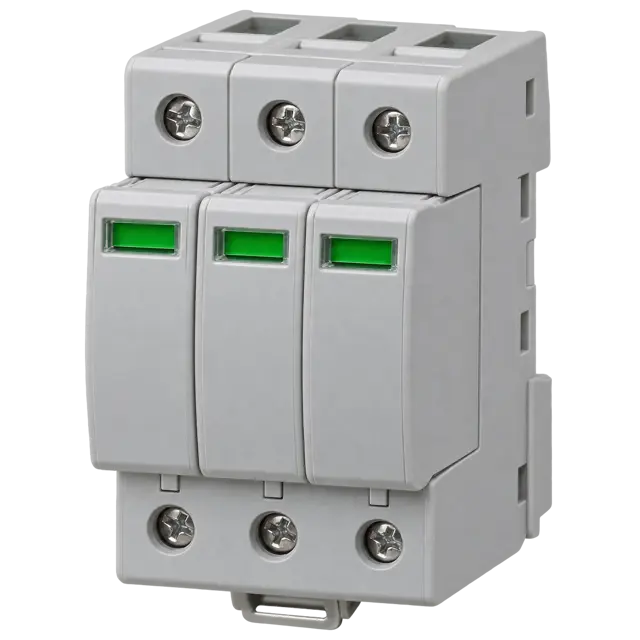
Y-configured MOV surge arrester with thermal disconnect and pluggable modules (In 20 kA, Imax 40 kA) for PV strings.
