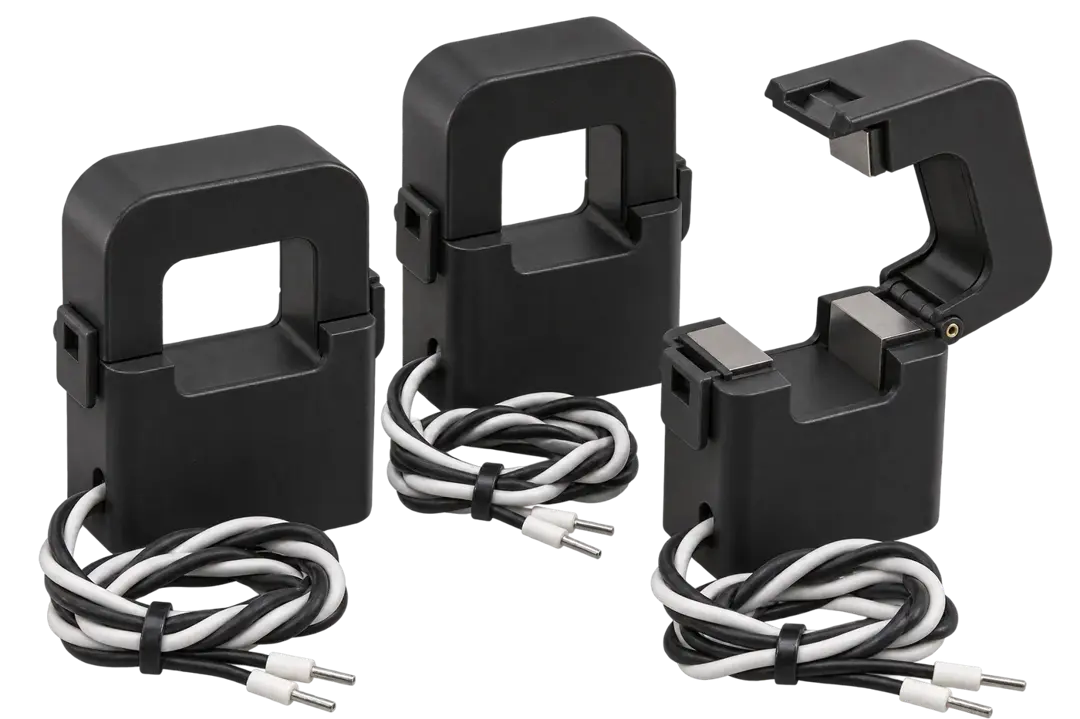
Most PV monitoring, zero-export and EMS functions depend on measuring current at the grid connection point. A split-core CT opens on a hinge, closes around the phase conductor and outputs a small signal proportional to the current, so it can be retrofitted into an existing board without cutting cables or shutting down the building for long. A set contains three CTs, one per phase, in the same ratio.
Two output types are common: 333 mV (or 1 V) voltage output, which is safe to wire over a few metres and is used by most inverter-brand smart meters, and 5 A secondary, the traditional metering standard that needs shorting links when the meter is removed. Choose the primary rating (100, 200, 400 or 600 A) slightly above the maximum feeder current, check the window diameter fits the cable or busbar, and respect the arrow direction towards the load — a reversed CT is the most common reason for negative or doubled readings. Class 1 accuracy is adequate for control; billing and revenue-grade measurement require class 0.5S CTs with a calibrated meter.
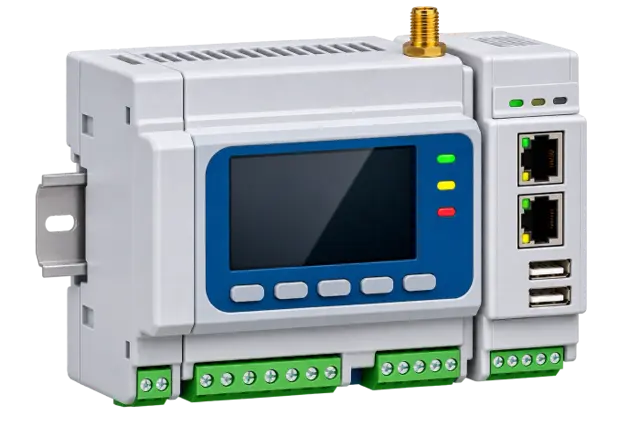
Central communication gateway that collects data from inverters, meters and sensors and sends it to the cloud or SCADA.

Plug-in communication stick that connects a single residential or small commercial inverter to the manufacturer's app.
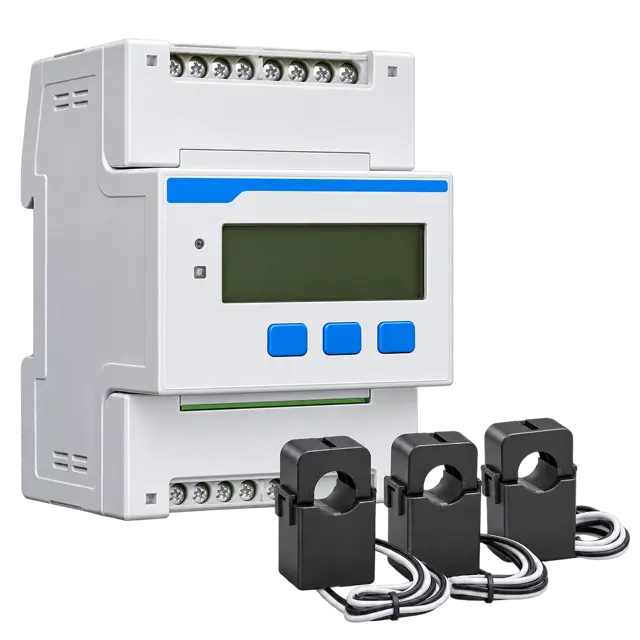
Bidirectional DIN-rail meter measuring grid import/export, required for zero-export control, self-consumption and battery management.
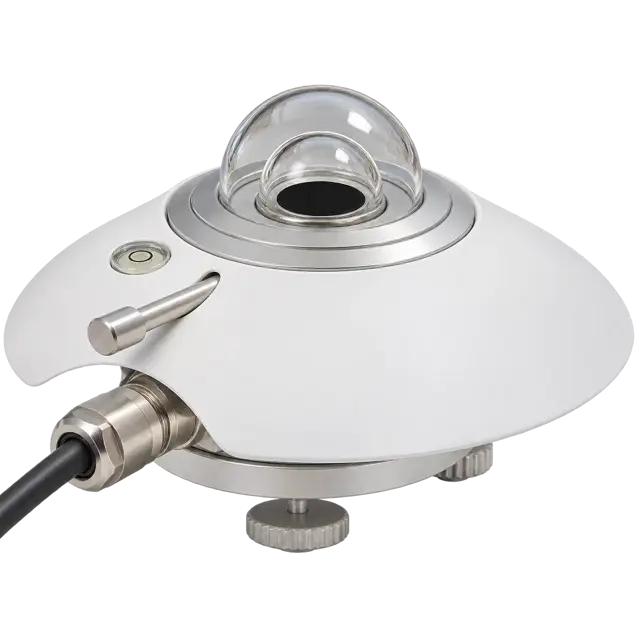
Thermopile sensor measuring global irradiance (W/m²); the reference for performance-ratio (PR) calculation on bankable plants.
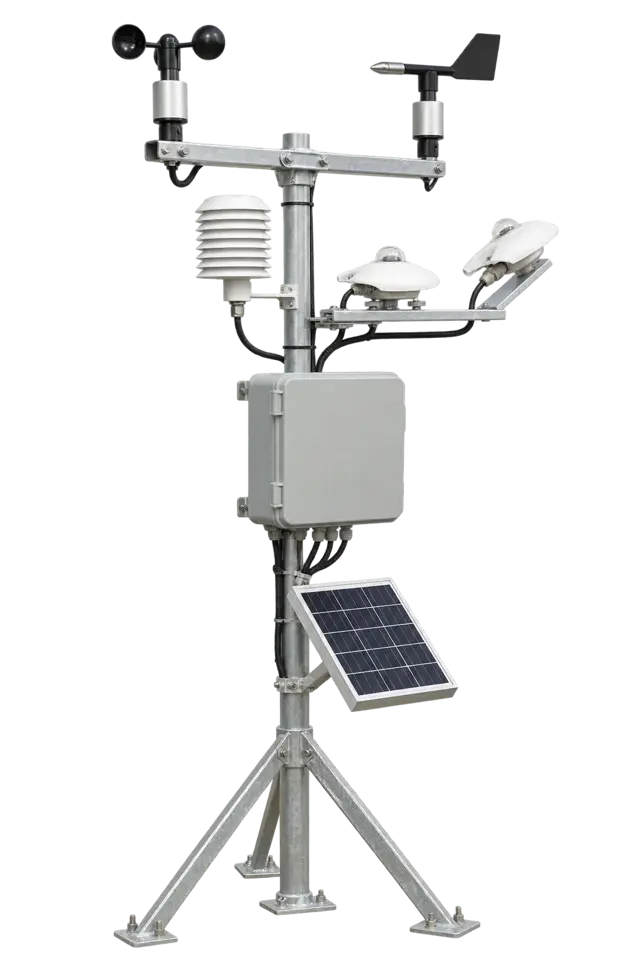
Complete meteorological mast: POA and GHI irradiance, module and ambient temperature, wind, humidity, rain and soiling.
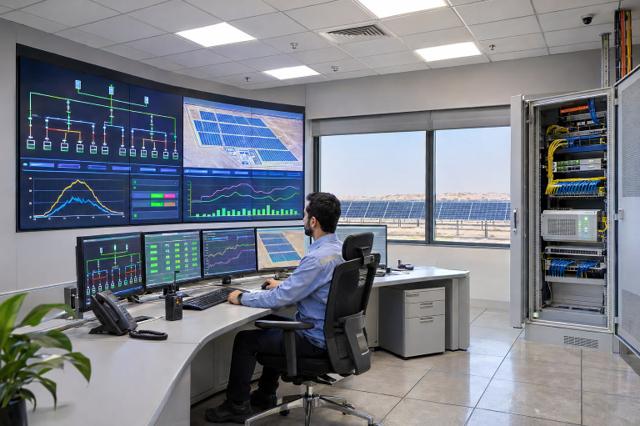
Plant-level supervisory control and grid-code compliance: active/reactive power, voltage and frequency response, alarms and reporting.
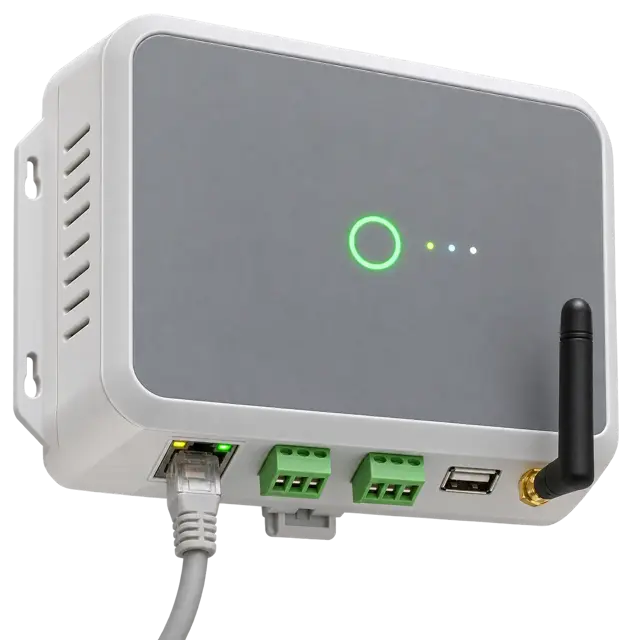
Small controller that coordinates PV, battery, EV charger, heat pump and big loads to use more of your own solar power and avoid peak tariffs.
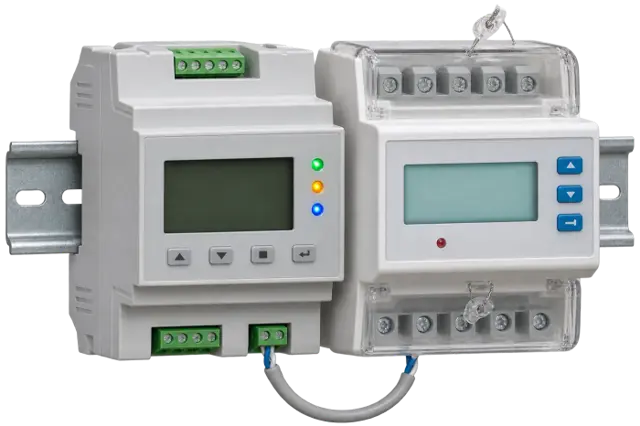
Measures power at the grid connection and curtails inverters in real time so the site never exports more than the utility allows — zero or a set limit.
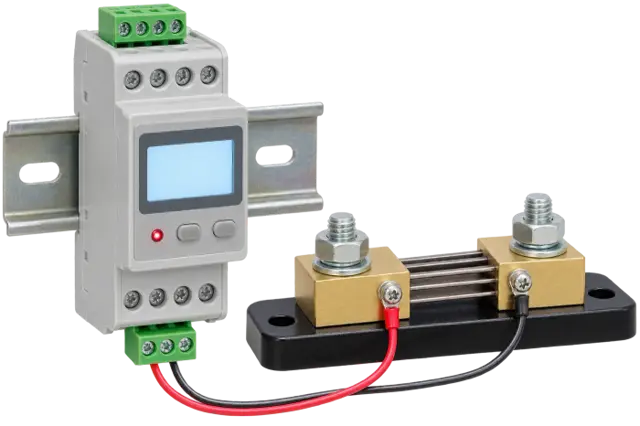
Measures voltage, current, power and kWh on PV strings, battery banks or DC loads; RS485 Modbus output for logging.
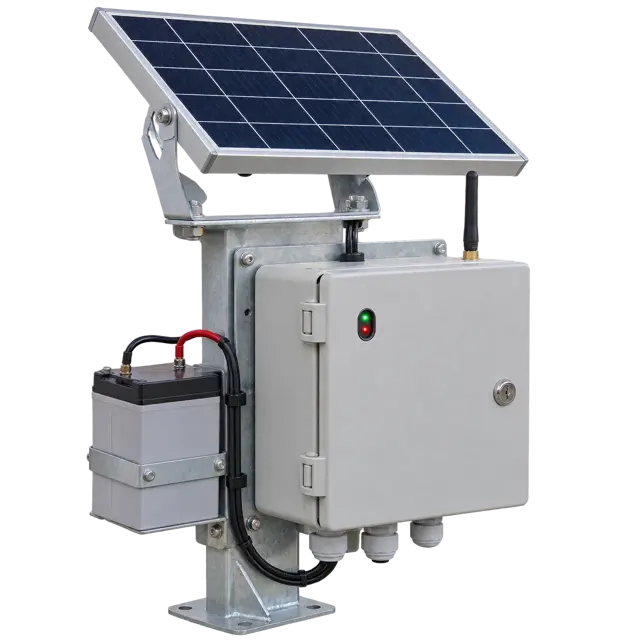
Row-mounted controller that drives a tracker motor using a solar-position algorithm, backtracking and automatic wind and flood stow.
