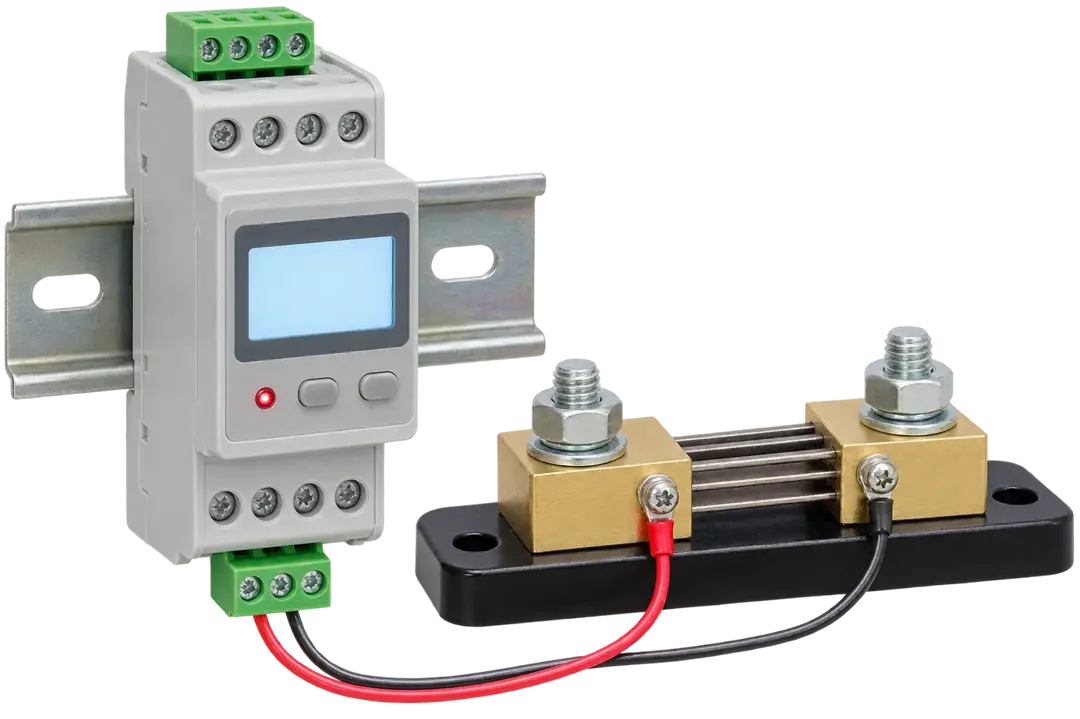
AC meters cannot measure direct current, yet many systems need DC data: energy in and out of a battery bank, production of a DC-coupled array, consumption of telecom or pumping loads, or EV DC fast-charger metering. A DC energy meter measures voltage directly up to 1000 V and current through an external shunt (for example 300 A / 75 mV) or a Hall-effect sensor, and integrates bidirectional energy so charge and discharge are counted separately.
The shunt is fitted in the negative conductor close to the battery, connected to the meter with short twisted sense leads, and sized so normal current sits at 50–80 % of its rating to limit heating. Class 0.5 or 1 accuracy is typical; meters certified to the relevant DC metering standard are needed where energy is billed. Use the RS485 Modbus output to feed a data logger or EMS, and protect the voltage sense input with a fuse — a fault on that thin lead must never become a battery short circuit.
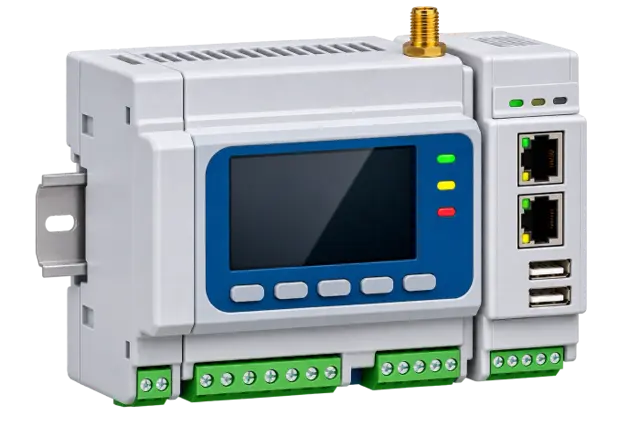
Central communication gateway that collects data from inverters, meters and sensors and sends it to the cloud or SCADA.

Plug-in communication stick that connects a single residential or small commercial inverter to the manufacturer's app.
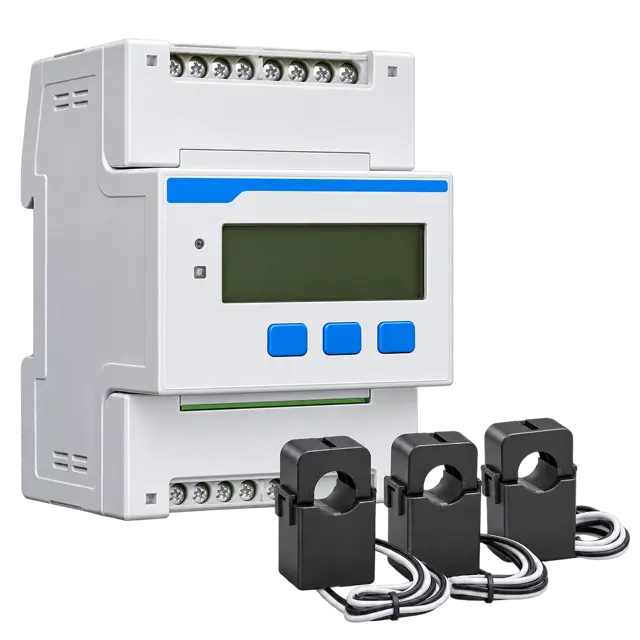
Bidirectional DIN-rail meter measuring grid import/export, required for zero-export control, self-consumption and battery management.
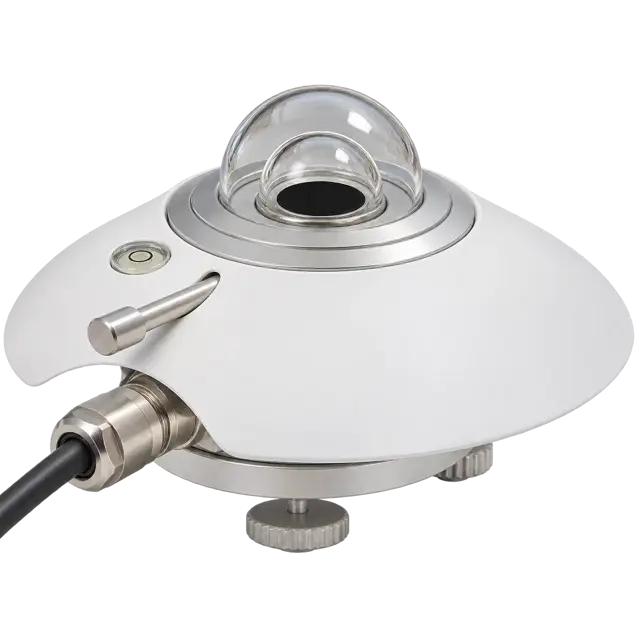
Thermopile sensor measuring global irradiance (W/m²); the reference for performance-ratio (PR) calculation on bankable plants.
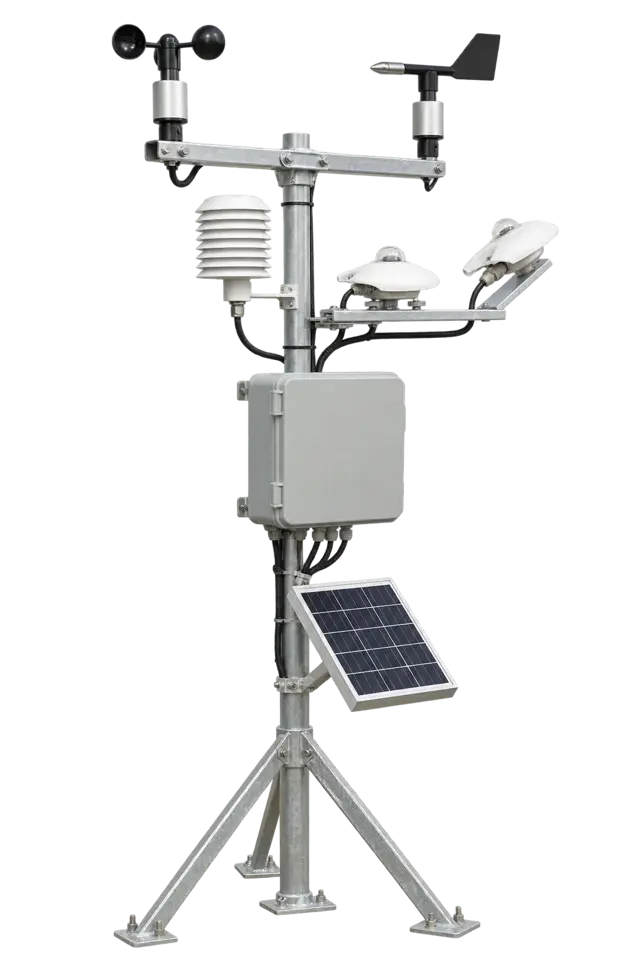
Complete meteorological mast: POA and GHI irradiance, module and ambient temperature, wind, humidity, rain and soiling.
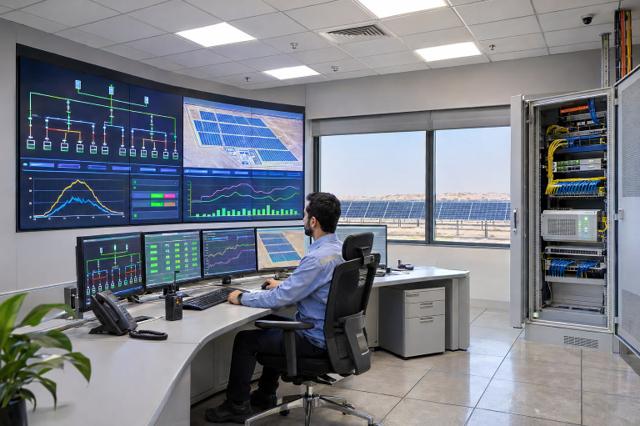
Plant-level supervisory control and grid-code compliance: active/reactive power, voltage and frequency response, alarms and reporting.
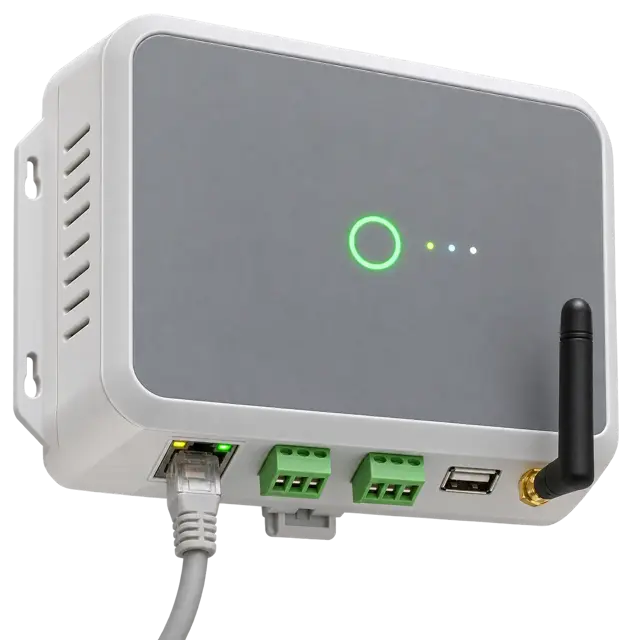
Small controller that coordinates PV, battery, EV charger, heat pump and big loads to use more of your own solar power and avoid peak tariffs.
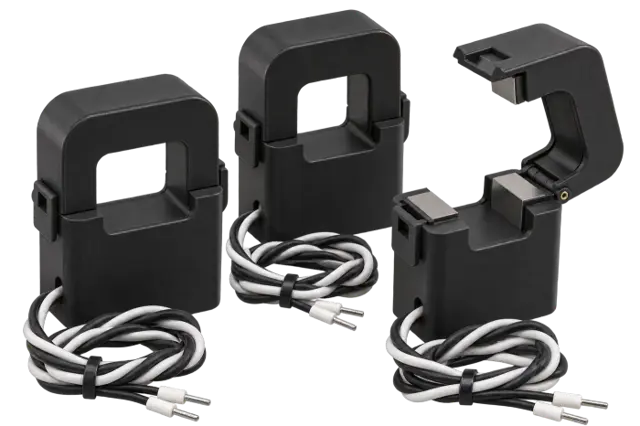
Clip-on current transformers for energy meters, export limiters and monitoring — installed around live cables without disconnecting them.
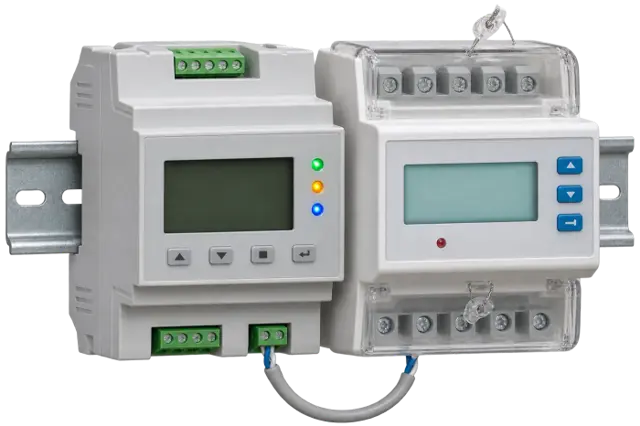
Measures power at the grid connection and curtails inverters in real time so the site never exports more than the utility allows — zero or a set limit.
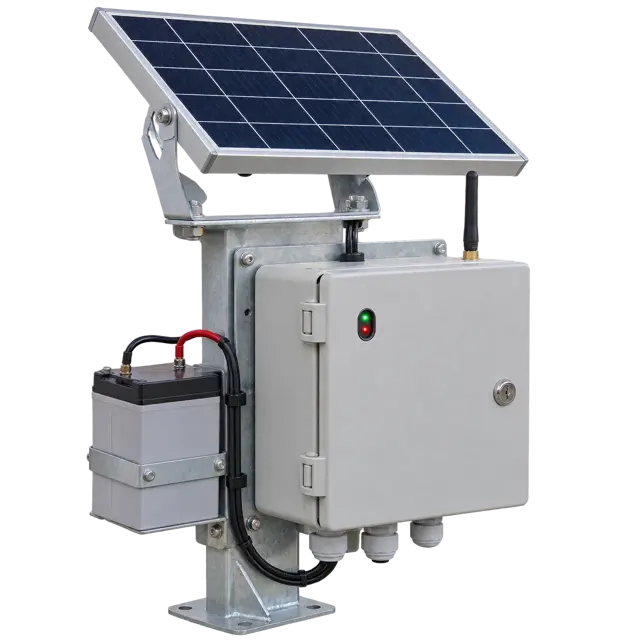
Row-mounted controller that drives a tracker motor using a solar-position algorithm, backtracking and automatic wind and flood stow.
