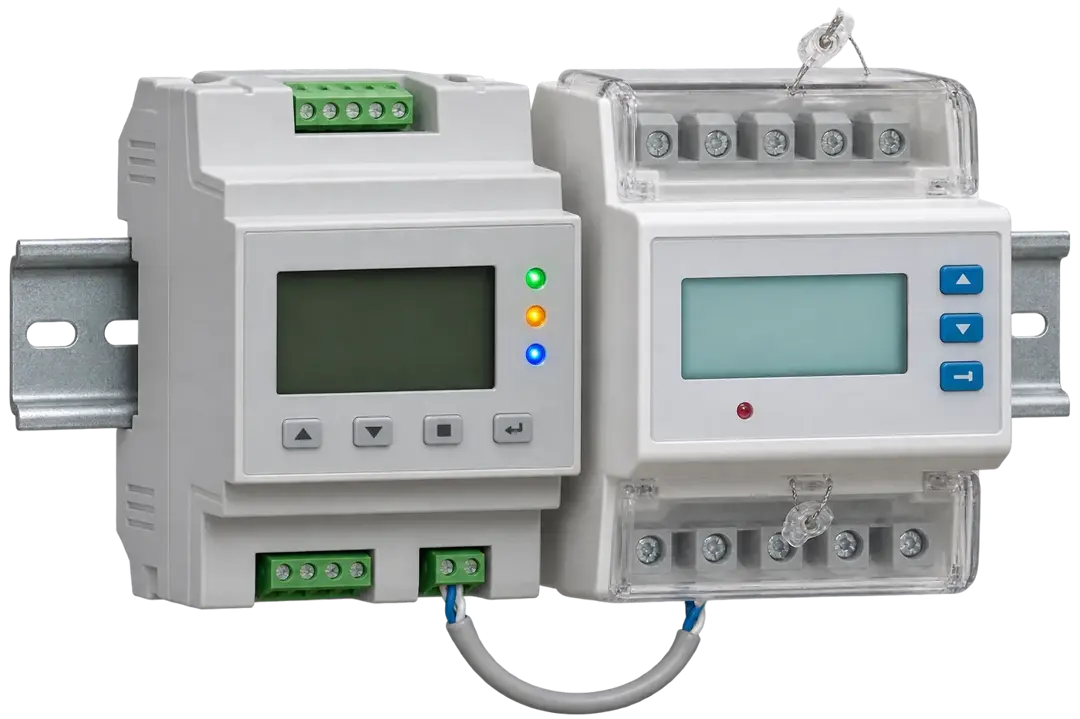
Many grids accept PV only up to a fixed export capacity, and some connections — certain commercial sites, private networks or sites behind a generator — must export nothing at all. Utilities in the region typically ask for an export-control scheme to be shown in the connection application and tested at commissioning. The limiter consists of a three-phase meter with CTs at the point of connection and a controller that sends active-power setpoints to every inverter over RS485/Ethernet several times per second.
A good scheme reacts within one to two seconds, handles multiple inverter brands and sizes, and fails safe: if communication with the meter or any inverter is lost, inverters drop to zero or to the permitted limit rather than continuing at full power. For sites with diesel generators the same controller prevents reverse power into the genset, which would trip it. Settings to agree with the utility and the designer include the export limit, response time, fail-safe behaviour and whether the limit applies per phase or in total. Always follow the utility's current connection requirements, which change over time.
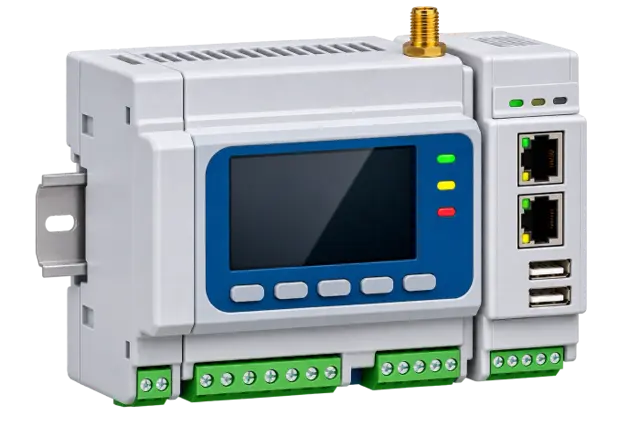
Central communication gateway that collects data from inverters, meters and sensors and sends it to the cloud or SCADA.

Plug-in communication stick that connects a single residential or small commercial inverter to the manufacturer's app.
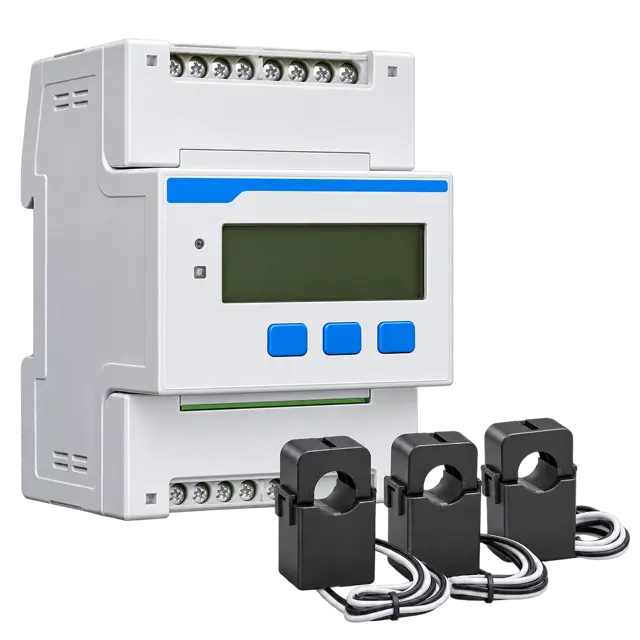
Bidirectional DIN-rail meter measuring grid import/export, required for zero-export control, self-consumption and battery management.
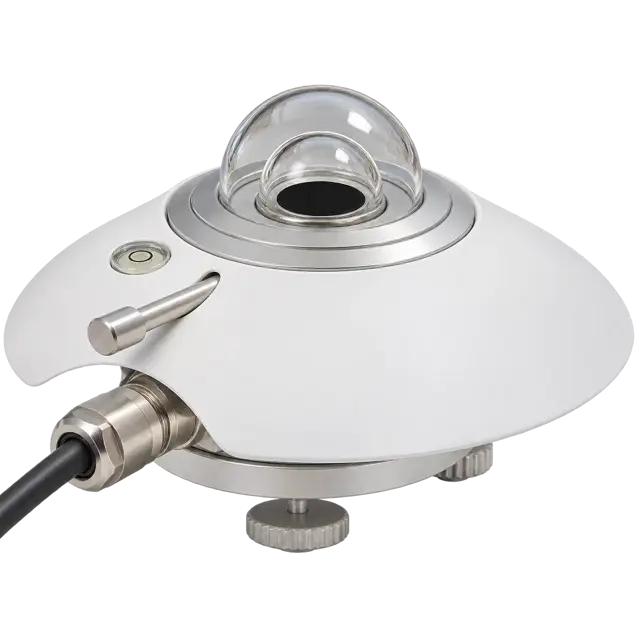
Thermopile sensor measuring global irradiance (W/m²); the reference for performance-ratio (PR) calculation on bankable plants.
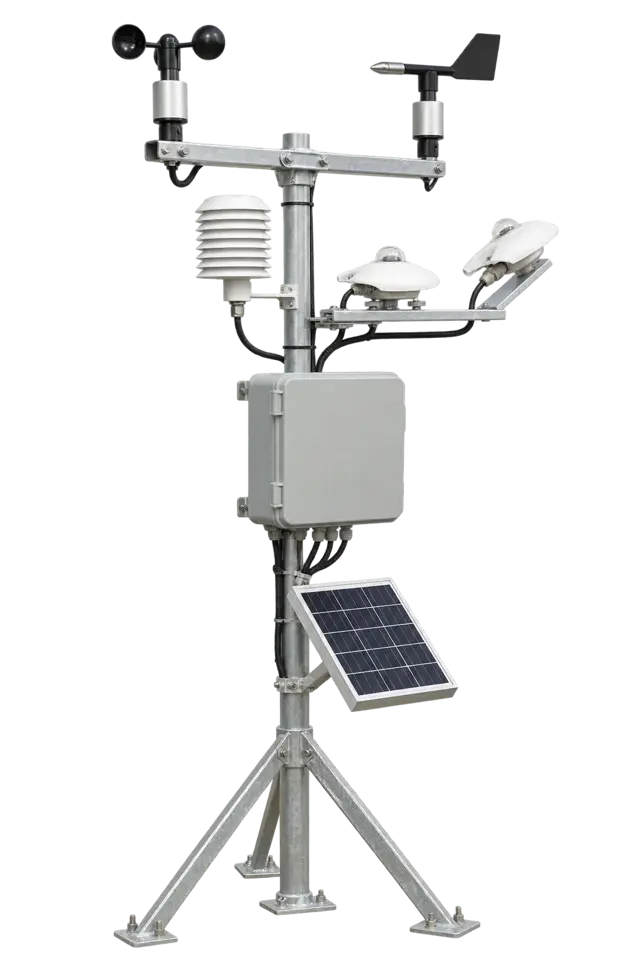
Complete meteorological mast: POA and GHI irradiance, module and ambient temperature, wind, humidity, rain and soiling.
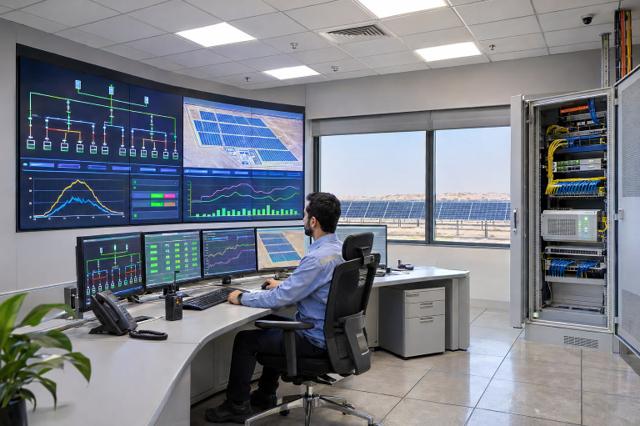
Plant-level supervisory control and grid-code compliance: active/reactive power, voltage and frequency response, alarms and reporting.
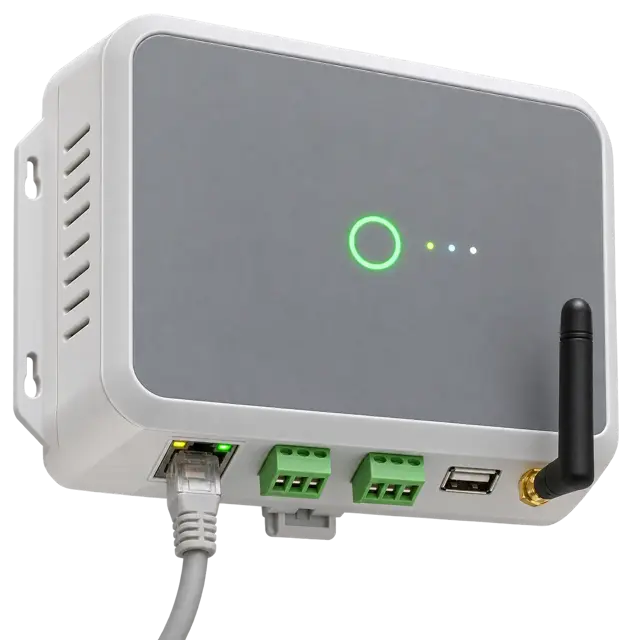
Small controller that coordinates PV, battery, EV charger, heat pump and big loads to use more of your own solar power and avoid peak tariffs.
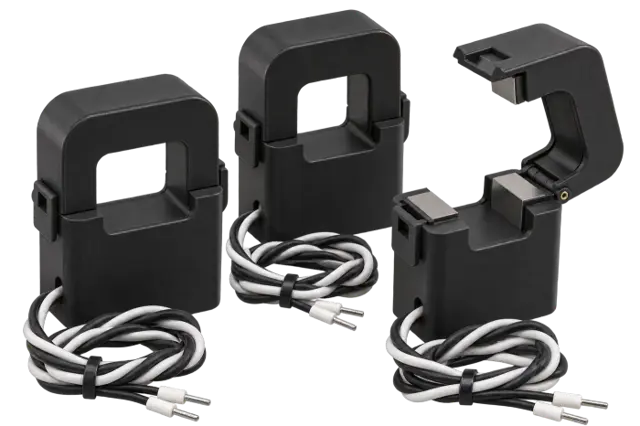
Clip-on current transformers for energy meters, export limiters and monitoring — installed around live cables without disconnecting them.
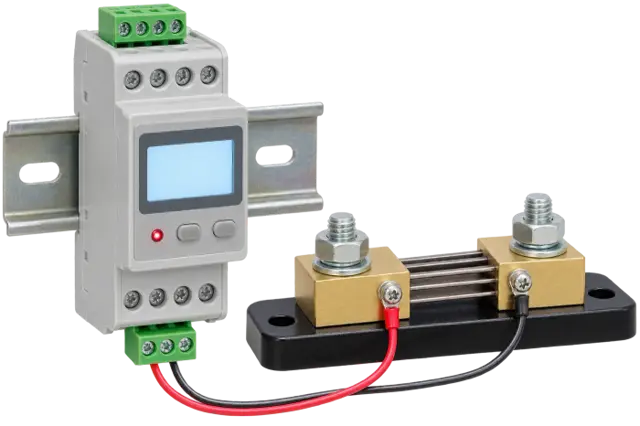
Measures voltage, current, power and kWh on PV strings, battery banks or DC loads; RS485 Modbus output for logging.
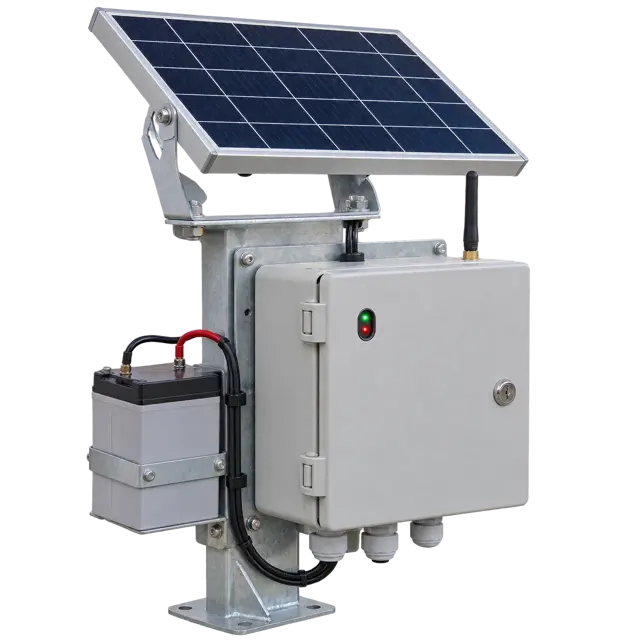
Row-mounted controller that drives a tracker motor using a solar-position algorithm, backtracking and automatic wind and flood stow.
