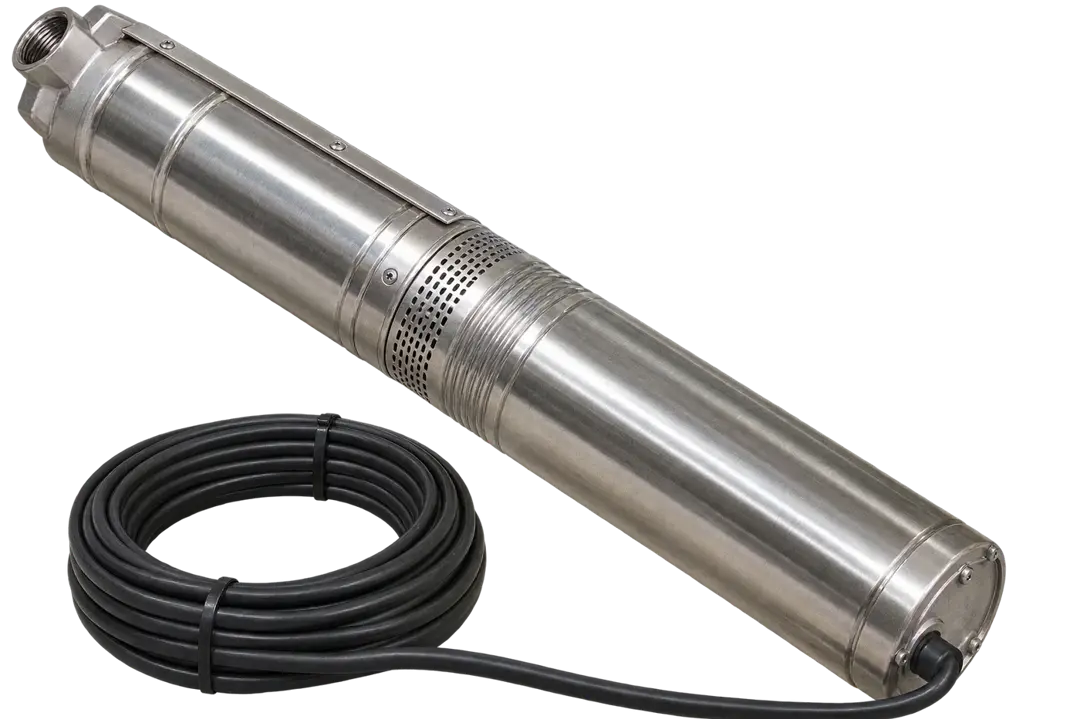
Borehole pumps push rather than pull, so they are the only option once the water level is deeper than about 7 m. This 4-inch (≈98 mm) multistage unit pairs a stainless AISI 304 pump end with a water-cooled 2.2 kW motor and delivers roughly 2–3 m³/h at 100 m head or 6–8 m³/h at 40 m. Driven by a solar pump inverter, it starts softly in the morning, follows the sun through the day and stops at dusk; typical arrays are 2.8–3.3 kWp, often on a simple ground frame at the wellhead. Daily output in the UAE at 60 m total head is in the order of 25–35 m³.
For reliable long life: size total dynamic head properly (static water level + drawdown + delivery height + pipe friction), keep the motor at least 1–2 m above the well bottom so it does not draw sand, and fit a level probe or rely on the inverter's dry-run protection. Groundwater in the Gulf is often brackish and warm (30–40 °C), so check the motor's maximum water temperature and choose AISI 316 for high chloride content. Use submersible drop cable sized for voltage drop over the full depth and a stainless safety rope.
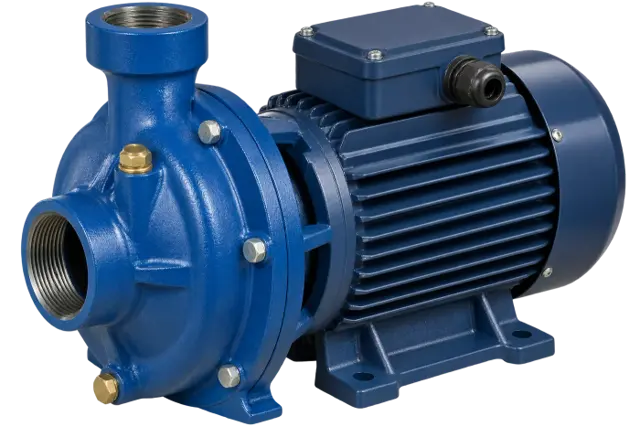
Surface pump for lifting water from tanks, canals and shallow sources into irrigation lines or header tanks, driven directly by a small PV array.
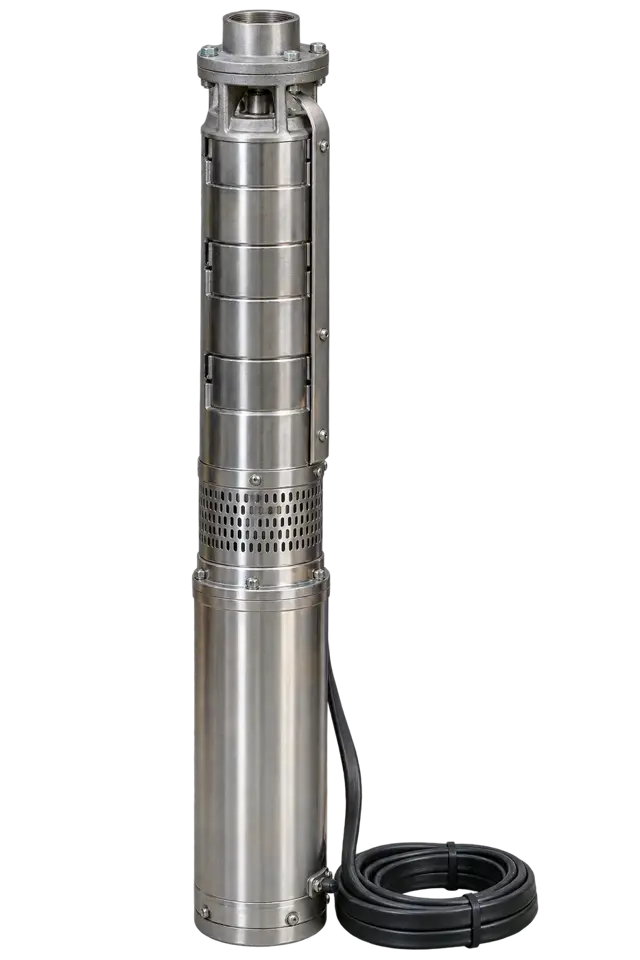
Six-inch borehole pump for farm-scale irrigation and date-palm plantations, replacing diesel pumpsets with a 10–11 kWp solar array.

Variable-frequency drive with built-in MPPT that runs standard three-phase AC pumps straight from PV, with dry-run, overload and tank-full protection.
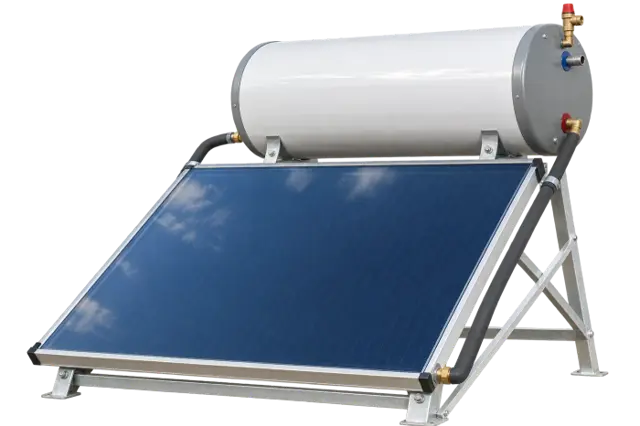
Rooftop flat-plate collector with an enamelled 200 L tank above it. No pump and no controller: the sun alone heats water for a family of four.
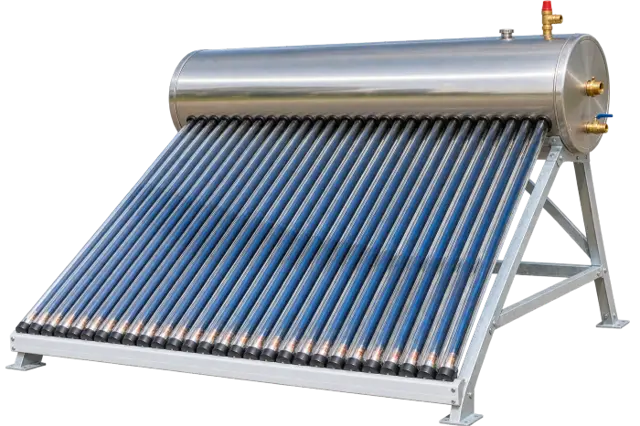
Pressurised heat-pipe system with 30 evacuated glass tubes and a 300 L stainless tank, sized for large villas, staff accommodation and small hotels.
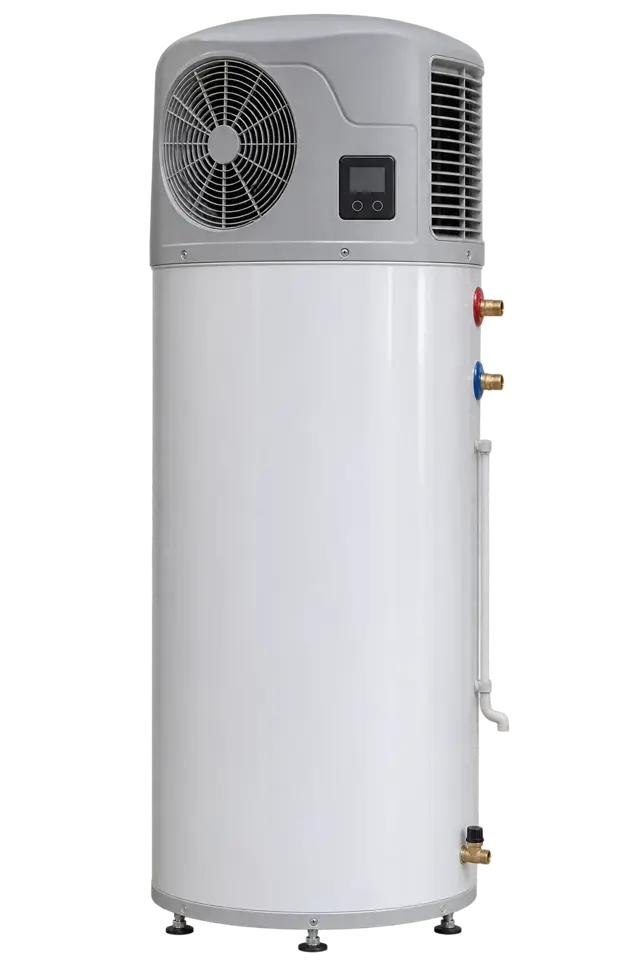
Air-source heat pump on top of a 300 L tank that makes hot water with a third of the electricity of an immersion heater. A good way to use surplus rooftop PV.
