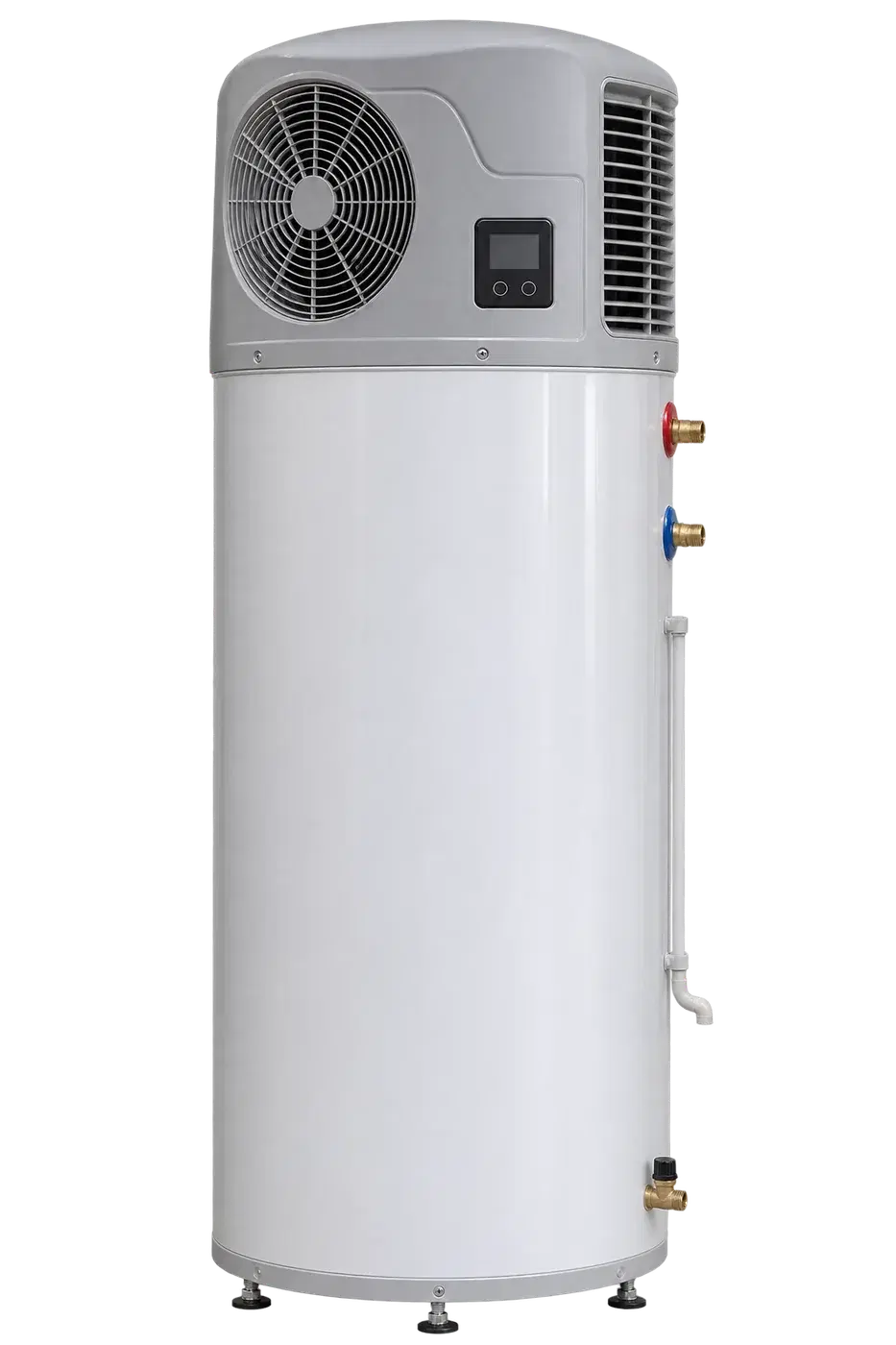
A heat-pump water heater moves heat from the surrounding air into the water using a compressor and refrigerant circuit, much like an air conditioner in reverse. For every 1 kWh of electricity it delivers 3–4 kWh of heat (COP 3–4), and in the warm Gulf climate COP stays high all year. The unit — compressor, evaporator and fan on top, 300 L enamelled or stainless tank with a wrap-around condenser below — heats water to 55–60 °C, with a 1.5–2 kW backup element for legionella cycles. Some models exhaust cool, dry air, which is a welcome side effect when installed in a utility room or garage.
It is the natural partner for PV because it is a large, flexible load. With a timer, a smart-grid input or a PV-surplus contact from the inverter or energy manager, the heat pump runs at midday on solar power and stores the energy as hot water for the evening — a 300 L tank holds about 12–14 kWh of heat for an electrical input of only 3–4 kWh. Compared with solar thermal it needs no extra roof space or plumbing to the roof, at the cost of some electricity and fan noise (typically 45–55 dB). Choose R290 or R134a refrigerant models, keep at least the recommended air volume around the unit, and plan a condensate drain.
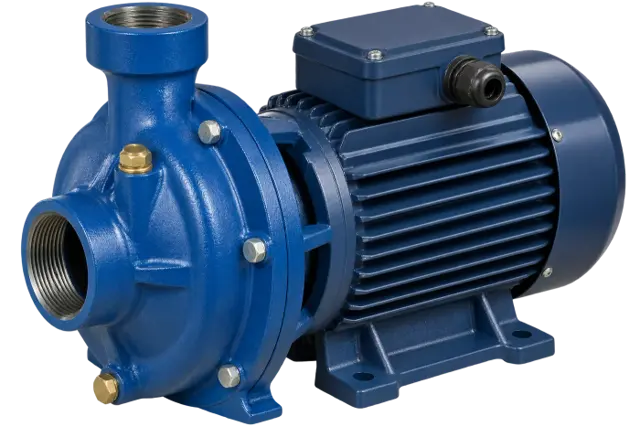
Surface pump for lifting water from tanks, canals and shallow sources into irrigation lines or header tanks, driven directly by a small PV array.

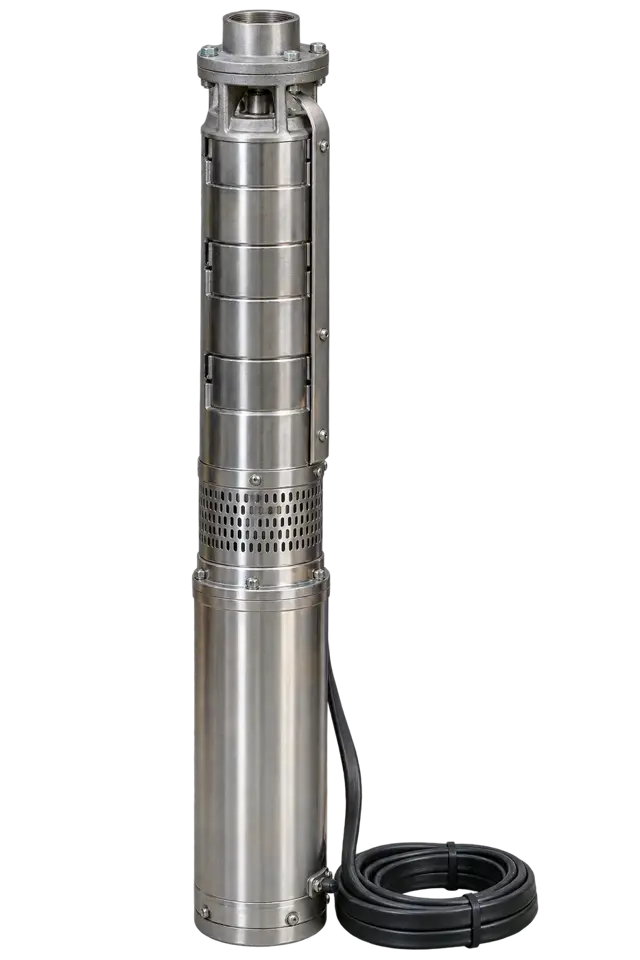
Multistage stainless submersible pump for 4-inch boreholes, for livestock, domestic supply and small-farm irrigation from wells up to about 120 m.
Six-inch borehole pump for farm-scale irrigation and date-palm plantations, replacing diesel pumpsets with a 10–11 kWp solar array.

Variable-frequency drive with built-in MPPT that runs standard three-phase AC pumps straight from PV, with dry-run, overload and tank-full protection.
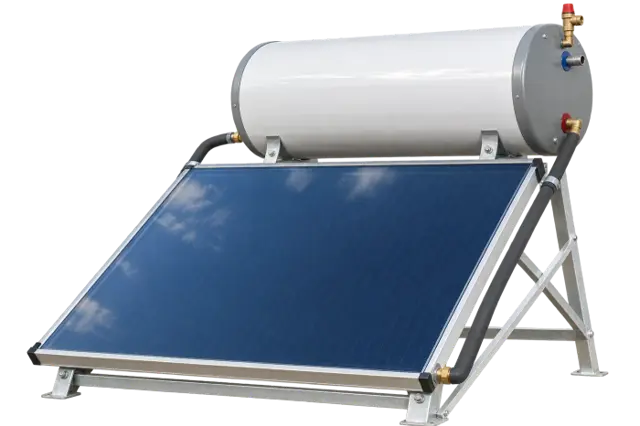
Rooftop flat-plate collector with an enamelled 200 L tank above it. No pump and no controller: the sun alone heats water for a family of four.
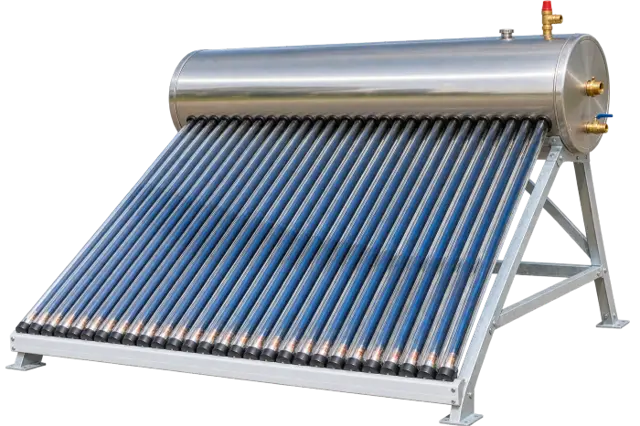
Pressurised heat-pipe system with 30 evacuated glass tubes and a 300 L stainless tank, sized for large villas, staff accommodation and small hotels.
