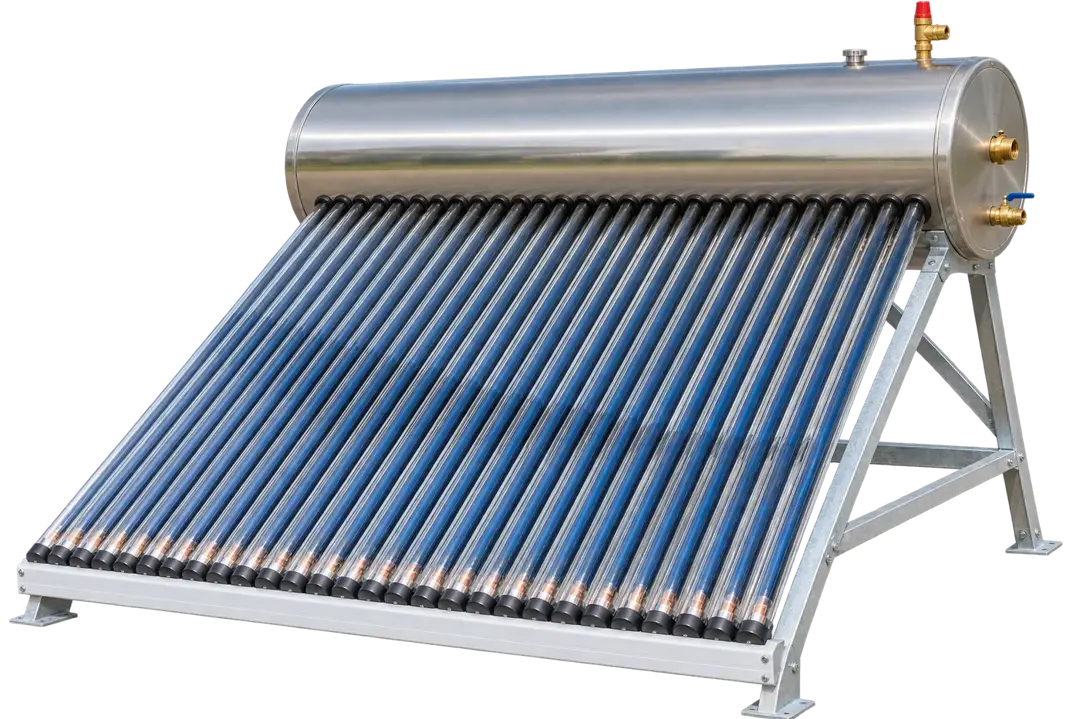
Each tube is a double-wall borosilicate glass cylinder with a vacuum between the walls and a selective coating on the inner wall — the vacuum all but eliminates heat loss, so evacuated tubes keep working on cool, windy or hazy days where flat plates lose output. Inside, a copper heat pipe containing a small amount of fluid evaporates, rises to a condenser bulb in the manifold and passes its heat to the tank water without the potable water ever entering the tubes. That makes the heat-pipe design pressurised (mains pressure up to about 6 bar), tolerant of hard water and easy to service: a broken tube can be replaced without draining the system.
A 300 L system with about 30 tubes (58 × 1800 mm) covers 5–7 people or a small guest house. In the Gulf, overheating is the main design issue — tubes can drive stagnation above 200 °C, so specify a T&P valve, a mixing valve, and consider tilting the collector more steeply (40–50°) to favour winter over summer, or installing a heat dump. Sand and dust reduce output; tubes clean easily with water. Expect 15–20 years of service, with anode checks every 1–2 years.
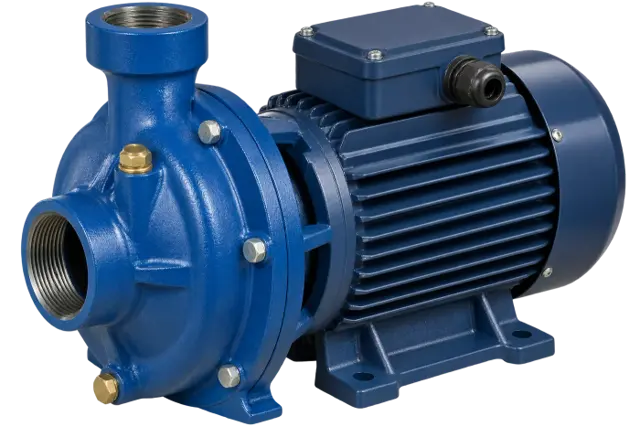
Surface pump for lifting water from tanks, canals and shallow sources into irrigation lines or header tanks, driven directly by a small PV array.

Multistage stainless submersible pump for 4-inch boreholes, for livestock, domestic supply and small-farm irrigation from wells up to about 120 m.
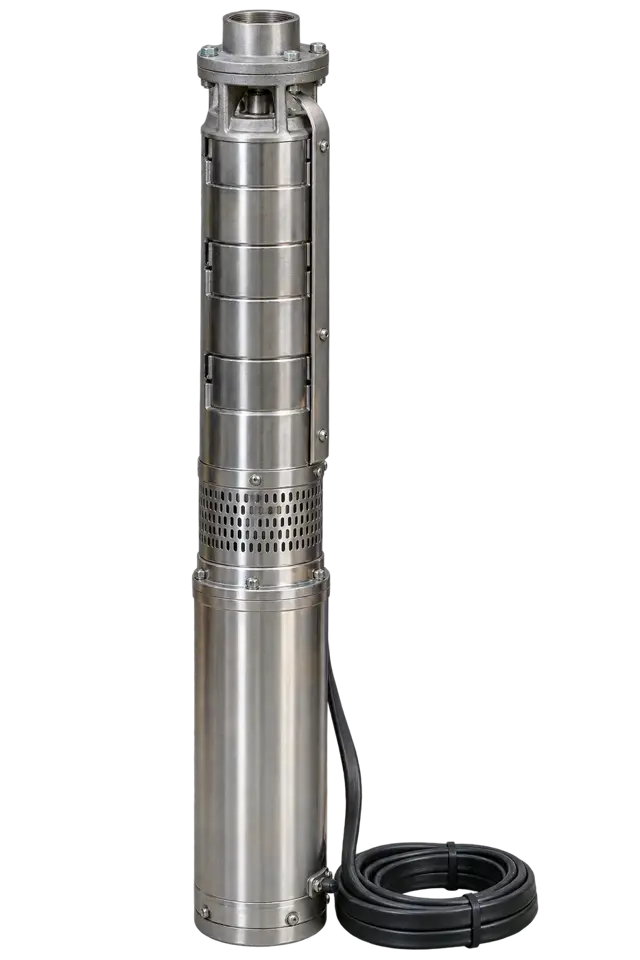
Six-inch borehole pump for farm-scale irrigation and date-palm plantations, replacing diesel pumpsets with a 10–11 kWp solar array.

Variable-frequency drive with built-in MPPT that runs standard three-phase AC pumps straight from PV, with dry-run, overload and tank-full protection.
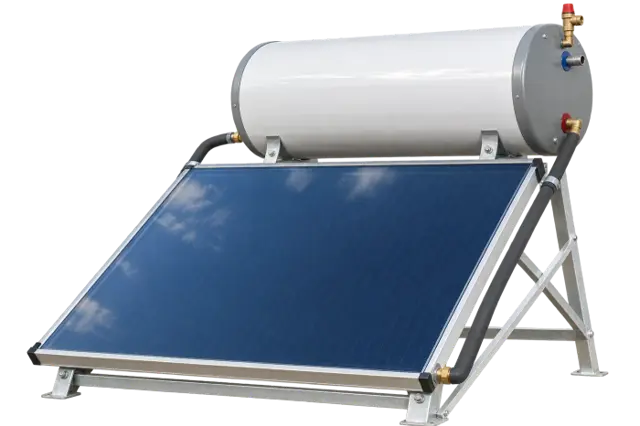
Rooftop flat-plate collector with an enamelled 200 L tank above it. No pump and no controller: the sun alone heats water for a family of four.
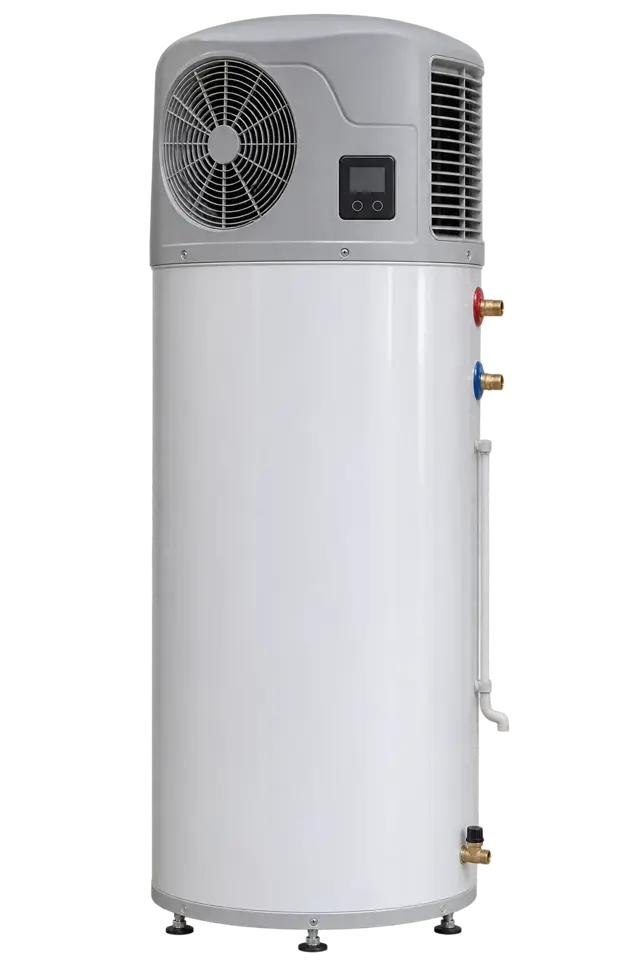
Air-source heat pump on top of a 300 L tank that makes hot water with a third of the electricity of an immersion heater. A good way to use surplus rooftop PV.
