
A solar project is ultimately judged on its cash flows. A financial model brings together the energy yield (P50 and P90), capital cost, operating costs, tariff or PPA price, degradation, inflation, tax and financing terms, and calculates the levelised cost of energy (LCOE), project and equity IRR, payback period and net present value year by year over the project life.
For projects with debt, the model sizes the loan against a target debt service coverage ratio, usually on the P90 or P99 energy case, and tests the covenants. Sensitivity and scenario tables — capex 10% higher, yield 5% lower, a delayed commercial operation date — show which assumptions really matter. A bankable model is transparent: inputs kept apart from calculations, no hard-coded numbers, and built-in checks that flag errors.
We build models for C&I self-consumption, PPA and utility-scale projects, or review existing ones before they go to a lender. The indicative price is for a standard project model with a short assumptions report.

Multi-brand web portal and phone app for live production, alarms and automated reports across one site or a whole portfolio.

Work orders, ticketing, preventive maintenance plans and spare-parts stock for teams looking after many PV sites.
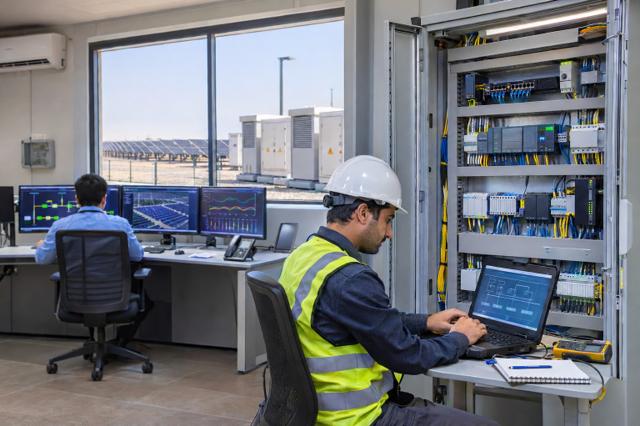
Engineering service to configure plant SCADA and the power plant controller, map every signal and prove grid-code performance at commissioning.

Hourly energy simulation with meteo data and detailed loss modelling, producing P50/P90 yields and reports that lenders accept.
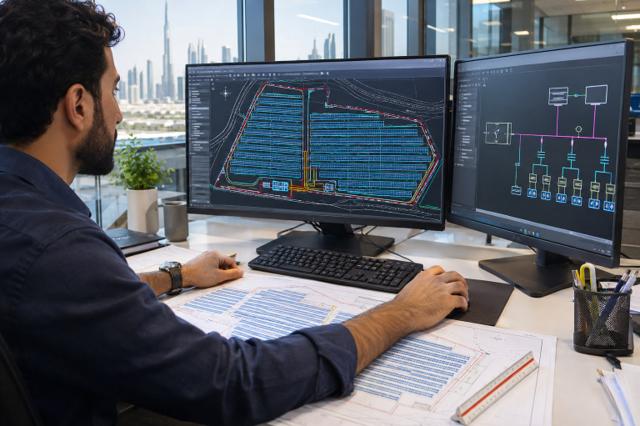
Array layout, row spacing, string plans, single-line diagrams and cable routing, from first sketch to construction drawings.
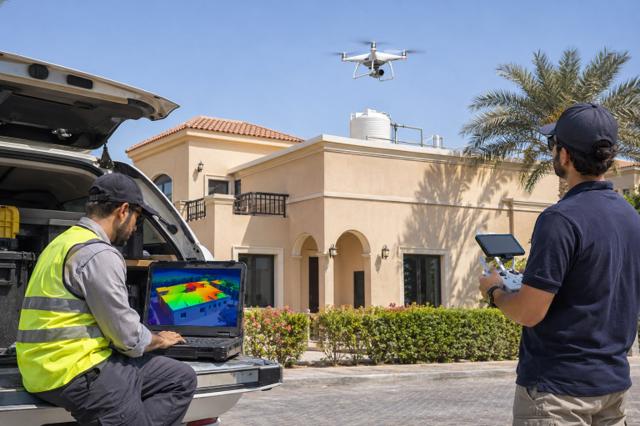
Accurate 3D model of a roof or site from a drone survey, used to quantify shading losses before the design is fixed.
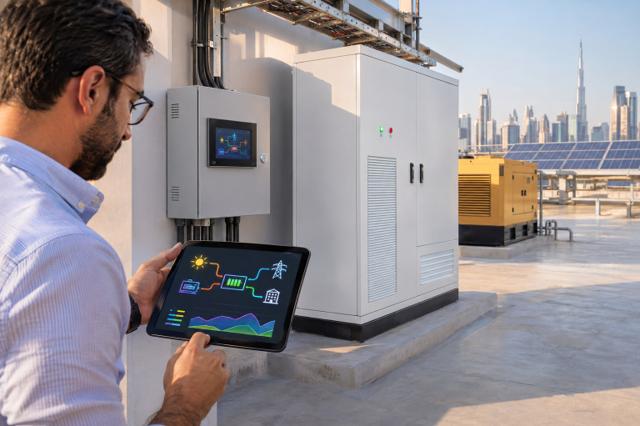
Controller and software that coordinate PV, batteries, generator and grid to cut energy cost, respect export limits and keep critical loads running.
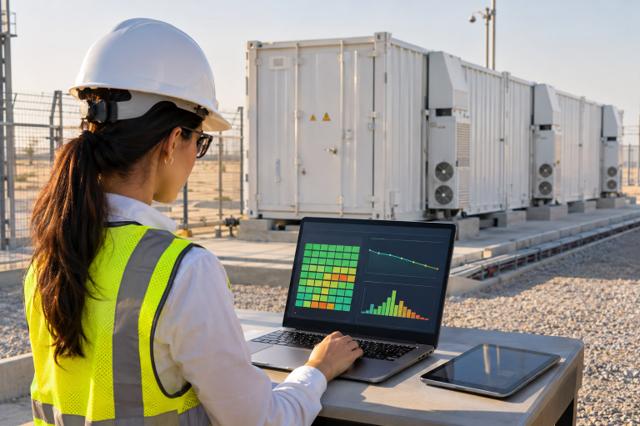
Cloud analysis of BMS data to track state of health, cell imbalance and degradation, and to build evidence for warranty claims.
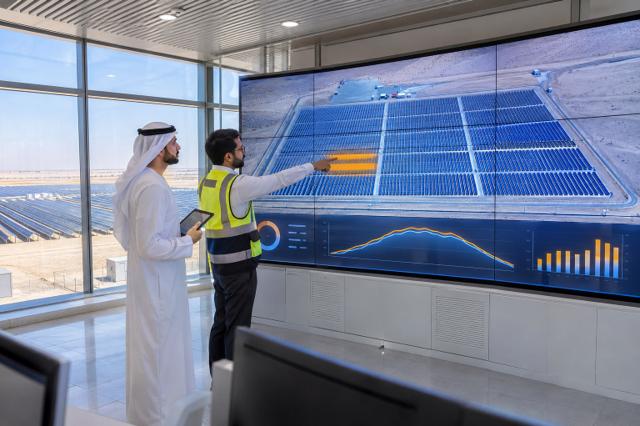
Physics-based model of the actual plant that runs alongside it, comparing expected and measured output to locate faults and losses.

Connecting plant data to ERP, BI dashboards, billing systems or the utility over Modbus, IEC 104, MQTT and REST.
