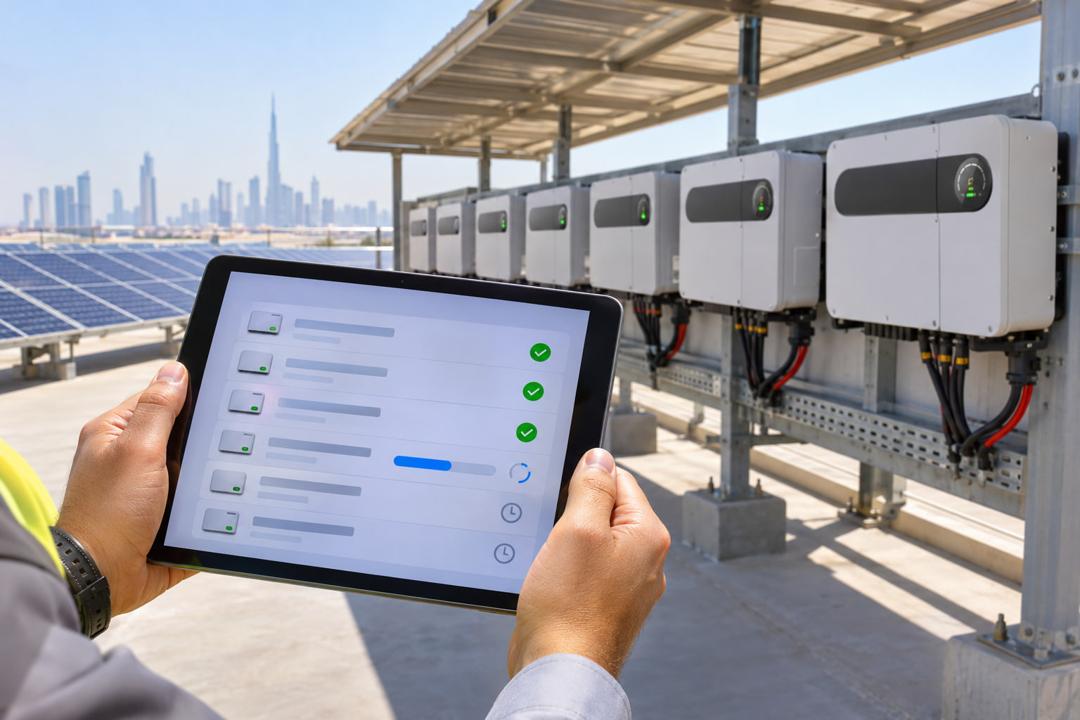
Inverter, logger and battery manufacturers release firmware to fix bugs, close security gaps, add grid-code functions or improve MPPT and battery behaviour. Updating hundreds of devices with a laptop on site is slow and expensive. Doing it remotely is efficient, but carries risk if an update fails halfway or changes a setting that the utility has already approved.
A managed FOTA service treats firmware as a controlled change: review the release notes and compatibility with each hardware revision, test on a pilot device, roll out in stages outside production hours, check afterwards that grid settings and communication are unchanged, and keep a register of which version runs on every device. If a problem appears, devices are rolled back to the previous version. Where an update affects grid-protection settings, the utility may need to be notified in advance.
The indicative price is per site per year and covers tracking new releases, planned update campaigns and records. It assumes the devices support remote updates through the manufacturer's platform or the site logger.

Multi-brand web portal and phone app for live production, alarms and automated reports across one site or a whole portfolio.

Work orders, ticketing, preventive maintenance plans and spare-parts stock for teams looking after many PV sites.
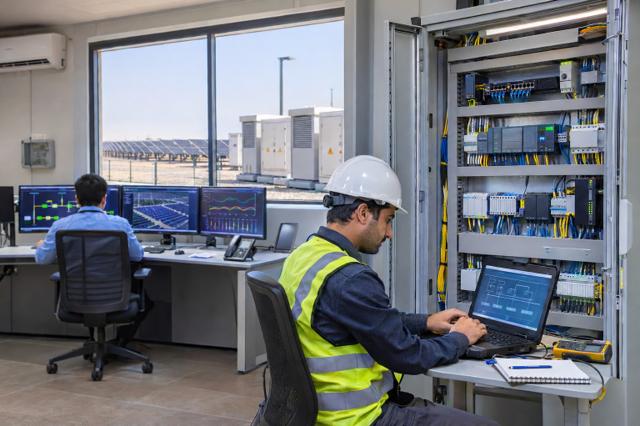
Engineering service to configure plant SCADA and the power plant controller, map every signal and prove grid-code performance at commissioning.

Hourly energy simulation with meteo data and detailed loss modelling, producing P50/P90 yields and reports that lenders accept.

Array layout, row spacing, string plans, single-line diagrams and cable routing, from first sketch to construction drawings.
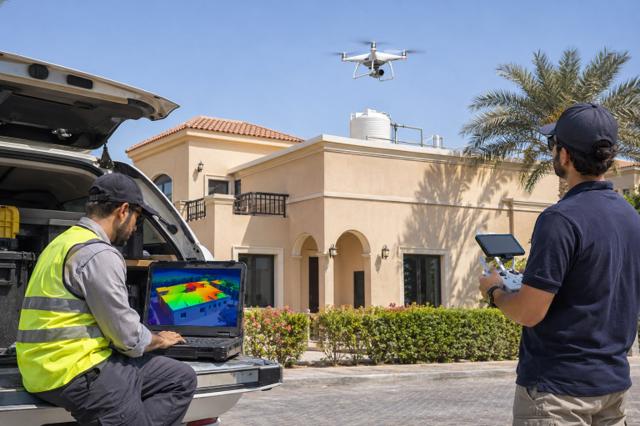
Accurate 3D model of a roof or site from a drone survey, used to quantify shading losses before the design is fixed.
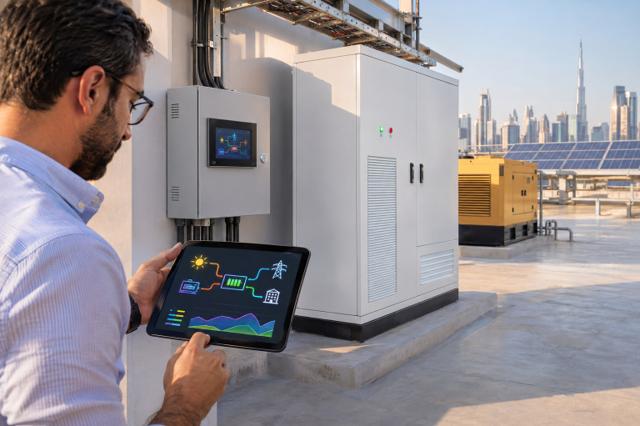
Controller and software that coordinate PV, batteries, generator and grid to cut energy cost, respect export limits and keep critical loads running.
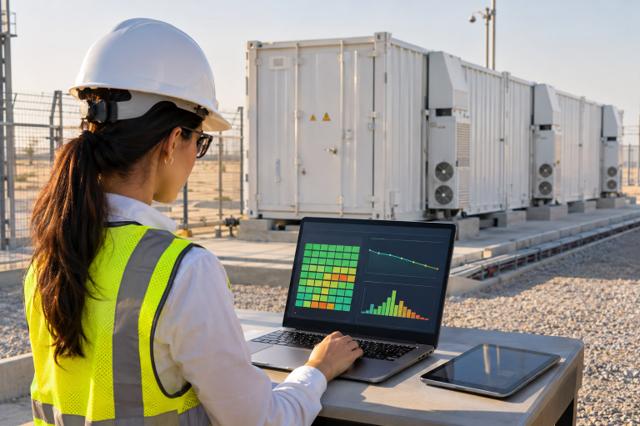
Cloud analysis of BMS data to track state of health, cell imbalance and degradation, and to build evidence for warranty claims.
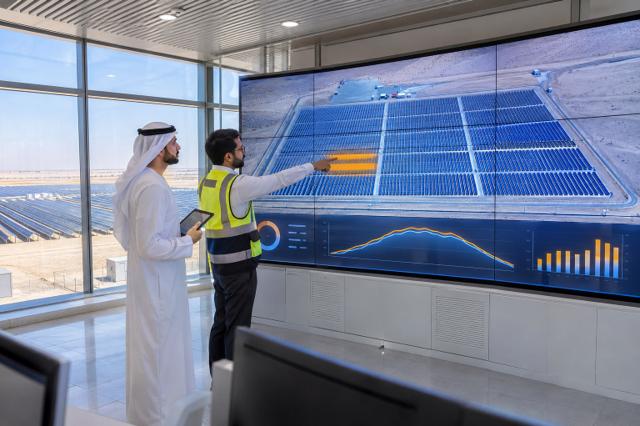
Physics-based model of the actual plant that runs alongside it, comparing expected and measured output to locate faults and losses.

Connecting plant data to ERP, BI dashboards, billing systems or the utility over Modbus, IEC 104, MQTT and REST.
