
Before asking for a quote, it helps to see roughly what a system would look like and how much it would produce. Our solar simulator does exactly that, right here on this website, with nothing to install (open it from Solar simulator in the main menu). You pick a location on a world map, and the tool retrieves long-term solar radiation and temperature data for that point from public datasets (NASA POWER and PVGIS), so the estimate reflects the actual local climate rather than a national average.
You can then place panels in a 3D view, set tilt and orientation, and see the expected monthly and annual energy yield. The simulator also builds a parts list — modules, inverter, mounting and the main electrical items — with an indicative cost in USD based on catalogue prices.
The results are a planning estimate, not a design: shading from nearby objects, roof condition, local regulations and the final equipment choice are confirmed during a site survey. There is no charge for using the simulator, and the result is a convenient starting point when you contact us for a proposal.

Multi-brand web portal and phone app for live production, alarms and automated reports across one site or a whole portfolio.
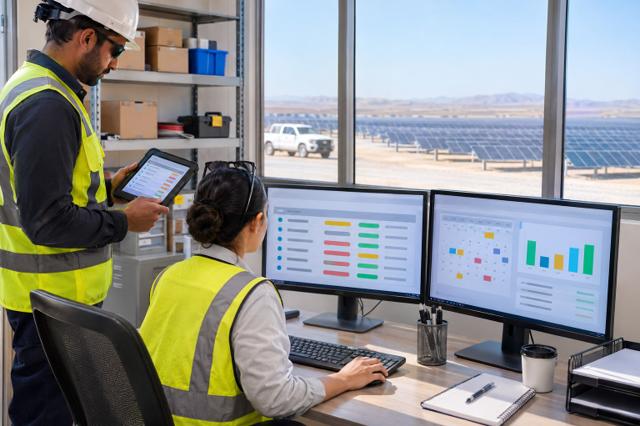
Work orders, ticketing, preventive maintenance plans and spare-parts stock for teams looking after many PV sites.
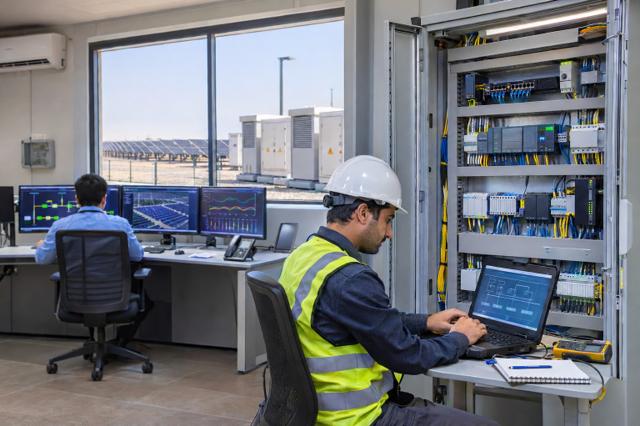
Engineering service to configure plant SCADA and the power plant controller, map every signal and prove grid-code performance at commissioning.
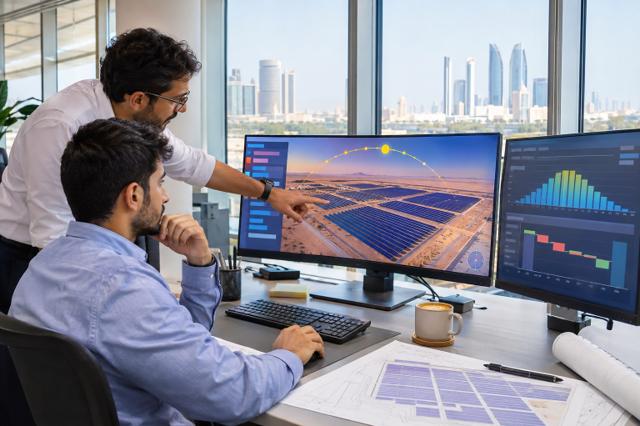
Hourly energy simulation with meteo data and detailed loss modelling, producing P50/P90 yields and reports that lenders accept.
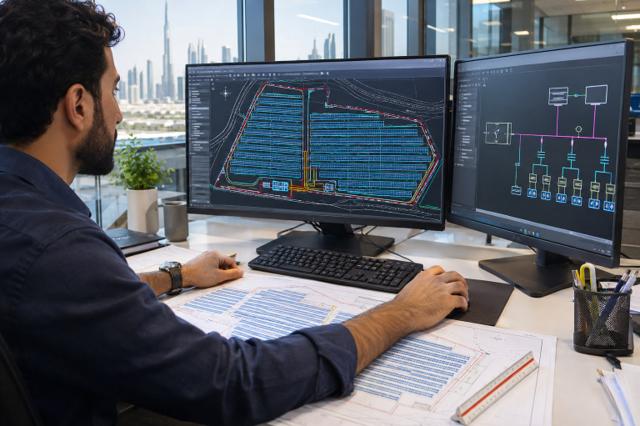
Array layout, row spacing, string plans, single-line diagrams and cable routing, from first sketch to construction drawings.
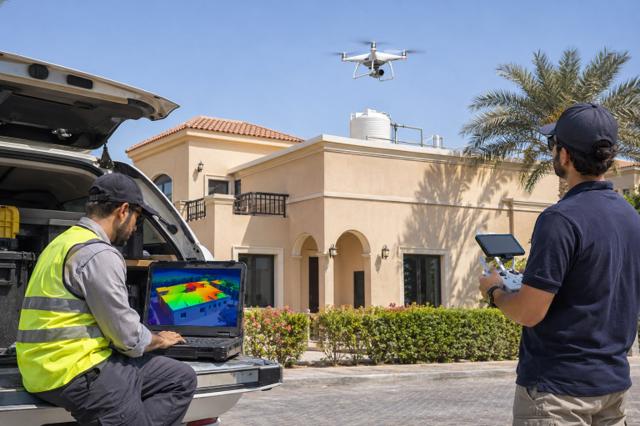
Accurate 3D model of a roof or site from a drone survey, used to quantify shading losses before the design is fixed.
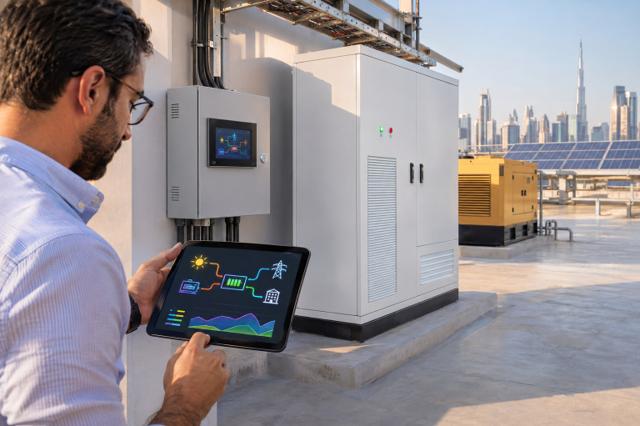
Controller and software that coordinate PV, batteries, generator and grid to cut energy cost, respect export limits and keep critical loads running.
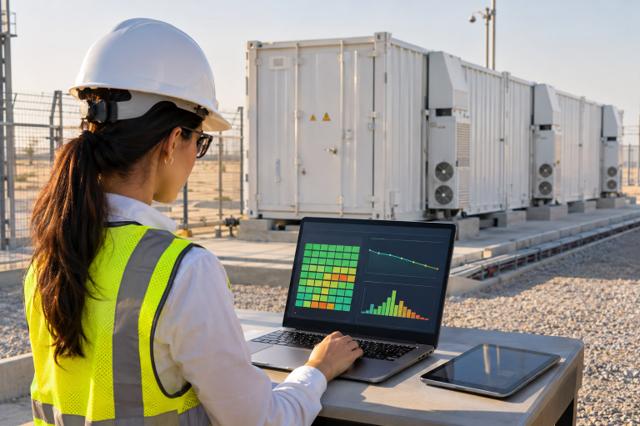
Cloud analysis of BMS data to track state of health, cell imbalance and degradation, and to build evidence for warranty claims.
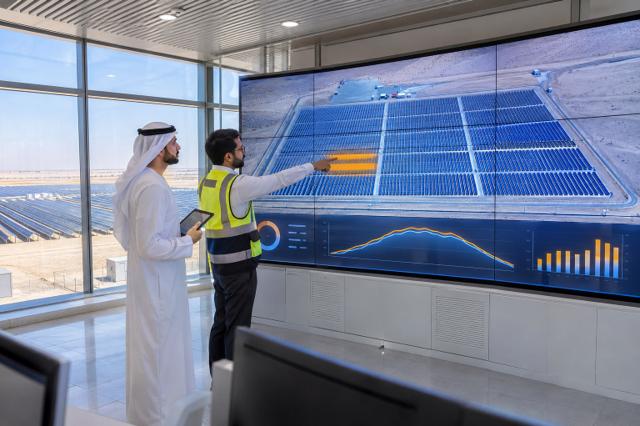
Physics-based model of the actual plant that runs alongside it, comparing expected and measured output to locate faults and losses.

Connecting plant data to ERP, BI dashboards, billing systems or the utility over Modbus, IEC 104, MQTT and REST.
