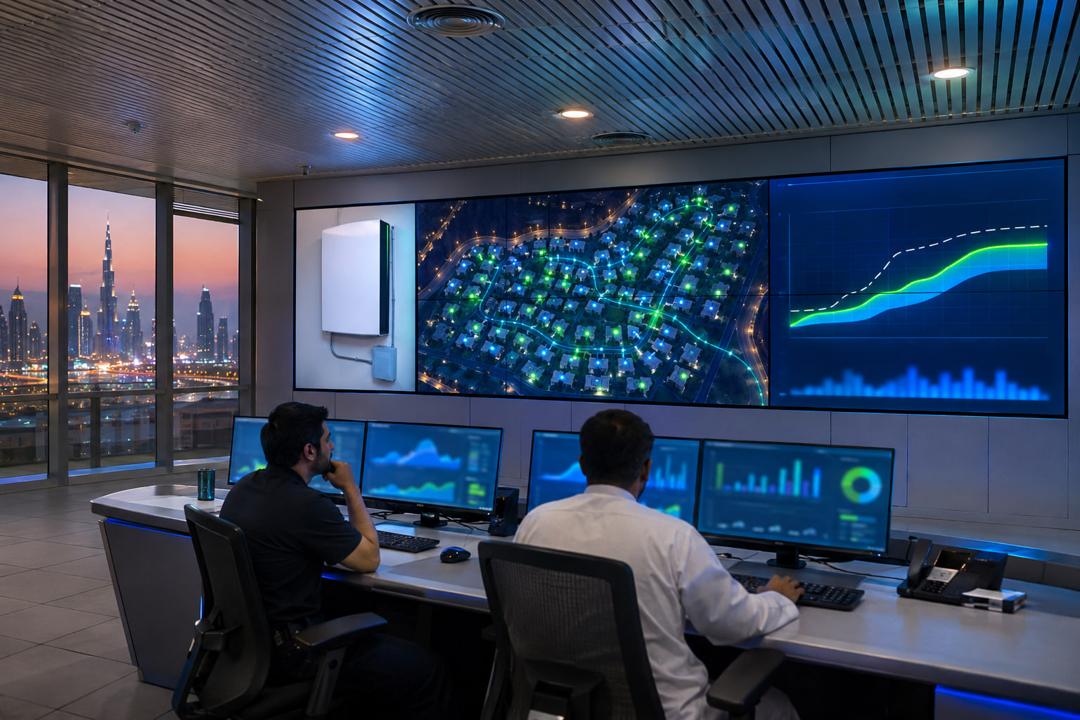
A single home battery is too small to matter to a grid operator, but a few thousand of them, controlled together, behave like a power plant. A VPP platform connects to distributed batteries, PV inverters and flexible loads, forecasts how much capacity each can offer, and responds to grid signals — reducing peak demand, absorbing a midday solar surplus or providing frequency response — while respecting each owner's backup reserve and preferences.
Whether a VPP makes sense depends on the market. There has to be a programme or tariff that pays for flexibility, rules that let aggregated small units take part, and reliable two-way communication with every device. Several markets already run such programmes; in the Gulf the frameworks are at an earlier stage, so current opportunities lie mainly in demand response for large commercial and industrial consumers and in utility pilots.
We can advise on device compatibility and integration so that a portfolio installed today is ready to join a VPP programme later. Pricing is on request and depends on the programme and the number of devices.

Multi-brand web portal and phone app for live production, alarms and automated reports across one site or a whole portfolio.

Work orders, ticketing, preventive maintenance plans and spare-parts stock for teams looking after many PV sites.
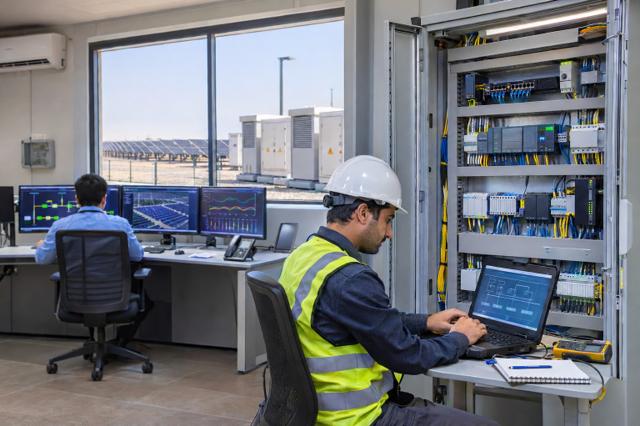
Engineering service to configure plant SCADA and the power plant controller, map every signal and prove grid-code performance at commissioning.

Hourly energy simulation with meteo data and detailed loss modelling, producing P50/P90 yields and reports that lenders accept.
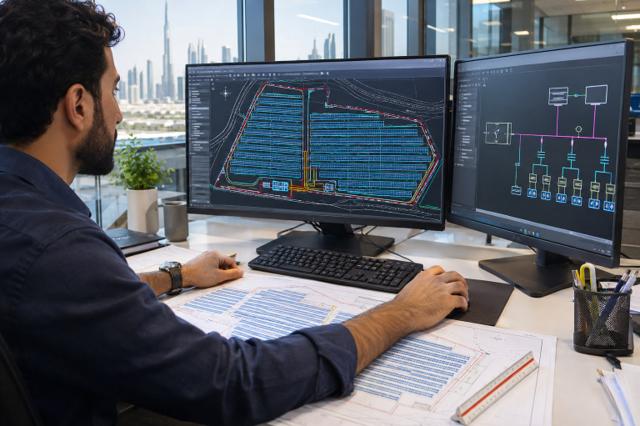
Array layout, row spacing, string plans, single-line diagrams and cable routing, from first sketch to construction drawings.
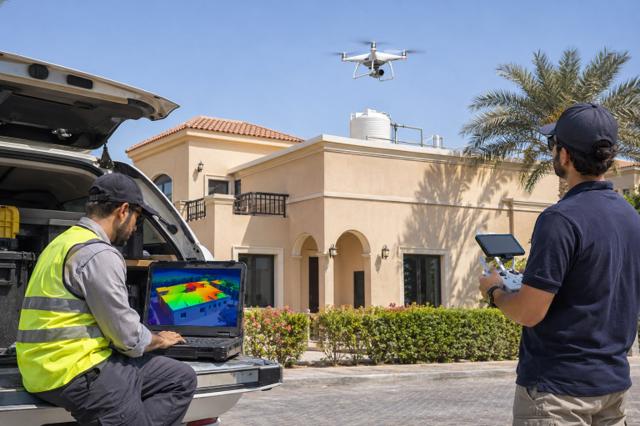
Accurate 3D model of a roof or site from a drone survey, used to quantify shading losses before the design is fixed.
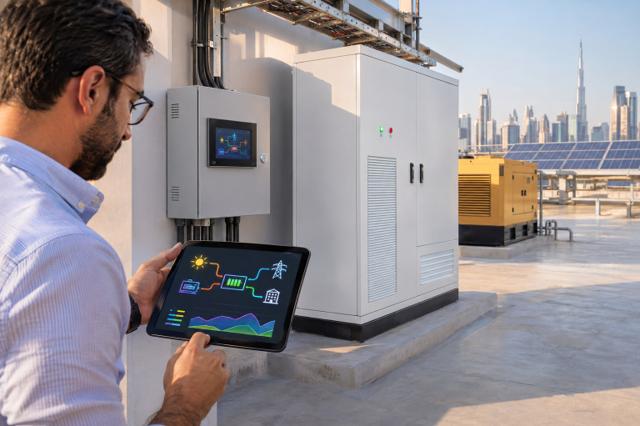
Controller and software that coordinate PV, batteries, generator and grid to cut energy cost, respect export limits and keep critical loads running.
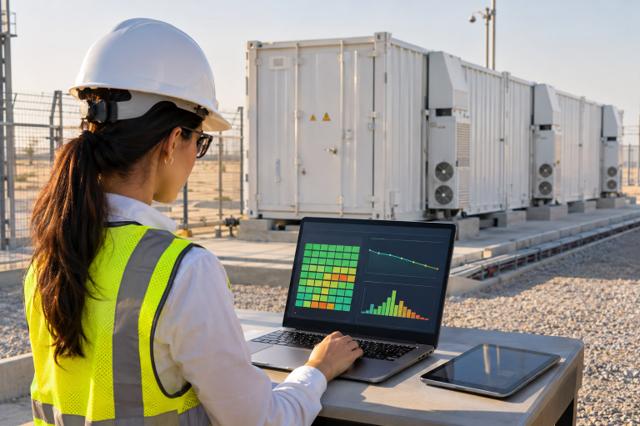
Cloud analysis of BMS data to track state of health, cell imbalance and degradation, and to build evidence for warranty claims.
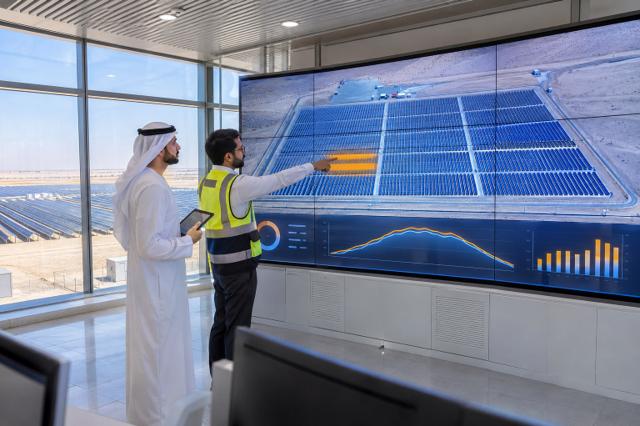
Physics-based model of the actual plant that runs alongside it, comparing expected and measured output to locate faults and losses.

Connecting plant data to ERP, BI dashboards, billing systems or the utility over Modbus, IEC 104, MQTT and REST.
