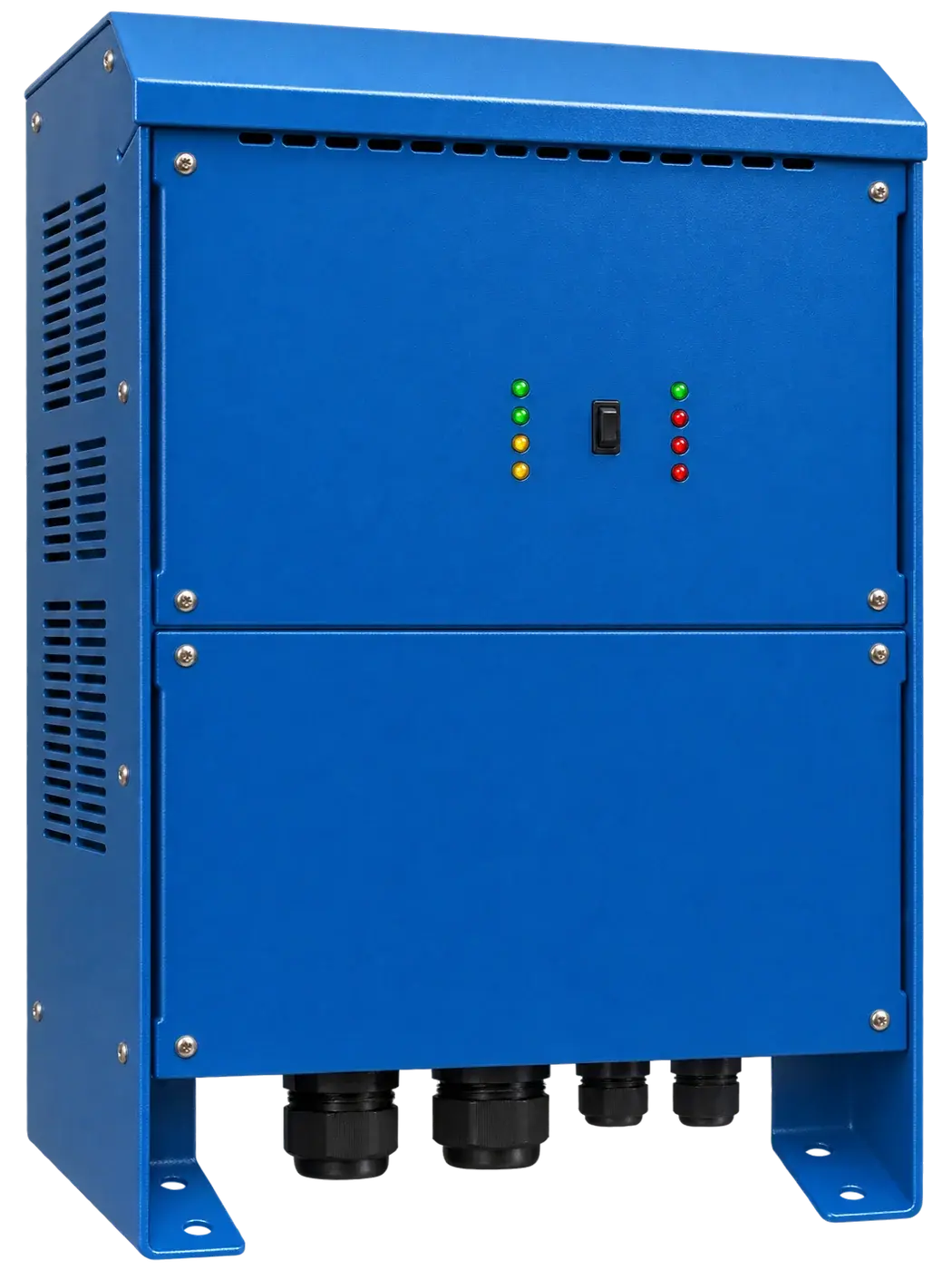
Low-frequency (LF) inverters switch battery DC through a heavy copper-wound toroidal or EI transformer that steps it up to 230 V. The transformer acts as an energy reservoir, so a 3 kW LF unit can deliver around 9 kW for several seconds — enough to start a 1.5 hp borehole pump, a workshop compressor or a refrigerator that would trip a high-frequency inverter of the same rating. The trade-off is weight (30–40 kg versus 8–12 kg) and a higher idle consumption of 30–50 W.
The same transformer works in reverse as a battery charger (typically 40–80 A at 24 V) when grid or generator power is present, and an internal relay transfers loads in under 10–20 ms. Charge profiles cover flooded, AGM, gel and LFP; for lithium, use a model with BMS communication or at least programmable absorption and float voltages. Some models accept an external MPPT controller for solar; others integrate one.
At 24 V, 3 kW of AC load draws about 140 A from the battery, so use 50–70 mm² battery cables no longer than 2 m and a 200 A class-T fuse. Size the battery for the surge too: an LFP bank must allow peak discharge currents of 300+ A for a few seconds. LF inverters remain the robust choice for farms, rural clinics and sites with motor loads and long generator hours.
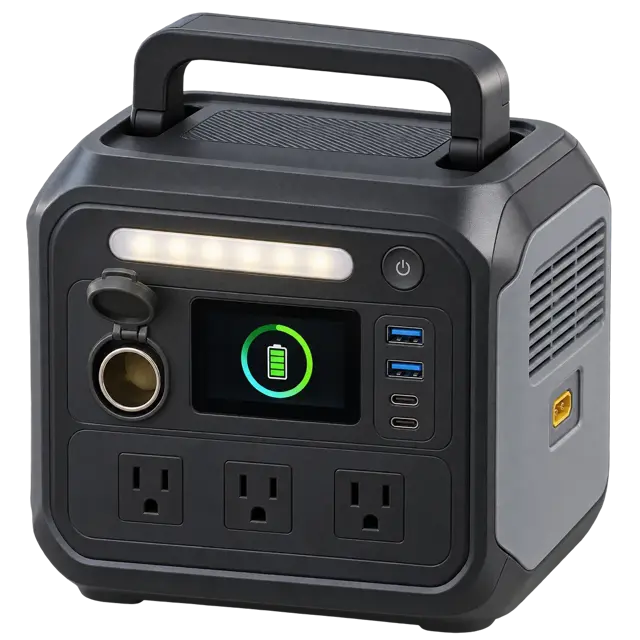
All-in-one battery, MPPT solar charger and pure-sine inverter in a carry case. Good for camping, site tools, mobile work and keeping essentials running at home.
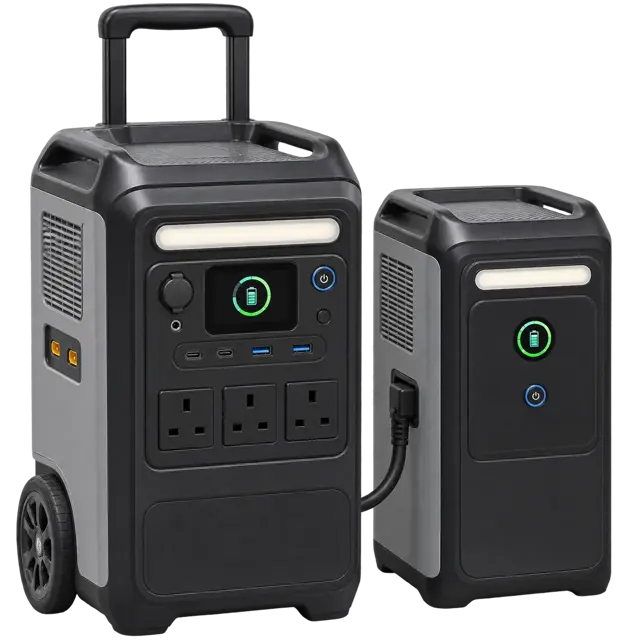
Wheeled LFP power unit with 3.6 kW inverter, dual MPPT inputs and add-on battery packs up to about 20 kWh: home backup with no installer needed.
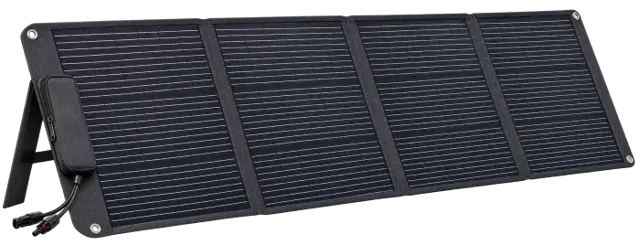
ETFE-laminated monocrystalline panel that folds into a briefcase with kickstands. Connects to power stations through an MC4 or XT60 adaptor.
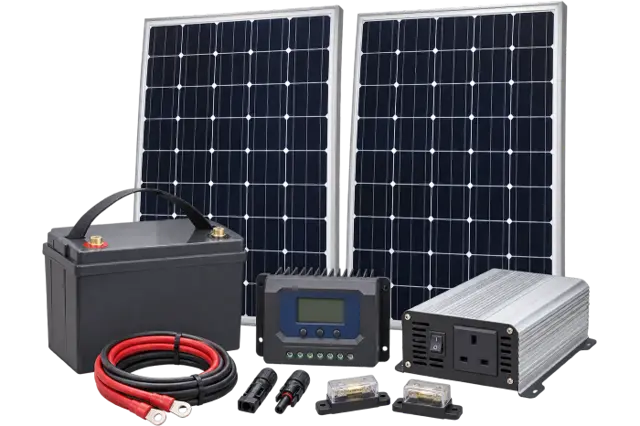
Complete small system for cabins, kiosks, campers and farm huts: 2 × 200 W panels, 30 A MPPT, 12.8 V 100 Ah LFP battery, 1 kW pure-sine inverter, cables and fuses.
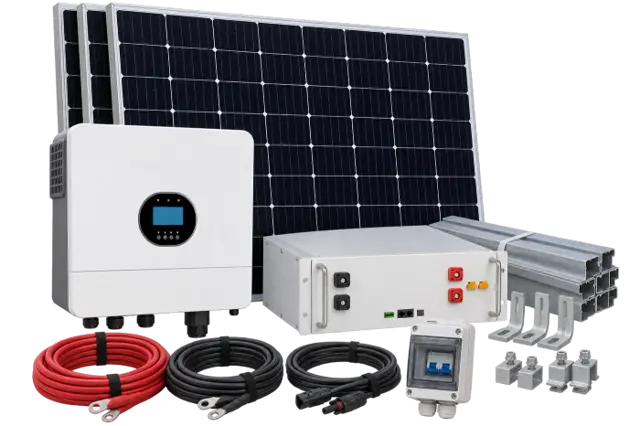
Cabin, farm or remote-site package: 1.5 kWp of modules, an all-in-one 3 kW inverter with built-in MPPT and charger, 25.6 V 200 Ah LFP, mounting and wiring.
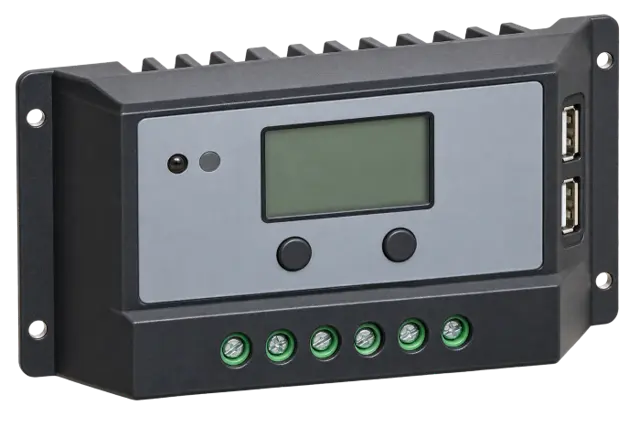
Low-cost controller for small 12/24 V systems with panels matched to battery voltage; LCD, USB outputs and selectable lead-acid or lithium profiles.

Tracks the panel's maximum power point and converts excess voltage into charging current. Handles up to 3.2 kW of PV at 48 V, with Bluetooth monitoring and lithium profiles.

Heavy-duty controller for 48 V battery banks up to 5.8 kW of PV, with longer strings, parallel operation and network monitoring for farms, telecom and remote sites.
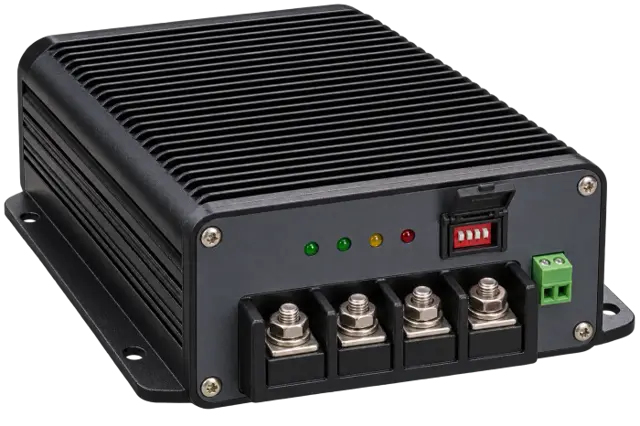
Charges a vehicle or boat house battery from the alternator and roof panels at the same time, with the correct lithium profile and starter-battery protection.
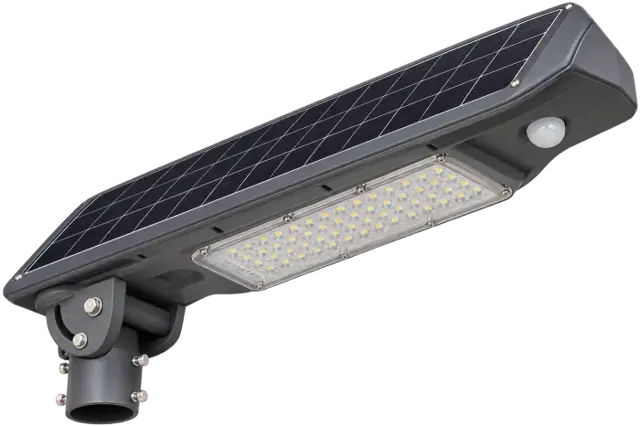
Panel, LFP battery, controller, LED head and motion sensor in one housing for 6–8 m poles. Lights roads, compounds and car parks with no trenching or grid connection.
