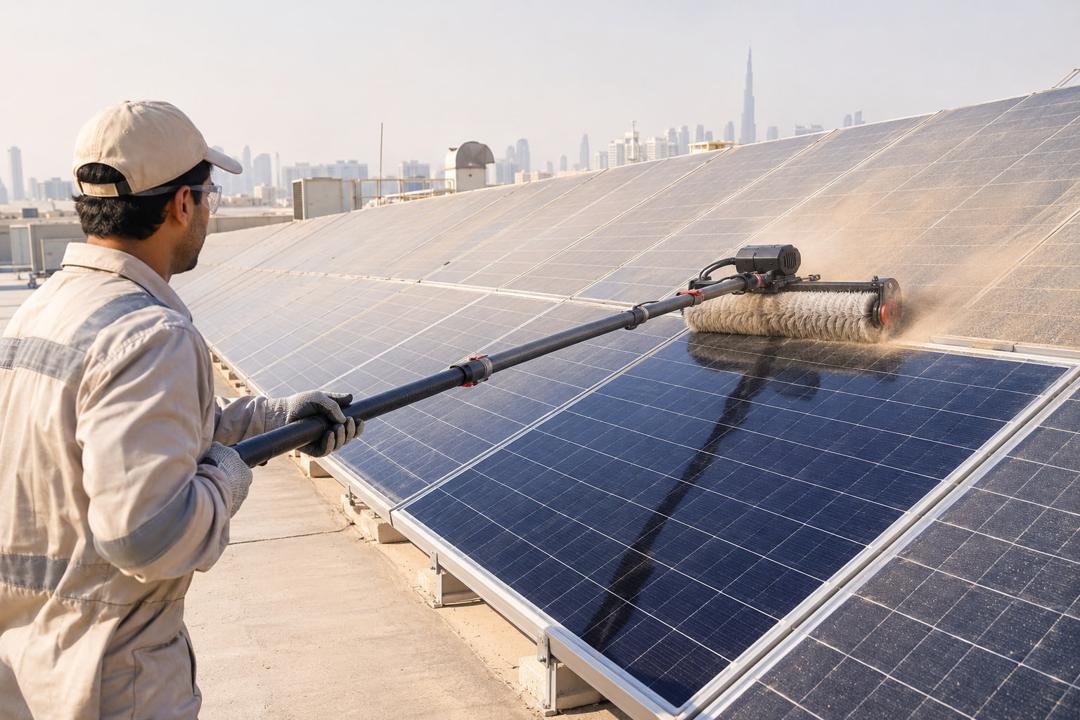
For rooftops and plants where robots are not economical, a semi-automatic brush lets one operator clean 2–4 times faster than with a squeegee. The soft nylon or microfiber roller spins at low speed to lift dust without scratching the anti-reflective coating; a water hose can be attached for sticky dirt such as bird droppings or the dust-and-dew crust common on GCC mornings.
Never use high-pressure jets, detergents or abrasive pads, and avoid cleaning hot glass with cold water around midday, as the thermal shock can crack cells. Early morning or evening cleaning is best.
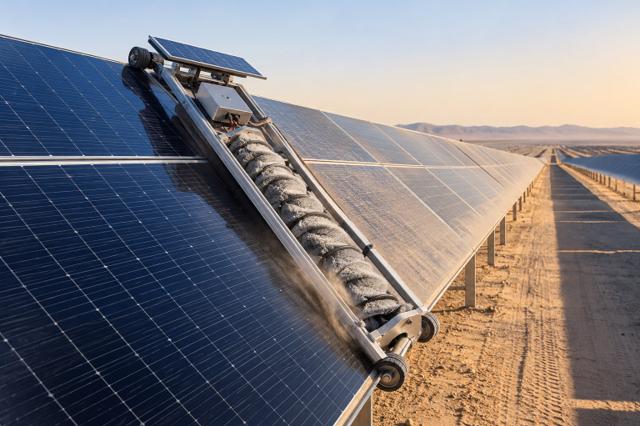
Autonomous microfiber-brush robot that cleans a full table row every night without water; the standard for desert utility plants.
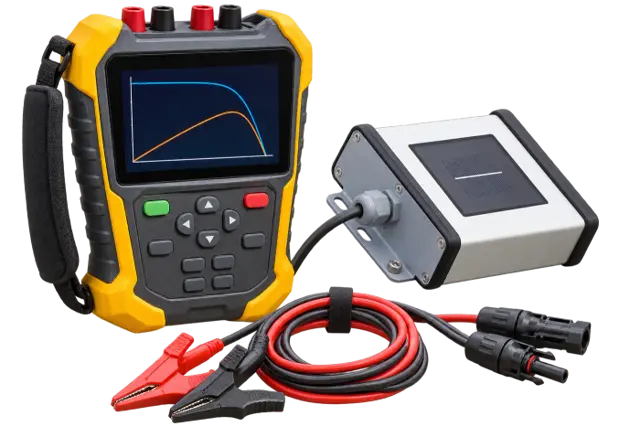
Field instrument that measures the full current-voltage curve of a string and compares it with the datasheet at STC.
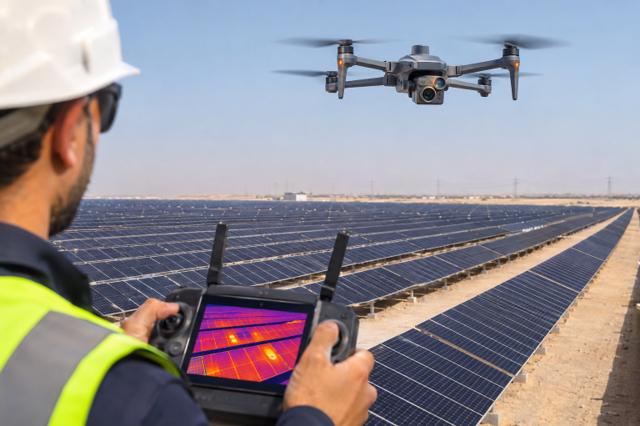
Aerial infrared survey that detects hot spots, failed diodes, disconnected strings and cracked modules across an entire plant in hours.

CAT III 1500 V kit: insulation resistance, Voc, Isc, polarity, earth continuity and DC clamp current for commissioning and fault-finding.

Arc-rated clothing, face shield, insulated gloves and safety footwear for work on live PV DC and LV AC equipment.
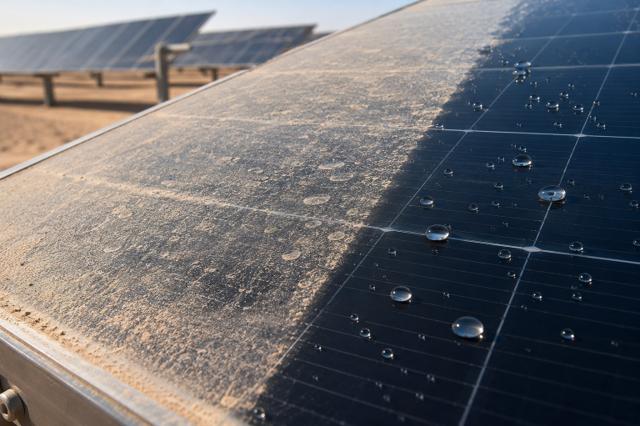
Optional nano-coating applied on site that reduces dust adhesion and makes cleaning easier; lasts 1–3 years.
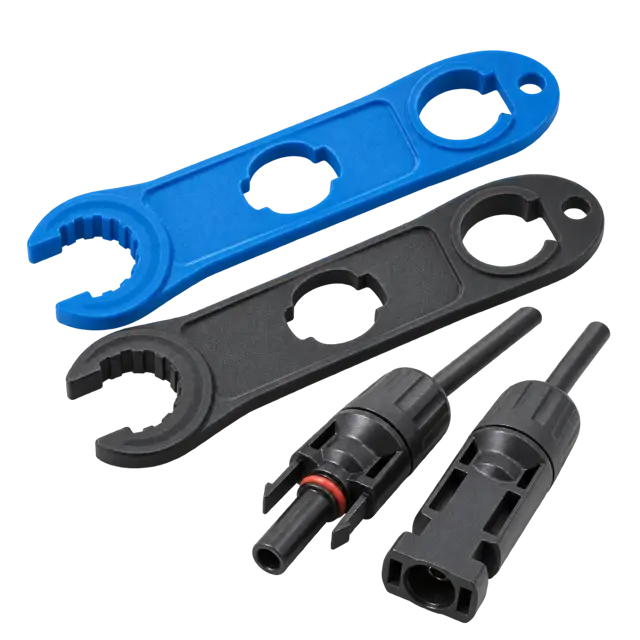
Pair of glass-fibre reinforced spanners for tightening MC4 cable glands and releasing the locking latches without damaging the housing.

Pocket meter reading plane-of-array irradiance in W/m² and module back-sheet temperature — the quick reference for commissioning and performance checks.
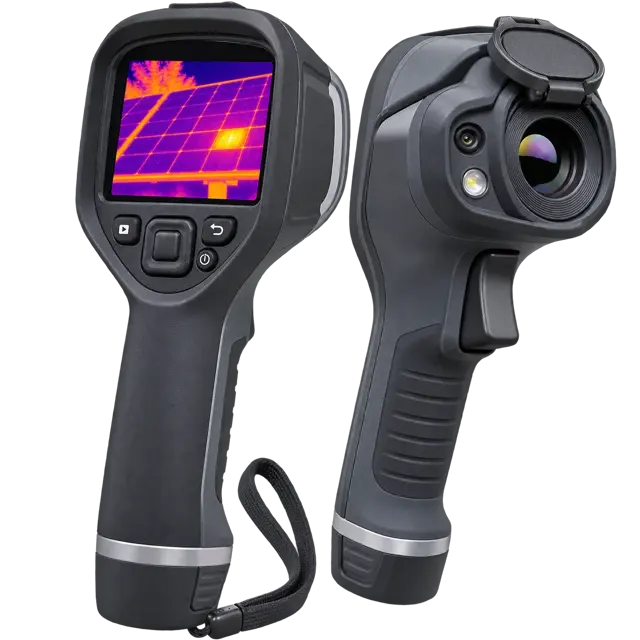
Radiometric infrared camera for finding hot cells, failed bypass diodes, loose terminals and overheated fuses in modules, combiner boxes and switchboards.

Measures earth electrode resistance and soil resistivity with stakes, plus stakeless clamp testing of individual rods in a meshed earthing system.
