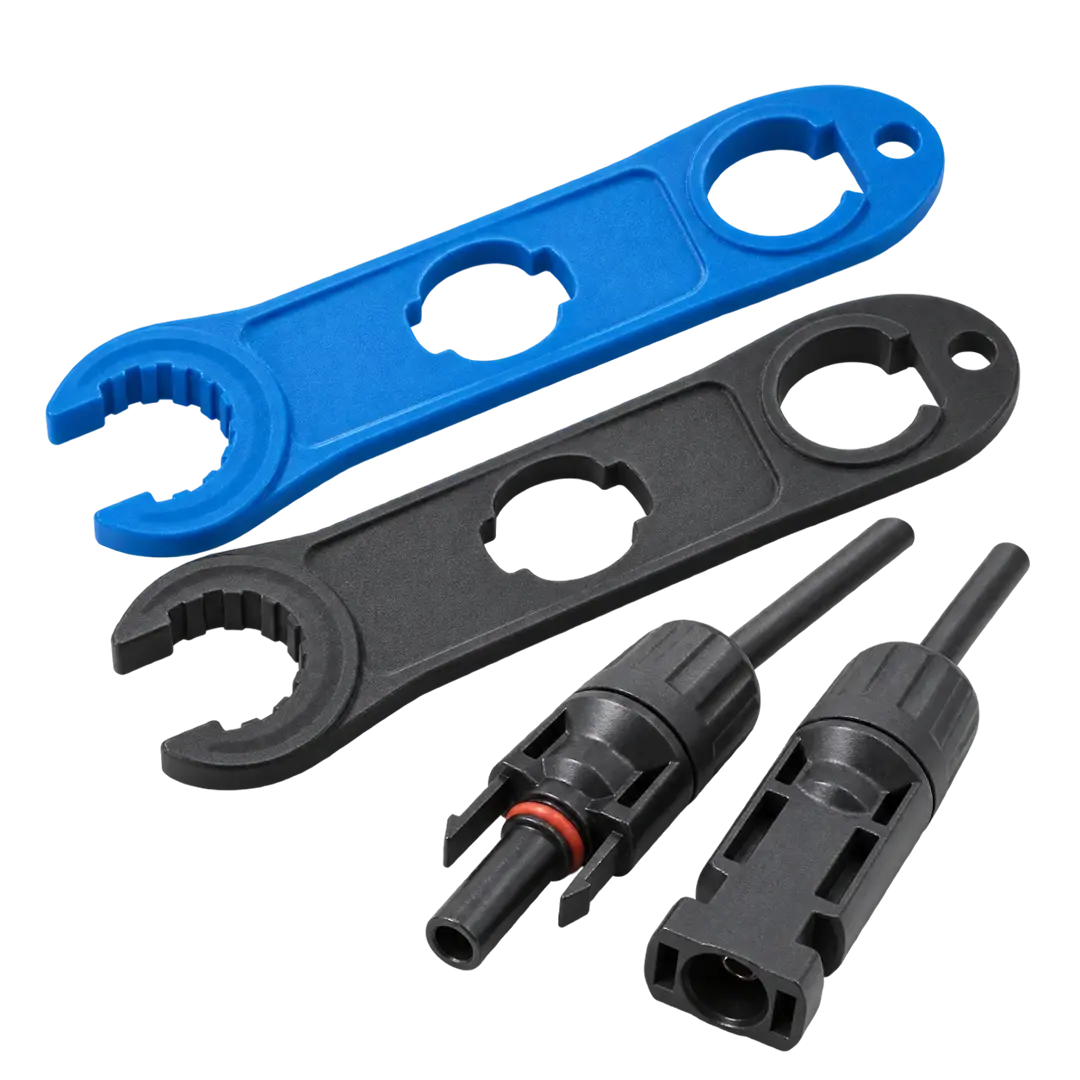
An MC4-type connector only reaches its IP67/IP68 rating when the rear cable nut is tightened to the specified torque — typically about 2.5–3 N·m — so the seal grips the cable sheath evenly. Hand-tightening is not enough, and pliers crack the housing or crush the seal. The spanner set holds the coupler body with one tool and turns the nut with the other; the open end of the second spanner also presses both locking latches at once, so mated connectors can be separated without a screwdriver.
On O&M rounds the spanners are used whenever a string is opened for IV-curve testing, insulation tests or a module swap. Always isolate the string first: never unplug a connector under load, because the DC arc can burn the contacts and the technician. Replace any connector that shows browning, a melted latch or a loose nut, and only mate connectors of the same make and type — cross-mating is a common cause of hot joints in desert plants.
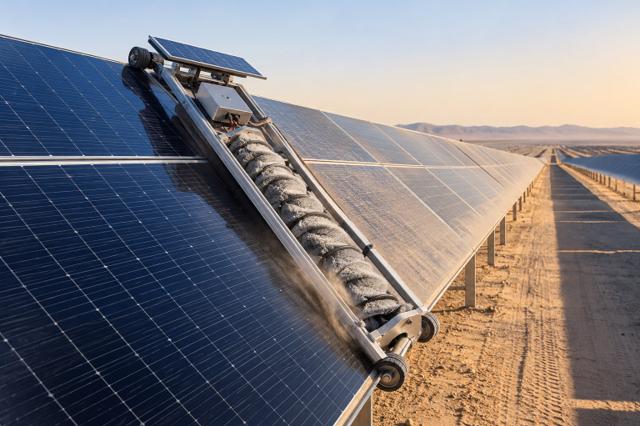
Autonomous microfiber-brush robot that cleans a full table row every night without water; the standard for desert utility plants.
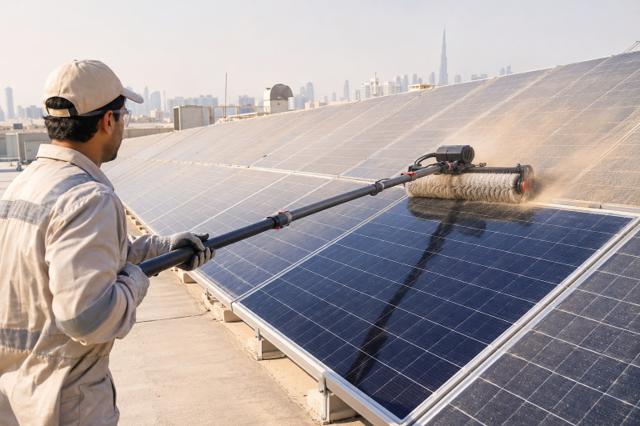
Battery-powered rotating brush on a telescopic pole for rooftops and small plants; optional water connection.
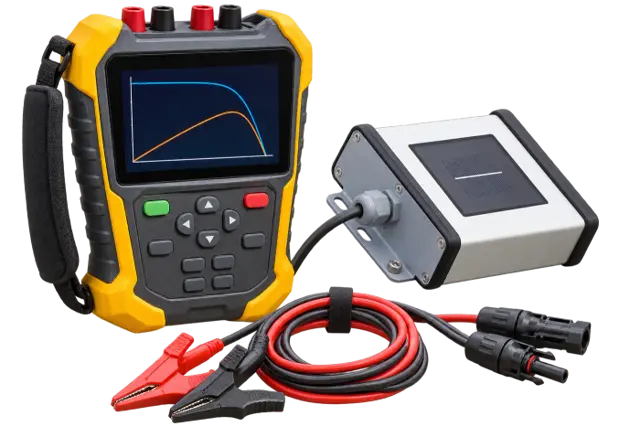
Field instrument that measures the full current-voltage curve of a string and compares it with the datasheet at STC.
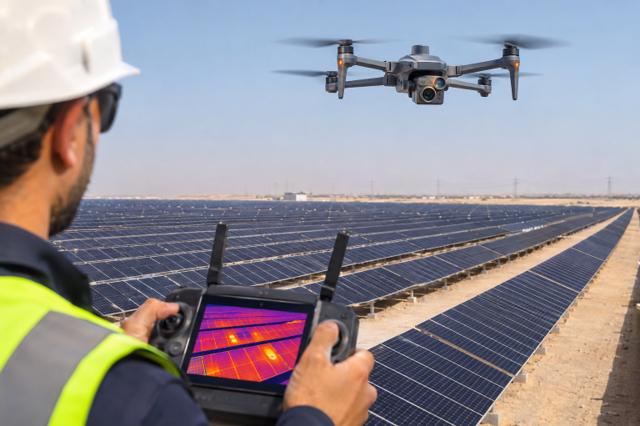
Aerial infrared survey that detects hot spots, failed diodes, disconnected strings and cracked modules across an entire plant in hours.

CAT III 1500 V kit: insulation resistance, Voc, Isc, polarity, earth continuity and DC clamp current for commissioning and fault-finding.

Arc-rated clothing, face shield, insulated gloves and safety footwear for work on live PV DC and LV AC equipment.
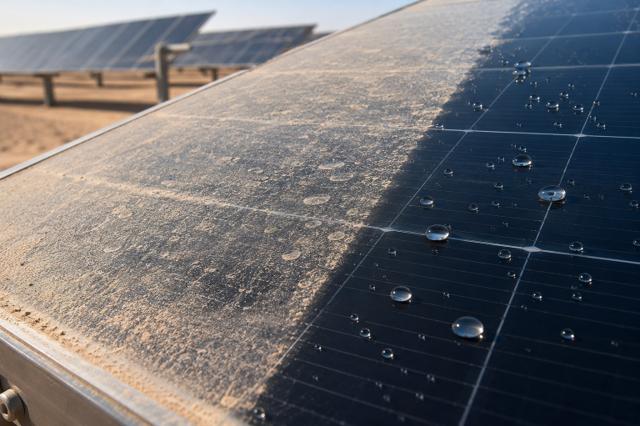
Optional nano-coating applied on site that reduces dust adhesion and makes cleaning easier; lasts 1–3 years.

Pocket meter reading plane-of-array irradiance in W/m² and module back-sheet temperature — the quick reference for commissioning and performance checks.
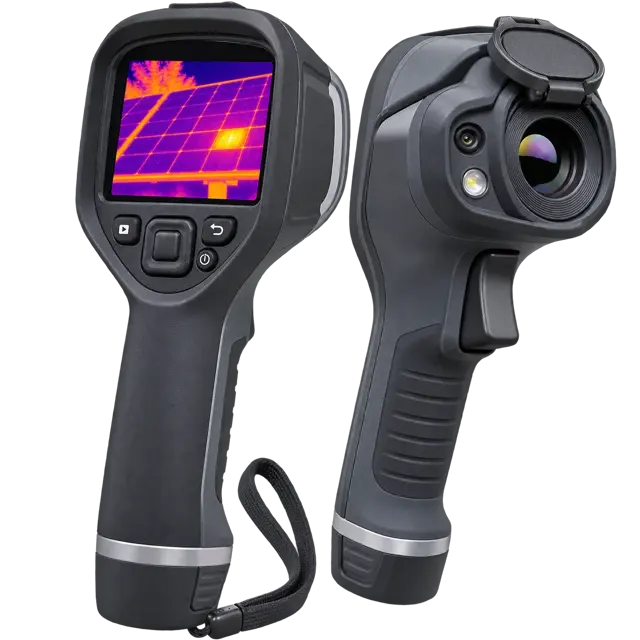
Radiometric infrared camera for finding hot cells, failed bypass diodes, loose terminals and overheated fuses in modules, combiner boxes and switchboards.

Measures earth electrode resistance and soil resistivity with stakes, plus stakeless clamp testing of individual rods in a meshed earthing system.
