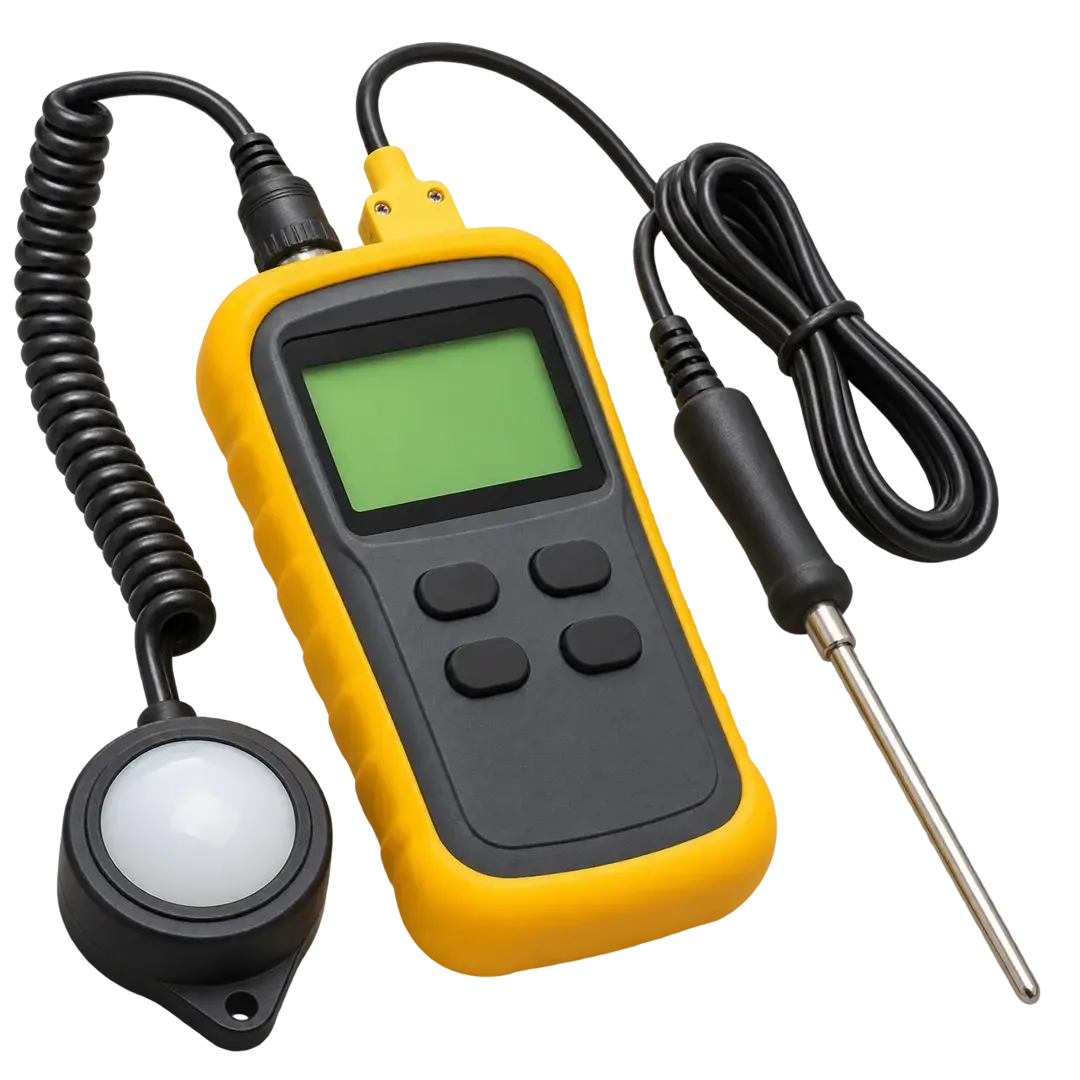
A module's output only means something when you know the sunlight it received. The irradiance meter uses a calibrated silicon sensor held in the plane of the array — same tilt and azimuth as the modules — and shows irradiance from 0 to about 2,000 W/m². A thermocouple probe taped to the back of a module gives cell temperature, so measured string power can be corrected to STC and compared with the datasheet. Typical accuracy is ±5 % of reading, which is adequate for field checks; plant performance ratio calculations should use the on-site pyranometer.
Use it during commissioning (IEC 62446-1 asks for irradiance to be recorded with every string measurement), when a customer reports low yield, and before and after cleaning to quantify soiling loss. Take readings at stable sky conditions above roughly 600 W/m², avoid clouds passing the sun, and hold the sensor clear of your own shadow. In the Gulf summer, back-sheet temperatures of 65–75 °C are normal at noon; the probe makes that visible to customers who expect nameplate power.
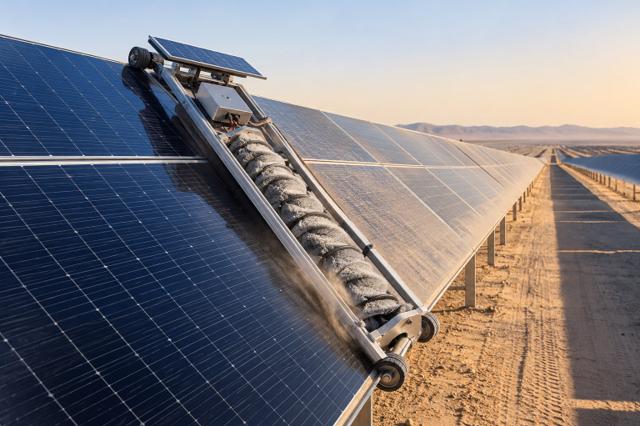
Autonomous microfiber-brush robot that cleans a full table row every night without water; the standard for desert utility plants.
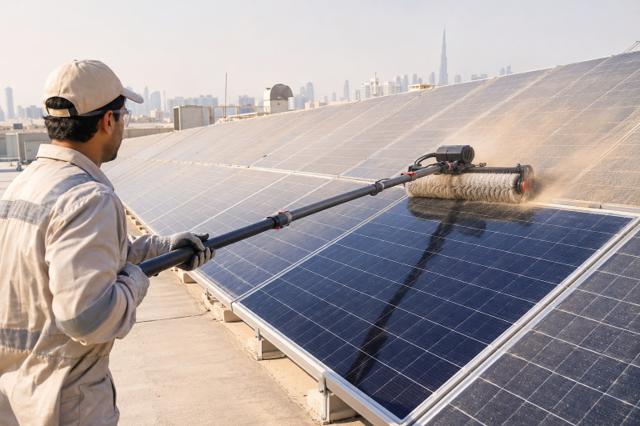
Battery-powered rotating brush on a telescopic pole for rooftops and small plants; optional water connection.
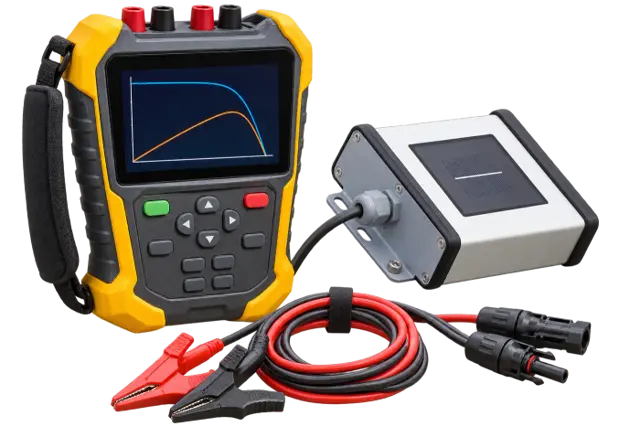
Field instrument that measures the full current-voltage curve of a string and compares it with the datasheet at STC.
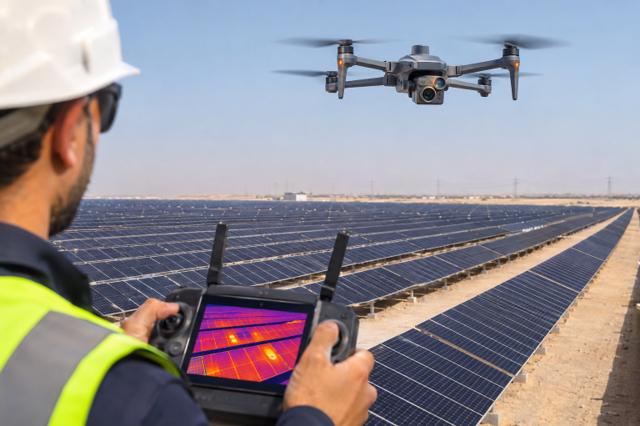
Aerial infrared survey that detects hot spots, failed diodes, disconnected strings and cracked modules across an entire plant in hours.

CAT III 1500 V kit: insulation resistance, Voc, Isc, polarity, earth continuity and DC clamp current for commissioning and fault-finding.

Arc-rated clothing, face shield, insulated gloves and safety footwear for work on live PV DC and LV AC equipment.
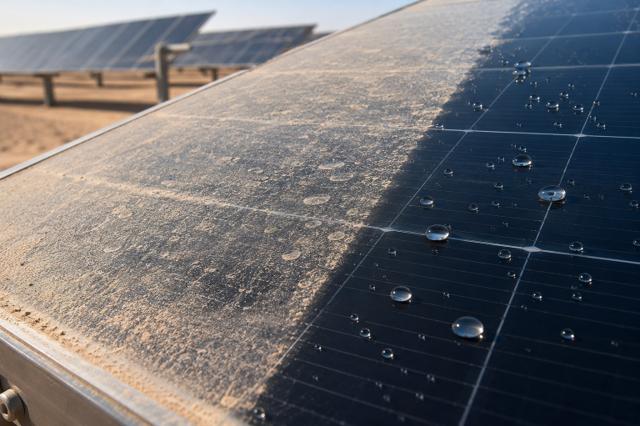
Optional nano-coating applied on site that reduces dust adhesion and makes cleaning easier; lasts 1–3 years.
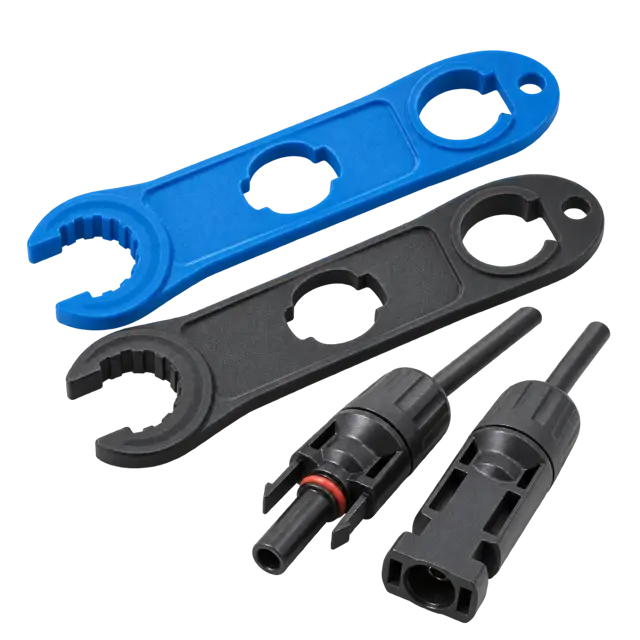
Pair of glass-fibre reinforced spanners for tightening MC4 cable glands and releasing the locking latches without damaging the housing.
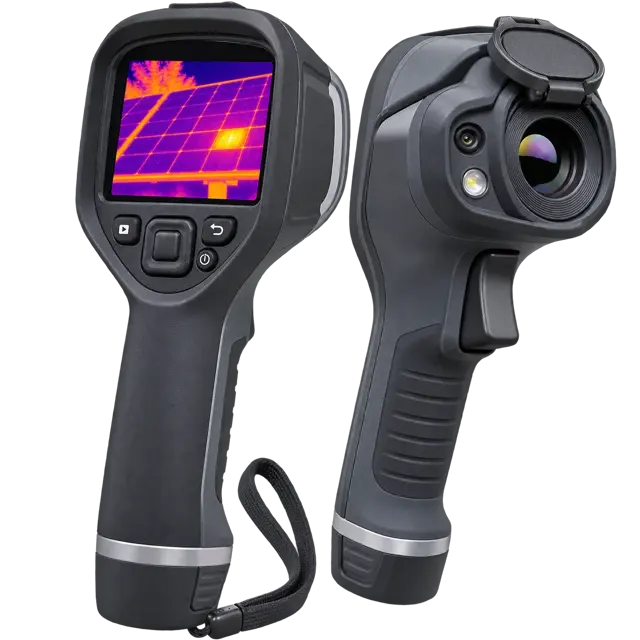
Radiometric infrared camera for finding hot cells, failed bypass diodes, loose terminals and overheated fuses in modules, combiner boxes and switchboards.

Measures earth electrode resistance and soil resistivity with stakes, plus stakeless clamp testing of individual rods in a meshed earthing system.
