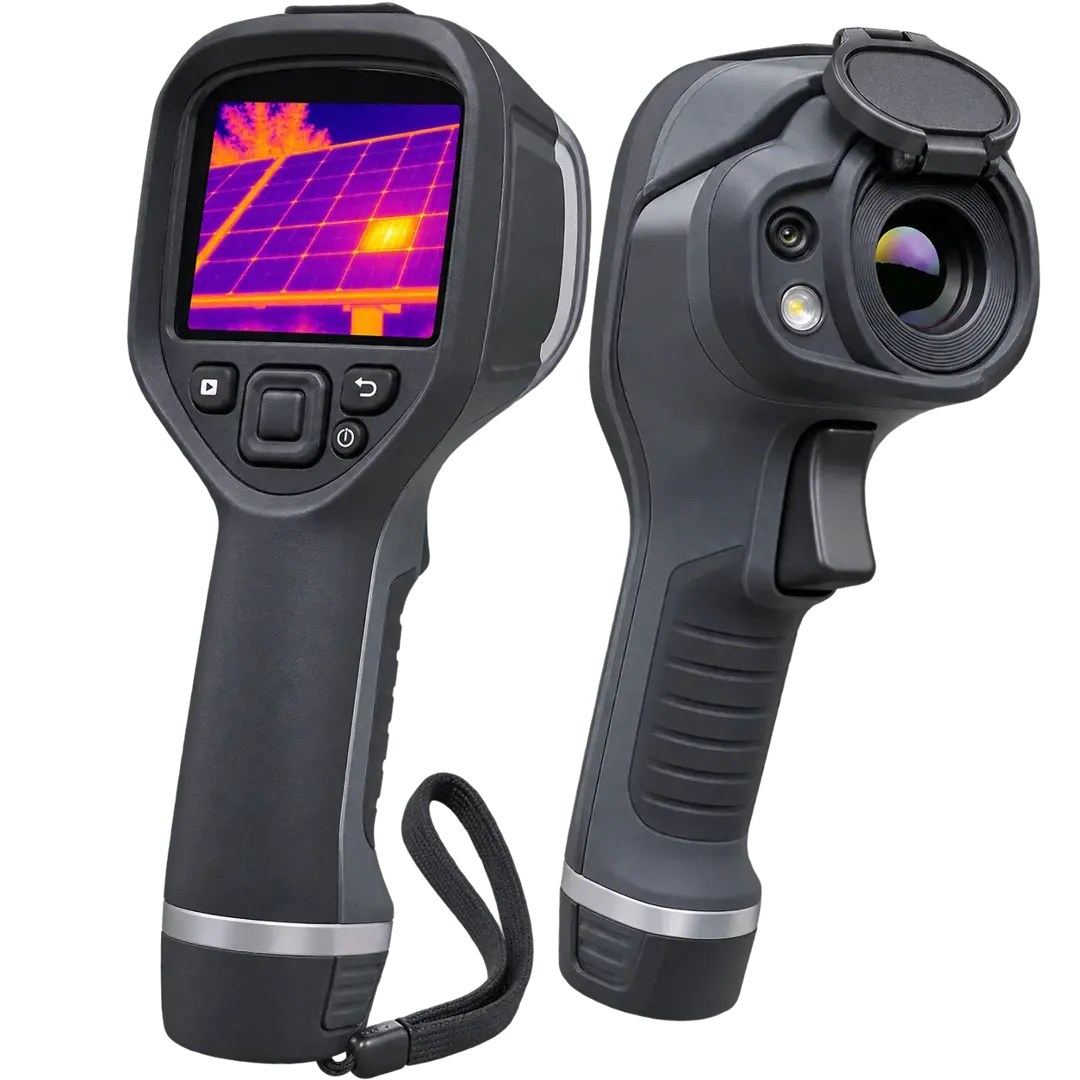
Most PV faults show up as heat before they show up as lost energy. A 320×240-pixel uncooled microbolometer camera with a thermal sensitivity below 0.05 °C picks out a cracked cell running 10–20 K hotter than its neighbours, a whole sub-string heated by a shorted bypass diode, or a breaker terminal that is 30 K above the others because of a loose screw. Radiometric images store a temperature for every pixel, so findings can be documented and classified later as IEC TS 62446-3 recommends.
For modules, scan from the front at an angle of 5–60° to the glass to avoid reflections of the sun and sky, with irradiance above 600 W/m² and the plant producing at normal load. For electrical cabinets, open the doors only under a permit and with arc-flash PPE, and compare identical components phase by phase rather than trusting absolute values. Handheld inspection suits rooftops and C&I sites; for plants above a few megawatts, drone thermography is faster and the handheld camera is kept for close-up confirmation.
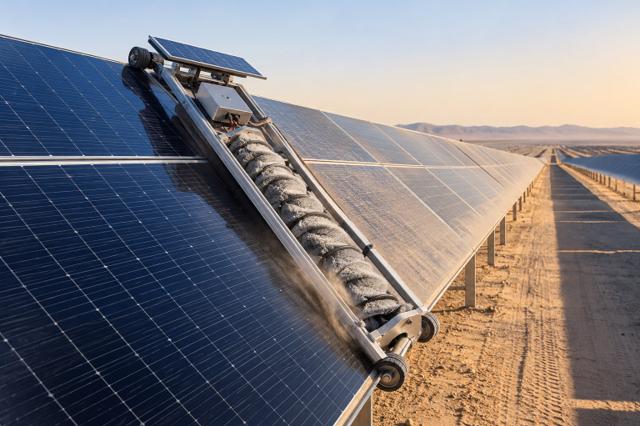
Autonomous microfiber-brush robot that cleans a full table row every night without water; the standard for desert utility plants.
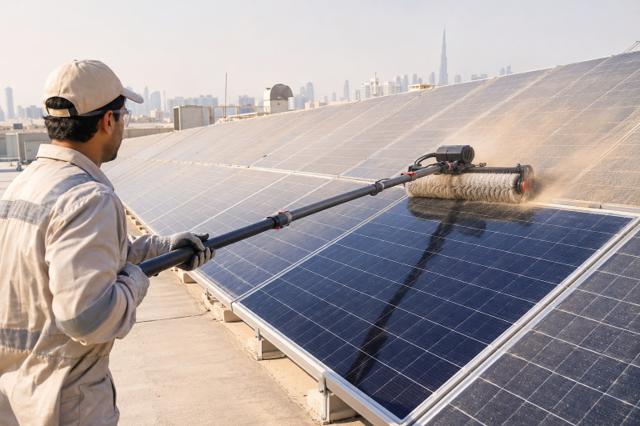
Battery-powered rotating brush on a telescopic pole for rooftops and small plants; optional water connection.
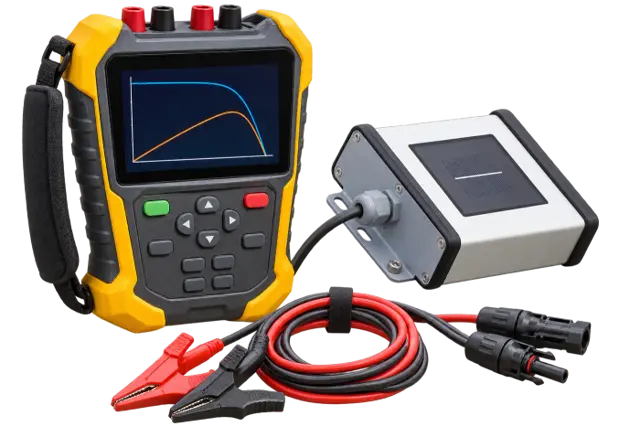
Field instrument that measures the full current-voltage curve of a string and compares it with the datasheet at STC.
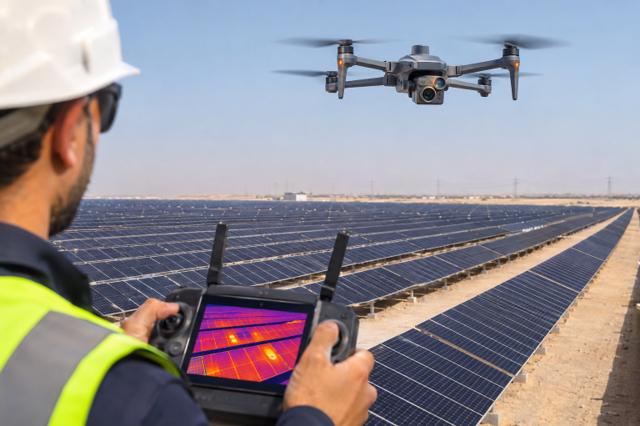
Aerial infrared survey that detects hot spots, failed diodes, disconnected strings and cracked modules across an entire plant in hours.

CAT III 1500 V kit: insulation resistance, Voc, Isc, polarity, earth continuity and DC clamp current for commissioning and fault-finding.

Arc-rated clothing, face shield, insulated gloves and safety footwear for work on live PV DC and LV AC equipment.
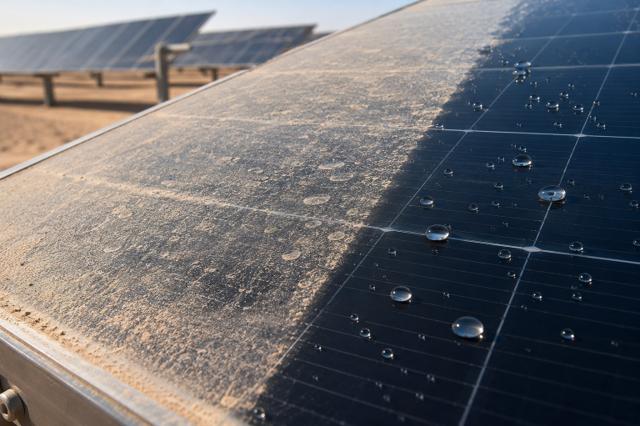
Optional nano-coating applied on site that reduces dust adhesion and makes cleaning easier; lasts 1–3 years.
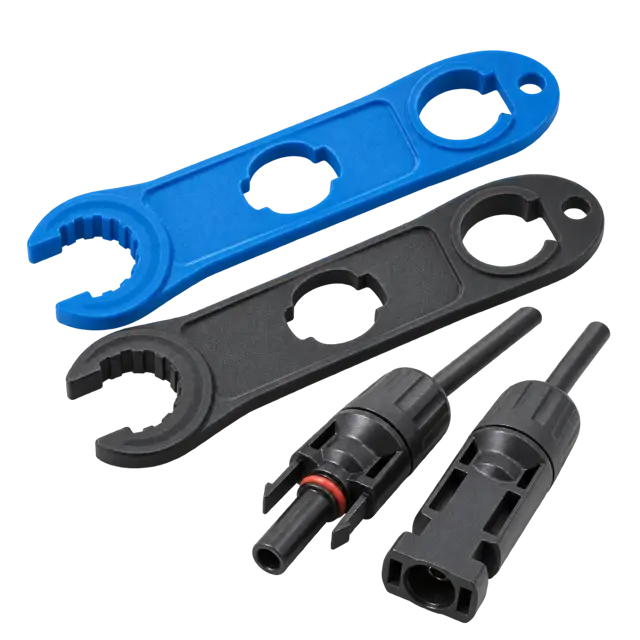
Pair of glass-fibre reinforced spanners for tightening MC4 cable glands and releasing the locking latches without damaging the housing.

Pocket meter reading plane-of-array irradiance in W/m² and module back-sheet temperature — the quick reference for commissioning and performance checks.

Measures earth electrode resistance and soil resistivity with stakes, plus stakeless clamp testing of individual rods in a meshed earthing system.
