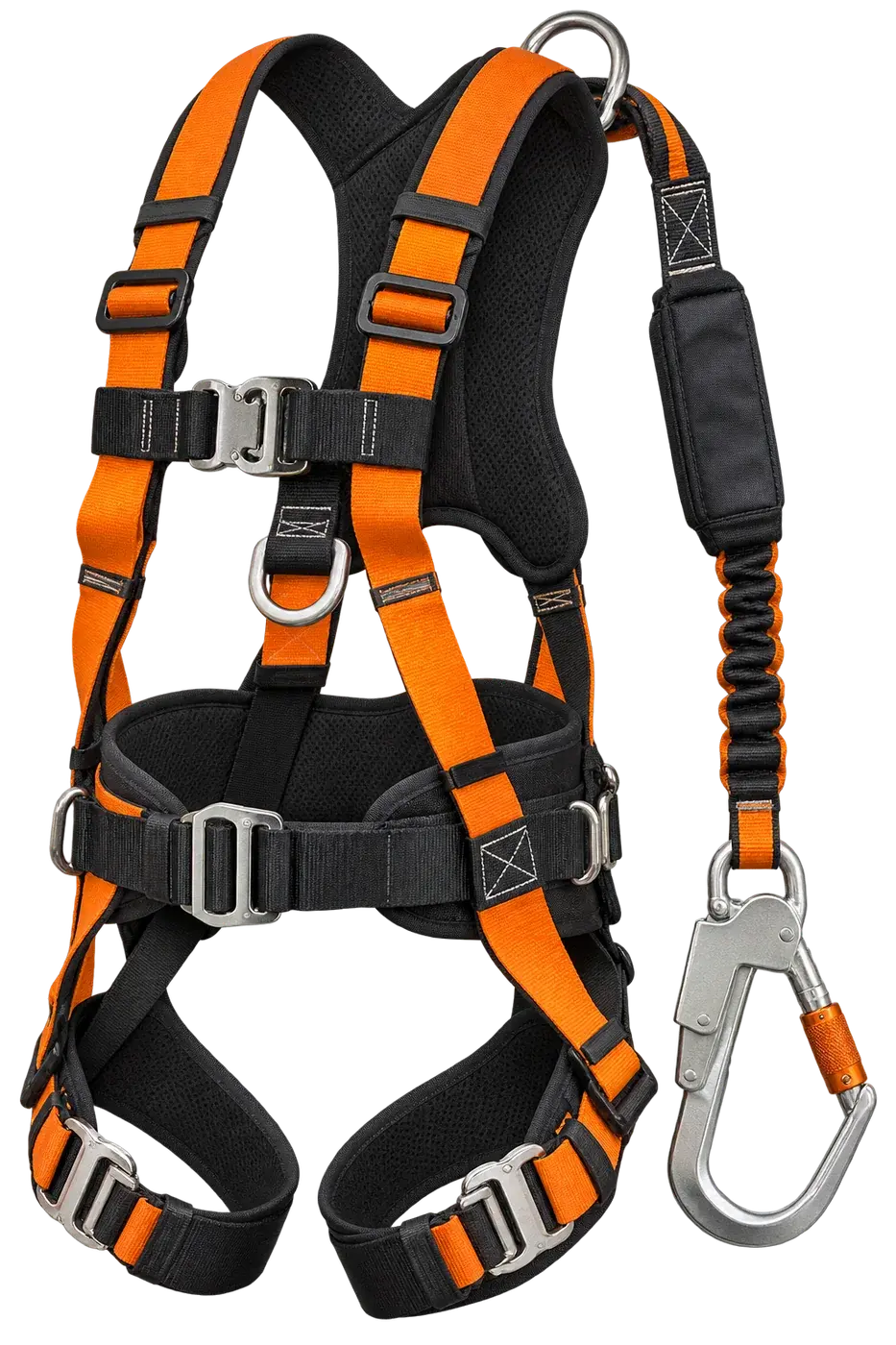
Falls from roofs are the most serious hazard in solar installation and maintenance — more than electric shock. Wherever workers are exposed to an unprotected edge, a fragile roof sheet or a skylight and collective protection (guardrails, nets) is not in place, a personal fall-arrest system is required. The harness distributes arrest forces across thighs, pelvis, chest and shoulders; the twin-leg lanyard with an energy absorber limits the force on the body to below 6 kN and lets the worker stay connected at all times while moving between anchor points.
A harness is only as good as its anchor: connect to a rated anchor (at least 12 kN, or a certified roof anchor or lifeline) above shoulder height where possible, check the clearance below — an energy-absorbing lanyard needs around 5–6 m of free fall distance — and have a written rescue plan, because suspension trauma becomes dangerous within minutes. Inspect webbing, stitching and hardware before each use, retire any harness that has arrested a fall, and store it out of the sun: UV degrades polyester webbing quickly in Gulf conditions.
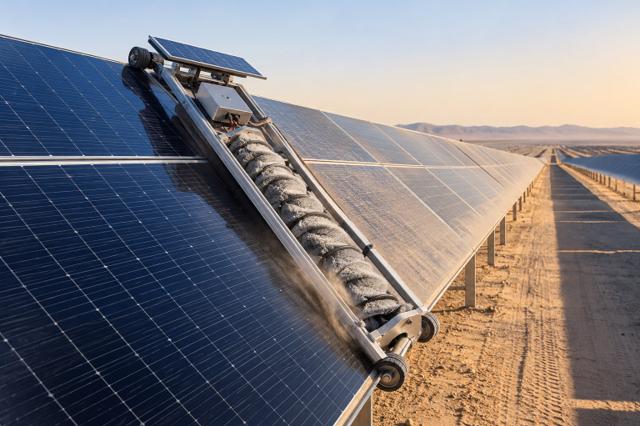
Autonomous microfiber-brush robot that cleans a full table row every night without water; the standard for desert utility plants.
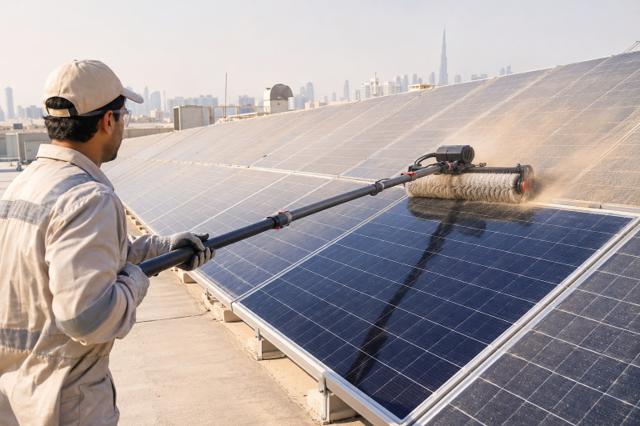
Battery-powered rotating brush on a telescopic pole for rooftops and small plants; optional water connection.
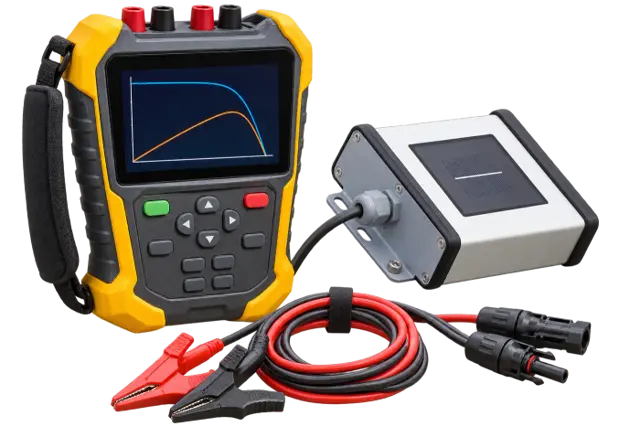
Field instrument that measures the full current-voltage curve of a string and compares it with the datasheet at STC.
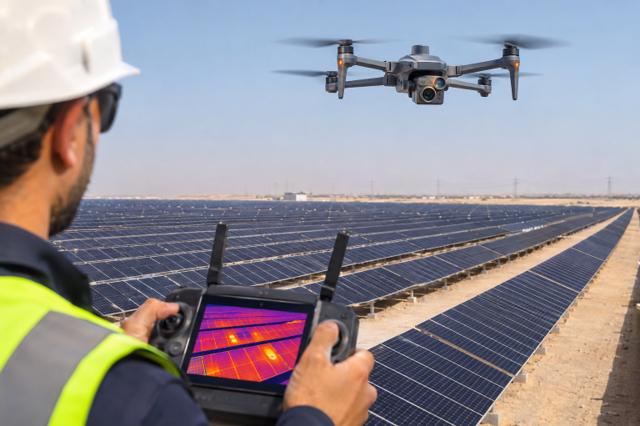
Aerial infrared survey that detects hot spots, failed diodes, disconnected strings and cracked modules across an entire plant in hours.

CAT III 1500 V kit: insulation resistance, Voc, Isc, polarity, earth continuity and DC clamp current for commissioning and fault-finding.

Arc-rated clothing, face shield, insulated gloves and safety footwear for work on live PV DC and LV AC equipment.
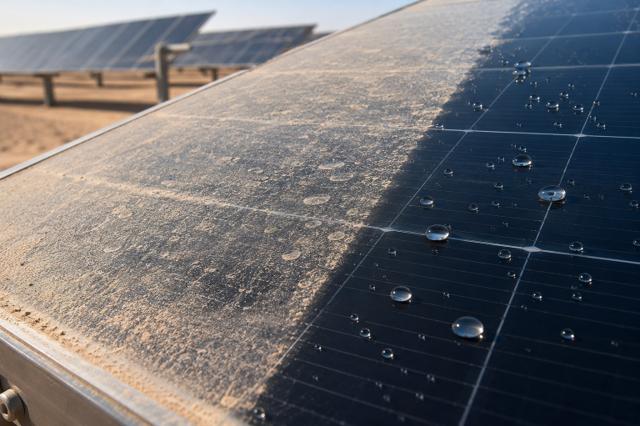
Optional nano-coating applied on site that reduces dust adhesion and makes cleaning easier; lasts 1–3 years.
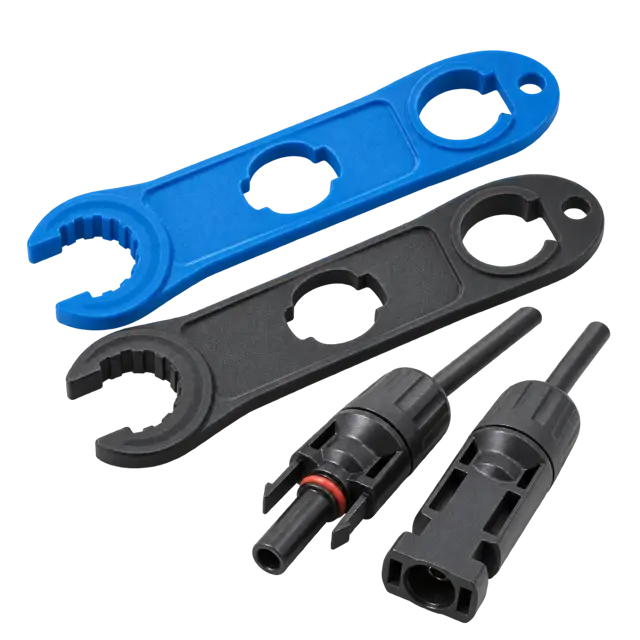
Pair of glass-fibre reinforced spanners for tightening MC4 cable glands and releasing the locking latches without damaging the housing.

Pocket meter reading plane-of-array irradiance in W/m² and module back-sheet temperature — the quick reference for commissioning and performance checks.
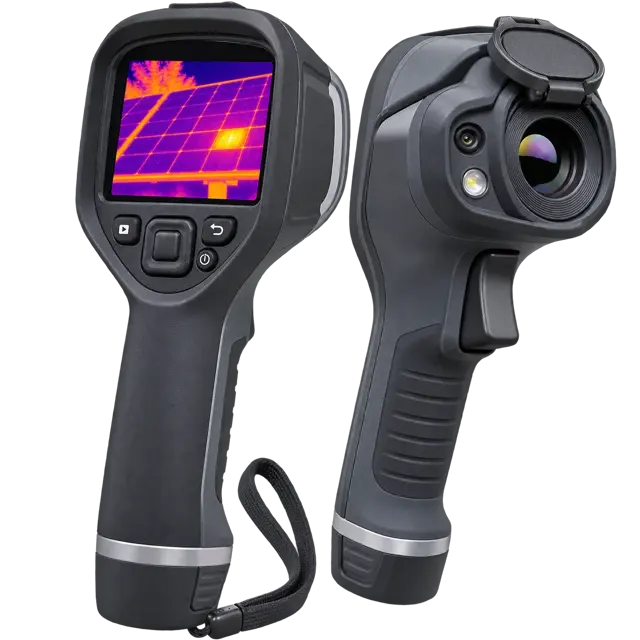
Radiometric infrared camera for finding hot cells, failed bypass diodes, loose terminals and overheated fuses in modules, combiner boxes and switchboards.
