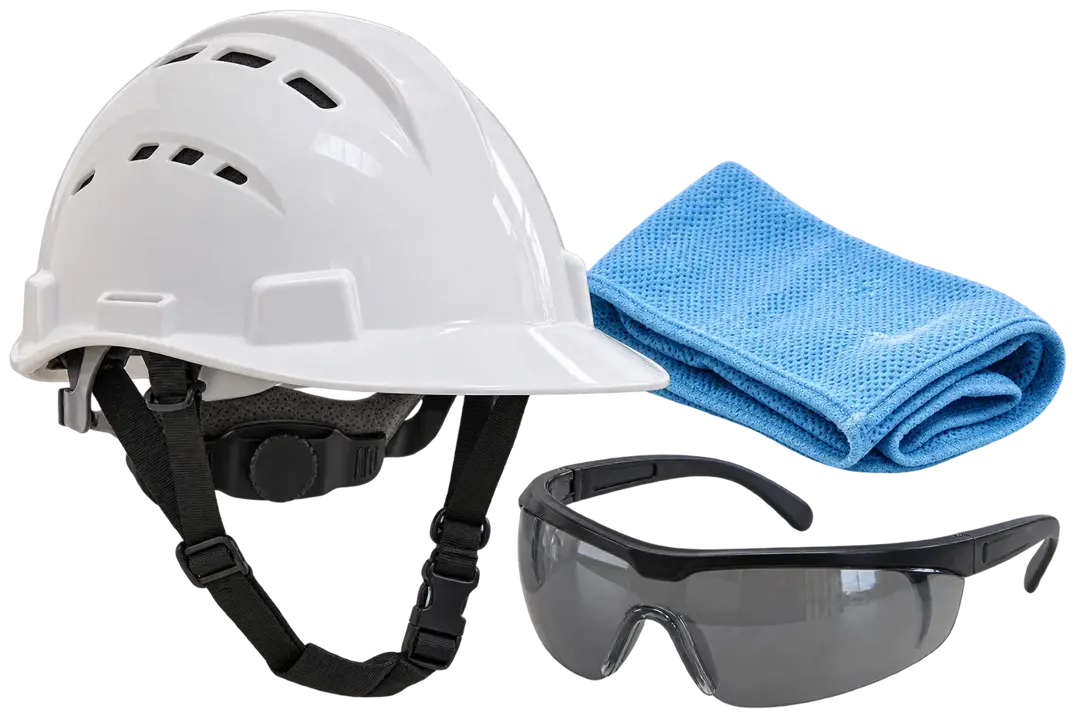
On a solar site the helmet protects against falling tools from module tables and against head strikes on the low edges of structures and carport beams, which are far more frequent than falling objects. A four-point chin strap keeps it on when the wearer bends over a table or works at height; vents and a white or light-coloured shell reduce heat build-up. Safety glasses with UV400 protection matter more in the Gulf than almost anywhere else: glare reflected from glass and white sand is intense, and drilling, cutting rail and grinding all throw debris.
The evaporative neck wrap is soaked in water and cools by evaporation for several hours — a simple measure inside a wider heat-stress plan. The UAE enforces a midday outdoor work ban in summer, and good practice on any Gulf site adds early starts, shaded rest areas, scheduled water and electrolyte breaks and buddy checks for heat illness. Replace helmets after any heavy impact or according to the shell manufacturer's service life, typically within about three to five years in strong UV.
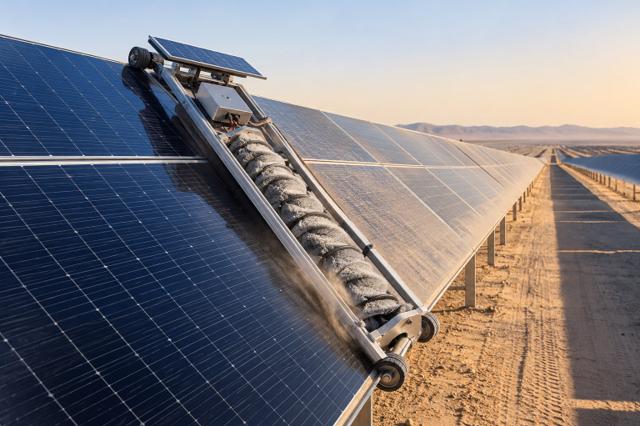
Autonomous microfiber-brush robot that cleans a full table row every night without water; the standard for desert utility plants.
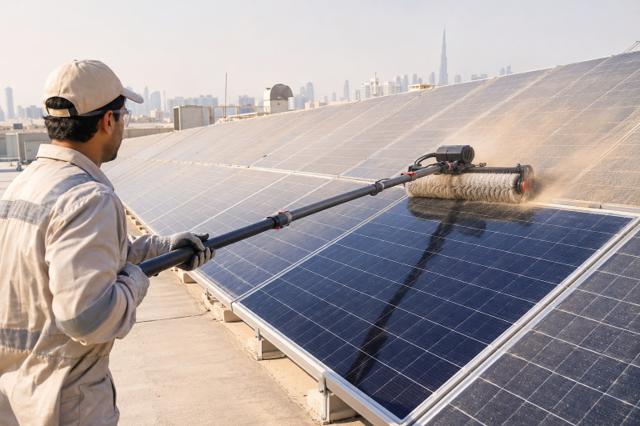
Battery-powered rotating brush on a telescopic pole for rooftops and small plants; optional water connection.
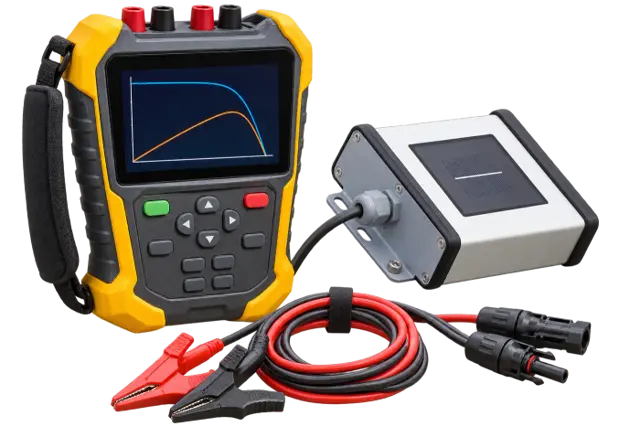
Field instrument that measures the full current-voltage curve of a string and compares it with the datasheet at STC.
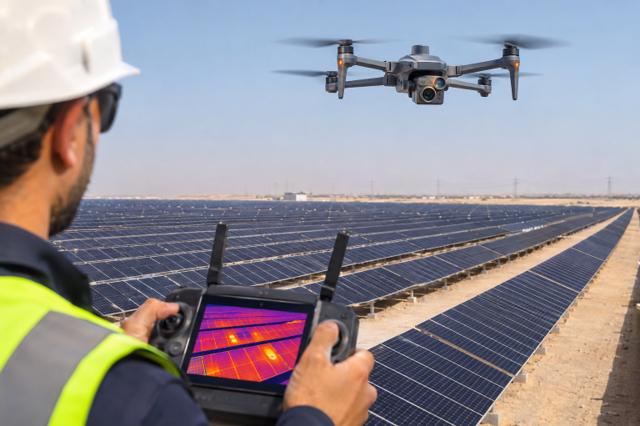
Aerial infrared survey that detects hot spots, failed diodes, disconnected strings and cracked modules across an entire plant in hours.

CAT III 1500 V kit: insulation resistance, Voc, Isc, polarity, earth continuity and DC clamp current for commissioning and fault-finding.

Arc-rated clothing, face shield, insulated gloves and safety footwear for work on live PV DC and LV AC equipment.
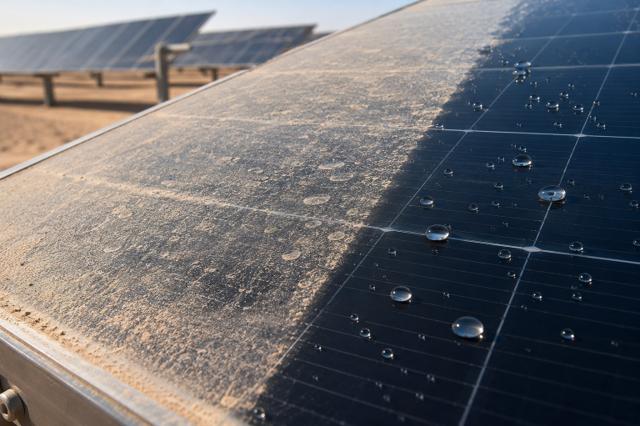
Optional nano-coating applied on site that reduces dust adhesion and makes cleaning easier; lasts 1–3 years.
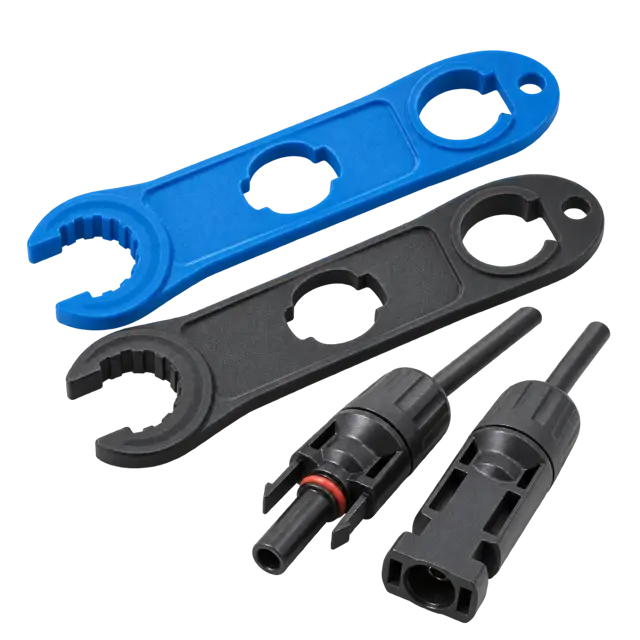
Pair of glass-fibre reinforced spanners for tightening MC4 cable glands and releasing the locking latches without damaging the housing.

Pocket meter reading plane-of-array irradiance in W/m² and module back-sheet temperature — the quick reference for commissioning and performance checks.
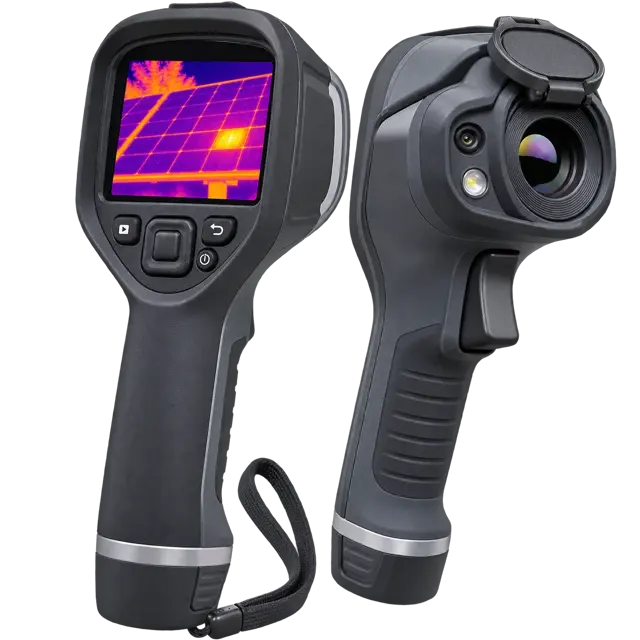
Radiometric infrared camera for finding hot cells, failed bypass diodes, loose terminals and overheated fuses in modules, combiner boxes and switchboards.
