
A PV array cannot be switched off: as long as light falls on the modules, strings carry voltage — up to 1500 V DC on utility plants. Insulating gloves are therefore basic PPE for anyone opening combiner boxes, handling connectors, replacing fuses or testing near live parts. Class 0 gloves are proof-tested at 5 kV AC and rated for a maximum working voltage of 1000 V AC or 1500 V DC. The leather protector is not optional: a small cut from a sharp rail edge or a cable strand can destroy the insulation without being visible.
Before every use, inflate the glove (by rolling the cuff or with a glove inflator) and check for leaks, cracks, ozone cuts and swelling. Gloves in service must be electrically retested every six months and the date marked on the cuff. Store them flat in their bag, away from heat, sunlight and solvents — a vehicle dashboard in a Gulf summer will age the rubber within weeks. Gloves are the last line of defence; isolation, lockout and testing for absence of voltage still come first.
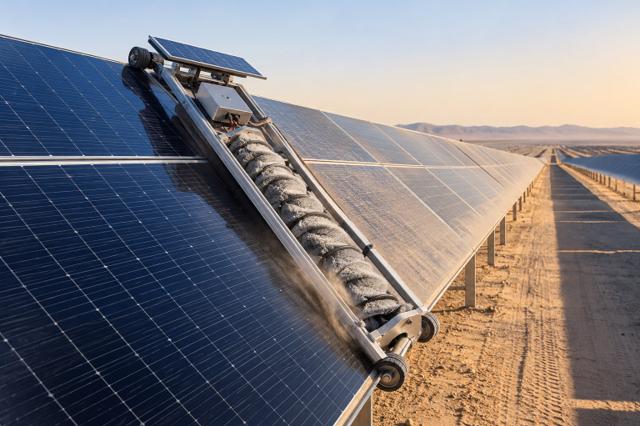
Autonomous microfiber-brush robot that cleans a full table row every night without water; the standard for desert utility plants.
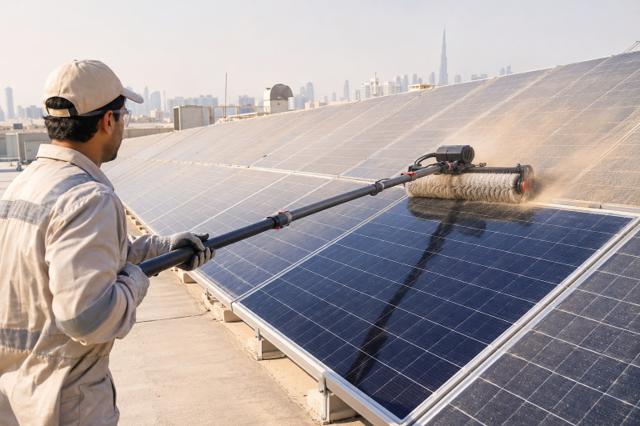
Battery-powered rotating brush on a telescopic pole for rooftops and small plants; optional water connection.
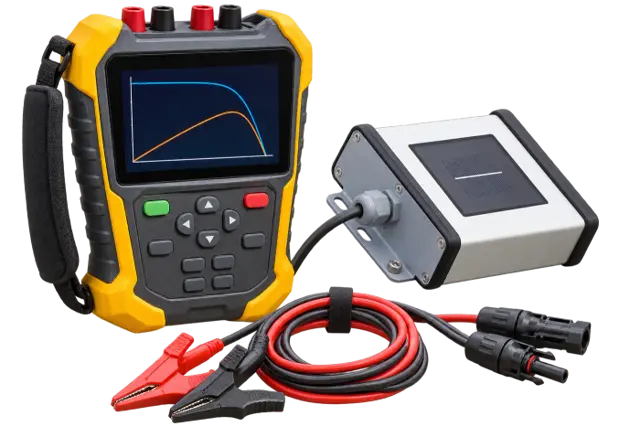
Field instrument that measures the full current-voltage curve of a string and compares it with the datasheet at STC.
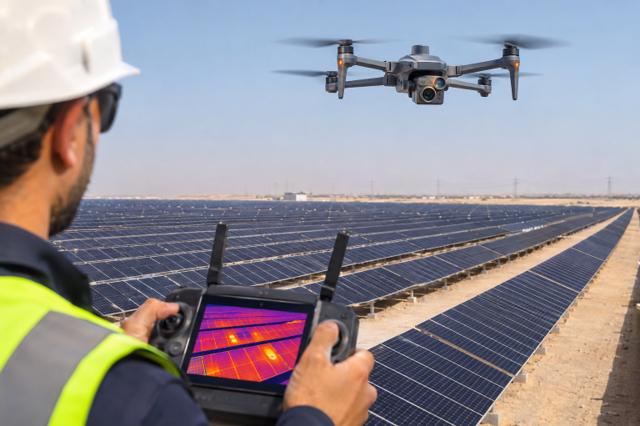
Aerial infrared survey that detects hot spots, failed diodes, disconnected strings and cracked modules across an entire plant in hours.

CAT III 1500 V kit: insulation resistance, Voc, Isc, polarity, earth continuity and DC clamp current for commissioning and fault-finding.

Arc-rated clothing, face shield, insulated gloves and safety footwear for work on live PV DC and LV AC equipment.
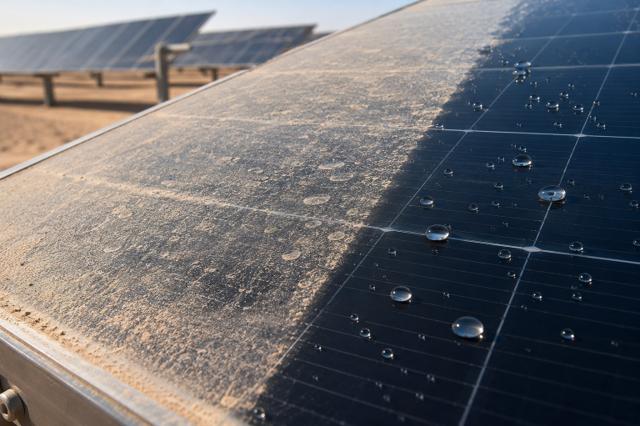
Optional nano-coating applied on site that reduces dust adhesion and makes cleaning easier; lasts 1–3 years.
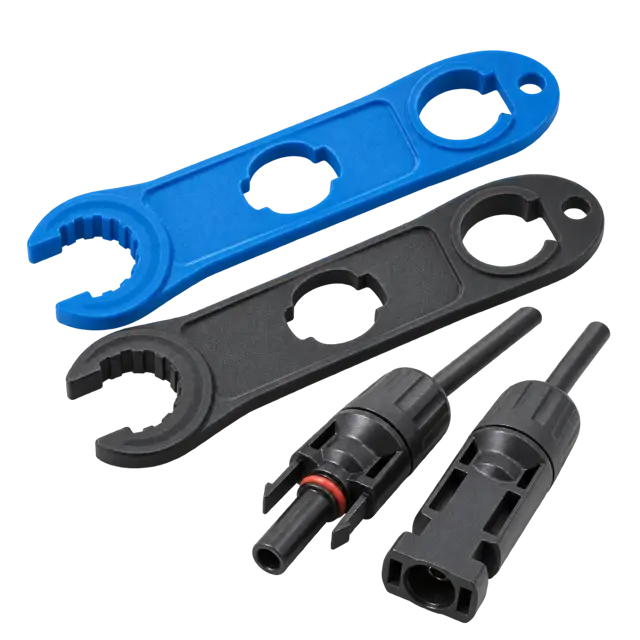
Pair of glass-fibre reinforced spanners for tightening MC4 cable glands and releasing the locking latches without damaging the housing.

Pocket meter reading plane-of-array irradiance in W/m² and module back-sheet temperature — the quick reference for commissioning and performance checks.
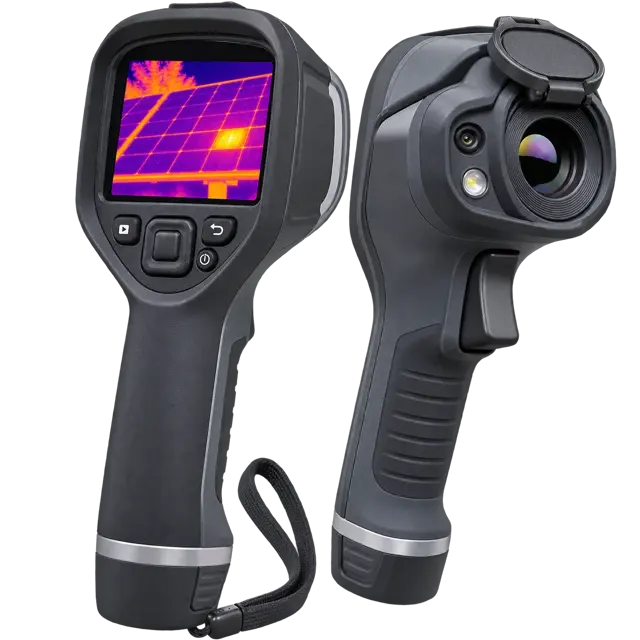
Radiometric infrared camera for finding hot cells, failed bypass diodes, loose terminals and overheated fuses in modules, combiner boxes and switchboards.
