
Every mounting manual specifies a tightening torque: typically 14–20 N·m for M8 module clamps on aluminium rail, 25–45 N·m for M10 structural bolts, and 2.5–6 N·m for inverter and breaker terminals. Under-torqued clamps let modules creep in high winds and lose their bonding contact; over-torqued clamps bend the module frame, crack the glass or strip the rail channel. Terminal screws that are too loose run hot, and too tight they crush the conductor. A click wrench removes guesswork and is required to keep the manufacturer's mechanical warranty valid on many structures.
The set covers 5–60 N·m with ±4 % accuracy, a reversible ratchet head and the common bits used in PV (hex 5/6 mm, Torx T30/T40, sockets 10–17 mm). For low-torque electrical terminals pair it with a torque screwdriver. Always reset the wrench to its lowest setting after use to protect the spring, recheck calibration every 12 months or 5,000 cycles, and mark checked bolts with a paint pen so QA inspectors can verify the work at a glance.
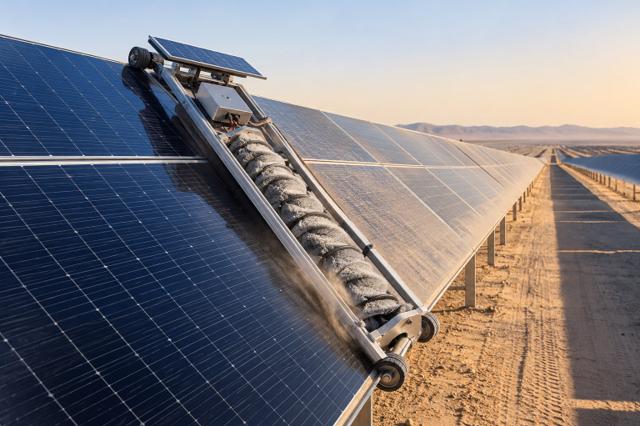
Autonomous microfiber-brush robot that cleans a full table row every night without water; the standard for desert utility plants.
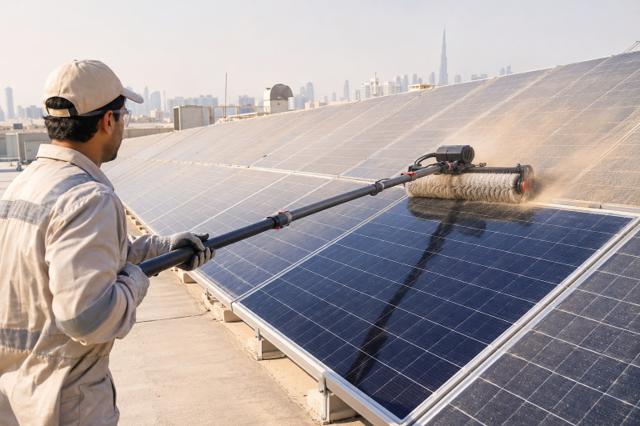
Battery-powered rotating brush on a telescopic pole for rooftops and small plants; optional water connection.
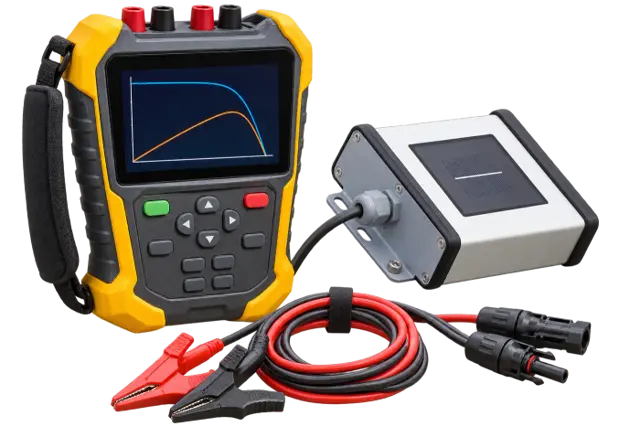
Field instrument that measures the full current-voltage curve of a string and compares it with the datasheet at STC.
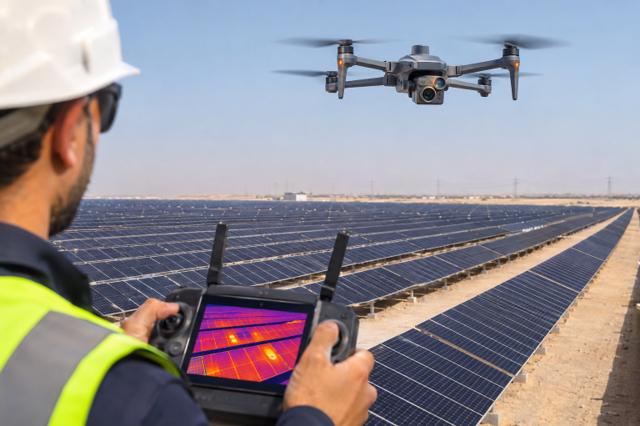
Aerial infrared survey that detects hot spots, failed diodes, disconnected strings and cracked modules across an entire plant in hours.

CAT III 1500 V kit: insulation resistance, Voc, Isc, polarity, earth continuity and DC clamp current for commissioning and fault-finding.

Arc-rated clothing, face shield, insulated gloves and safety footwear for work on live PV DC and LV AC equipment.
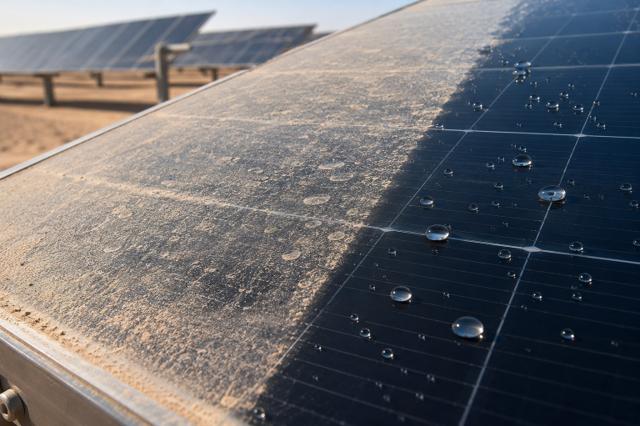
Optional nano-coating applied on site that reduces dust adhesion and makes cleaning easier; lasts 1–3 years.
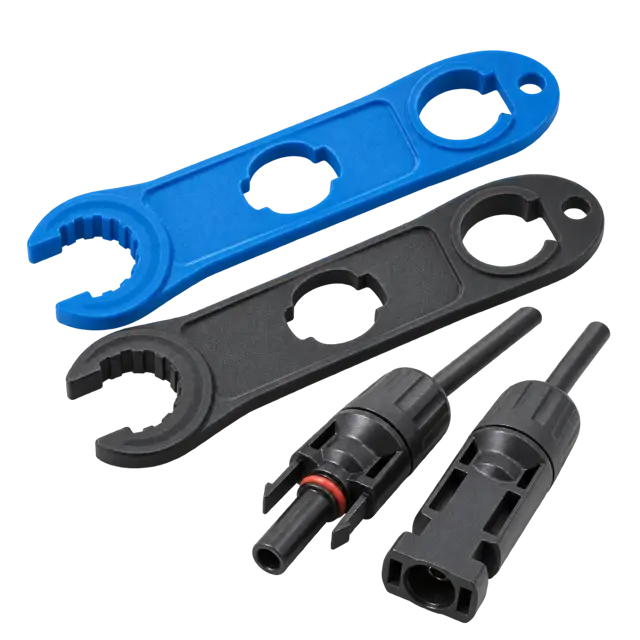
Pair of glass-fibre reinforced spanners for tightening MC4 cable glands and releasing the locking latches without damaging the housing.

Pocket meter reading plane-of-array irradiance in W/m² and module back-sheet temperature — the quick reference for commissioning and performance checks.
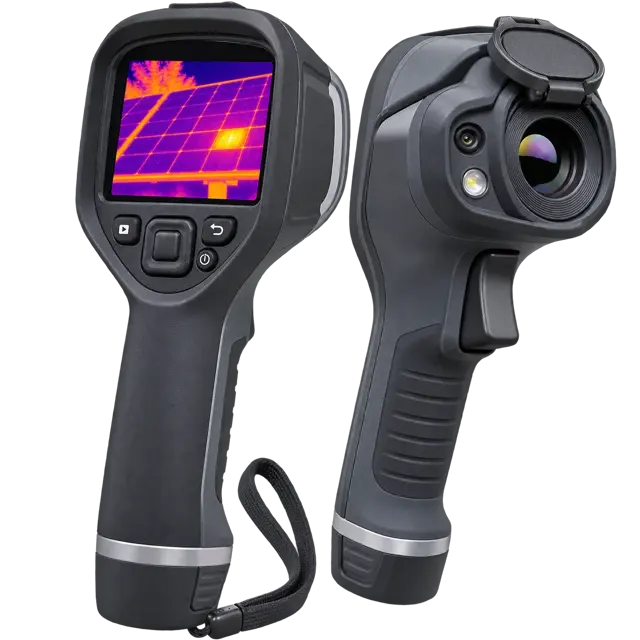
Radiometric infrared camera for finding hot cells, failed bypass diodes, loose terminals and overheated fuses in modules, combiner boxes and switchboards.
