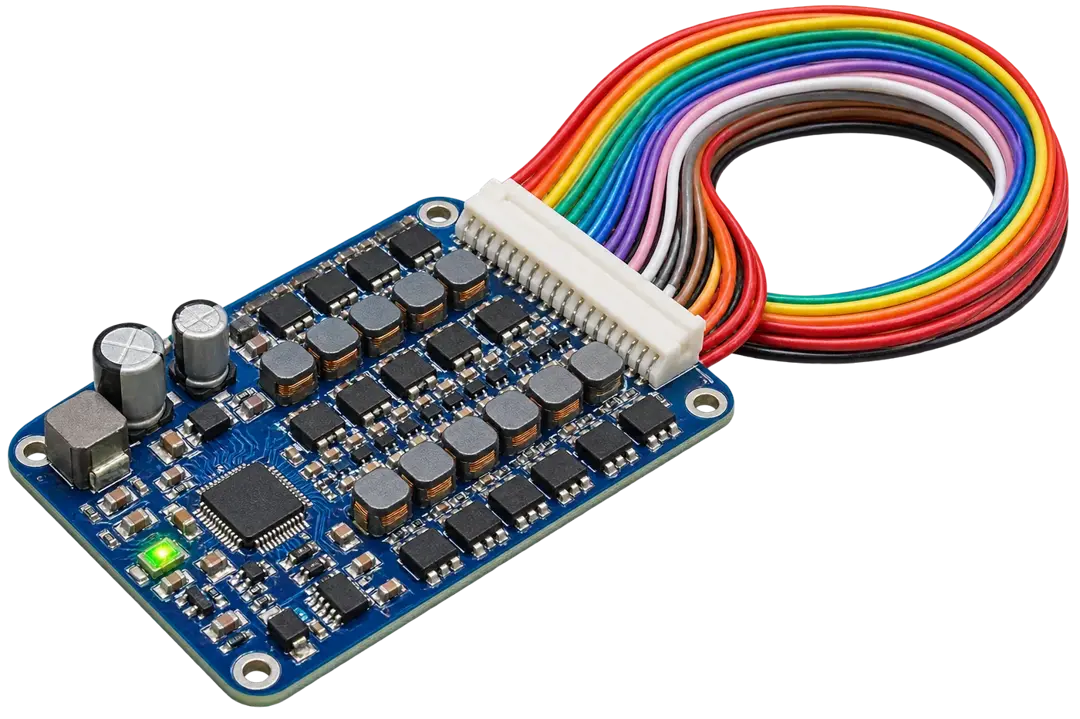
Passive balancing in a BMS burns excess energy in resistors and is limited to a fraction of an ampere. With 280–314 Ah cells, a capacity spread of only 2 % represents 6 Ah, which passive balancing cannot correct within a normal charge. An active balancer instead transfers energy from higher cells to lower ones, through switched capacitors or a flyback/buck-boost inductor, at 2–5 A depending on the model.
Capacitive types balance adjacent cells and work best when the voltage difference is significant; inductive types move energy across the whole string and remain effective in the flat part of the LFP curve. Most units start balancing above a small set threshold, typically 10–30 mV, and stop automatically when the pack is idle at low voltage to avoid draining it.
The balancer works alongside the BMS, not instead of it: it provides no protection functions. Connect the balance leads in the correct order with the battery isolated, and check each lead voltage before plugging in the harness.
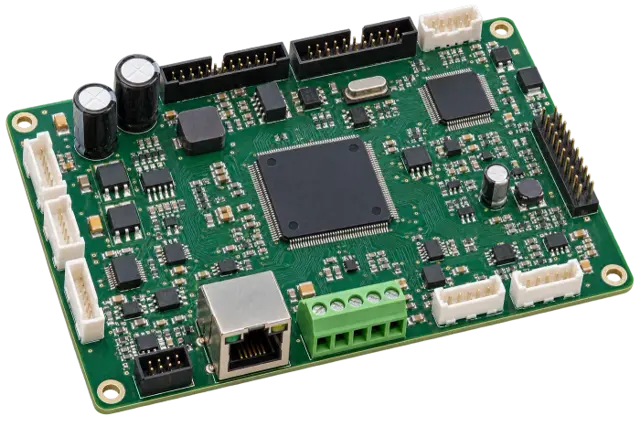
Replacement main control board for string and hybrid inverters, handling measurement, MPPT, grid synchronisation, protection and communication.
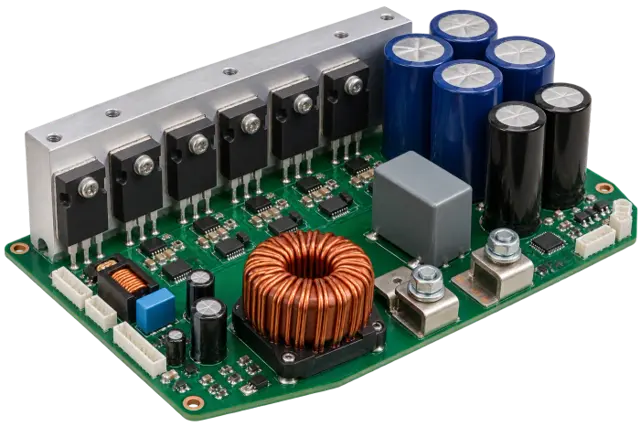
Power-stage board carrying the boost and inverter bridges, gate drivers and DC-link capacitors. The major spare most often needed after surge or overheating damage.
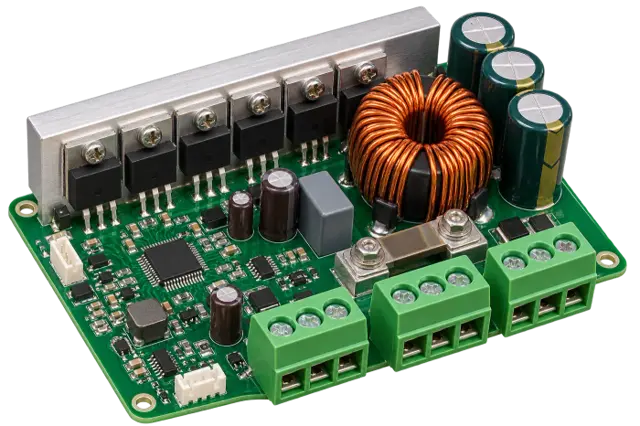
Assembled MPPT buck-converter board with automatic 12/24/48 V battery detection, for off-grid controller builds and repairs.
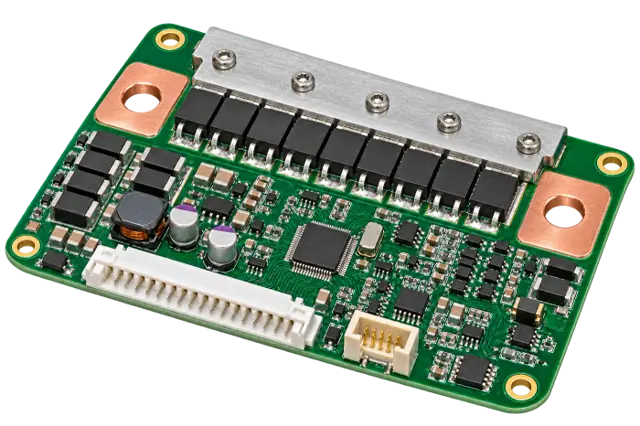
Battery management board for 48 V-class LFP packs with cell monitoring, MOSFET switching, passive balancing and CAN/RS485 inverter communication.
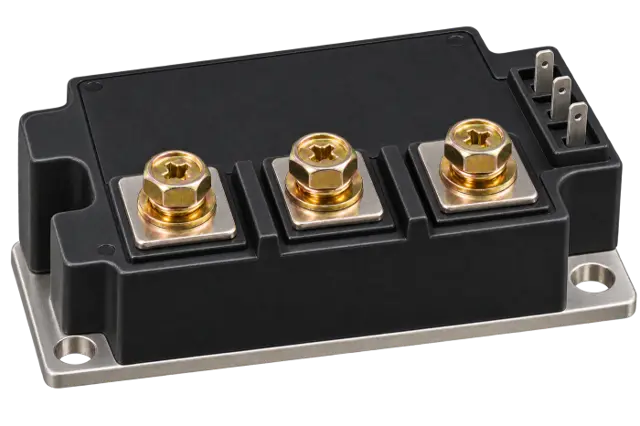
Industry-standard 62 mm half-bridge IGBT module with anti-parallel diodes, used in central and large string inverters, PCS and motor drives.
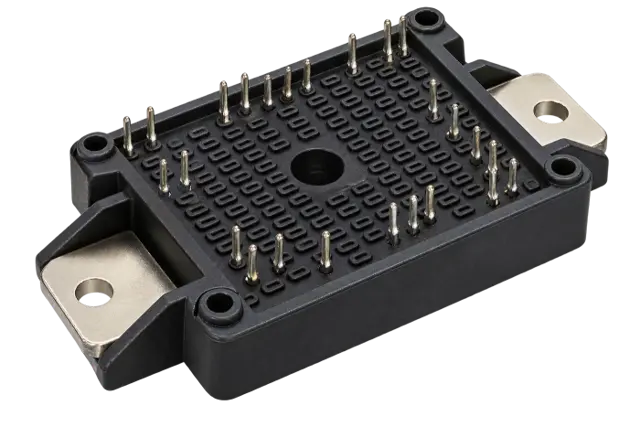
Silicon-carbide half-bridge module for high-frequency, high-efficiency inverters, DC/DC stages and fast chargers.
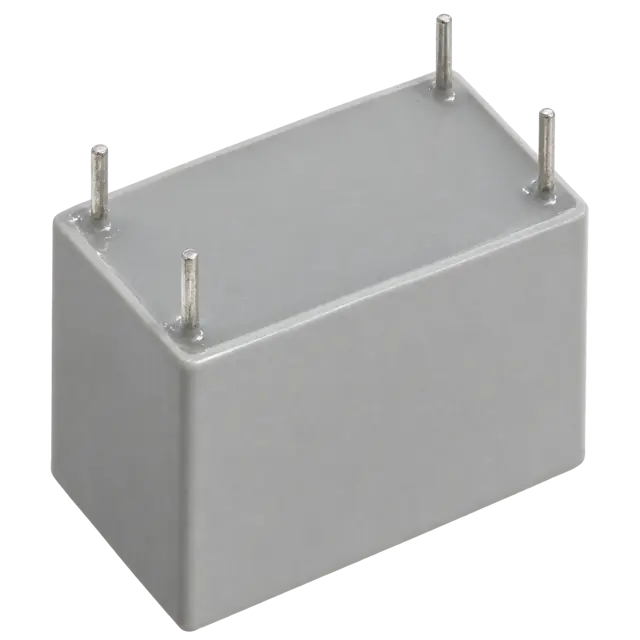
Self-healing metallised-polypropylene capacitor for inverter DC buses, with high ripple-current rating and long life at elevated temperature.
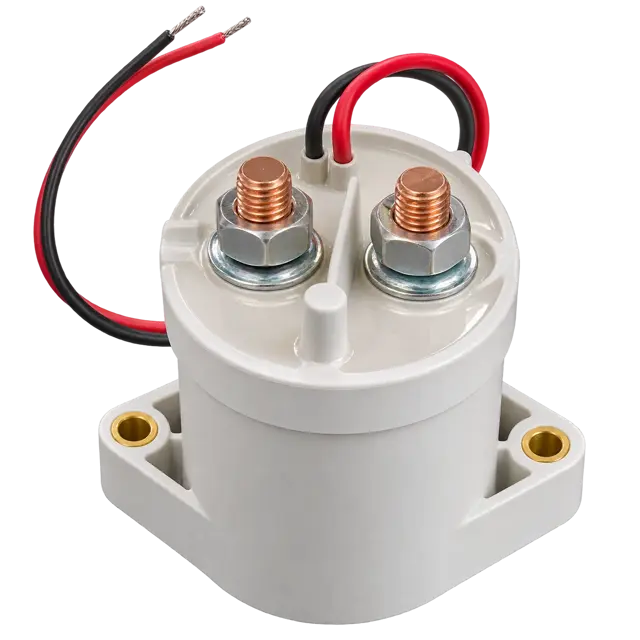
Sealed, gas-filled DC contactor for battery racks, PCS and high-voltage battery packs, with magnetic arc blow-out and auxiliary contact.
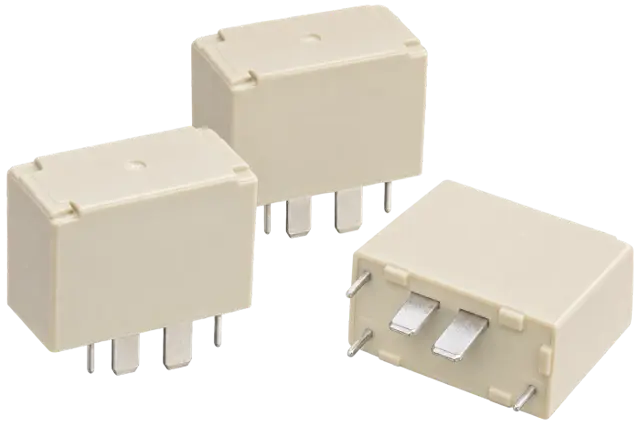
PCB-mount power relay used as the AC output disconnect in string and hybrid inverters, with wide contact gap for grid-code isolation.
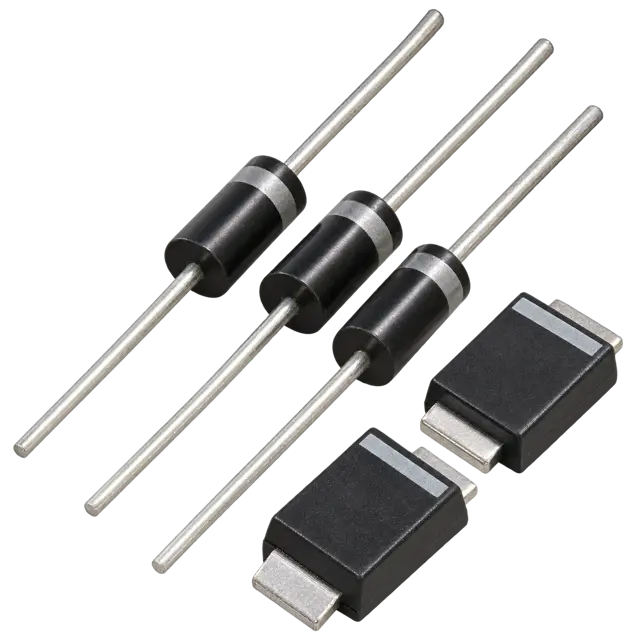
Schottky bypass diodes for PV junction boxes that route current around shaded or damaged cell groups and prevent hot spots.
