Licences and utility enrolment, references, design documents, component datasheets, warranties and the O&M offer — plus the red flags that should make you walk away.
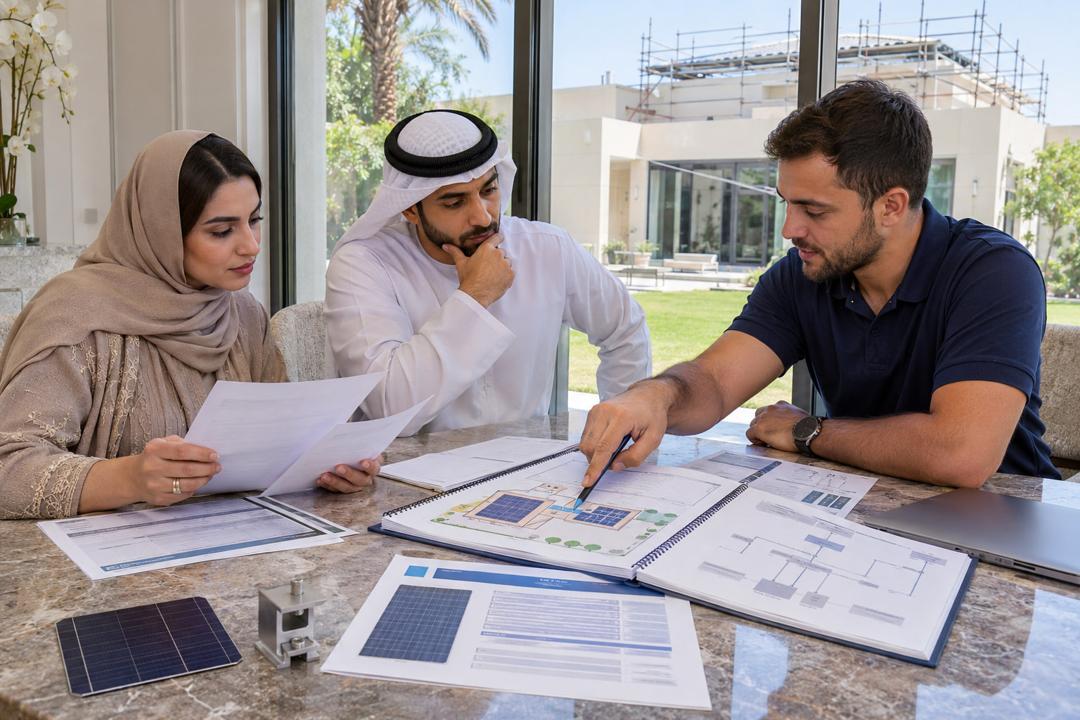
A solar system is a 25-year electrical installation on your roof or land, and the installer's work determines its safety and yield as much as the equipment does. Price matters, but the cheapest quote is often cheap because something is missing: design work, quality components, proper cabling and protection, or after-sales support.
Start with credentials. The installer should hold a valid trade licence covering electrical or solar contracting and, where the utility runs an approval scheme, be enrolled or registered with it — in the UAE, for example, rooftop grid-connected systems go through the local utility's approved-contractor and consultant process. Ask for evidence of qualified electrical engineers on staff, insurance (contractor's all-risk and third-party liability) and a health-and-safety plan for working at height.
Ask for references of a similar size and type, and if possible visit one or speak to the owner: did the system perform as predicted, was the paperwork handled, how quickly were faults fixed? A serious installer provides a design package before you sign: a site survey, a shading analysis, a yield simulation with stated assumptions (irradiation source, losses, degradation), a single-line diagram, string sizing, a layout drawing, structural notes for the roof or foundations, and a bill of materials naming the exact module, inverter, mounting and protection devices.
Check every major component against its datasheet and certifications (IEC 61215/61730 for modules, IEC 62109 and grid-code compliance for inverters, IEC 62619 or UL 9540A-related tests for batteries). Make sure the offer states the warranties clearly: product and performance warranties from the manufacturers, plus a separate workmanship warranty from the installer (commonly 2–10 years) covering leaks, loose connections and mounting. Clarify who handles warranty claims and who pays for labour and transport if a part fails.
Finally, compare the after-sales offer: monitoring setup and access for you, response times, cleaning and inspection frequency, and the cost of an O&M contract after the first year. Red flags include: yield promises far above independent simulations, no single-line diagram, unbranded or unspecified components, pressure to sign quickly, large up-front payments without milestones, refusal to provide references, and mixing connector brands on site. A clear, documented proposal is the best sign that the system will be built properly.
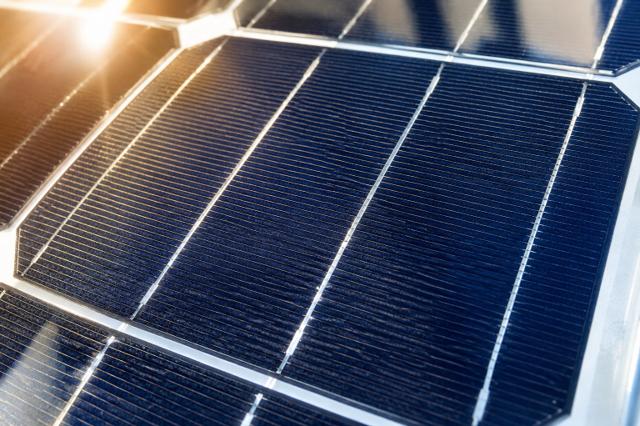
From photon to kilowatt-hour: the physics of a solar cell and the path of energy through a complete PV system.
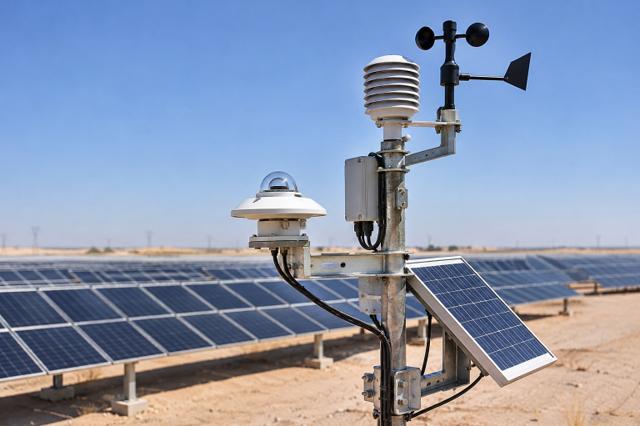
GHI, DNI and DHI explained, how sun position changes through the day and year, and why the Gulf is one of the world's best solar resources.
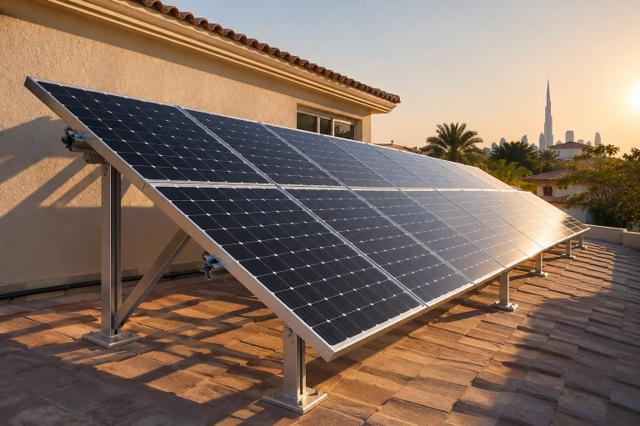
How to orient a PV array: the latitude rule of thumb, why lower tilts often win in the Gulf, and how east–west layouts trade yield for density.
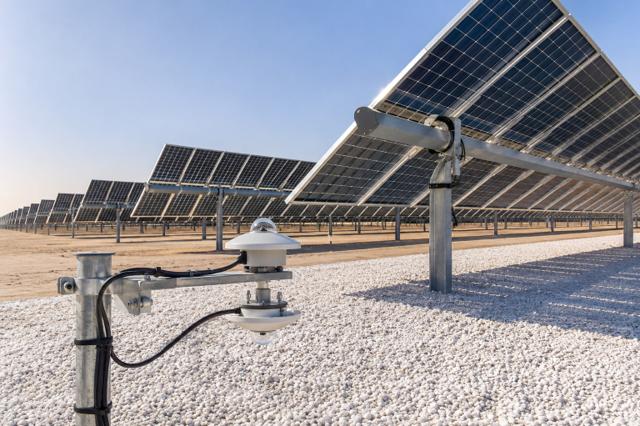
How bifacial modules harvest reflected light, what albedo values to expect on sand, gravel and white membranes, and why bifacial pairs so well with trackers.
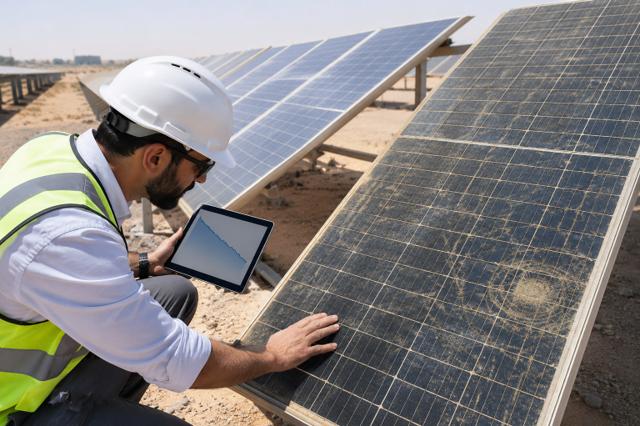
LID, LeTID and long-term power loss explained, and how to read a 12-year product / 30-year linear power warranty.
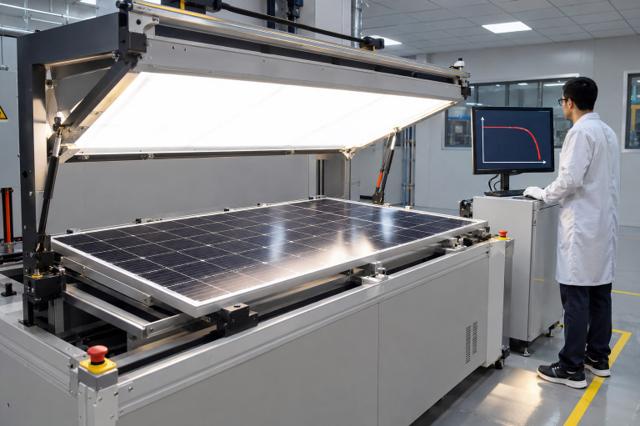
What the datasheet power really means, how temperature coefficients translate into lost watts, and why heat is the main derating factor in the desert.
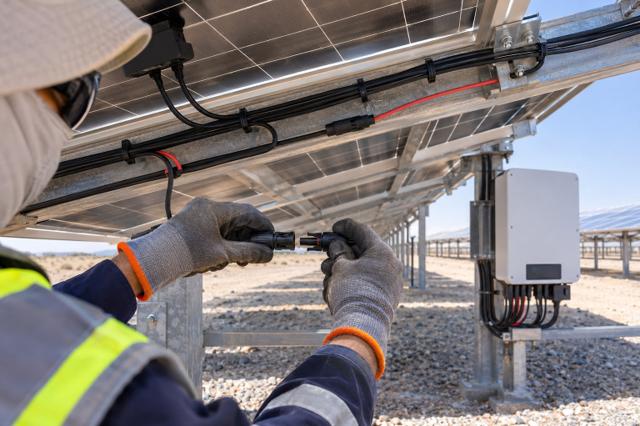
How many modules can go in one string: the cold-temperature Voc limit, the MPPT window and current limits, with a worked 1,500 V example.
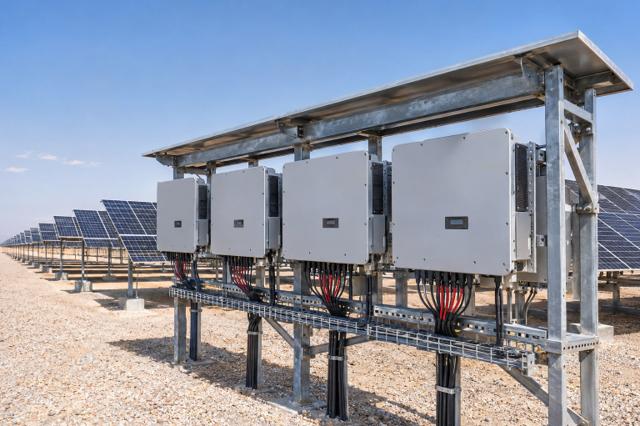
Why PV plants are built with more module power than inverter power, and how to choose a DC/AC ratio between 1.1 and 1.35 without losing too much energy to clipping.
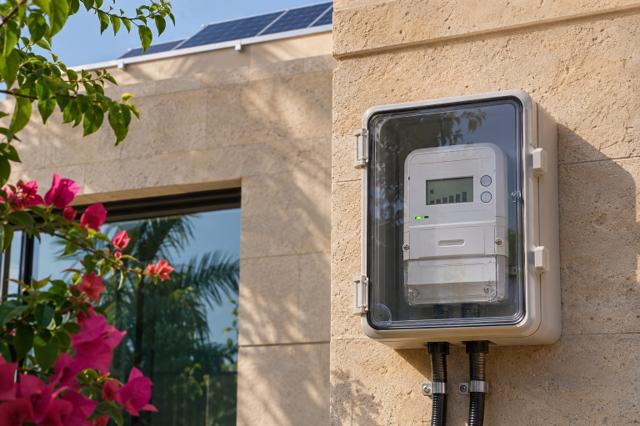
How grid-connected rooftop systems are credited for the electricity they export, and how the tariff scheme changes the right system size and the payback period.
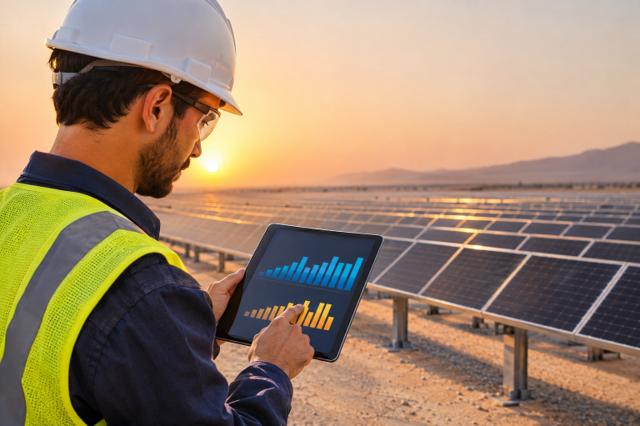
The single number used to compare power plants: lifetime cost divided by lifetime energy, both discounted. What drives it, and why Gulf solar tariffs are among the lowest in the world.
