From photon to kilowatt-hour: the physics of a solar cell and the path of energy through a complete PV system.
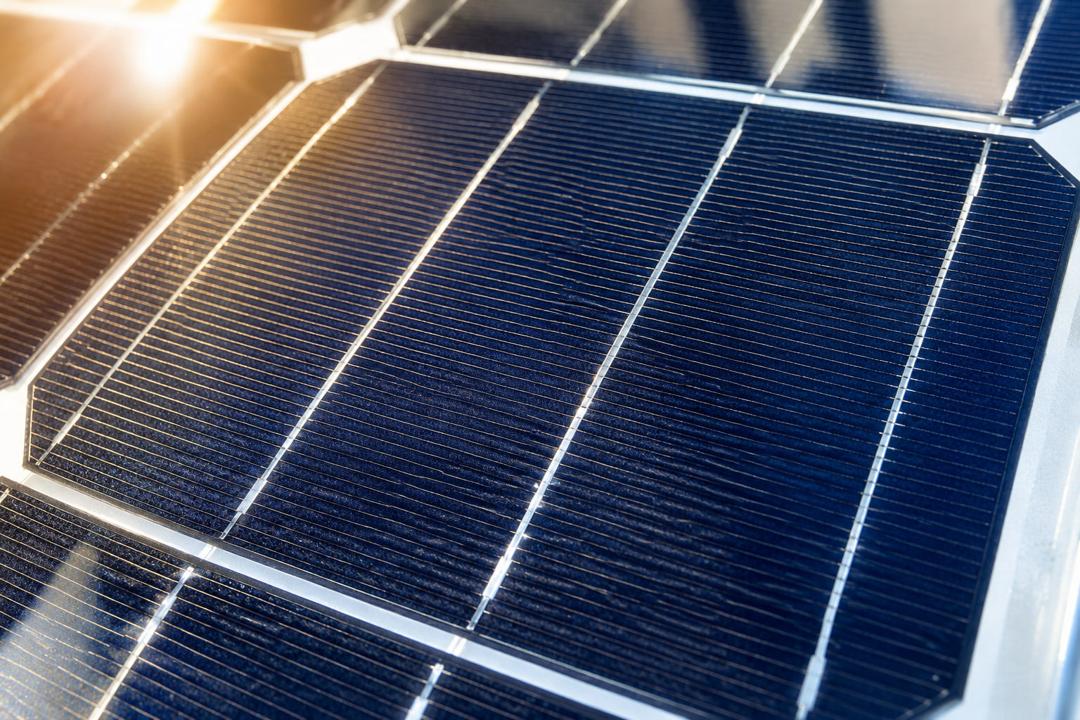
A solar cell is a large-area semiconductor diode, almost always made of crystalline silicon. Silicon is doped to create a p-n junction: one side has a surplus of electrons (n-type), the other a surplus of 'holes' (p-type). The junction builds an internal electric field. When a photon with enough energy (above silicon's band gap of about 1.12 eV) is absorbed, it frees an electron-hole pair, and the field sweeps the electron and the hole in opposite directions. Collected by metal contacts, this separated charge becomes a direct current. This is the photovoltaic effect.
A single cell delivers only about 0.6–0.7 V, so cells are wired in series inside a module. A modern 132-cell half-cut module, for example, is built from two parallel halves of 66 cells each and reaches an open-circuit voltage of around 48–50 V. The cells are laminated between glass and an encapsulant (EVA or POE), framed in aluminium and fitted with a junction box containing bypass diodes that limit losses when part of the module is shaded.
Modules are then connected in series to form strings, raising the voltage to several hundred volts (up to 1,000 V in residential and 1,500 V in utility systems). The strings feed an inverter, which tracks the maximum power point (MPPT) of the array and converts DC into grid-quality AC at 50 or 60 Hz. Between the modules and the grid sit the balance-of-system components: DC cables, MC4 connectors, combiner boxes, fuses, surge protection, AC breakers, transformers and metering.
How much energy a system produces depends on the solar resource at the site, the orientation and tilt of the modules, temperature, soiling, shading, and the efficiency of every link in the chain. A well-designed system in the Gulf typically yields 1,650–1,900 kWh per installed kWp each year on fixed structures, and more on single-axis trackers, among the best figures anywhere in the world.
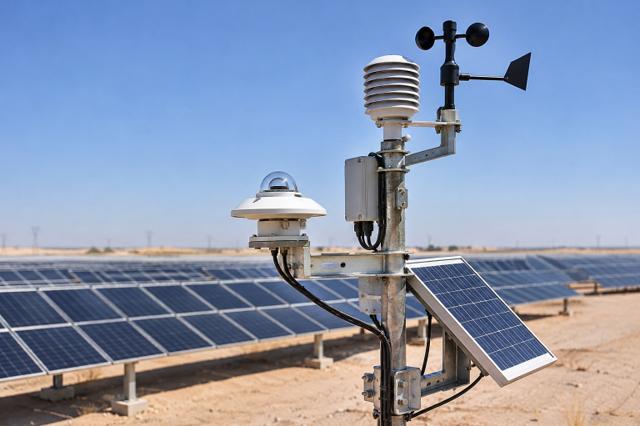
GHI, DNI and DHI explained, how sun position changes through the day and year, and why the Gulf is one of the world's best solar resources.
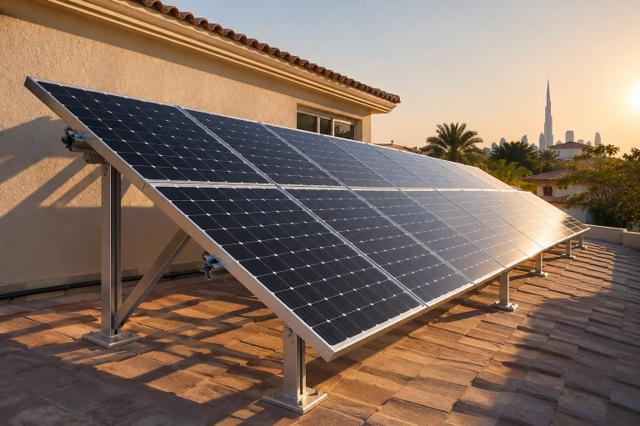
How to orient a PV array: the latitude rule of thumb, why lower tilts often win in the Gulf, and how east–west layouts trade yield for density.
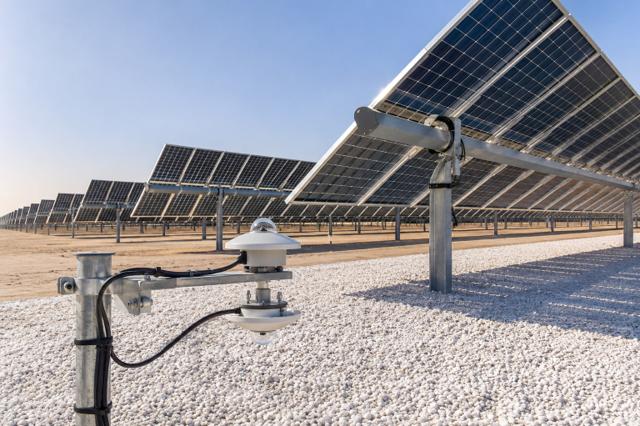
How bifacial modules harvest reflected light, what albedo values to expect on sand, gravel and white membranes, and why bifacial pairs so well with trackers.
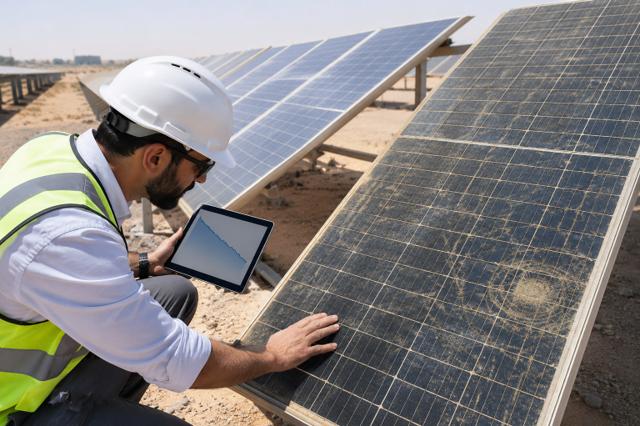
LID, LeTID and long-term power loss explained, and how to read a 12-year product / 30-year linear power warranty.
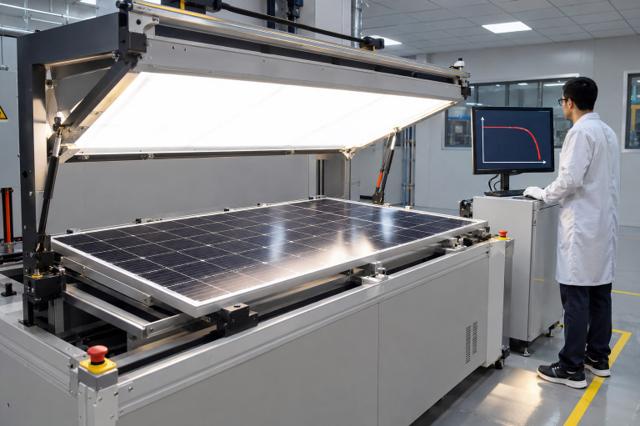
What the datasheet power really means, how temperature coefficients translate into lost watts, and why heat is the main derating factor in the desert.
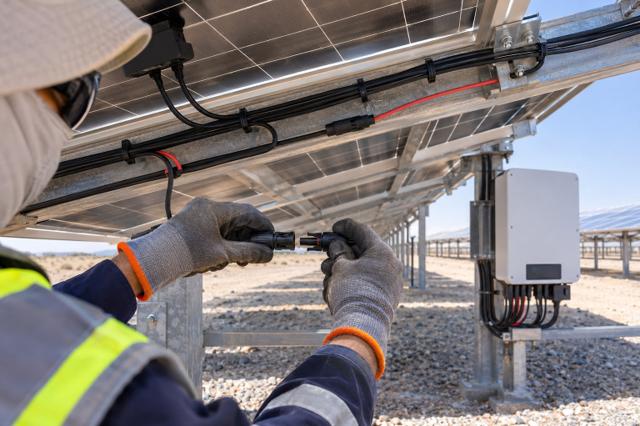
How many modules can go in one string: the cold-temperature Voc limit, the MPPT window and current limits, with a worked 1,500 V example.
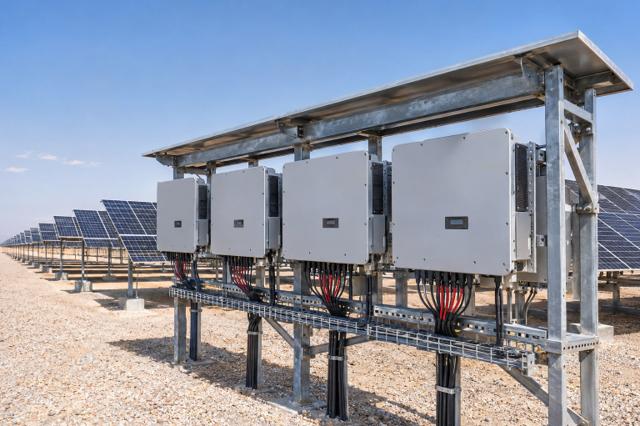
Why PV plants are built with more module power than inverter power, and how to choose a DC/AC ratio between 1.1 and 1.35 without losing too much energy to clipping.
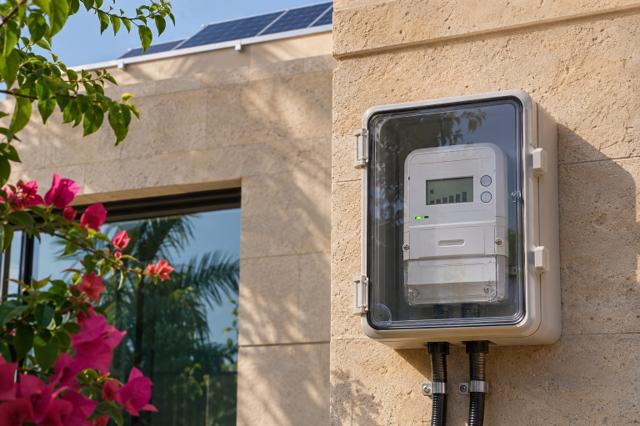
How grid-connected rooftop systems are credited for the electricity they export, and how the tariff scheme changes the right system size and the payback period.
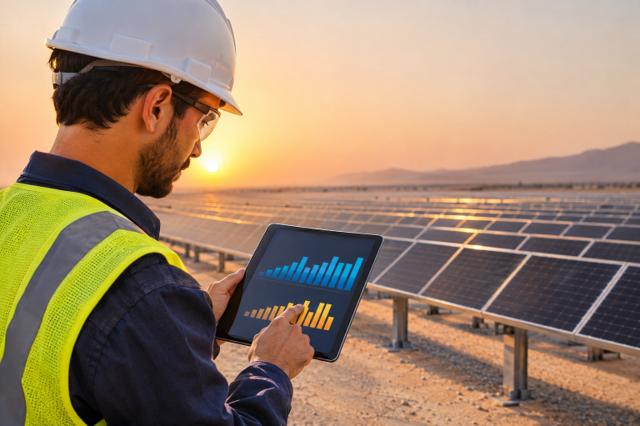
The single number used to compare power plants: lifetime cost divided by lifetime energy, both discounted. What drives it, and why Gulf solar tariffs are among the lowest in the world.
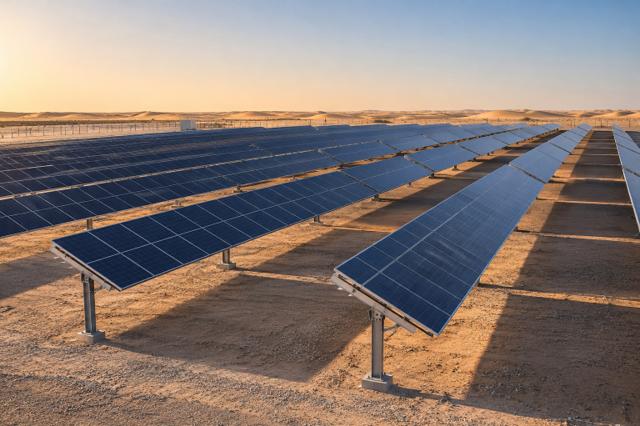
How shadows reduce PV output far more than their size suggests, how to set row pitch with the ground coverage ratio and the winter-solstice rule, and how bypass diodes and half-cut cells limit the damage.
