How many modules can go in one string: the cold-temperature Voc limit, the MPPT window and current limits, with a worked 1,500 V example.
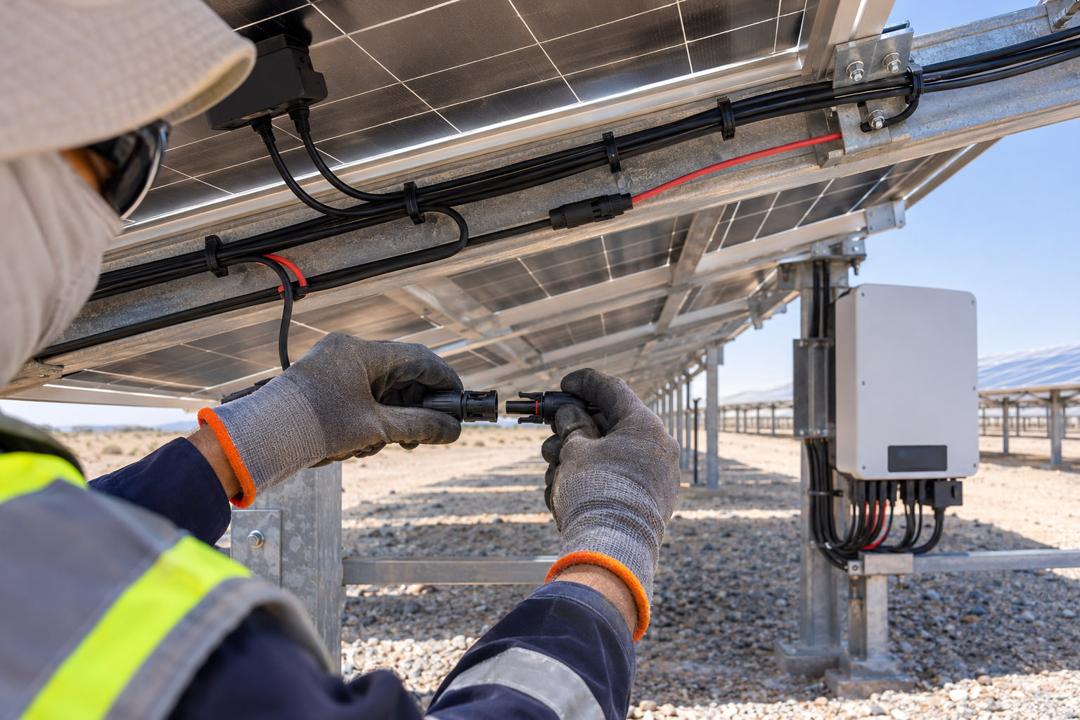
Modules in a string are connected in series, so their voltages add up while the current stays that of a single module. String sizing means choosing the number of modules per string so that the string voltage always stays within the limits of the inverter and of the modules themselves (maximum system voltage, usually 1,500 V DC for utility modules and 1,000–1,100 V for residential inverters).
The hard upper limit is set by the open-circuit voltage at the coldest expected cell temperature, because Voc rises as temperature falls. Voc(T) = Voc,STC × [1 + β × (T − 25)], where β is the Voc temperature coefficient. The rule is: N_max = floor(V_max,DC / Voc(T_min)). Exceeding the inverter's maximum DC voltage on a cold, bright morning can permanently damage it and voids the warranty, so there is no safety margin to borrow here.
Worked example: a 720 W N-type module has Voc = 49.04 V and β = −0.25 %/°C, connected to a 1,500 V inverter. At a design minimum of −10 °C (ΔT = −35 K), Voc rises by 8.75 % to 53.33 V, so N_max = 1,500 / 53.33 = 28.1 → 28 modules. At a typical Gulf site where the record-low cell temperature is around +5 °C (ΔT = −20 K), Voc rises by 5 % to 51.49 V and N_max = 29.1 → 29 modules. That is why the same module may be strung 28 or 29 per string depending on climate.
The lower limit comes from the MPPT window. On the hottest day, Vmp falls (for example from 40.9 V at STC to about 36 V at a 70 °C cell temperature), and the string's Vmp must stay above the inverter's minimum MPPT voltage, ideally near its rated voltage for best efficiency. Current must also be checked: the string Isc (×1.25 safety factor per IEC/NEC practice) must not exceed the inverter's maximum MPPT input current, and when more than two strings are paralleled each needs a fuse rated above 1.25 × Isc and below the module's maximum series fuse (e.g. 35 A).
Finally, keep all strings on one MPPT the same length and orientation, consider bifacial current gain (rear-side light can add 5–15 % to Isc), and verify the design with the inverter manufacturer's sizing tool. Longer strings mean fewer combiner inputs and less cable, so in large plants the target is usually the maximum permissible length.
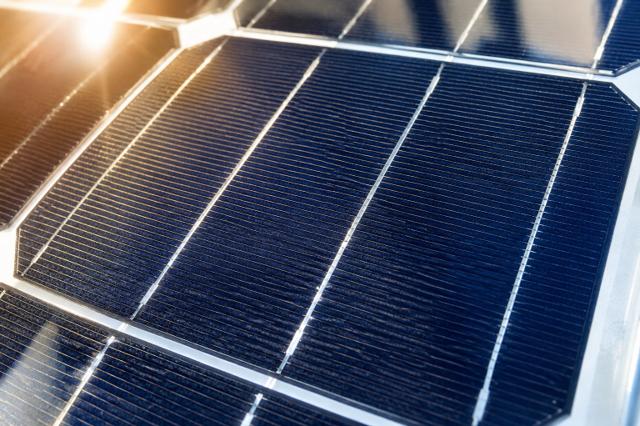
From photon to kilowatt-hour: the physics of a solar cell and the path of energy through a complete PV system.
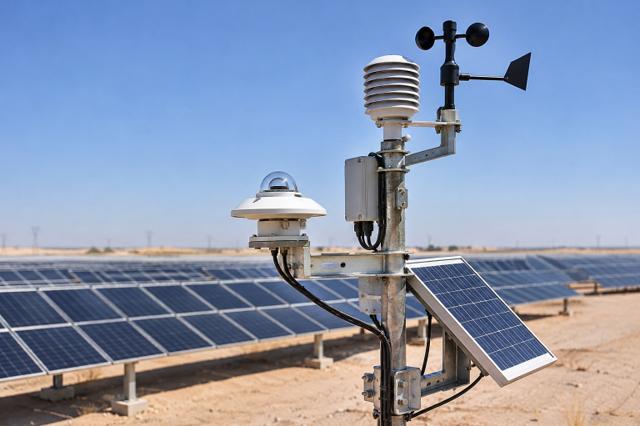
GHI, DNI and DHI explained, how sun position changes through the day and year, and why the Gulf is one of the world's best solar resources.
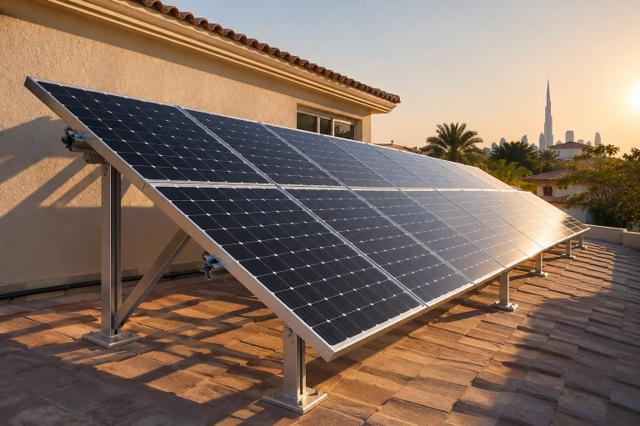
How to orient a PV array: the latitude rule of thumb, why lower tilts often win in the Gulf, and how east–west layouts trade yield for density.
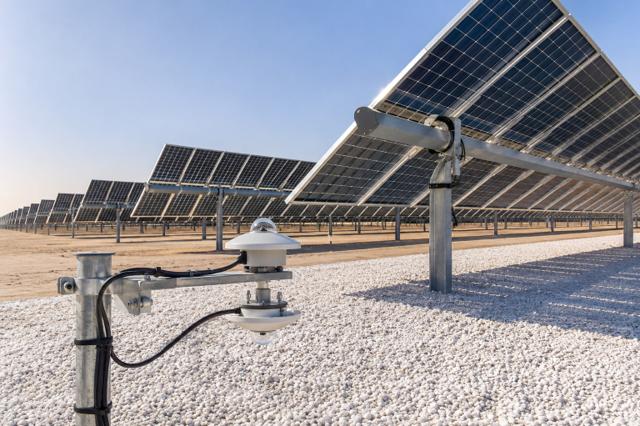
How bifacial modules harvest reflected light, what albedo values to expect on sand, gravel and white membranes, and why bifacial pairs so well with trackers.
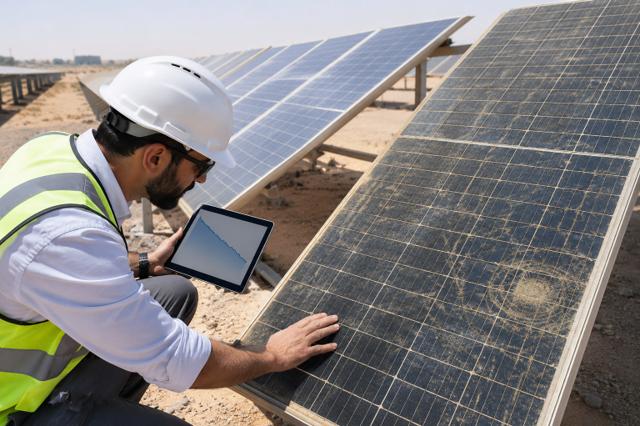
LID, LeTID and long-term power loss explained, and how to read a 12-year product / 30-year linear power warranty.
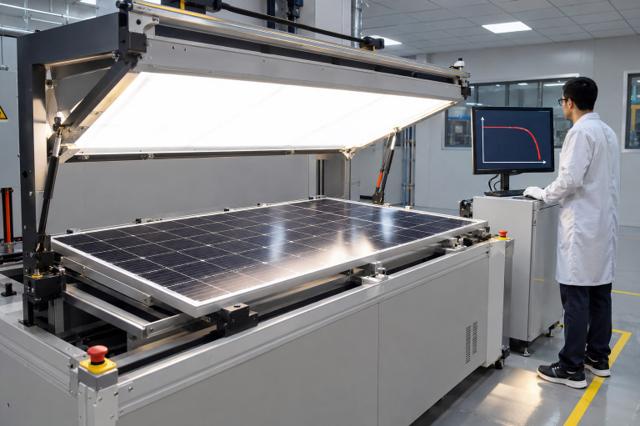
What the datasheet power really means, how temperature coefficients translate into lost watts, and why heat is the main derating factor in the desert.
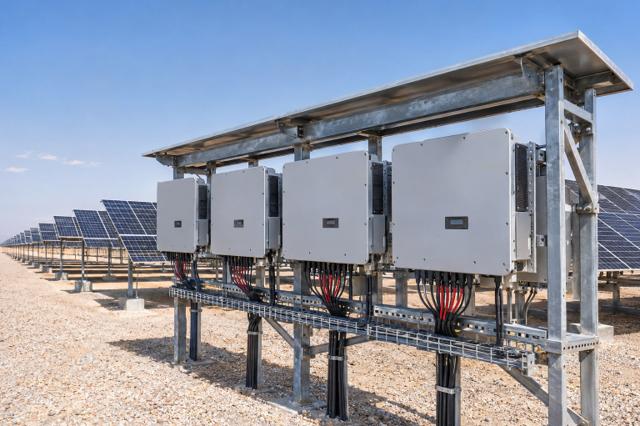
Why PV plants are built with more module power than inverter power, and how to choose a DC/AC ratio between 1.1 and 1.35 without losing too much energy to clipping.
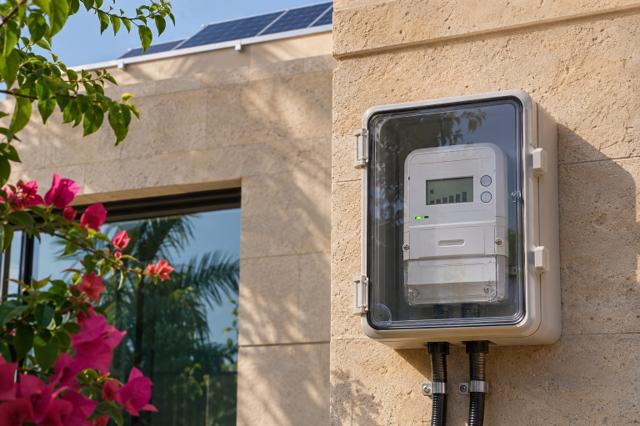
How grid-connected rooftop systems are credited for the electricity they export, and how the tariff scheme changes the right system size and the payback period.

The single number used to compare power plants: lifetime cost divided by lifetime energy, both discounted. What drives it, and why Gulf solar tariffs are among the lowest in the world.
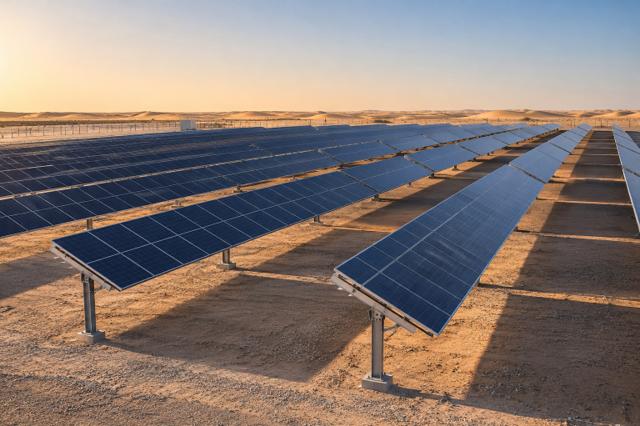
How shadows reduce PV output far more than their size suggests, how to set row pitch with the ground coverage ratio and the winter-solstice rule, and how bypass diodes and half-cut cells limit the damage.
