The single number used to compare power plants: lifetime cost divided by lifetime energy, both discounted. What drives it, and why Gulf solar tariffs are among the lowest in the world.

The levelized cost of energy (LCOE) is the constant price per kWh at which a power plant would exactly recover all of its costs over its lifetime, including a return on capital. It allows a rooftop system, a utility PV plant, a gas turbine and a wind farm to be compared on one scale, even though their cost structures are completely different.
In its standard form, LCOE = Σ [(Iₜ + O&Mₜ + Fₜ) / (1 + r)ᵗ] ÷ Σ [Eₜ / (1 + r)ᵗ], where Iₜ is capital expenditure in year t, O&Mₜ operation and maintenance cost, Fₜ fuel cost (zero for solar), Eₜ the energy delivered, and r the discount rate (weighted average cost of capital). Discounting the energy as well as the costs is what makes the result a true “levelized” price rather than a simple average.
For solar PV the dominant term is the up-front investment: modules, inverters, mounting structure, cabling, civil works, grid connection and development costs. The other big levers are energy yield (irradiance, tracking, bifacial gain, degradation rate, availability), plant lifetime (30–35 years for modern N-type glass-glass modules) and, above all, the cost of finance. A one-percentage-point change in the discount rate typically moves PV LCOE by 6–10 %, which is why bankable equipment, long warranties and strong offtake contracts matter so much.
The Gulf region combines excellent irradiance (1,900–2,200 kWh/m²·year global horizontal), large flat sites, single-axis trackers with bifacial modules, low-cost financing and long-term power purchase agreements with creditworthy utilities. The result has been a series of record-low utility-scale tariffs, with recent awards in the region in the order of 1.3 US cents per kWh. These figures reflect very large plant sizes and specific contract structures, so they cannot be transferred directly to a commercial rooftop, whose LCOE is several times higher but still usually below the retail electricity tariff.
When comparing offers, look at LCOE rather than price per watt alone. A slightly more expensive module with higher efficiency, lower degradation (for example 0.4 %/year instead of 0.55 %/year), higher bifaciality and a longer power warranty can produce a lower cost per kWh over 30 years than the cheapest module on the market.
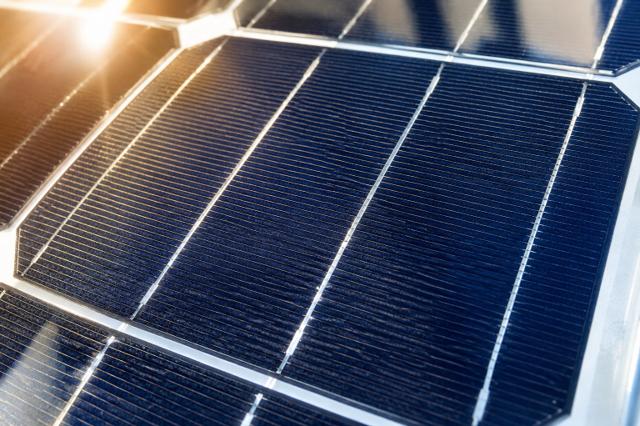
From photon to kilowatt-hour: the physics of a solar cell and the path of energy through a complete PV system.
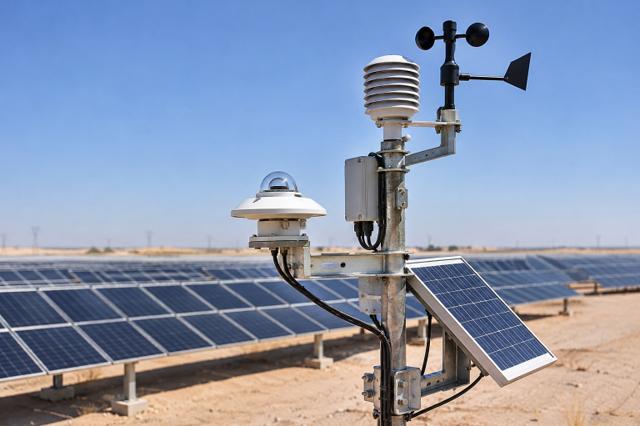
GHI, DNI and DHI explained, how sun position changes through the day and year, and why the Gulf is one of the world's best solar resources.
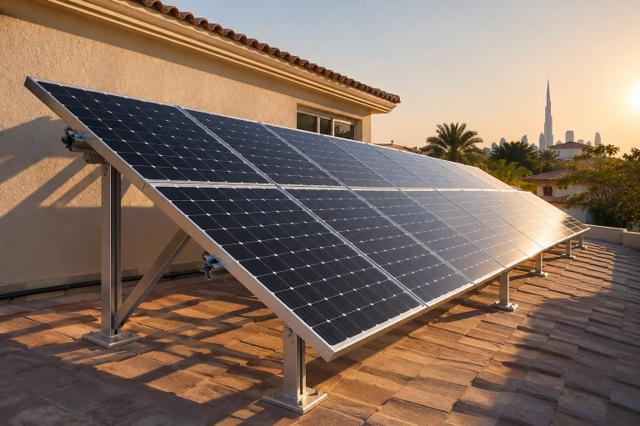
How to orient a PV array: the latitude rule of thumb, why lower tilts often win in the Gulf, and how east–west layouts trade yield for density.
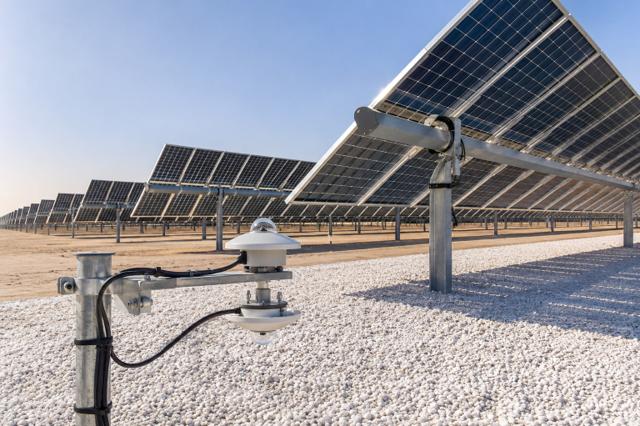
How bifacial modules harvest reflected light, what albedo values to expect on sand, gravel and white membranes, and why bifacial pairs so well with trackers.
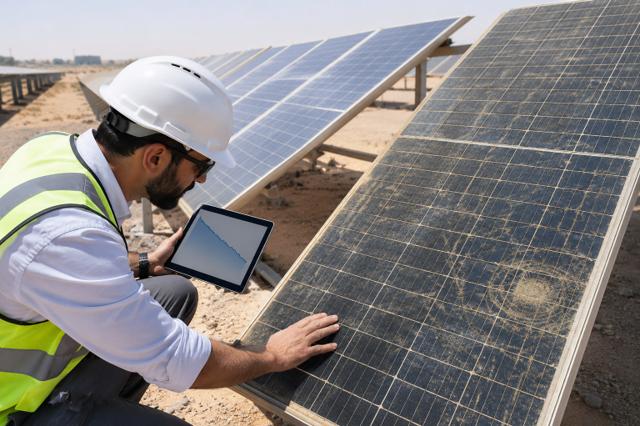
LID, LeTID and long-term power loss explained, and how to read a 12-year product / 30-year linear power warranty.
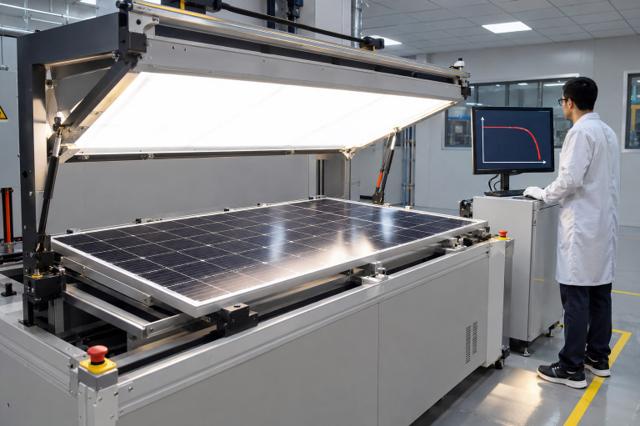
What the datasheet power really means, how temperature coefficients translate into lost watts, and why heat is the main derating factor in the desert.
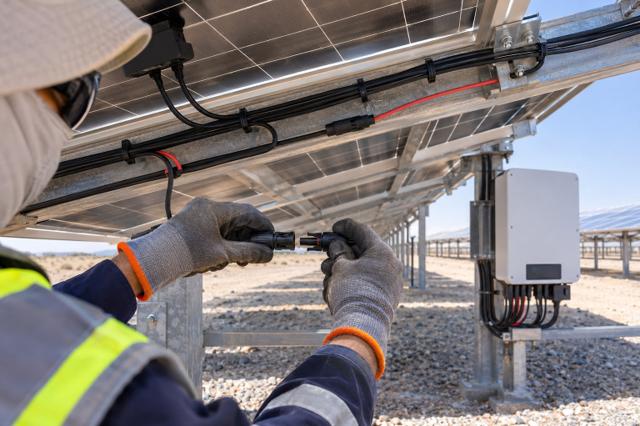
How many modules can go in one string: the cold-temperature Voc limit, the MPPT window and current limits, with a worked 1,500 V example.
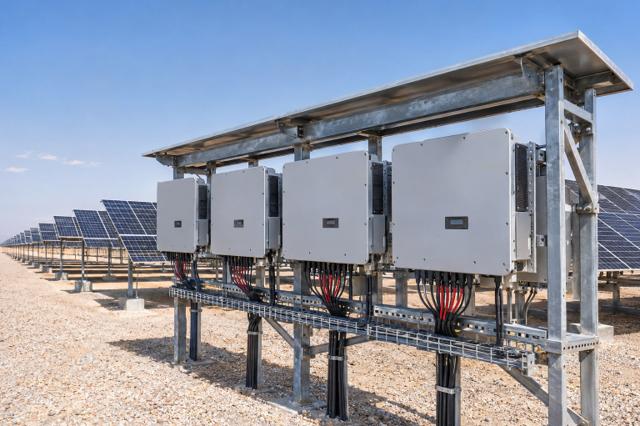
Why PV plants are built with more module power than inverter power, and how to choose a DC/AC ratio between 1.1 and 1.35 without losing too much energy to clipping.
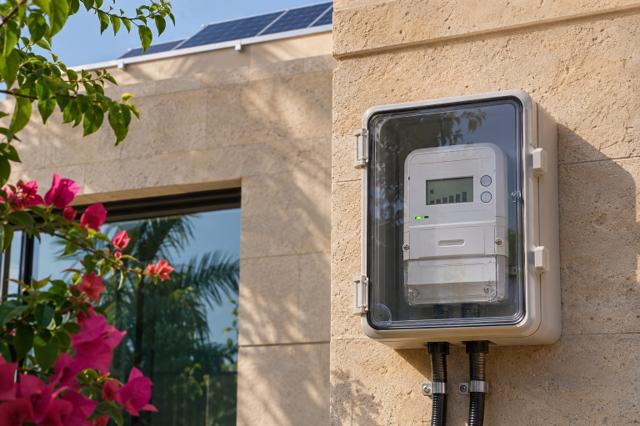
How grid-connected rooftop systems are credited for the electricity they export, and how the tariff scheme changes the right system size and the payback period.
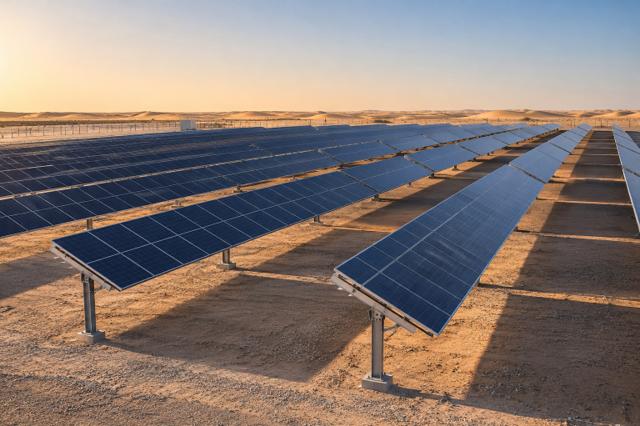
How shadows reduce PV output far more than their size suggests, how to set row pitch with the ground coverage ratio and the winter-solstice rule, and how bypass diodes and half-cut cells limit the damage.
