Dust and soiling are the biggest controllable loss for PV plants in the Gulf. How fast output drops, why morning dew makes it worse, and how to choose between manual washing, waterless robots and an optimized cleaning schedule.
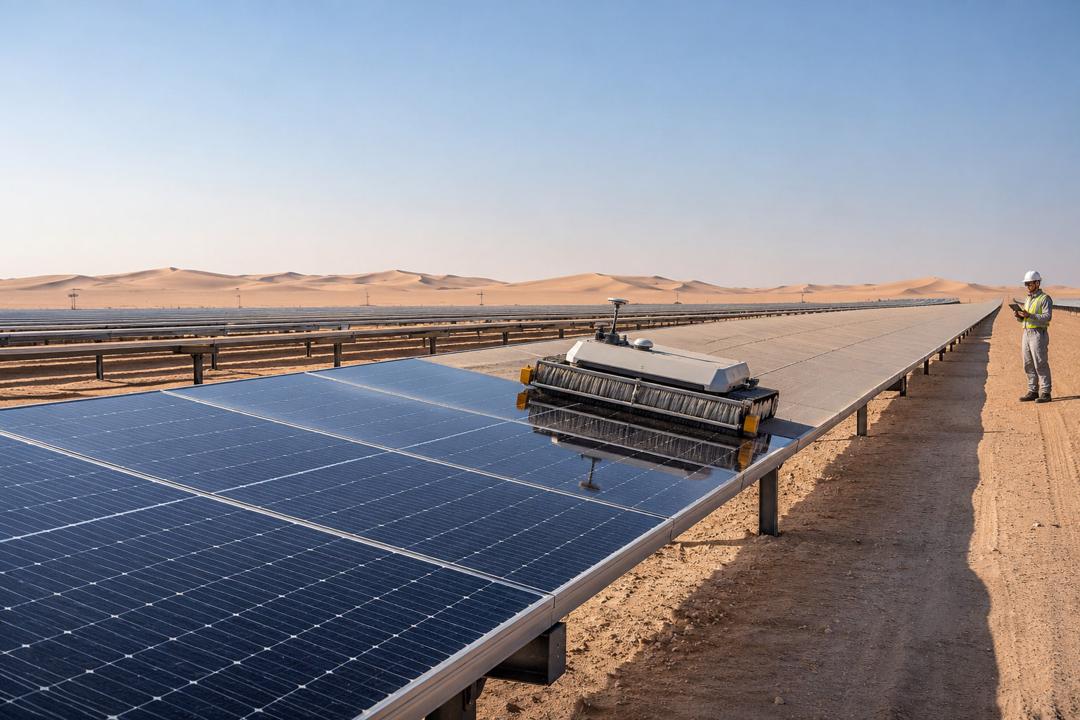
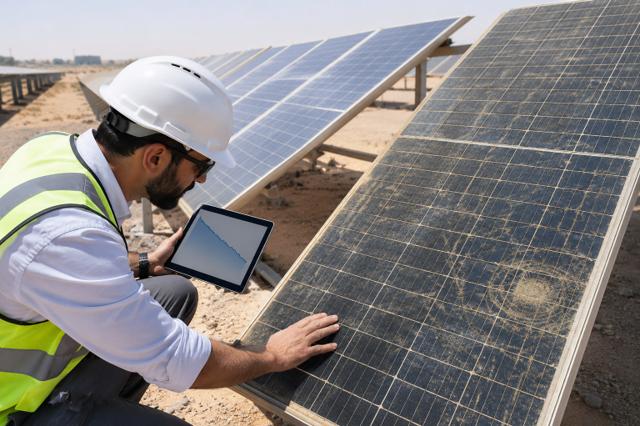
In the deserts of the Arabian Peninsula, airborne dust settles on modules every day. Field measurements in the GCC typically show soiling rates of 0.3–1 % of output lost per day without cleaning, with much higher spikes after sandstorms (shamal winds) when a single event can cut output by 10–20 % or more. Left untreated, accumulated soiling can remove a quarter of a plant’s annual energy, making it the largest controllable loss after the choice of equipment itself.
Coastal and humid parts of the Gulf face an additional problem: dew cementation. Overnight the module glass cools below the dew point, moisture condenses and mixes with fine dust and salts; as the sun dries it in the morning, a hard, mud-like film forms that loose wind and light brushing do not remove. Tilted modules shed some dust, but low tilt angles (often 10–25° in the region) allow a dirt line to build up along the lower frame edge, which can create partial shading of the bottom cells.
Cleaning methods range from manual washing with demineralized water and soft brushes, through tractor-mounted brushes, to fully automatic robots. Water is scarce and expensive in the desert, and hard water leaves mineral deposits, so utility plants in the region increasingly use waterless robots: rail- or frame-mounted units that travel along each row every night with microfiber brushes and air flow, powered by their own small PV module and battery. They prevent dew cementation from building up and avoid any water logistics, but add capital cost per row and require their own maintenance.
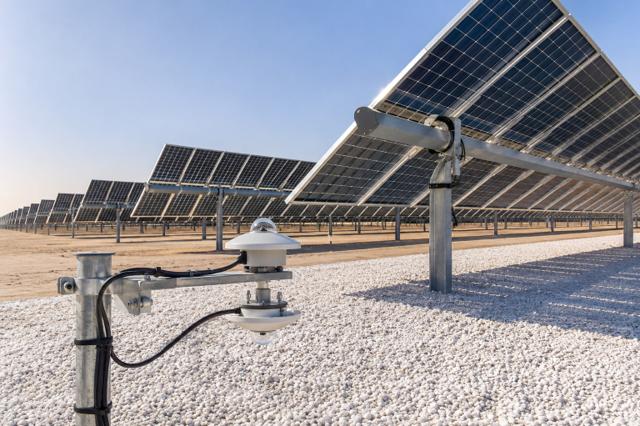
The economics are a simple balance: cleaning cost per event versus the value of energy recovered. With a robot, the marginal cost of an extra cleaning cycle is close to zero, so daily or every-other-day cleaning is normal. With manual crews the optimum is usually every one to four weeks, plus extra cleaning after sandstorms. Soiling-ratio sensors (a clean and a dirty reference cell side by side) or comparisons of string currents let operators trigger cleaning only when the lost revenue exceeds the cost.
A few precautions apply whatever the method. Use only cleaning tools and pressures approved by the module manufacturer, avoid abrasive brushes that damage anti-reflective coatings, never spray cold water on hot glass at midday, and keep personnel off the modules. Anti-soiling glass coatings and higher tilt angles can reduce, but not eliminate, the need for regular cleaning in desert climates.
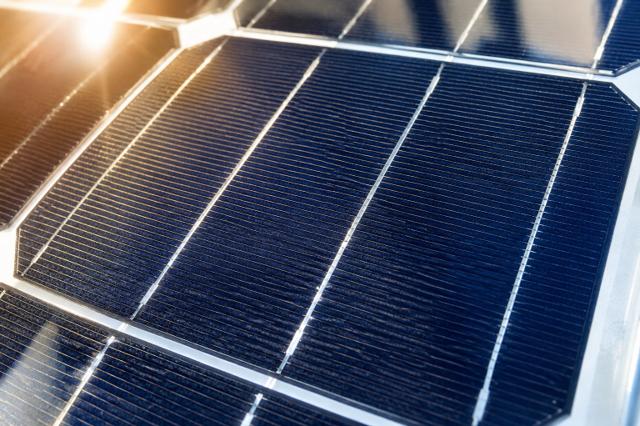
From photon to kilowatt-hour: the physics of a solar cell and the path of energy through a complete PV system.
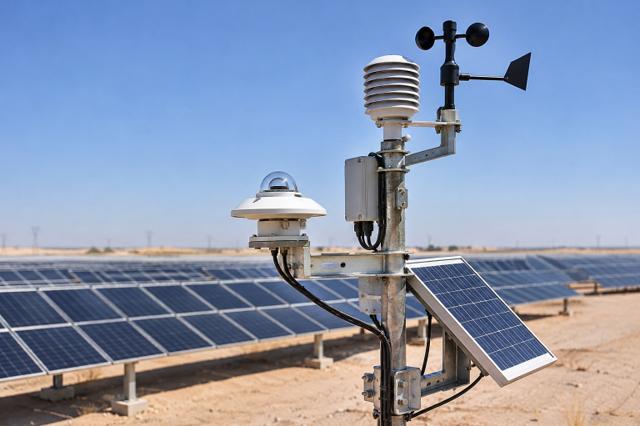
GHI, DNI and DHI explained, how sun position changes through the day and year, and why the Gulf is one of the world's best solar resources.
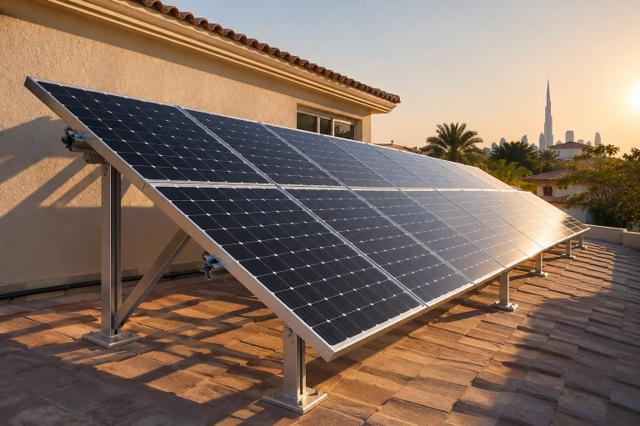
How to orient a PV array: the latitude rule of thumb, why lower tilts often win in the Gulf, and how east–west layouts trade yield for density.
How bifacial modules harvest reflected light, what albedo values to expect on sand, gravel and white membranes, and why bifacial pairs so well with trackers.
LID, LeTID and long-term power loss explained, and how to read a 12-year product / 30-year linear power warranty.
What the datasheet power really means, how temperature coefficients translate into lost watts, and why heat is the main derating factor in the desert.
How many modules can go in one string: the cold-temperature Voc limit, the MPPT window and current limits, with a worked 1,500 V example.
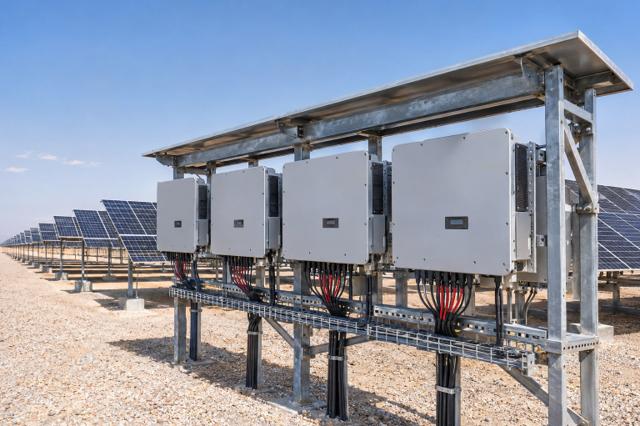
Why PV plants are built with more module power than inverter power, and how to choose a DC/AC ratio between 1.1 and 1.35 without losing too much energy to clipping.
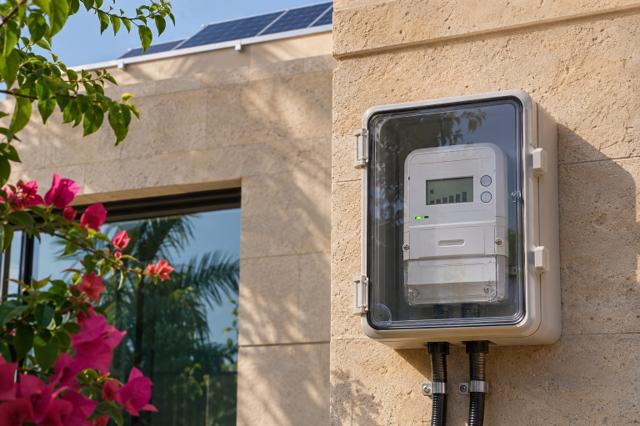
How grid-connected rooftop systems are credited for the electricity they export, and how the tariff scheme changes the right system size and the payback period.

The single number used to compare power plants: lifetime cost divided by lifetime energy, both discounted. What drives it, and why Gulf solar tariffs are among the lowest in the world.
