STC and NOCT ratings, power tolerance, temperature coefficients, mechanical load ratings, certifications and the warranty fine print — what each line of a module datasheet really means.

A module datasheet is a compact two-page summary, and almost every line affects design, yield or bankability. Read it together with the installation manual and the warranty document, because the datasheet alone does not contain all the conditions.
The electrical table lists values at STC (standard test conditions: 1,000 W/m², 25 °C cell temperature, AM1.5 spectrum): maximum power Pmax, voltage and current at maximum power (Vmp, Imp), open-circuit voltage Voc, short-circuit current Isc and efficiency. STC is a laboratory reference, not field reality. The second table, at NOCT or NMOT (800 W/m², 20 °C ambient, 1 m/s wind), shows a more realistic operating point — typically 74–76 % of STC power. For bifacial modules, look for the rear-side gain table (e.g. +5 %, +15 %, +25 %) and the bifaciality factor, usually 70–85 %.
Power tolerance such as "0 to +5 W" means every module delivers at least its rated power at STC; avoid negative tolerances. Temperature coefficients tell you how output changes with heat: a Pmax coefficient of −0.29 %/°C means a module running at 65 °C (40 K above STC) loses about 11.6 % of its power — so in the Gulf, a lower coefficient is worth real energy. The Voc coefficient is used for string sizing: at the coldest expected temperature the string Voc must stay below the inverter's and the module's maximum system voltage (1,000 V or 1,500 V). The maximum series fuse rating limits how many strings may be paralleled without fusing.
The mechanical section gives dimensions, weight, frame and glass thickness, cell count and junction box details, and the tested mechanical loads, for example 5,400 Pa front (snow) and 2,400 Pa rear (wind uplift). These figures are valid only for the clamping positions and mounting methods shown in the installation manual; a different clamp zone can reduce the permitted load. Check connector type and cable length too — they decide whether modules can be connected in portrait or landscape without extension leads.
Certifications prove the design passed independent tests: IEC 61215 (design qualification) and IEC 61730 (safety), plus IEC 61701 (salt mist), IEC 62716 (ammonia), IEC 60068-2-68 (sand and dust) and PID resistance per IEC TS 62804 — the last three are especially relevant in coastal and desert climates. Finally, the warranty box: product warranty years, performance warranty duration, first-year degradation and annual degradation (for example ≤1 % then 0.4 %/yr). Confirm the full warranty conditions, the warrantor and how claims are made before you buy; the datasheet headline is only a summary.
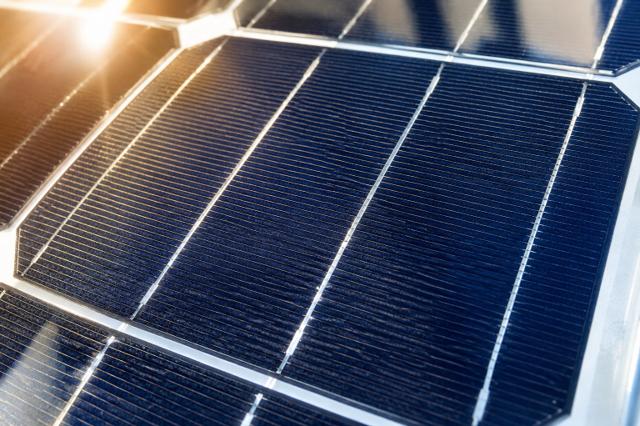
From photon to kilowatt-hour: the physics of a solar cell and the path of energy through a complete PV system.
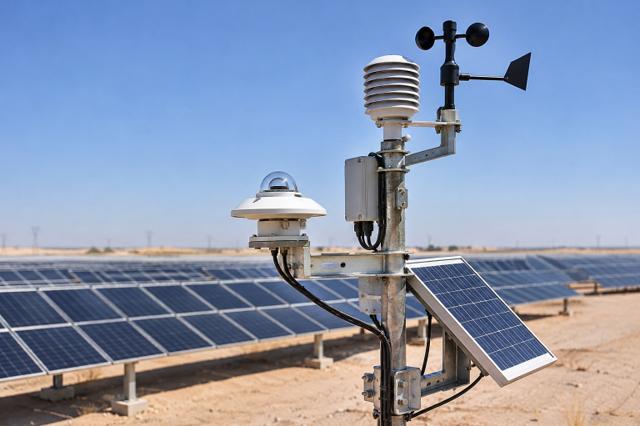
GHI, DNI and DHI explained, how sun position changes through the day and year, and why the Gulf is one of the world's best solar resources.
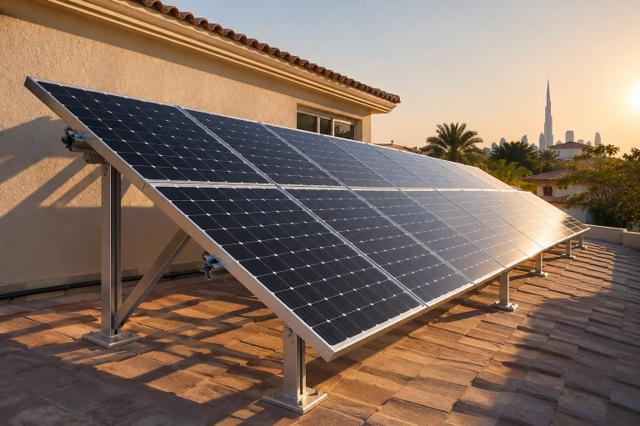
How to orient a PV array: the latitude rule of thumb, why lower tilts often win in the Gulf, and how east–west layouts trade yield for density.
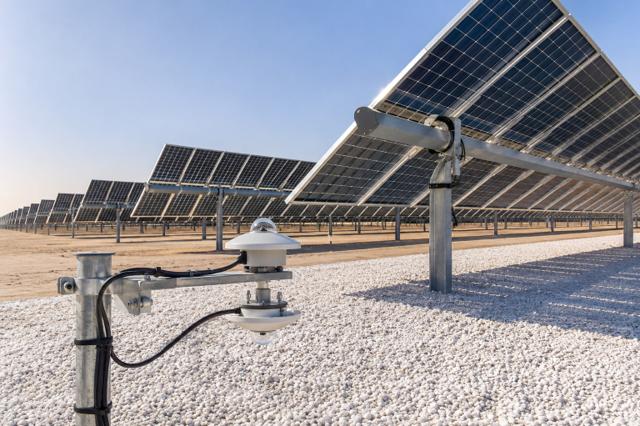
How bifacial modules harvest reflected light, what albedo values to expect on sand, gravel and white membranes, and why bifacial pairs so well with trackers.
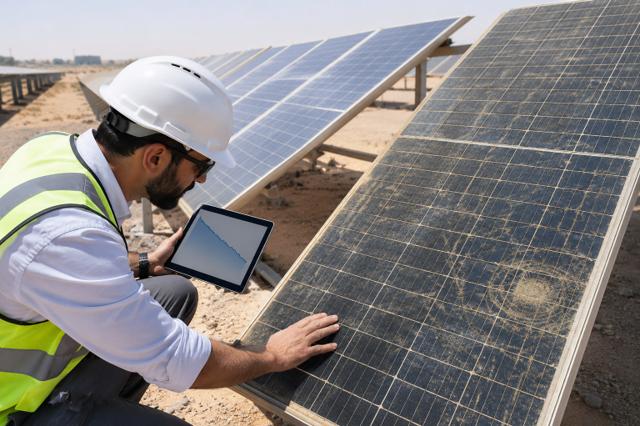
LID, LeTID and long-term power loss explained, and how to read a 12-year product / 30-year linear power warranty.
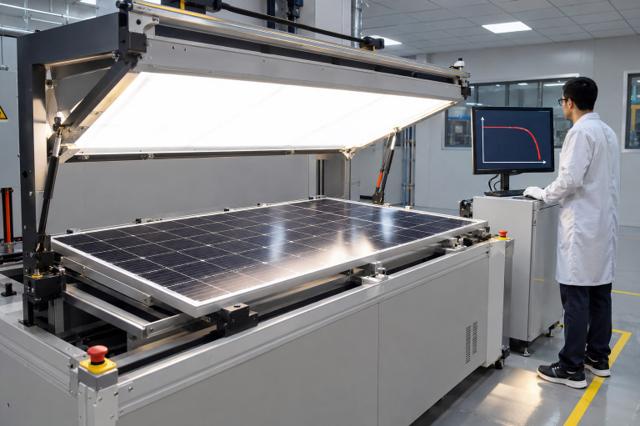
What the datasheet power really means, how temperature coefficients translate into lost watts, and why heat is the main derating factor in the desert.
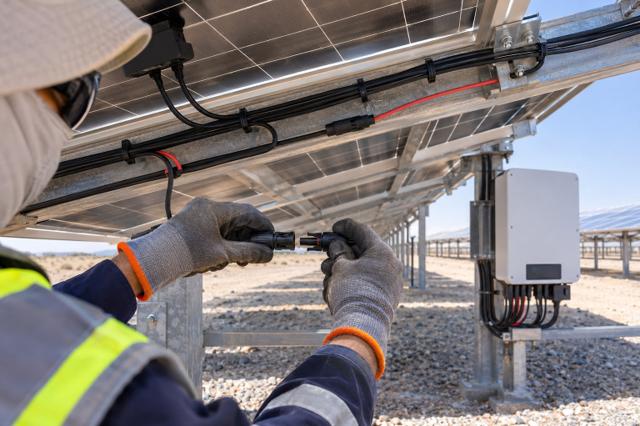
How many modules can go in one string: the cold-temperature Voc limit, the MPPT window and current limits, with a worked 1,500 V example.
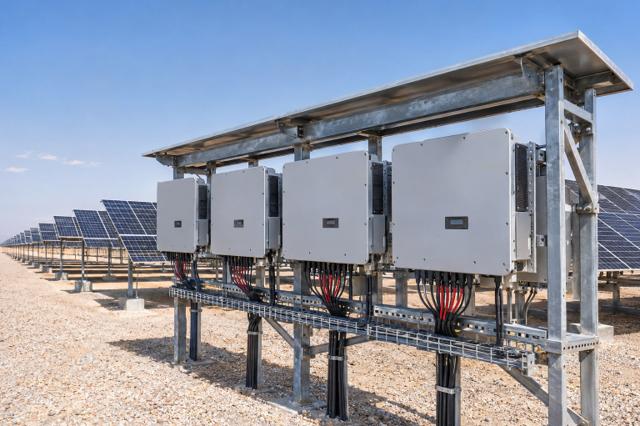
Why PV plants are built with more module power than inverter power, and how to choose a DC/AC ratio between 1.1 and 1.35 without losing too much energy to clipping.
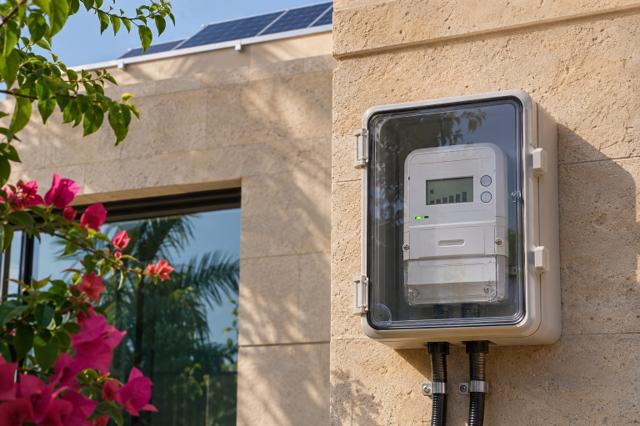
How grid-connected rooftop systems are credited for the electricity they export, and how the tariff scheme changes the right system size and the payback period.

The single number used to compare power plants: lifetime cost divided by lifetime energy, both discounted. What drives it, and why Gulf solar tariffs are among the lowest in the world.
