How many kWp an electric car needs, how surplus (solar-only) charging and smart scheduling work, why load balancing protects the main breaker, and what bidirectional V2H/V2G will add.
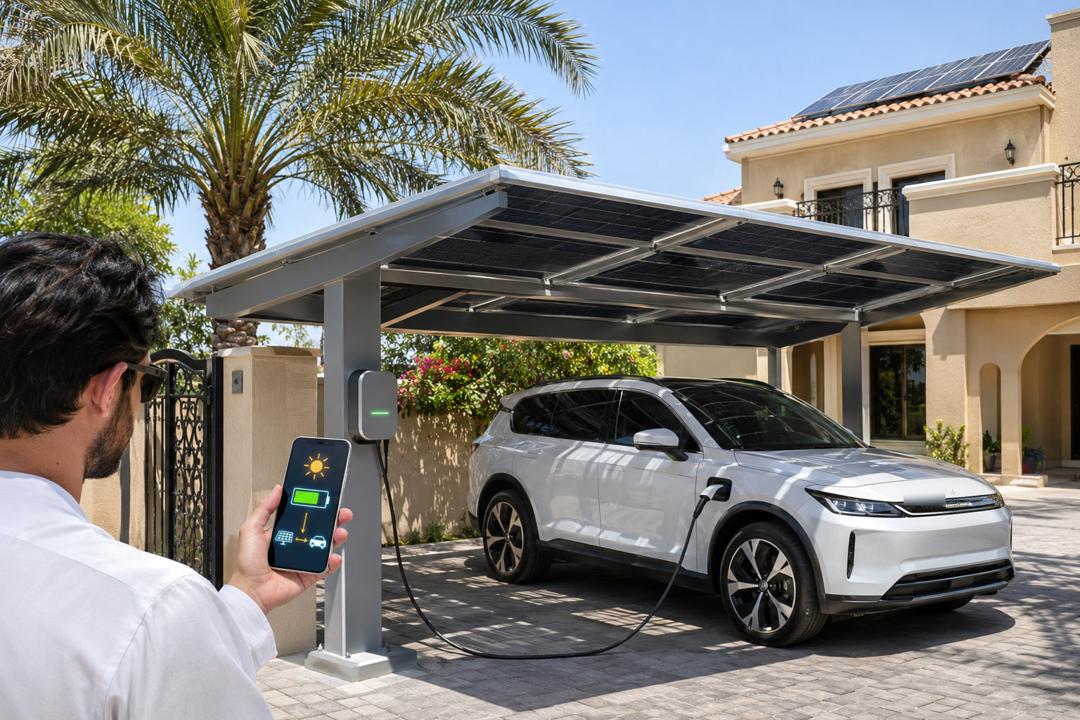
Solar and electric vehicles are a natural pair: the car is a large, flexible load, and charging it with your own PV electricity is usually the most valuable use of surplus energy — worth the full retail tariff or fuel price instead of a low export rate. Typical EVs use 15–20 kWh per 100 km. A car driven 15,000 km a year therefore needs about 2,300–3,000 kWh, plus 10 % charging losses. In the UAE a well-oriented array yields roughly 1,600–1,800 kWh per kWp per year, so around 1.8–2 kWp of modules — four modern panels — covers the energy of an average driver over the year.
The difficulty is timing. A car parked at the office all day cannot absorb home solar production, and evening charging coincides with the household peak. Surplus charging solves part of this: a solar-aware wallbox reads a meter at the grid connection and adjusts charging current so the car only takes what the house would otherwise export. Because the IEC 61851 standard sets a minimum of 6 A, a single-phase charger needs at least about 1.4 kW of surplus to start and a three-phase one about 4.1 kW; chargers with automatic phase switching move between one and three phases to follow the sun. Many owners combine a "solar only" mode for daytime with a minimum-charge or tariff-based schedule at night, and hybrid systems can also discharge a home battery into the car when sensible.
Load management is essential once a charger is added to an existing supply. A 7.4 kW single-phase or 11–22 kW three-phase wallbox can overload the main breaker when air-conditioning, cooking and water heating run at the same time. Dynamic load balancing uses a CT or meter on the incoming supply to reduce charging current in real time, keeping the total below the connection limit. On commercial car parks and solar carports, a load-management controller shares the available power among many chargers and can prioritise by arrival time or user group, avoiding costly grid upgrades.
Designing a solar carport for EV charging follows the same logic: size the canopy for the parking layout first, then check how much of the charging energy the canopy produces across the day and season. Fleet depots with daytime parking can reach very high solar fractions; public sites with evening peaks benefit from a battery to shift energy. DC fast chargers (50–150 kW and above) draw far more than any canopy produces at a moment, so they are planned around the grid connection, with PV and storage reducing demand charges rather than covering each session.
The next step is bidirectional charging. Vehicle-to-home (V2H) lets the car's 50–80 kWh battery supply the house during an outage or the evening peak; vehicle-to-grid (V2G) lets it sell flexibility to the network. CHAdeMO has supported bidirectional DC power for years, and the CCS ecosystem is following through ISO 15118-20. Availability still depends on the car model, the charger, the utility's rules and the warranty terms, so check all four before planning on it — but a charger and wiring sized for future upgrades costs little today.

From photon to kilowatt-hour: the physics of a solar cell and the path of energy through a complete PV system.
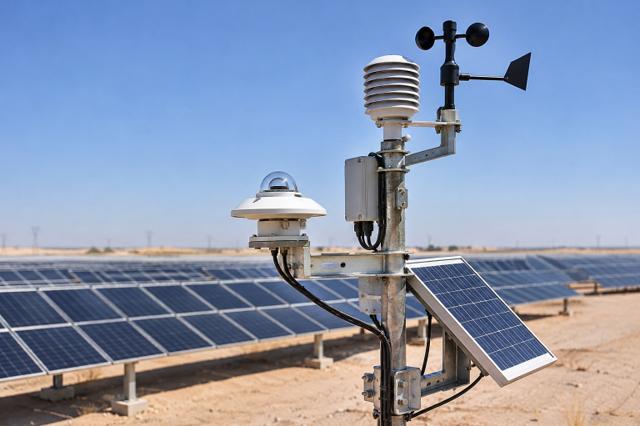
GHI, DNI and DHI explained, how sun position changes through the day and year, and why the Gulf is one of the world's best solar resources.
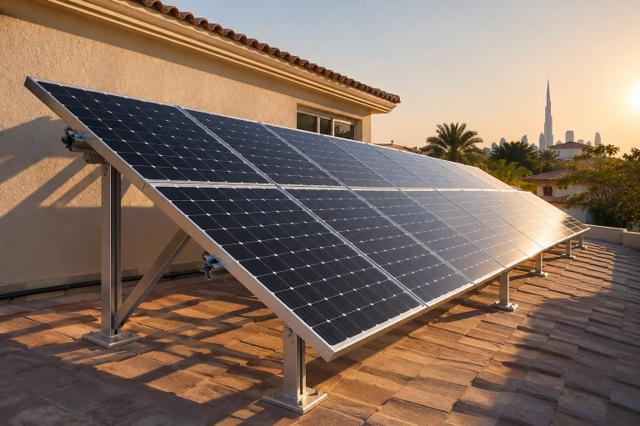
How to orient a PV array: the latitude rule of thumb, why lower tilts often win in the Gulf, and how east–west layouts trade yield for density.
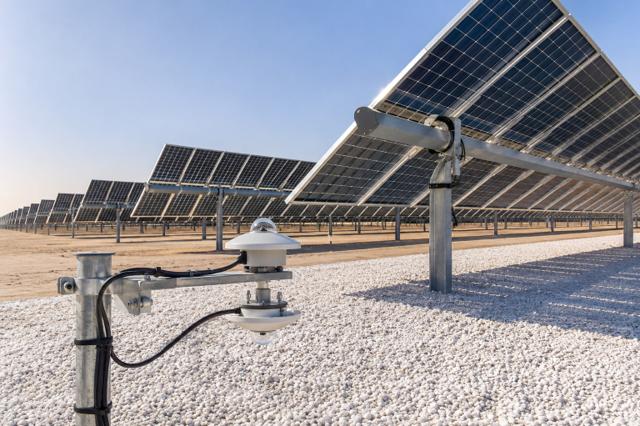
How bifacial modules harvest reflected light, what albedo values to expect on sand, gravel and white membranes, and why bifacial pairs so well with trackers.

LID, LeTID and long-term power loss explained, and how to read a 12-year product / 30-year linear power warranty.
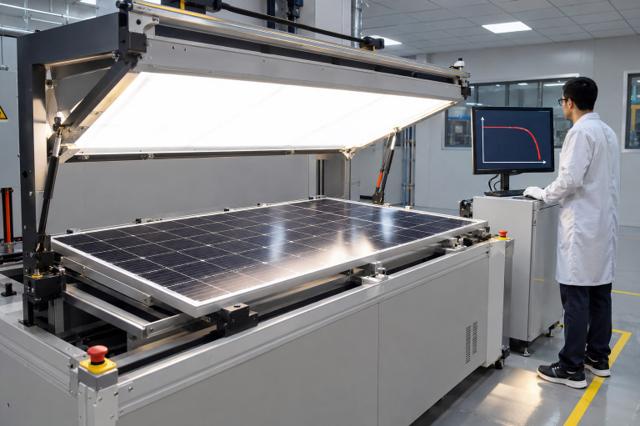
What the datasheet power really means, how temperature coefficients translate into lost watts, and why heat is the main derating factor in the desert.
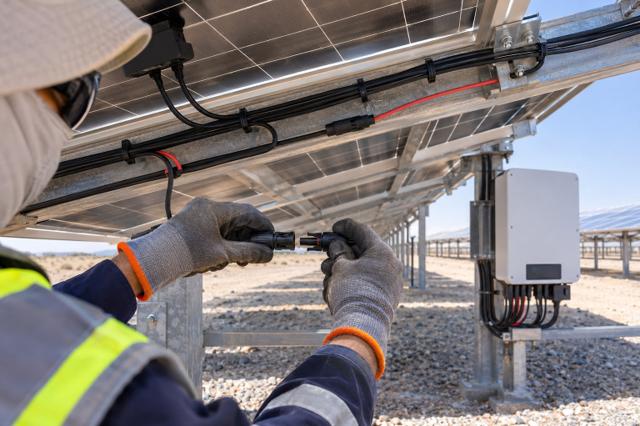
How many modules can go in one string: the cold-temperature Voc limit, the MPPT window and current limits, with a worked 1,500 V example.
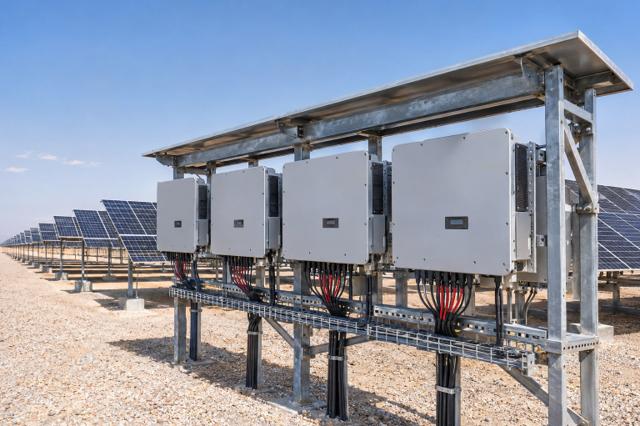
Why PV plants are built with more module power than inverter power, and how to choose a DC/AC ratio between 1.1 and 1.35 without losing too much energy to clipping.
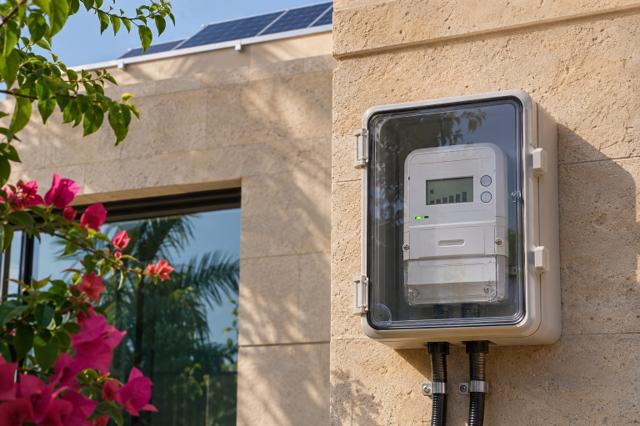
How grid-connected rooftop systems are credited for the electricity they export, and how the tariff scheme changes the right system size and the payback period.

The single number used to compare power plants: lifetime cost divided by lifetime energy, both discounted. What drives it, and why Gulf solar tariffs are among the lowest in the world.
