How floating PV works — HDPE floats, anchoring and mooring, the cooling gain from water, reduced evaporation — and the corrosion and electrical-safety points that decide whether a project lasts 25 years.
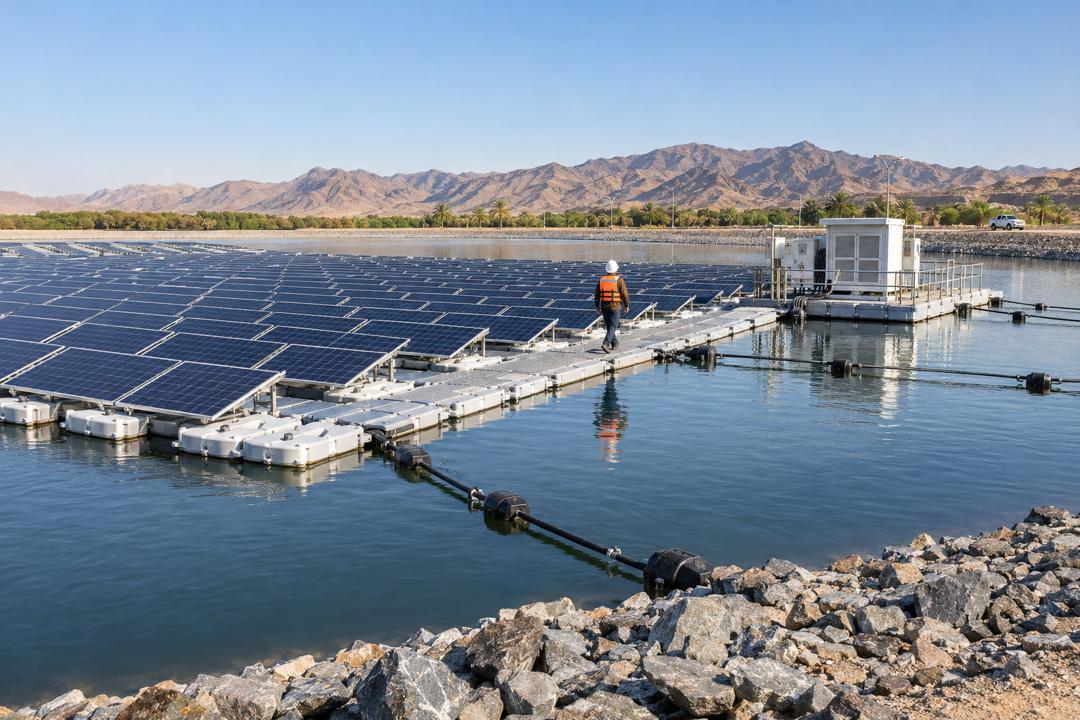
Floating PV (FPV) mounts modules on buoyant platforms anchored on a body of water: drinking-water and irrigation reservoirs, hydropower lakes, mining ponds, wastewater lagoons and quarry lakes. It uses surface that has no other productive use, avoids land acquisition and can share an existing grid connection, which is why it has grown fastest in regions where flat land is scarce or expensive.
The most common platform is a modular system of blow-moulded HDPE floats, UV-stabilised and food-grade where the water is drinkable. Modules sit at a low tilt (typically 5–15°) either directly on the floats or on a light aluminium or galvanised-steel frame carried by them, with walkway floats between rows for maintenance. Larger designs use pontoons or membrane structures. Low tilt reduces wind load but increases soiling from birds, so bird deterrents and access for cleaning are part of the design.
Anchoring and mooring are the critical engineering. The island is held by mooring lines — often elastic or chain-and-rope combinations — to anchors on the bed (deadweight blocks, screw or driven piles) or to the banks. The system must follow water-level changes, which can exceed 10–20 m on a hydropower reservoir, and resist wind, waves and, where relevant, ice. Mooring design is based on site wind data, bathymetry and a geotechnical survey of the bed, and it is checked by dynamic analysis rather than simple static loads.
The water brings two benefits. Evaporative and convective cooling keeps cells cooler than on a hot rooftop or desert ground mount; field data typically shows a few percent more yield, depending on climate, wind and how open the structure is underneath. Covering the surface also cuts evaporation — valuable for reservoirs in arid climates such as the Gulf — and shading can slow algae growth.
The trade-offs are corrosion and electrical safety. Humidity, splashing and, on brackish or salt water, chlorides demand stainless or high-grade coated fasteners, aluminium alloys with suitable anodising, sealed connectors kept out of the water and cables rated for wet locations. DC cables should be routed in trays above the floats, not trailing in the water, and the earthing and equipotential bonding of a moving structure must be engineered carefully, together with insulation monitoring. Inverters and transformers are usually installed on the bank or on a dedicated platform. Environmental studies on water quality and aquatic life are part of the permitting process.
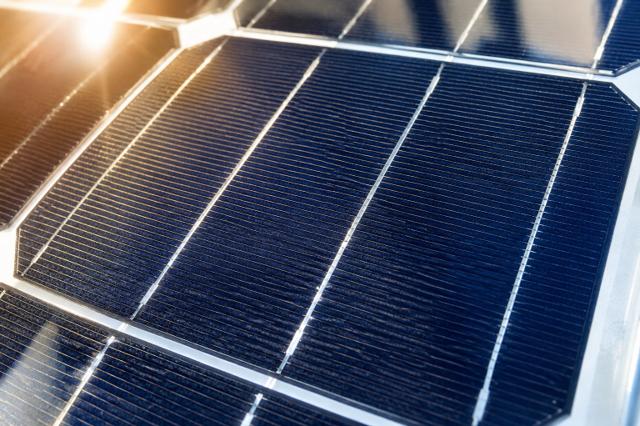
From photon to kilowatt-hour: the physics of a solar cell and the path of energy through a complete PV system.
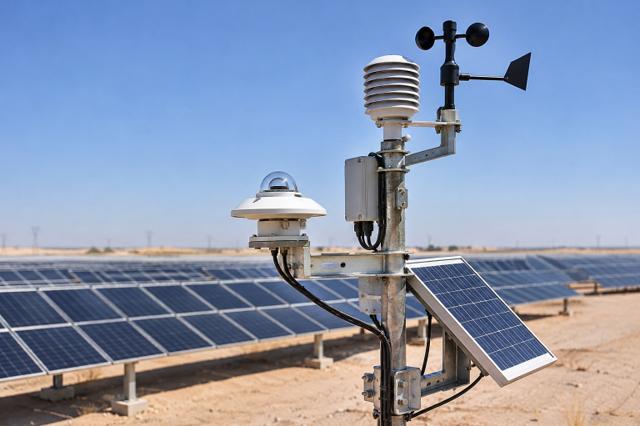
GHI, DNI and DHI explained, how sun position changes through the day and year, and why the Gulf is one of the world's best solar resources.
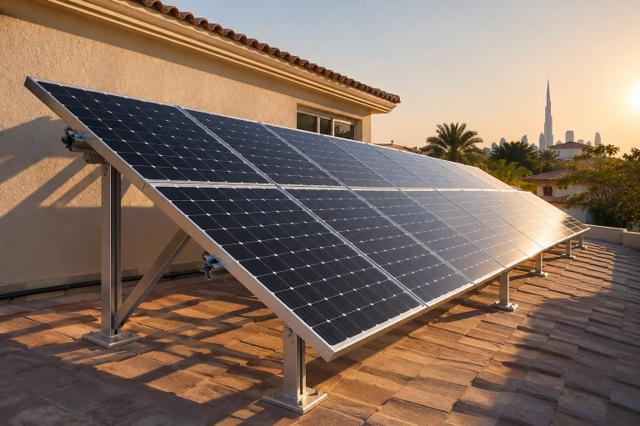
How to orient a PV array: the latitude rule of thumb, why lower tilts often win in the Gulf, and how east–west layouts trade yield for density.
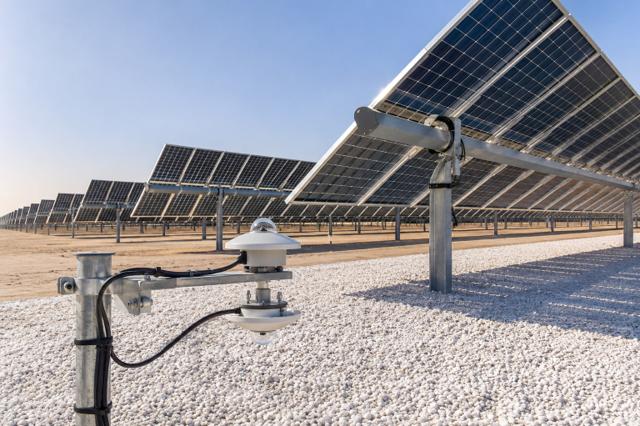
How bifacial modules harvest reflected light, what albedo values to expect on sand, gravel and white membranes, and why bifacial pairs so well with trackers.
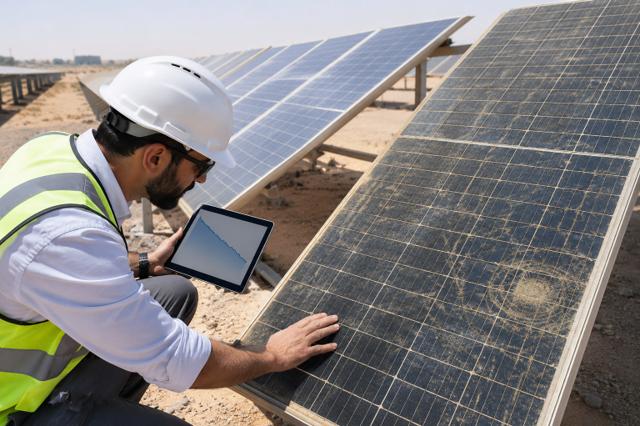
LID, LeTID and long-term power loss explained, and how to read a 12-year product / 30-year linear power warranty.
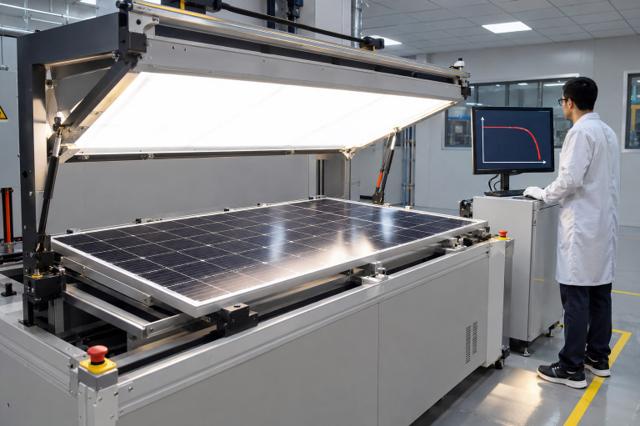
What the datasheet power really means, how temperature coefficients translate into lost watts, and why heat is the main derating factor in the desert.
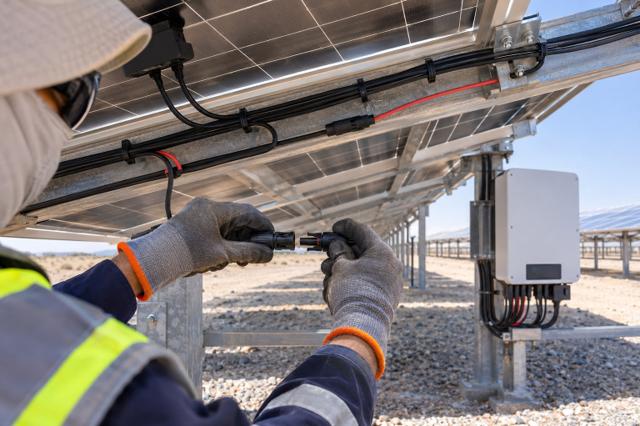
How many modules can go in one string: the cold-temperature Voc limit, the MPPT window and current limits, with a worked 1,500 V example.
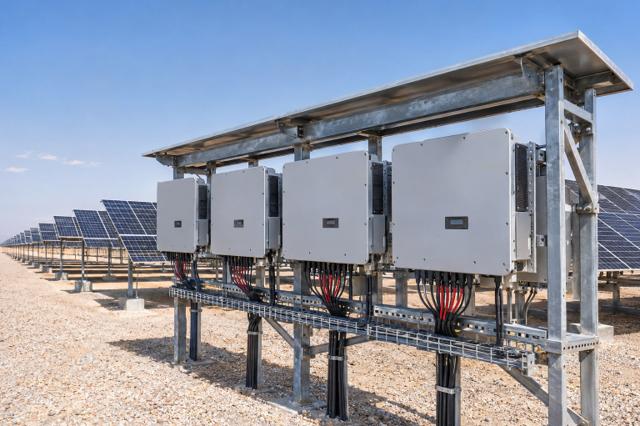
Why PV plants are built with more module power than inverter power, and how to choose a DC/AC ratio between 1.1 and 1.35 without losing too much energy to clipping.
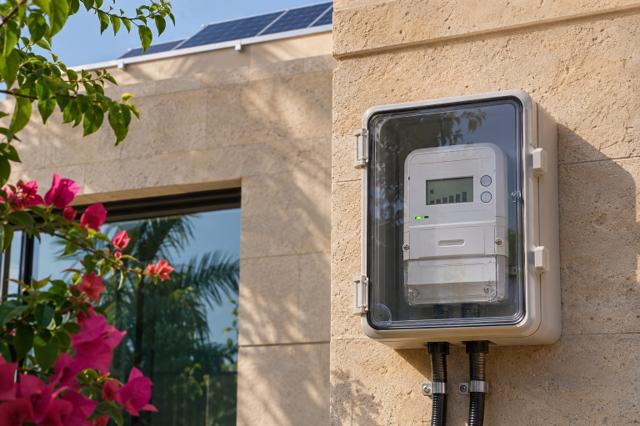
How grid-connected rooftop systems are credited for the electricity they export, and how the tariff scheme changes the right system size and the payback period.
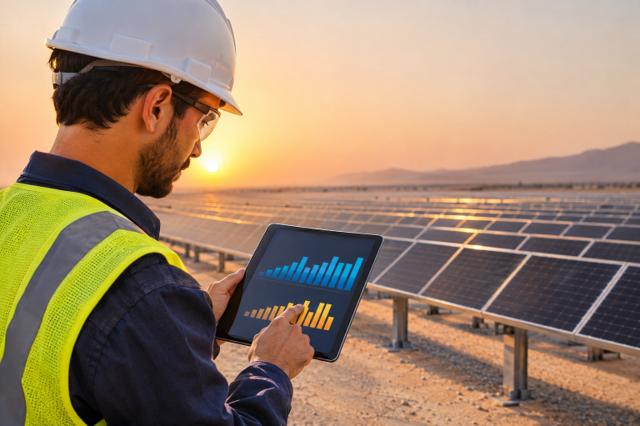
The single number used to compare power plants: lifetime cost divided by lifetime energy, both discounted. What drives it, and why Gulf solar tariffs are among the lowest in the world.
