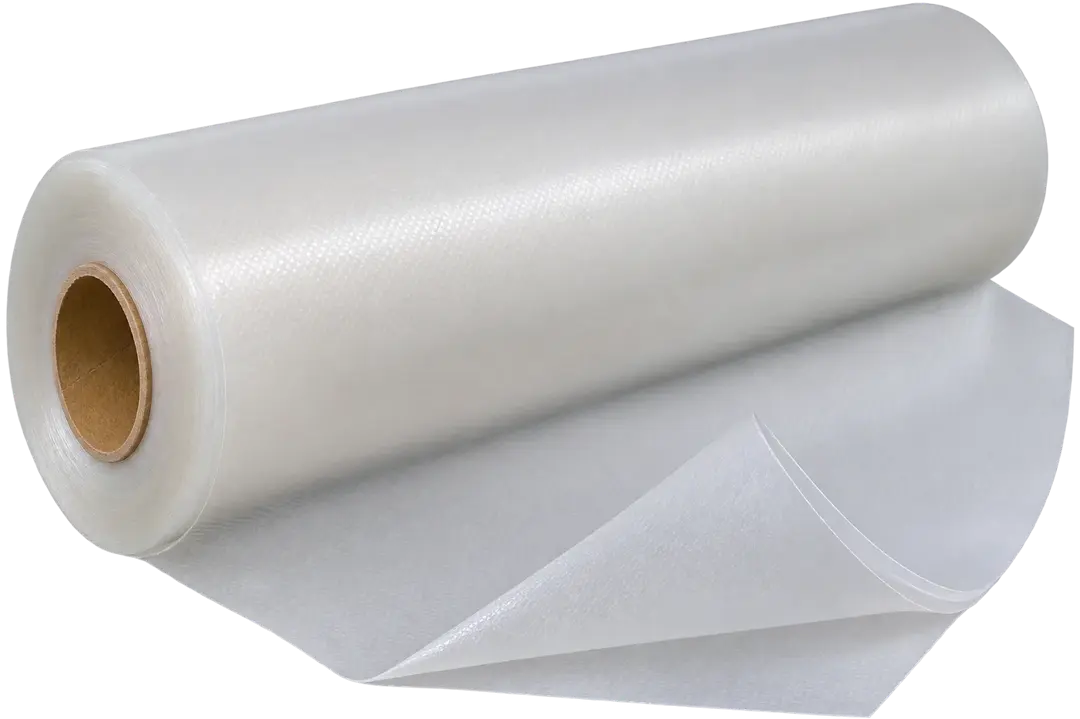
EPE is made by co-extruding a POE core between two thin EVA layers in a single film. The POE layer acts as the moisture and ion barrier, while the EVA skins give fast wetting, good adhesion to glass and cells, and a lamination window close to standard EVA. Layup is less slippery than pure POE, and the film costs less.
This balance has made EPE a common front-side encapsulant for TOPCon glass-glass modules, often paired with POE or EPE on the rear. Because EVA still touches the cell, the acid risk is reduced rather than removed, so match the grade to the cell maker's recommendation and run damp-heat and PID tests on new combinations. Typical thickness is 0.45–0.55 mm; specify the layer ratio, transmittance and UV behaviour on the purchase order.
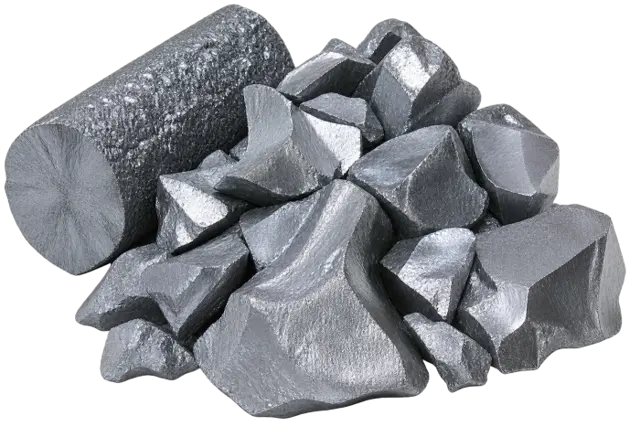
High-purity polysilicon in rod or chunk form, graded for N-type monocrystalline ingot pulling; granular material available for blended recharge.
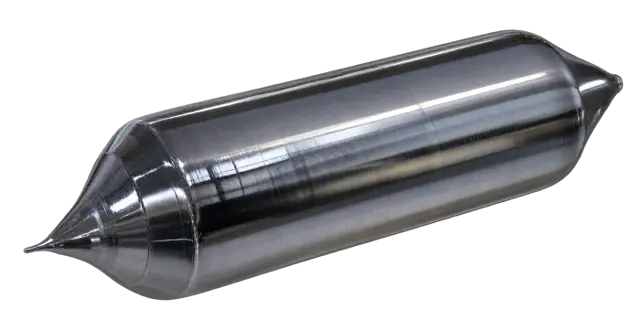
Phosphorus-doped Czochralski ingot, cropped and squared for M10, G12R or G12 wafering, with resistivity and lifetime data per piece.
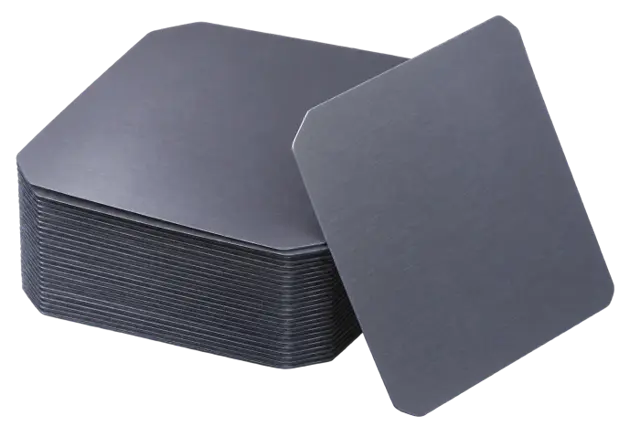
Diamond-wire-cut N-type monocrystalline wafer, about 130 µm thick, in the near-square M10 format used for TOPCon and HJT cells.

Rectangular 210R wafer for the 2382 × 1134 mm module format: more power per module while staying within standard container and handling limits.
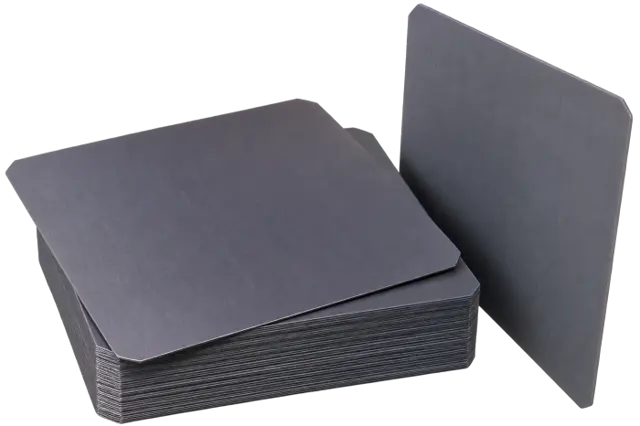
Full-size 210 mm square N-type wafer for high-power utility modules above 700 W, usually cut into half or third cells.
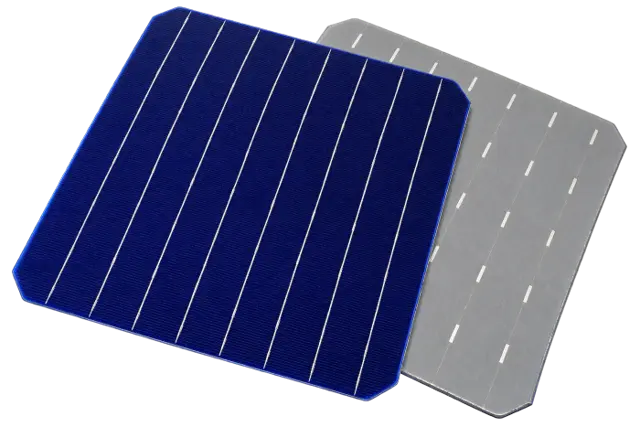
Gallium-doped P-type PERC cell, about 23.3–23.6 % efficient, for cost-driven modules and replacement production on existing lines.
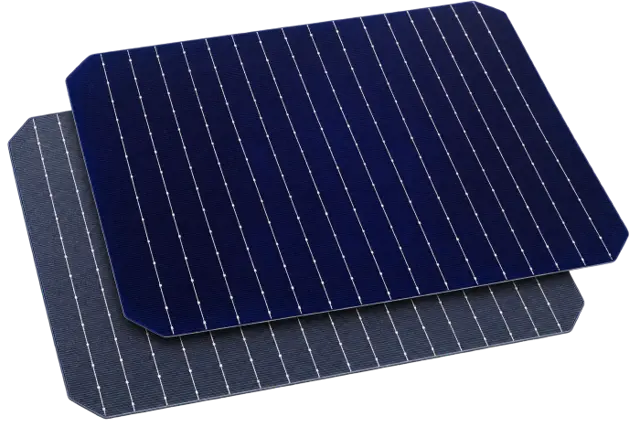
Mainstream N-type cell in M10 or G12R format, around 26 % efficient with 80–85 % bifaciality, for glass-glass and glass-backsheet modules.
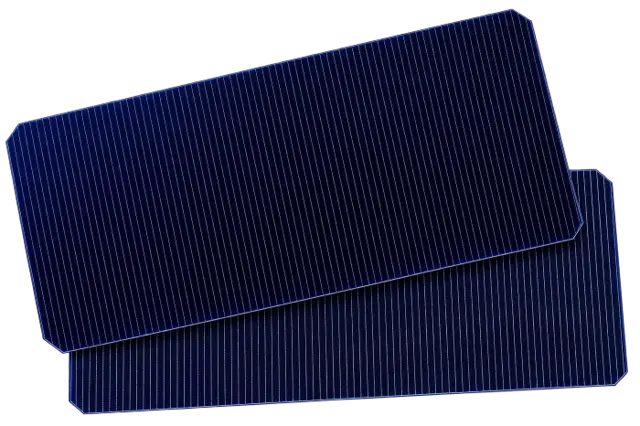
Low-temperature N-type cell with amorphous-silicon passivation, high bifaciality and the best temperature coefficient among mainstream technologies.

Cell with all contacts on the rear and an unshaded front, the highest-efficiency mass-produced option at 26.5–27 %+, suited to premium rooftop modules.
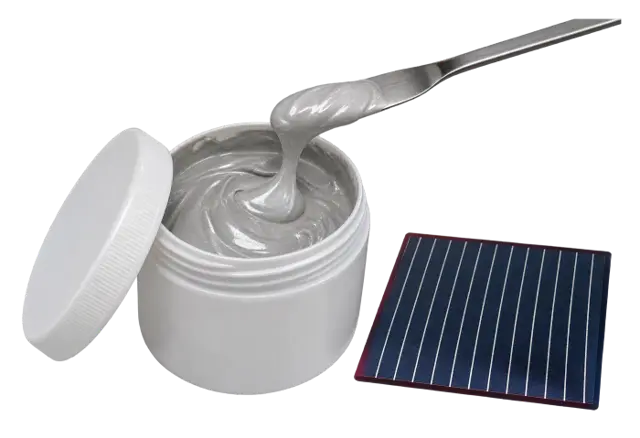
Screen-printing pastes for TOPCon, PERC and HJT cells, including silver-aluminium, fine-line silver, low-temperature and silver-coated copper grades; price indexed to silver.
