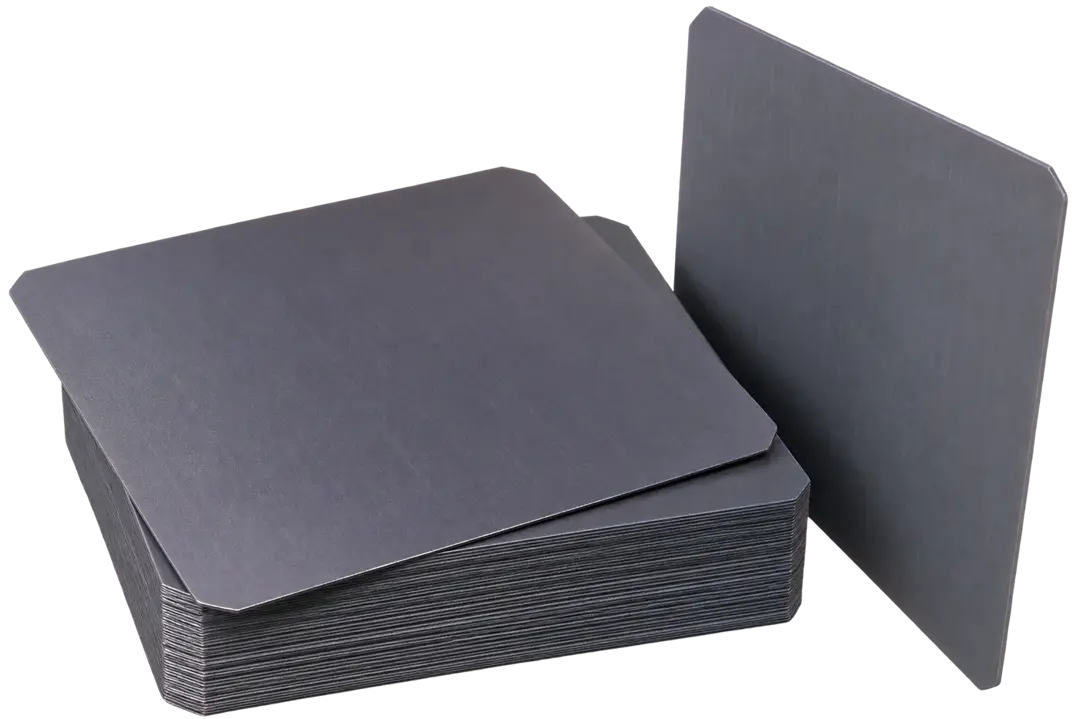
G12 is the largest mainstream wafer, 210 × 210 mm, grown from ingots close to 300 mm in diameter. A 66-cell (132 half-cell) module on G12 measures about 2384 × 1303 mm and delivers 700–730 W with TOPCon or HJT cells, which lowers balance-of-system cost per watt on large ground-mount and tracker projects.
The large area means high cell current, so G12 cells are almost always cut into halves or thirds to keep module current and resistive losses manageable. Assemblers need laminators, layup tables, framing machines and packaging that accommodate the 1.3 m module width, and should confirm that customers' trackers and inverters are rated for the higher string current. HJT lines often use thinner G12 wafers of 110–120 µm; TOPCon stays around 130 µm.
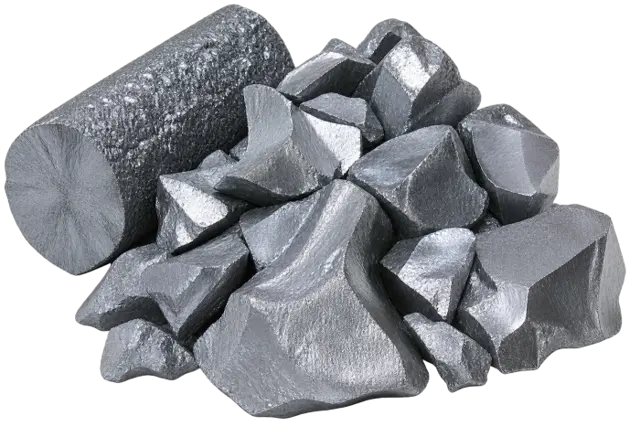
High-purity polysilicon in rod or chunk form, graded for N-type monocrystalline ingot pulling; granular material available for blended recharge.
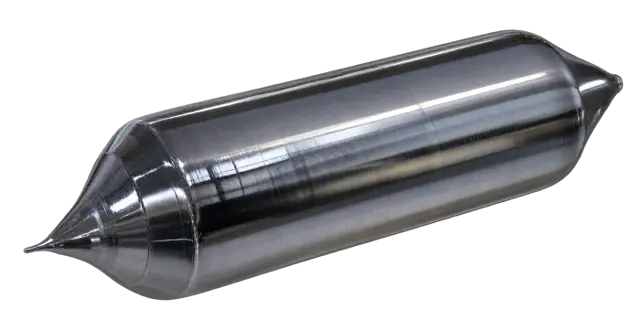
Phosphorus-doped Czochralski ingot, cropped and squared for M10, G12R or G12 wafering, with resistivity and lifetime data per piece.
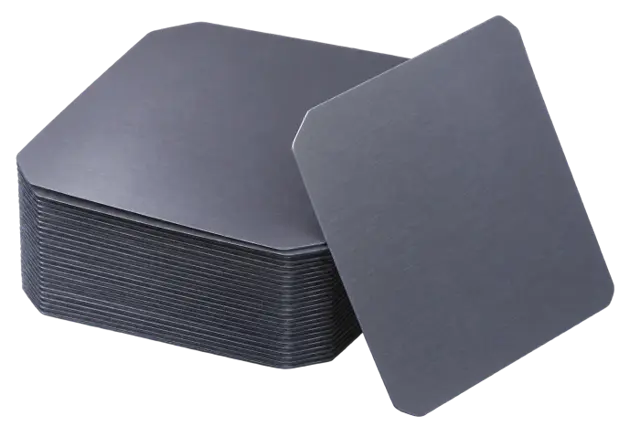
Diamond-wire-cut N-type monocrystalline wafer, about 130 µm thick, in the near-square M10 format used for TOPCon and HJT cells.

Rectangular 210R wafer for the 2382 × 1134 mm module format: more power per module while staying within standard container and handling limits.
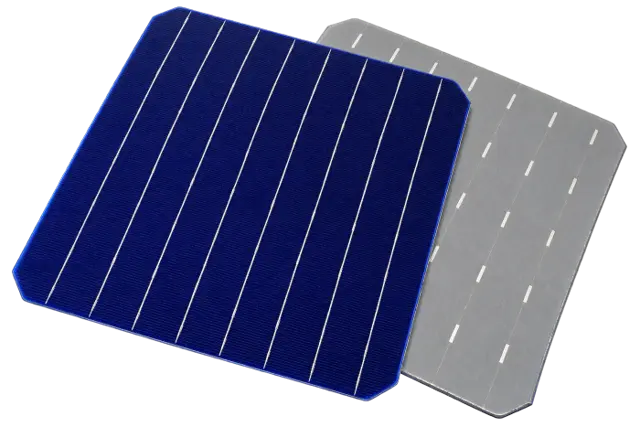
Gallium-doped P-type PERC cell, about 23.3–23.6 % efficient, for cost-driven modules and replacement production on existing lines.
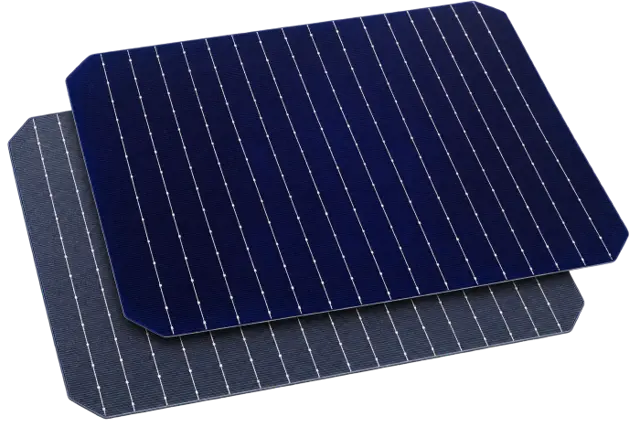
Mainstream N-type cell in M10 or G12R format, around 26 % efficient with 80–85 % bifaciality, for glass-glass and glass-backsheet modules.
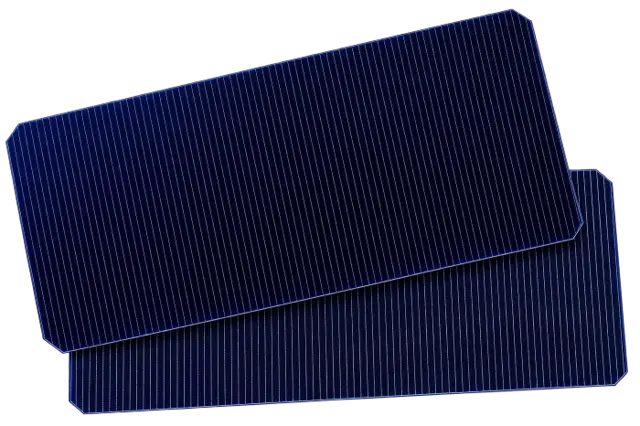
Low-temperature N-type cell with amorphous-silicon passivation, high bifaciality and the best temperature coefficient among mainstream technologies.

Cell with all contacts on the rear and an unshaded front, the highest-efficiency mass-produced option at 26.5–27 %+, suited to premium rooftop modules.
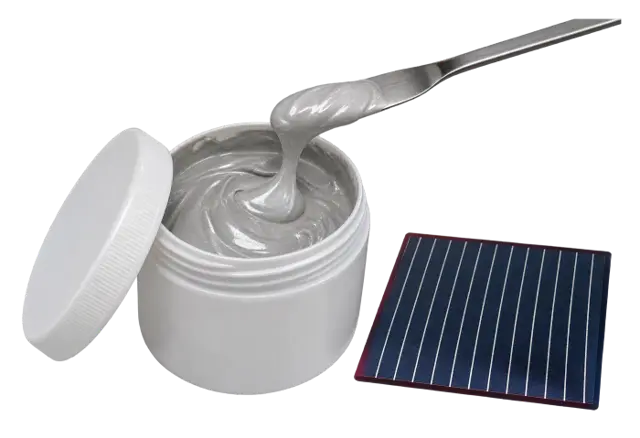
Screen-printing pastes for TOPCon, PERC and HJT cells, including silver-aluminium, fine-line silver, low-temperature and silver-coated copper grades; price indexed to silver.

Low-iron patterned front glass, fully tempered with anti-reflective coating and about 94 % transmittance, for glass-backsheet modules.
