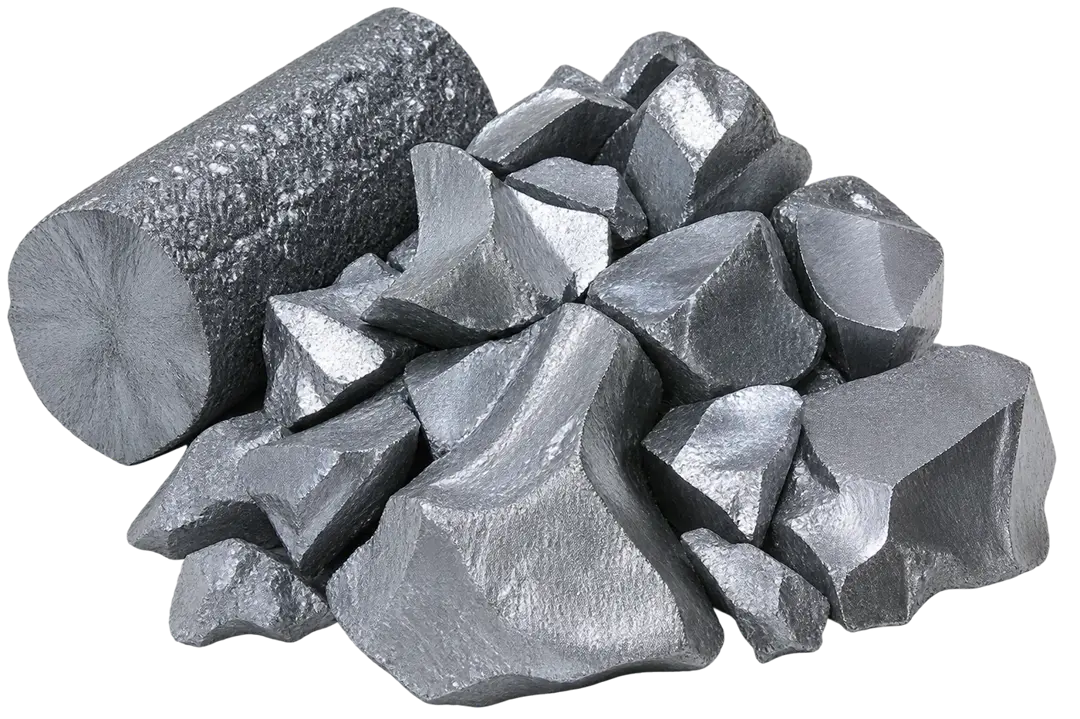
Almost all solar polysilicon is made by the modified Siemens process: trichlorosilane is purified by distillation and deposited onto heated silicon filaments in a bell-jar reactor, producing rods that are then broken into chunks, sorted by size and packed in clean bags. Granular polysilicon from fluidised-bed reactors uses less energy and flows freely, so many ingot plants blend a share of it into continuous recharge alongside chunk material.
N-type ingots tolerate far less contamination than the P-type material of the PERC era. Buyers should check donor and acceptor levels (boron and phosphorus in the ppta range), carbon, and surface metals at ppbw level, together with the chunk size distribution and the share of fines. Material that meets these limits is usually described as N-type grade, around 11N electronic-like purity.
Polysilicon prices move with industry capacity and policy, and have swung widely since 2022. The figure shown is an indicative level per kilogram for N-type dense material; contracts are normally quoted against a published market index with monthly or per-shipment adjustment.
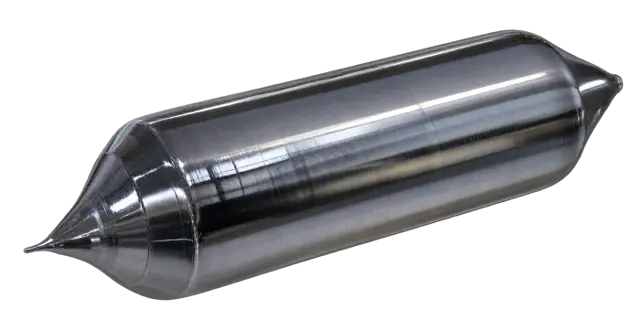
Phosphorus-doped Czochralski ingot, cropped and squared for M10, G12R or G12 wafering, with resistivity and lifetime data per piece.
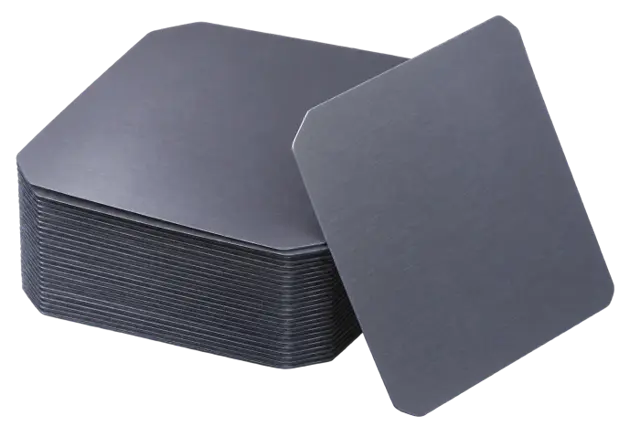
Diamond-wire-cut N-type monocrystalline wafer, about 130 µm thick, in the near-square M10 format used for TOPCon and HJT cells.

Rectangular 210R wafer for the 2382 × 1134 mm module format: more power per module while staying within standard container and handling limits.
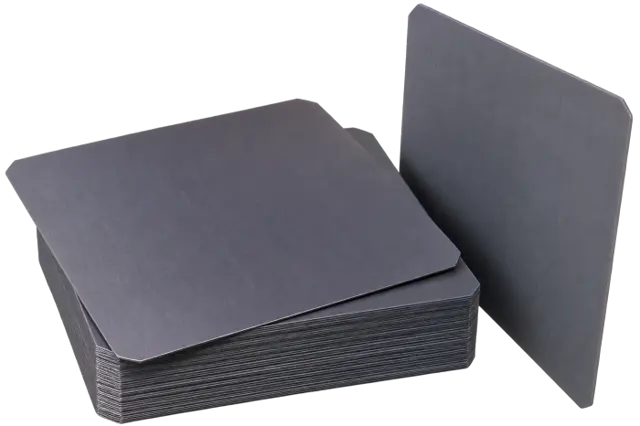
Full-size 210 mm square N-type wafer for high-power utility modules above 700 W, usually cut into half or third cells.
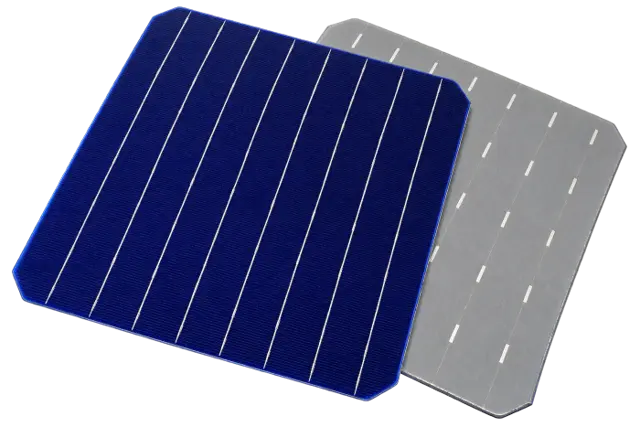
Gallium-doped P-type PERC cell, about 23.3–23.6 % efficient, for cost-driven modules and replacement production on existing lines.
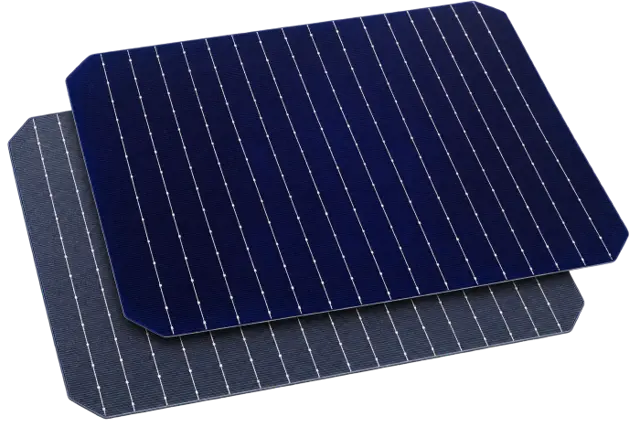
Mainstream N-type cell in M10 or G12R format, around 26 % efficient with 80–85 % bifaciality, for glass-glass and glass-backsheet modules.
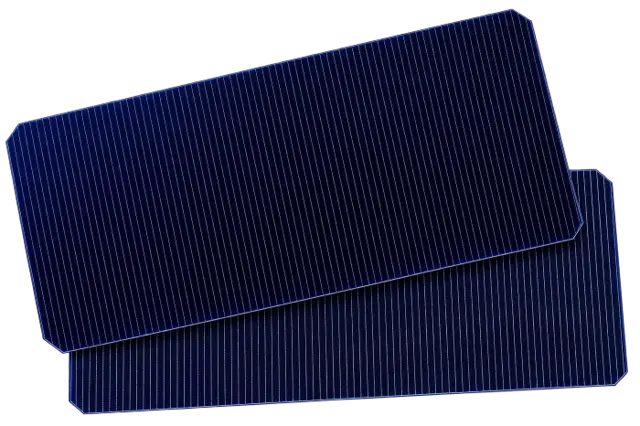
Low-temperature N-type cell with amorphous-silicon passivation, high bifaciality and the best temperature coefficient among mainstream technologies.

Cell with all contacts on the rear and an unshaded front, the highest-efficiency mass-produced option at 26.5–27 %+, suited to premium rooftop modules.
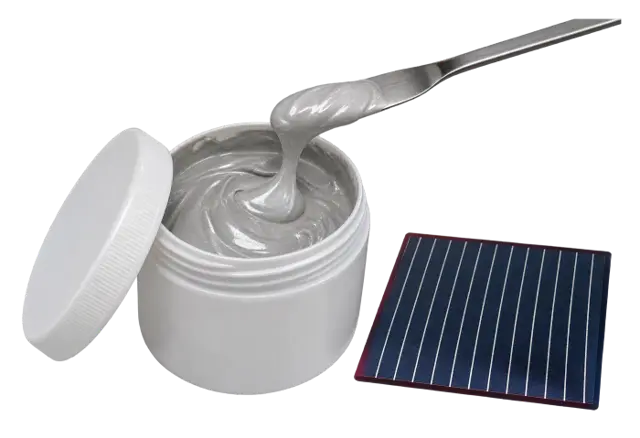
Screen-printing pastes for TOPCon, PERC and HJT cells, including silver-aluminium, fine-line silver, low-temperature and silver-coated copper grades; price indexed to silver.

Low-iron patterned front glass, fully tempered with anti-reflective coating and about 94 % transmittance, for glass-backsheet modules.
