PV that replaces a building material, such as roof tiles, façade cladding, skylights or canopies, and generates power at the same time.
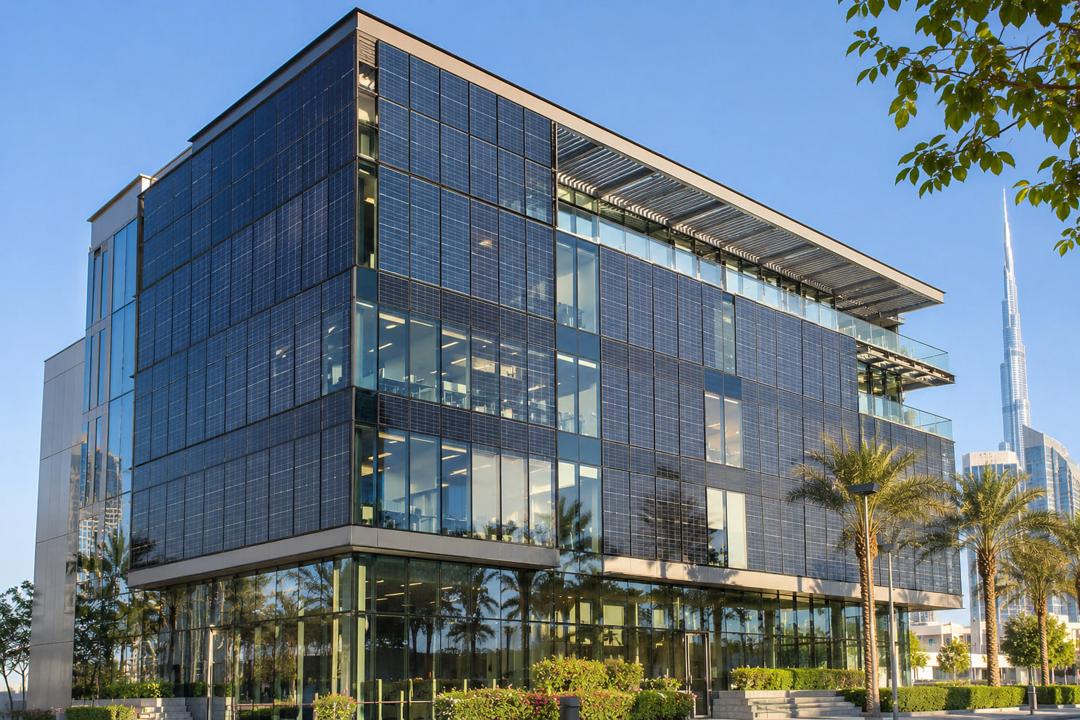
Building-integrated photovoltaics are part of the building envelope rather than an add-on. Products include solar roof tiles, metal standing-seam roofs with laminated cells, semi-transparent glass-glass units for curtain walls and skylights, and colored façade panels whose printed or coated front glass hides the cells.
Because the BIPV element also fulfills structural, weather-proofing, fire-safety and sometimes thermal or daylighting functions, it must comply with building codes as well as PV standards (IEC 61215/61730 plus EN 50583 or local façade regulations). Projects are usually custom-sized and need early coordination between architect, façade engineer and electrical designer.
Energy yield per watt is lower than for an optimally tilted rack because façades are vertical and ventilation is limited, but the avoided cost of the conventional material and the architectural value can justify the investment. In the GCC, BIPV is increasingly specified for landmark buildings, shading canopies and green-building certifications such as LEED and Estidama.
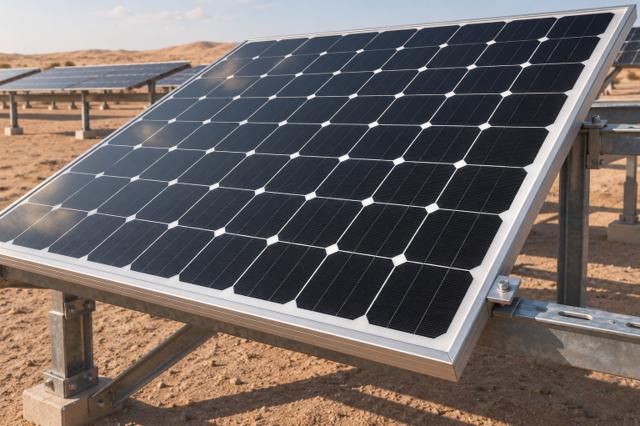
Passivated Emitter and Rear Cell on P-type monocrystalline silicon, the workhorse technology of 2016–2023.
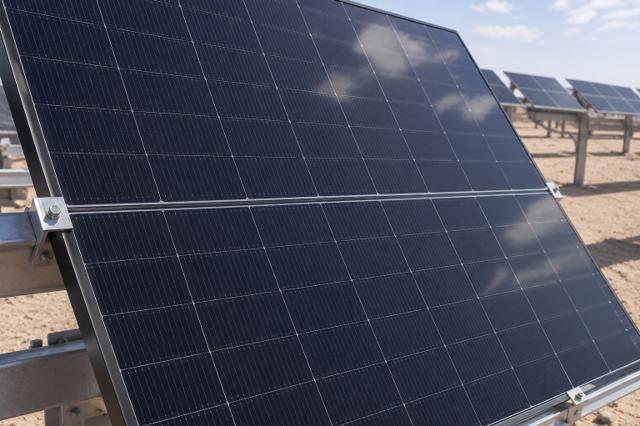
Tunnel Oxide Passivated Contact cells on N-type wafers: today's mainstream high-efficiency, high-bifaciality technology.
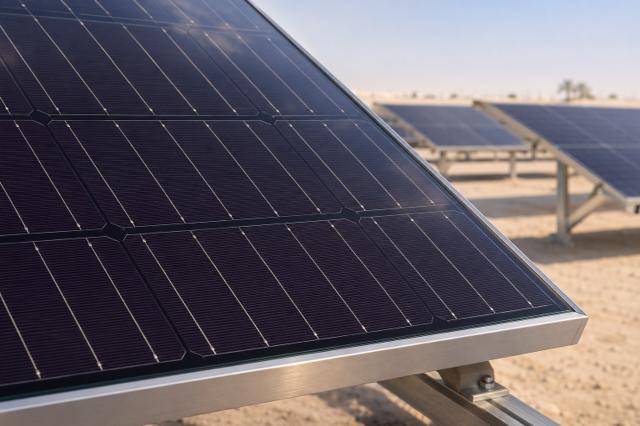
Crystalline N-type wafer sandwiched between thin amorphous-silicon layers, with the best temperature coefficient among silicon technologies.
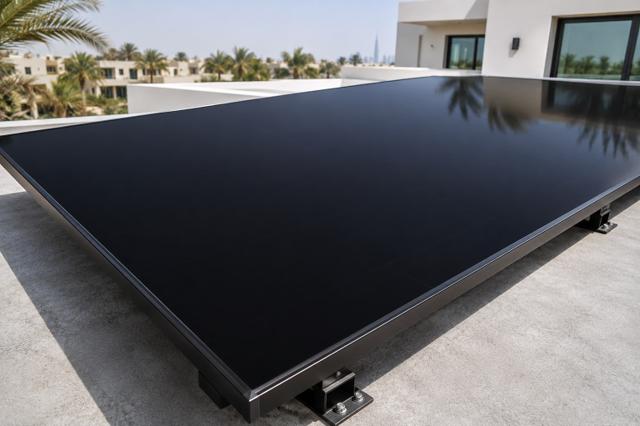
All electrical contacts moved to the rear of the cell. No front busbars, more light captured and the highest module efficiencies on the market.
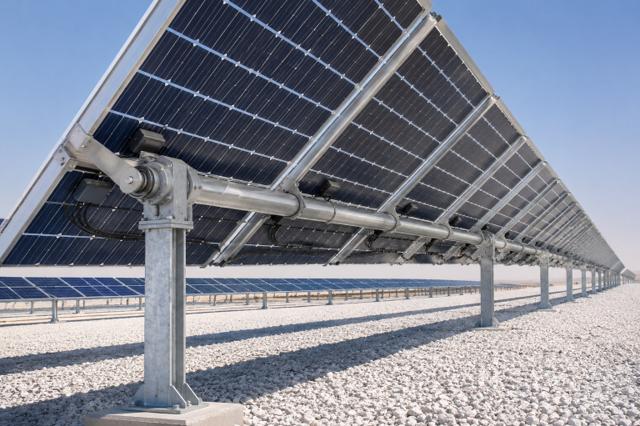
Modules that also convert light reaching their rear side, adding 5–25 % energy depending on ground albedo and mounting height.
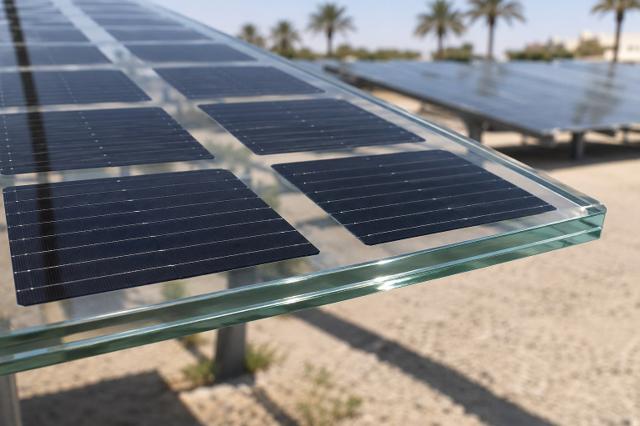
Cells laminated between two sheets of tempered glass for higher durability, lower degradation and 30-year warranties.
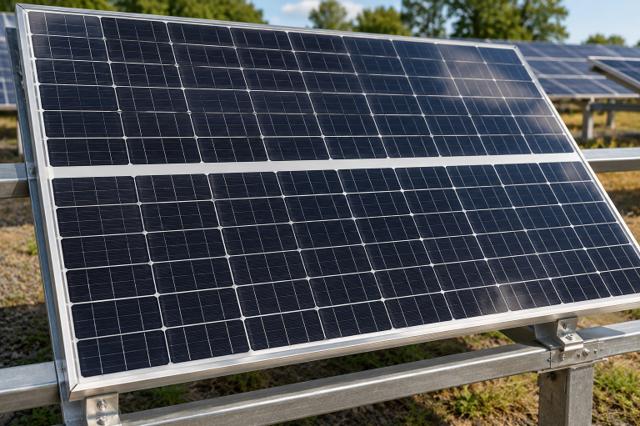
Cells laser-cut in half to halve current per string, reduce resistive losses and improve shade tolerance.
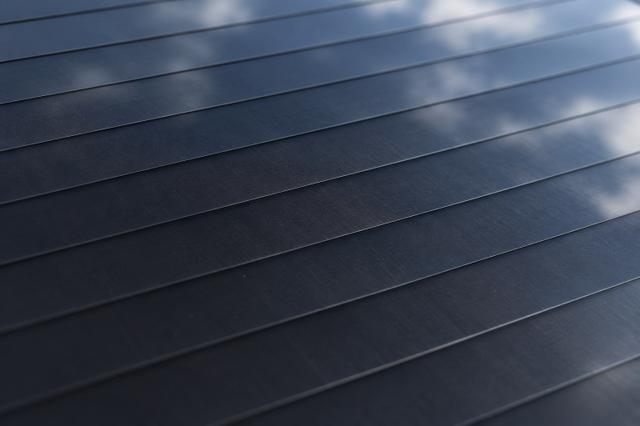
Cell strips overlapped like roof shingles and bonded with conductive adhesive, leaving no gaps or ribbons and a high active area.
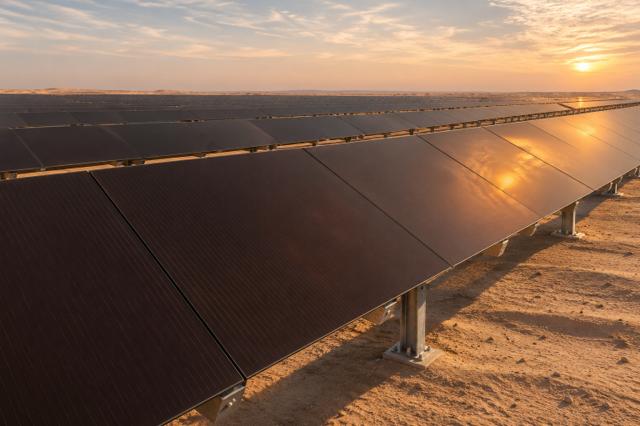
Semiconductor layers a few micrometers thick deposited on glass. Excellent heat and diffuse-light behavior, lower efficiency per area.
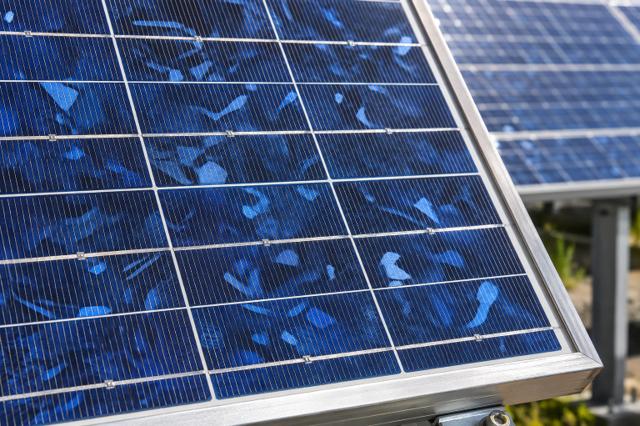
Blue, multi-grain silicon modules that dominated until about 2018, now discontinued by Tier-1 makers.
