Semiconductor layers a few micrometers thick deposited on glass. Excellent heat and diffuse-light behavior, lower efficiency per area.
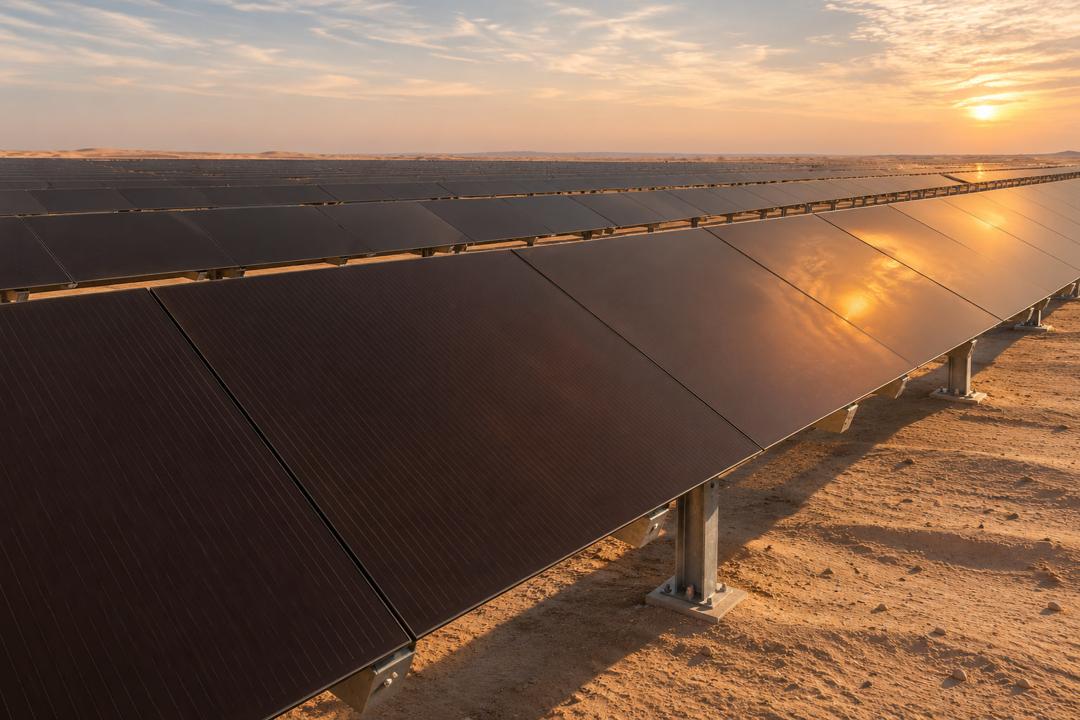
Thin-film modules do not use silicon wafers. Instead, a light-absorbing semiconductor only 2–5 µm thick is deposited directly onto a glass substrate and divided into cells by laser scribing. The two commercially relevant chemistries are cadmium telluride (CdTe) and copper indium gallium selenide (CIGS).
CdTe, manufactured at gigawatt scale mainly for utility plants, reaches module efficiencies of about 19–20 % and has a very good temperature coefficient (about −0.28 to −0.32 %/°C) and spectral response in hot, humid and hazy conditions. CIGS reaches 15–18 % and can also be made on flexible substrates.
Because efficiency per square meter is lower than crystalline silicon, thin film needs more land, structure and cabling per megawatt. Modules are frameless glass-glass laminates with lower current and higher voltage, which affects string design and inverter choice.
Thin film is a valid alternative in specific cases, but for most projects in the Gulf region today, N-type crystalline modules from the five Tier-1 brands we deal in offer a better balance of cost, efficiency and bankability.
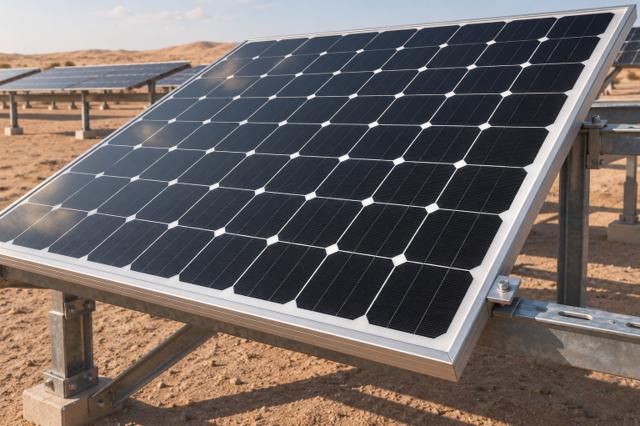
Passivated Emitter and Rear Cell on P-type monocrystalline silicon, the workhorse technology of 2016–2023.
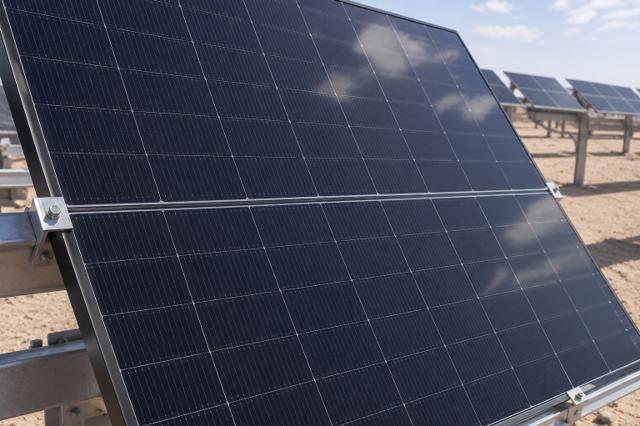
Tunnel Oxide Passivated Contact cells on N-type wafers: today's mainstream high-efficiency, high-bifaciality technology.
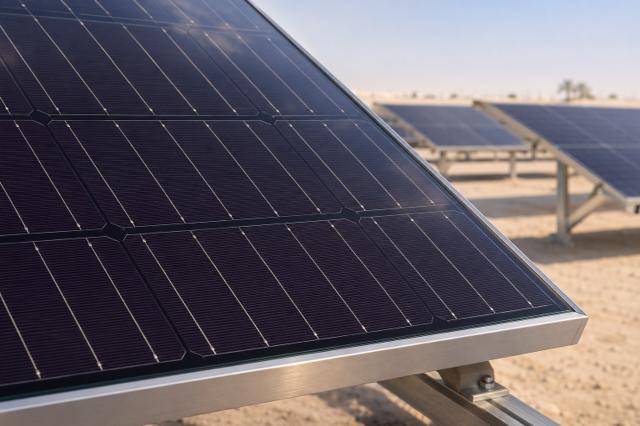
Crystalline N-type wafer sandwiched between thin amorphous-silicon layers, with the best temperature coefficient among silicon technologies.
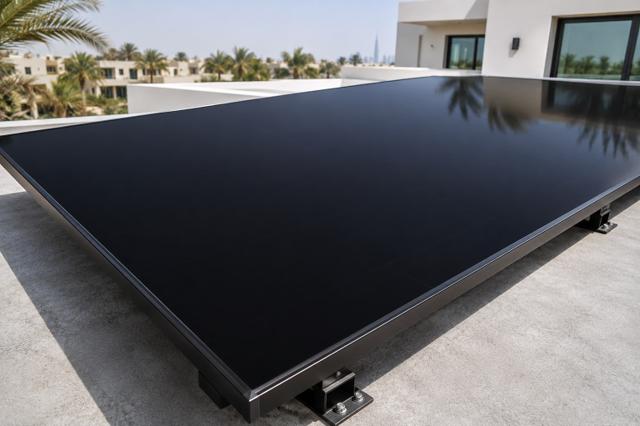
All electrical contacts moved to the rear of the cell. No front busbars, more light captured and the highest module efficiencies on the market.
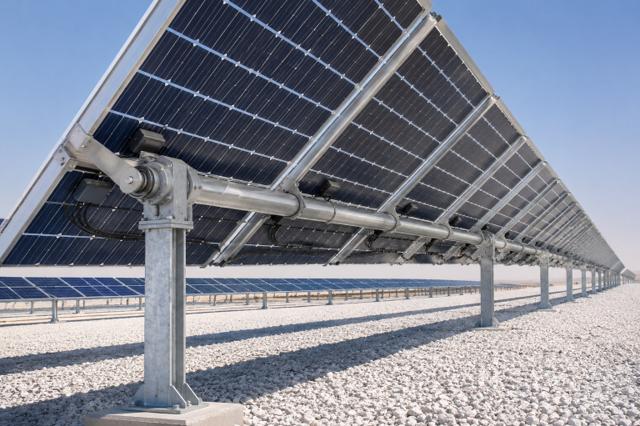
Modules that also convert light reaching their rear side, adding 5–25 % energy depending on ground albedo and mounting height.
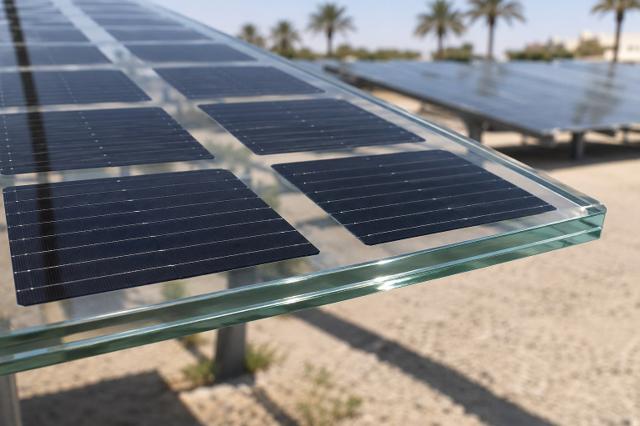
Cells laminated between two sheets of tempered glass for higher durability, lower degradation and 30-year warranties.
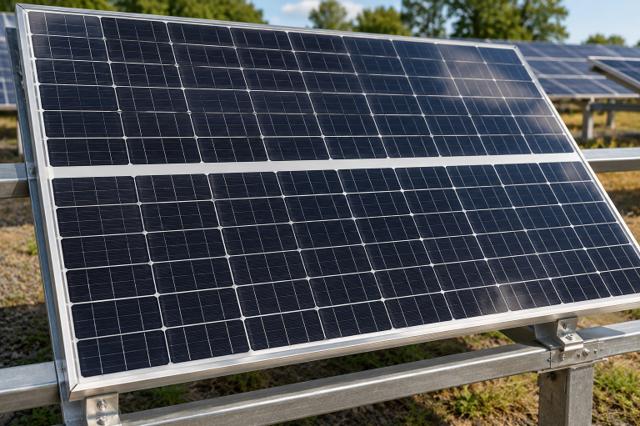
Cells laser-cut in half to halve current per string, reduce resistive losses and improve shade tolerance.
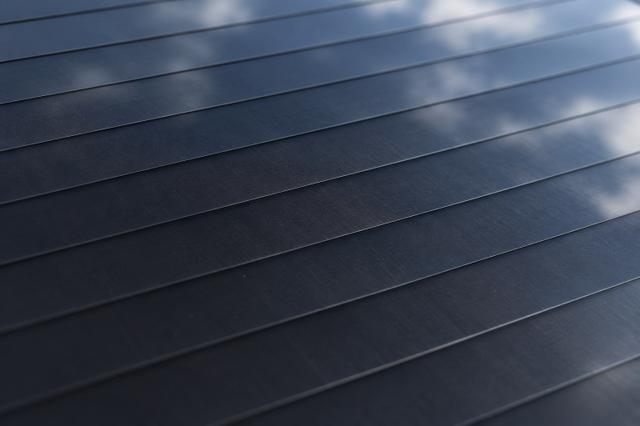
Cell strips overlapped like roof shingles and bonded with conductive adhesive, leaving no gaps or ribbons and a high active area.
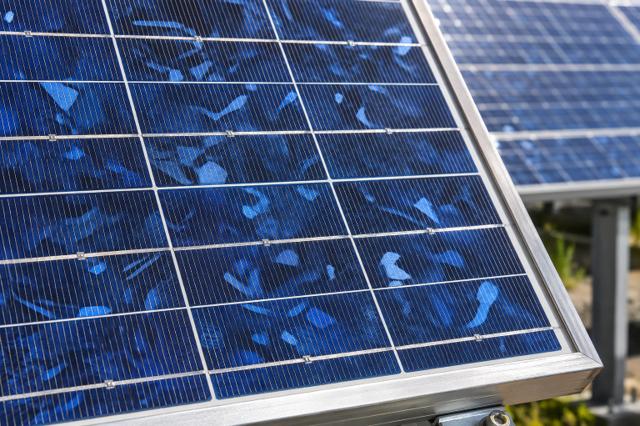
Blue, multi-grain silicon modules that dominated until about 2018, now discontinued by Tier-1 makers.
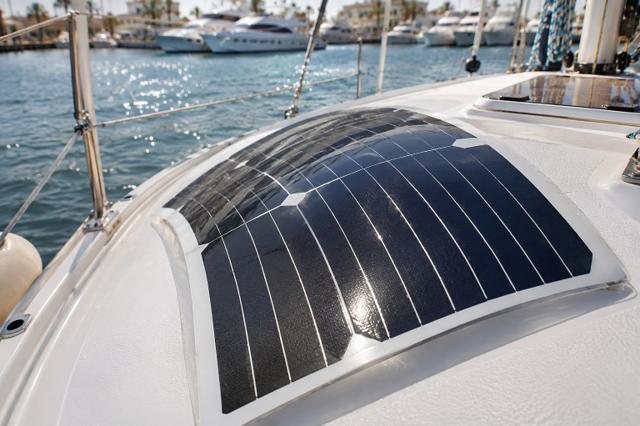
Glass-free laminates for roofs with low load capacity, curved surfaces, vehicles and marine use.
